
Category: Uncategorized
Peter Dreier’s vicious attack on Bhaskar Sunkara in The Nation is an embarrassment to that publication. The Nation editors should be ashamed of having allowed Dreier to lambast the editor of Jacobin in such a venomous piece because Sunkara said he would vote for presidential candidate
This article was written for L’Anticapitaliste, the biweekly newspaper of the New Anticapitalist Party (NPA) of France.

Across the United States we are seeing workers walk off the job in wildcat strikes in response to the employers’ failure either to shut down the workplace or to make it safe. The strikes are too few to call them
This article was written for L’Anticapitaliste, the weekly newspaper of the New Anticapitalist Party (NPA) of France.
Like the front edge of a furious storm, the coronavirus pandemic has reached and begun to ravage the United States, which now has the
Like the front edge of a furious storm, the coronavirus pandemic has reached and begun to ravage the United States, which now has the
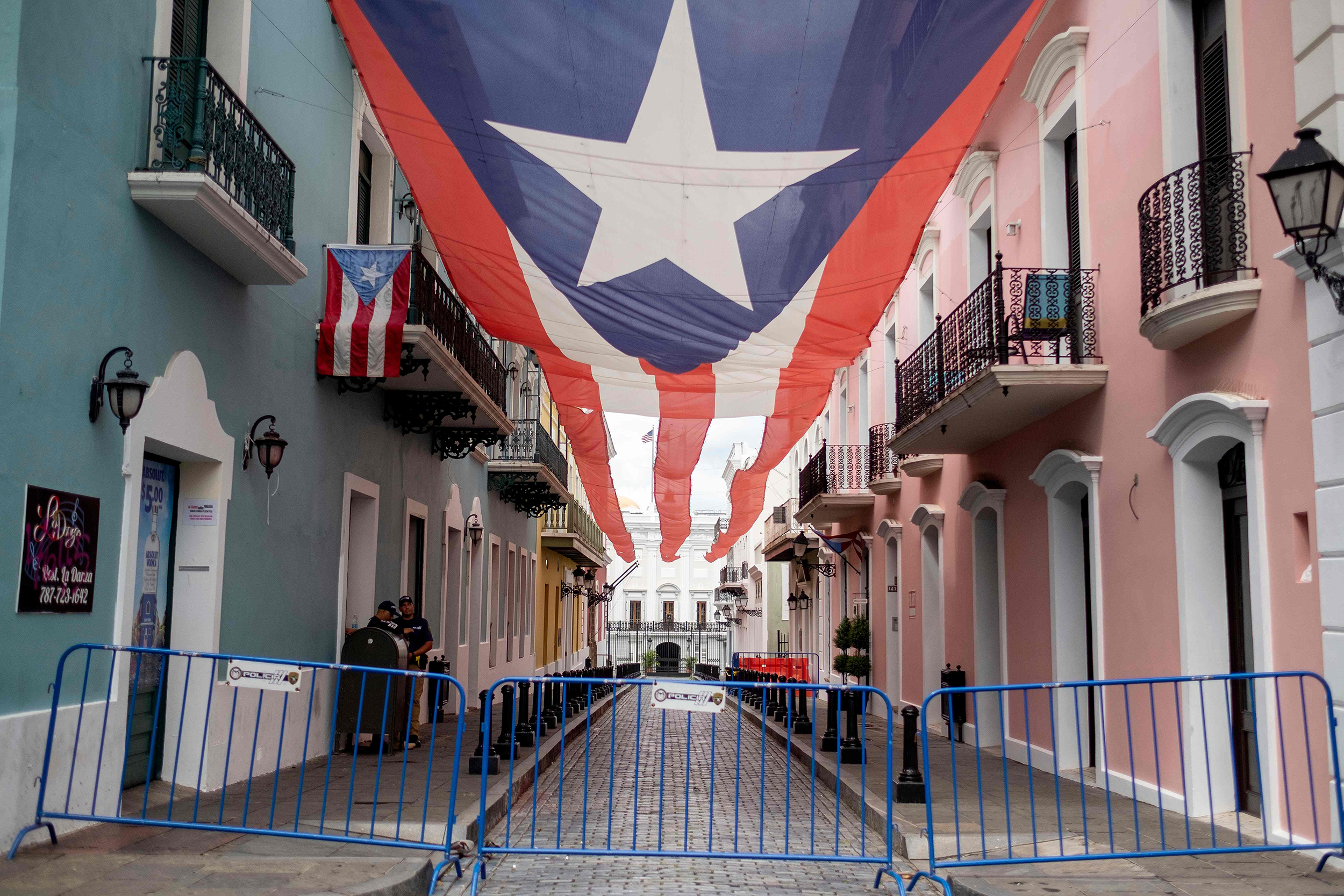
Barricades block the entrance to the Governor’s mansion known as La Fortaleza in San Juan, Puerto Rico on March 18, 2020. – On Sunday March 15, Puerto Rico’s Governor Wanda Vazquez imposed a curfew and ordered the shutdown of most

This article was originally written for Viento Sur, a political magazine published in the Spanish state.

Joe Biden turned out to be the big winner on Super Tuesday. While not all of the votes have been counted, Biden seems likely to end up with a majority. He is now positioned to do well in the rest
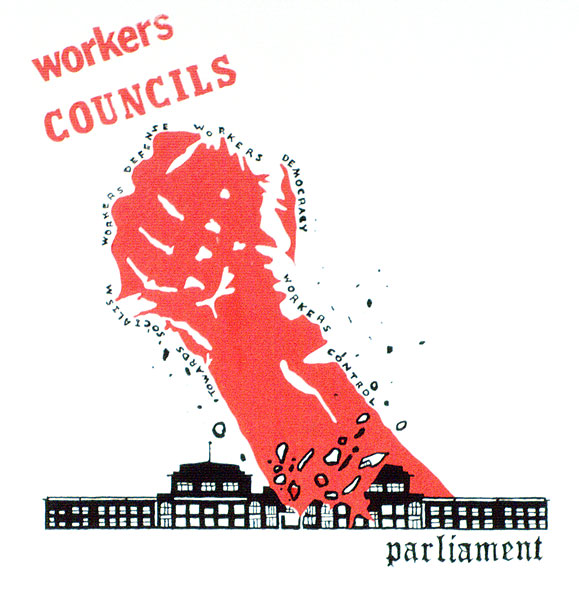
While I found the article critiquing the electoral road to socialism by Kit Wainer and Mel Bienenfeld found in the in the current issue of New Politics quite interesting and informative, I also found it problematic. This is mostly because
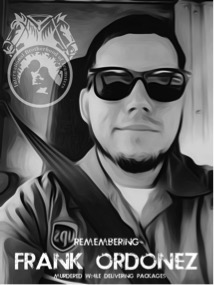
El jueves 5 de diciembre de 2019, Frank Ordoñez, de 27 años de edad, un chofer de UPS y padre de dos hijas, fue matado en un tiroteo entre la policía y dos sospechosos que huían de la escena de un robo.

The roots of the current social explosion in Chile can be found in the 17-year dictatorship headed by General Augusto Pinochet (1973-1990), who took power after a bloody military coup backed by Washington. The armed forces overthrew the democratic socialist
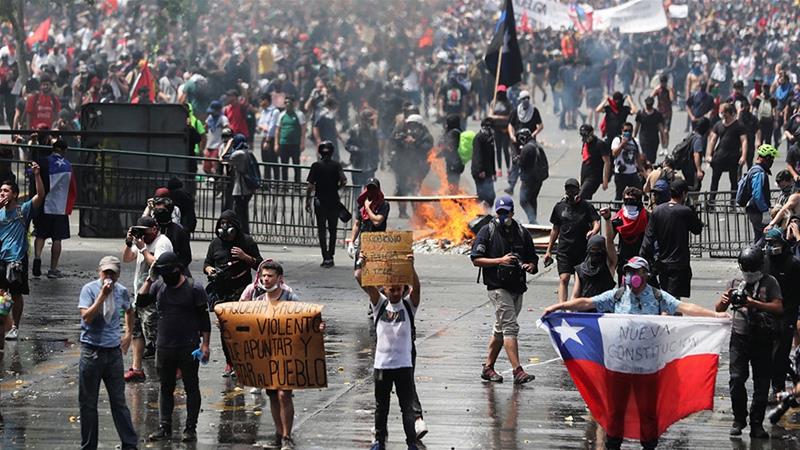
Chile has exploded in social protests for the past several days, initially ignited by an increase in the metro fare. The initial protests developed into a national strike, even though conservative President Sebastián Piñera rescinded the four percent increase
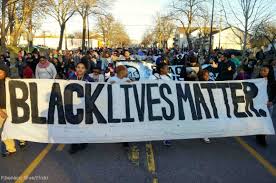
What is the future of black leadership? In the wake of the Movement for Black Lives on the one hand and the “election” of Donald Trump (and the forthcoming presidential election) on the other, a range of intellectuals, pundits, activists,
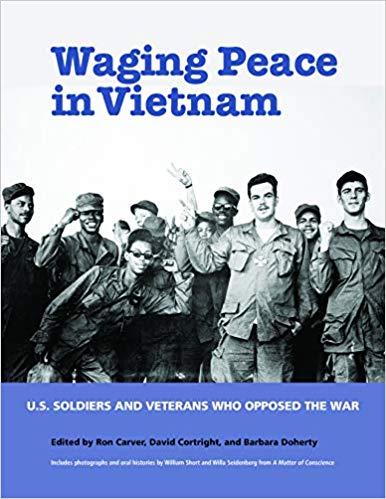
Fifty years ago this fall, a campus upsurge turned opposition to the Vietnam War into a genuine mass movement.
On October 15, 1969, several million students, along with community-based activists, participated in anti-war events under the banner of the “Vietnam Moratorium.”
On October 15, 1969, several million students, along with community-based activists, participated in anti-war events under the banner of the “Vietnam Moratorium.”
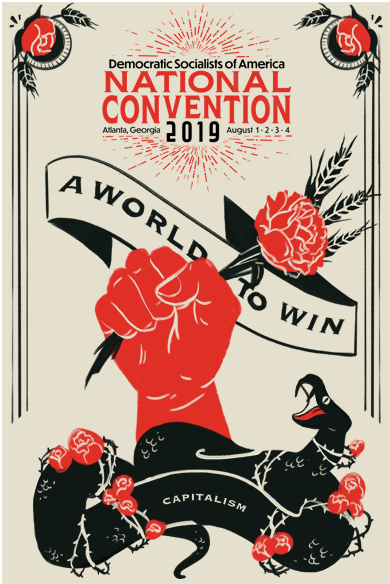
Earlier this month, the Democratic Socialists of America (DSA) held its 2019 National Convention. I wrote a piece for Jacobin giving an overview of the major decisions that came out of the convention, but there’s a larger conversation to be
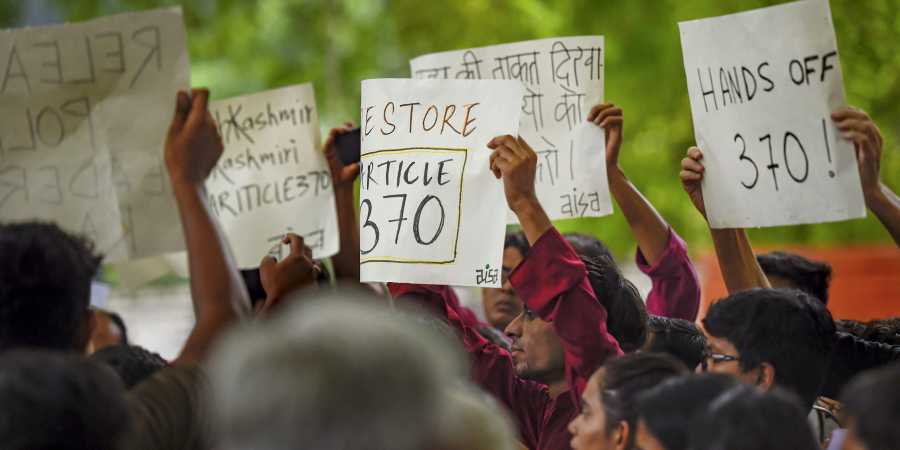
As the Indian government resorts to annexation of the state of Jammu and Kashmir at gunpoint, detaining its political leaders and cutting off all means of communication, we extend our solidarity to the people of Jammu and Kashmir as they
Pessimism and optimism vie for our feelings as we survey the world and national scene. We are deeply disheartened by the continuing reports on climate change, driven largely by the coal and oil industries, most recently a report

This awakening was not about ideologies, but for the country and against a common adversary: the Ortega-Murillo dictatorship. Nobody prepared us or financed us.
By Lesther Aleman* (Confidencial)
HAVANA TIMES – We all asked for changes, but never thought of demanding, living and writing
By Lesther Aleman* (Confidencial)
HAVANA TIMES – We all asked for changes, but never thought of demanding, living and writing

We publish here an account of the discussions taking place in the Democratic Socialists of America, now the largest left organization in the United States with over 50,000 members , as it prepares for its national convention to take place
The 109th annual convention of the NAACP Read more ›

Vivek Chibber’s “Our Road to Power” published recently in Jacobin—oddly enough written as a commemoration of the Russian Revolution of October 1917—codifies a strategy for what is one of the dominant tendencies in the American left today: social democracy. The principal argument of “Our Road to Power” (a title chosen by Jacobin’s editors, perhaps alluding to German Social Democrat Karl Kautsky’s The Road to Power) is that a “ruptural strategy” is off the agenda. By “ruptural strategy” Chibber means one that is predicated upon a crisis of the economic and political system leading to the breakdown or to the overthrow of the state. Chibber believes that since the power of the state is so great today—because of its legitimacy, its coercive power, and its power of surveillance—a revolutionary strategy is ruled out. It would be, he says, “hallucinatory” to think otherwise.
 Loneliness
In Hannah Arendt’s pioneering book The Origins of Totalitarianism, she criticized the failure of many to understand the appeals of fascism to modern citizens. She wrote that many observers gave fairly rote justifications for its rise and appeal in an apparently advanced and enlightened country like Germany, the birthplaces of Goethe, Kant, and Beethoven. Some claimed that it was the depressed economy that was responsible. Others in the German context pointed to defeat and humiliation in the First World War. Some reactionary conservatives claimed it was declining moral standards and the collapse of religiosity. And Arendt accepted that many of these might have something to do with it. But her ultimate explanation was far simpler and yet strangely more acute. Modern Germans were lonely.
- « Newer Posts
- 1
- …
- 8
- 9
- 10
- 11
- 12
- 13
- Older Posts »