Category: Uncategorized
The 109th annual convention of the NAACP Read more ›

Vivek Chibber’s “Our Road to Power” published recently in Jacobin—oddly enough written as a commemoration of the Russian Revolution of October 1917—codifies a strategy for what is one of the dominant tendencies in the American left today: social democracy. The principal argument of “Our Road to Power” (a title chosen by Jacobin’s editors, perhaps alluding to German Social Democrat Karl Kautsky’s The Road to Power) is that a “ruptural strategy” is off the agenda. By “ruptural strategy” Chibber means one that is predicated upon a crisis of the economic and political system leading to the breakdown or to the overthrow of the state. Chibber believes that since the power of the state is so great today—because of its legitimacy, its coercive power, and its power of surveillance—a revolutionary strategy is ruled out. It would be, he says, “hallucinatory” to think otherwise.
 Loneliness
In Hannah Arendt’s pioneering book The Origins of Totalitarianism, she criticized the failure of many to understand the appeals of fascism to modern citizens. She wrote that many observers gave fairly rote justifications for its rise and appeal in an apparently advanced and enlightened country like Germany, the birthplaces of Goethe, Kant, and Beethoven. Some claimed that it was the depressed economy that was responsible. Others in the German context pointed to defeat and humiliation in the First World War. Some reactionary conservatives claimed it was declining moral standards and the collapse of religiosity. And Arendt accepted that many of these might have something to do with it. But her ultimate explanation was far simpler and yet strangely more acute. Modern Germans were lonely.

Let’s set the scene.
You just had dinner with your family and argued about the viability of the creation of socialism in the United States while fighting off their tired and false rebuttals of human nature as your uncle Steve got broccoli stuck in his teeth. Exhausted from the argument in a way that only your family can cause, you head to your home and get ready for bed. A notification appears on your phone that a new article from Jacobin.

“Who is to blame for the election of Donald Trump?” It’s a question that was asked more than a few times after November. We’re all familiar with the answers that were given: James Comey, the electoral college, the DNC’s leaked—not hacked—emails, the characteristically shameful performance of the mainstream media in its focus on personalities rather than substance, the stupefying incompetence of Hillary Clinton’s campaign, the elitist insularity and corruption of the Democratic Party, etc.

When the Democratic Socialists of America (DSA) meets in convention in Chicago this weekend the central question will be this: Will DSA return to the Democratic Party or chart an independent course? DSA members Joseph M. Schwartz and Bhaskar Sunkara have written an article in which they argue that DSA should follow the example of the Communist Party USA in the Popular Front period of the 1930s when it supported Democratic Party president Franklin D. Roosevelt.

[Updated May 19, 2017] After nearly four months of President Donald Trump’s chaotic presidency surrounded by controversies and scandals, the American establishment has decided to take things in hand. That is the meaning of deputy attorney general Rod J. Rosenstein’s appointment of Robert S. Mueller III to serve as special counsel to investigate ties between the Trump administration and Russia. Mueller, who had served as the FBI director from 2001 to 2013 under presidents George W. Bush and Barack Obama, has both the confidence of the establishment and the political independence that will allow him to pursue the issue without fear of presidential interference.

President Donald Trump is neither the populist champion of working-class underdogs that some of his supporters hoped, nor is he is the fascist dictator that some feared. Co-opted by the Republican establishment, he is a dangerous, authoritarian, militarist whose programs threaten the American people, world peace, and the planet.
As Trump took office, the majority of Americans were anxious, worried.
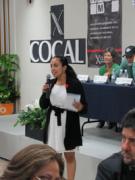
The neoliberal policies implemented since the 1980s in Mexico and around the world have worsened the conditions of academic workers, imposing labor flexibility and precariousness on most of the teachers in higher education. This new academic majority needs a political revival. The reorganization of this sector has become an urgent task for academics and their unions.

Behind the humanitarian disaster of the Syrian civil war is a political crisis the Left urgently needs to understand.
The Syrian tragedy is a key moral and political question today. Yet it has not been easy for leftists around the world to decide where they stand on Syria.
Though conceived out of conversations concerning the Eurozone crisis in summer 2015, this interview with Nathan Cedric Tankus engages with heightened focus by the left on finance capita. Tankus is research scholar at the Modern Money Network, an organization committed to: “The creation and improvement of monetary and financial institutions governed by the public and directed in support of public purpose; The universal, enforceable and inalienable right of every person to participate in economic life in a manner consistent with basic principles of justice, fairness, equality and dignity; The security of individuals, families and communities, the development of autonomous, non-state entities and the flourishing of civil society as critical components of economic freedom” as well as principles of ecological sustainability and intellectual freedom.

Republican presidential candidate Donald Trump’s bragging about his sexual assaults on women appears to be sparking a revival of the women’s movement.
Trump’s remark that he could “grab women by the pussy”—followed by more women coming forward to describe his sexual assault on them over many years—has led to social media protests and to demonstrations in New York City and Washington, D.C.
Trump’s outrageous remarks prompted women of all ages, races, and ethnicities who had been silent for years and even decades to speak out, sit-in, and protest. We seem to be at a “Women’s Lives Matter” moment and perhaps at the beginning of a new women’s movement.
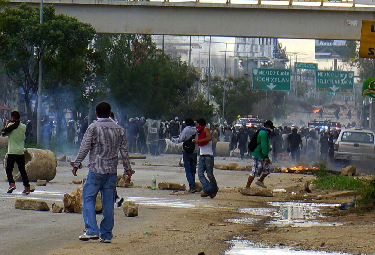 Two new articles provide useful, accurate analysis about what's behind the protests in Oaxaca Mexico about education reform. One explains the economic factors that compel the government to respond with such vicious repression and are behind its refusal to compromise about its policy to replace the existing teacher workforce with contract labor.
 There are 500 delegates from more than 100 political organizations in the Americas here at the São Paolo Forum being held this year in San Salvador. Yesterday at the opening session I found myself seated next to Julio Molina, a delegate from the Farabundo Martí National Liberation Front (FMLN) of the host country, El Salvdor. We introduced ourselves and when the session ended went out to talk about our mutual interest in history.

On May 12, Brazil's democratic government, led by the Workers’ Party (PT), was the victim of a coup. What will the other BRICS countries (Russia, India, China, and South Africa) do? Will they stand by as the reactionaries who took power in Brasilia pivot closer to Western powers, glad to warm Dilma Rousseff's seat at the BRICS summit in Goa, India in five months’ time? Or take a stronger line, following the lead of Latin American progressive countries (Venezuela, Cuba, Ecuador, Bolivia, Nicaragua and El Salvador)?
International Call to Struggle and for Solidarity against the Imposition of the Oversight Board (Junta) in Puerto Rico
We invite the international community and the Puerto Rican diaspora to join us in struggle and solidarity with Puerto Rico’s present situation.
The vote on impeachment, which is in a decisive week, makes clear the interests of the ruling classes and their inclination to reverse the losses from the global economic crisis. It is the class struggle carried out in government offices.
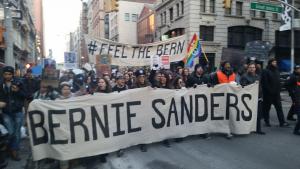
Some 3,000 supporters of Bernie Sanders marched through the streets of Manhattan yesterday from Union Square, historic site of labor and left rallies since the beginning of the last century, to Zuccotti Park, the site of the Occupy Wall Street movement of 2011.
In 1992, the world witnessed African American Rodney King being brutally beaten by Los Angeles policemen. In 1999, Amadou Diallo, an unarmed Black immigrant from Guinea, was shot 19 times by five New York City policemen outside his apartment. Sean Bell was shot to death by NYPD in 2006 on the morning of his wedding. And just in 2014, Officer Darren Wilson murdered Mike Brown in broad daylight in the city of Ferguson, Missouri.
PUERTO RICO HAS been in the news lately, particularly the financial news. The possibility that its government may default on part of its $73 billion public debt has drawn the attention of Wall Street analysts. The New York Times has deemed the situation worthy of several editorials.
- « Newer Posts
- 1
- …
- 9
- 10
- 11
- 12
- 13
- Older Posts »