

Author: Andrew Sernatinger
Andrew Sernatinger reviews a new edition of the 1982 classic Teamster Rank and File, an in-depth study of the rank-and-file movement at Local 208 in Los Angeles, offering a prescient critique of the TDU’s electoralism.
The book sets out to familiarize uninitiated DSA members with the terms of political debates that are in play nearly ten years after the organization’s resurgence in 2016.
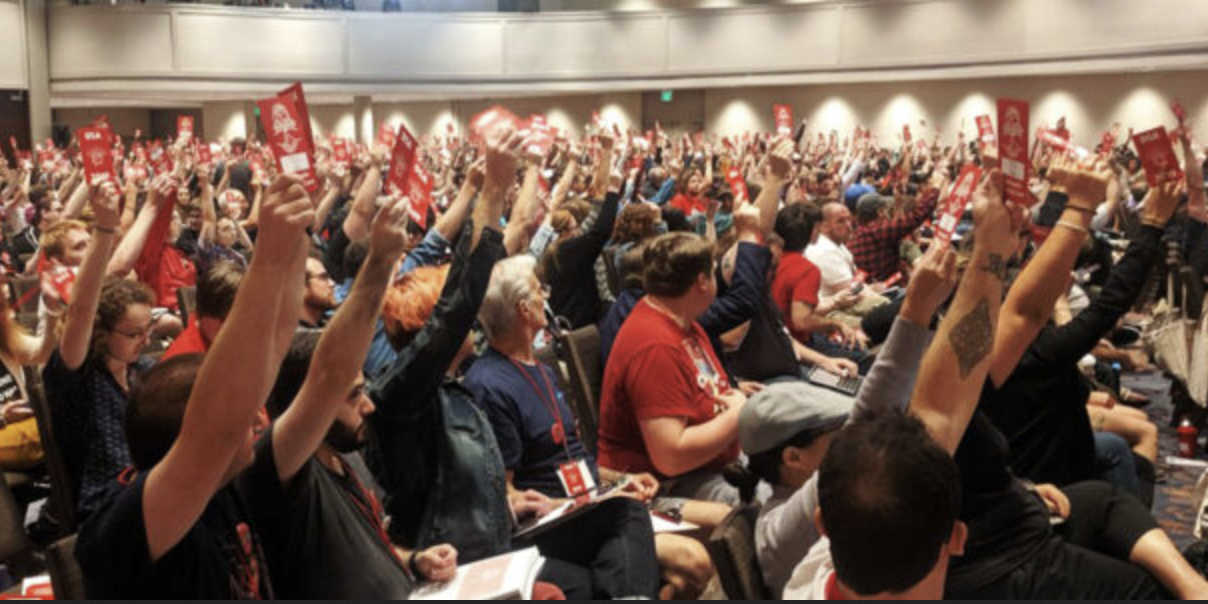
The backdrop for the last two DSA conventions was resistance to Donald Trump and the anticipation of a second Sanders campaign. In 2021, that is gone: Trump is no longer president. Sanders lost. In the Biden era, what is DSA?

It should be a major red flag that the number of proposals has sunk compared to previous years, especially when we weight them by the size of the organization. A small minority of proposals are coming from rank-and-file members.
The DSA National Political Committee report posted on 5/4/20 showed an alarming question that had come to a vote: “Should DSA ask members in swing states to consider voting for Biden?”

The Democratic Party is a capitalist party, it cannot be reformed, and we do need a new party. But that understanding alone does not help us to navigate the troubled waters of politics in the United States.

In March of 2019, the Democratic Socialists of America (DSA) endorsed Bernie Sanders’ bid for President of the United States. DSA members voted on an advisory referendum that simply asked if the Democratic Socialists of America should endorse Bernie Sanders
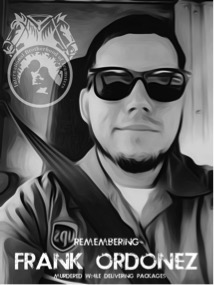
El jueves 5 de diciembre de 2019, Frank Ordoñez, de 27 años de edad, un chofer de UPS y padre de dos hijas, fue matado en un tiroteo entre la policía y dos sospechosos que huían de la escena de un robo.
On Thursday, December 5th 2019, Frank Ordoñez, 27, a UPS driver and father of two, was killed in a shootout between police and suspects fleeing the scene of a robbery.

Earlier this month, the Democratic Socialists of America (DSA) held its 2019 National Convention. I wrote a piece for Jacobin giving an overview of the major decisions that came out of the convention, but there’s a larger conversation to be
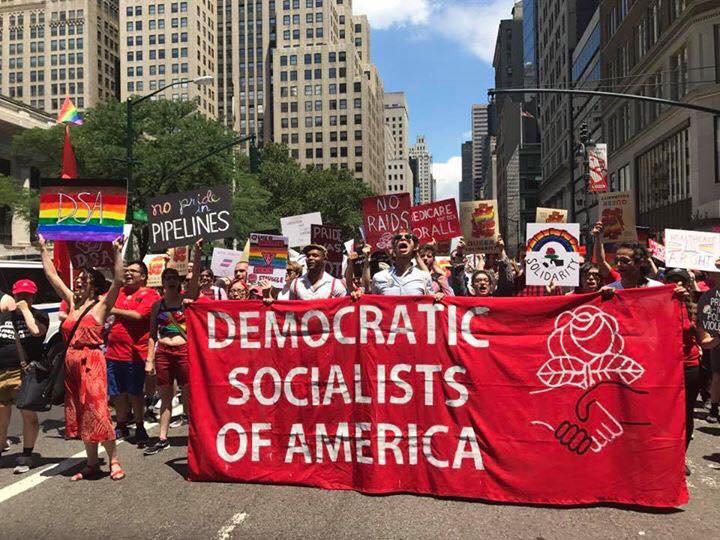
The 2019 Convention for Democratic Socialists of America (DSA) is fast approaching, and there is a lot to sort out. The Convention will debate and vote on the approved resolutions and constitution/bylaw changes and elect a new sixteen (16) person

Barely five years ago, if you asked someone where a new U.S. socialist movement might appear, I would wager that nearly no one would have said with the Democratic Socialists of America (DSA). Before 2016, DSA’s profile was
 [This is part two of an interview with scholar-activist David McNally on the current economic crisis. The first part focused on the crisis itself, its causes, the way in which working life has been reorganized, the perspective of ruling elites in managing the crisis and pursuing austerity policies, and how this should help inform our stance as movement activists.
 [It’s been nearly seven years since the onset of the global economic crisis that began in 2007. In order to get an understanding of the crisis—of its origins, depth, and trajectory, we spoke with David McNally, activist, political economist, and author of Global Slump: The Economics and Politics of Crisis and Resistance (2010) and more recently Monsters of the Market: Zombies, Vampires and Global Capitalism (2012). For readability’s sake, we have broken this interview into two parts. This first part focuses on the crisis itself, its causes, the way in which working life has been reorganized, the perspective of ruling elites in managing the crisis and pursuing austerity policies, and how this should help inform our stance as movement activists.
We’re at an interesting (and terrible) moment where we’re witnessing attacks on most every gain working people have made for at least the last half century. The curious exception to that has been the advance of marriage and civil rights for gay and lesbian couples in many U.S. states and core imperialist countries.
Andrew Sernatinger: I’m speaking today with Kshama Sawant, a socialist running for a seat in the Washington State House of Representatives against Democrat Frank Chopp, presently the House Speaker. Kshama is a lecturer in economics at Seattle University and Seattle Central Community College, and is a member of Socialist Alternative. Kshama, thanks for speaking with me today.
Kshama Sawant: Thank you for having me.