Category: Electoral Politics

The uprising and fighting in Syria have gone on for over five years and your platform doesn’t say a word about it. Delegates to this weekend’s convention, how about adding these five sentences?

As the U.S. election season proceeds, there is controversy, confusion, consternation, and sometimes recrimination. Below, in a question and answer format, we present our views on these matters, hoping to contribute to the discussion.
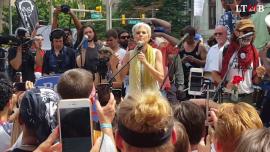 For three days the wounded and defeated soldiers of Bernie Sanders’ army, tired and disappointed but still idealistic and hopeful, marched and picketed around the convention center in Philadelphia, while inside many of Sanders’ delegates booed Hillary Clinton’s name every time it was mentioned.
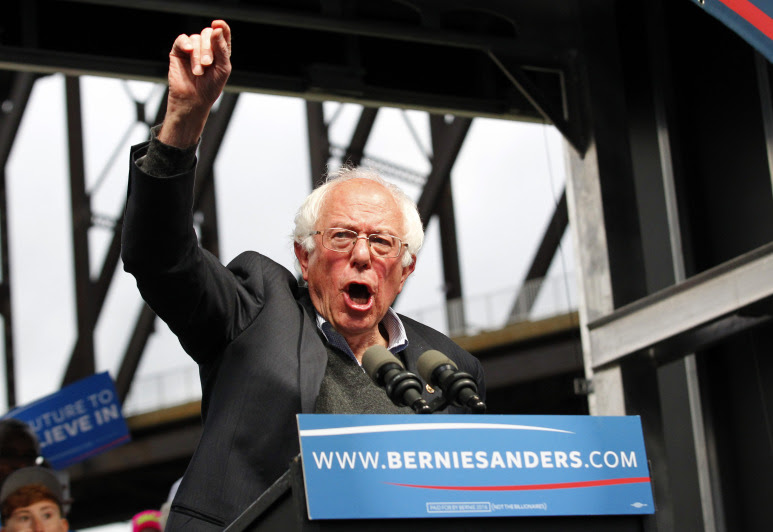
A serious and wide-ranging debate has been taking place among Sandernistas in the two weeks since Bernie endorsed Hillary. And now with the Democratic Convention underway, the unresolved questions become more pressing by the day.
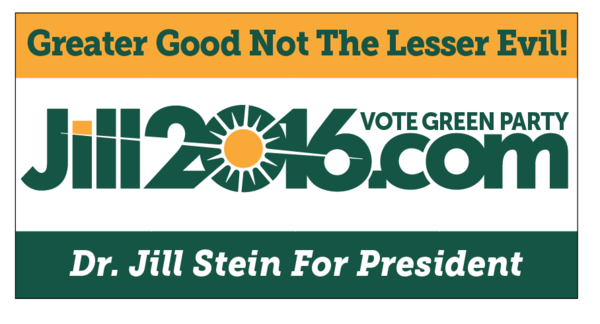
Bernie Sanders’ campaign for a “political revolution” lit up the 2016 primary election season like a meteor across the sky. Contrary to conventional wisdom that he’d peak and fade early, Sanders’ challenge to the Democratic party machine lasted throughout the primaries. Surpassing all expectations, he won 23 primary and caucus contests, raised an astonishing $222 million almost exclusively in small donations, and gathered over 1800 pledged delegates.

As the US primary season closes we are faced with a bitter choice between an uninspiring Democrat and a shockingly popular racist demagogue. As such, writers on the Left are bracing for the general election and lining up behind one of two supposed “strategies”: Fight the Right and Bernie or Bust.
 Temma Kaplan’s Democracy: A World History arrives at a timely moment. With presidential candidates and U.S. officials alike evoking the term “democracy” as a justification for political movements or a pretense for extraterritorial violence, Kaplan’s history of democracy offers a sorely needed study at an opportune time.
 Bernie Sanders’ presidential campaign has rocketed across the political landscape in this most abnormal of election seasons—an independent, self-defined democratic socialist running in the Democratic primary contest.
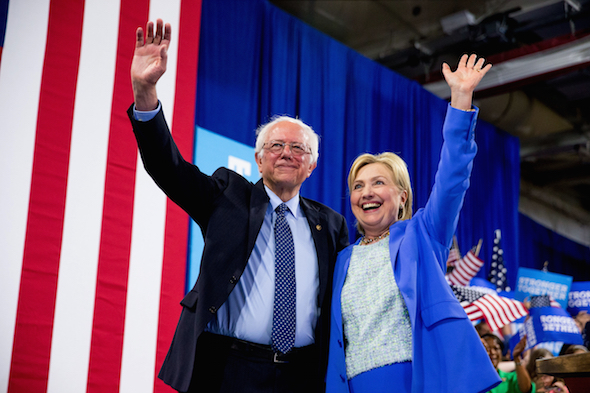
What an embarrassment for Bernie Sanders and those, myself included, who thought he would not descend so cravenly into the swamp of political sellout.

Doug Henwood, My Turn: Hillary Clinton Targets the Presidency. O/R Books, 2016. 200 pages. Paperback, $15.
In introducing his 1959 novel Naked Lunch, William S. Burroughs wrote that its title “means exactly what the words say: naked lunch, a frozen moment when everyone sees what is on the end of every fork.”

With abstention up by 4% from the last parliamentary elections in the Spanish state on December 20, 2016 (69.84% participation against 73.2%), the results of what we might call a “second round”, with the right wing Popular Party (PP) increasing its number of votes (600,000 extra votes and 33% of voters) and its number of seats to 137 (against 123 previously), and a Socialist Party (PSOE) which, despite losing 100,000 votes (22.7% of voters) and five seats, remains the second biggest political force in the country.
Since the June 7 California primary, the historic upheaval that coalesced around Bernie Sanders’ campaign has continued to defy the demands of the political establishment, but has also increasingly turned into a search for the way forward. After a powerful, yearlong mass campaign over the hostile terrain of a rigged primary, our political revolution is at a crossroads.

Three thousand Bernie Sanders supporters from all over the US gathered in Chicago to share ideas, hear about each other’s movements, learn about becoming “down-ballot” candidates, and collectively grieve. The Summit started by acknowledging that the Bernie Sanders for President movement suffered a loss: he will, very likely, not be running for President of the United States in 2016, either on the Democratic Party ticket or any other. While the Summit celebrated the joy of the movement, having a candidate to actually believe in, the shared energy of working so hard on concrete tasks like phone banking and door-to-door canvassing, meeting new friends and building new alliances, the big question hanging over the crowd was “Where do we go from here?”

The mood among the 3,000 Bernie Sanders supporters meeting in Chicago McCormick Place was improbably optimistic this past weekend, with many of the speakers proclaiming to cheering crowds that the movement has been victorious—even though Hillary Clinton, the presumptive nominee of the Democratic Party has received a majority of the popular votes and a majority of elected delegates and super-delegates, as well as the endorsements of President Barack Obama, Vice-President Joe Biden, and Senator Elizabeth Warren.
That disjuncture—between the Sanders’ movement’s belief that we have achieved something quite important and Clinton’s clear victory in the primary—provides the contradictory context for this conference of progressives, radicals, and socialists searching for the way to the future, I among them.

Preamble: Among the elements of the weak form of democracy enshrined in the constitution, presidential elections continue to pose a dilemma for the left in that any form of participation or non participation appears to impose a significant cost on our capacity to develop a serious opposition to the corporate agenda served by establishment politicians. The position outlined below is that which many regard as the most effective response to this quadrennial Hobson’s choice, namely the so-called “lesser evil” voting strategy or LEV. Simply put, LEV involves, where you can, i.e. in safe states, voting for the losing third party candidate you prefer, or not voting at all. in competitive “swing” states, where you must, one votes for the “lesser evil” Democrat.

For a year now presidential candidate Bernie Sanders has been the hope of millions in the United States, people who were disgusted with the role of the banks and corporations in politics, angered by the increasing inequality in society, appalled by our country’s racial injustice, and opposed to a foreign policy based on military intervention. Throughout the nation millions rallied to Sanders’ slogans calling or a fight against the “billionaire class” and for a political revolution. Taking up the demands and embracing the spirit of Occupy Wall Street first and then of Black Lives Matter, the Sanders campaign has been an unprecedented radical, populist movement, rejecting Wall Street and Washington and suggesting a more democratic, egalitarian, and peaceful future.
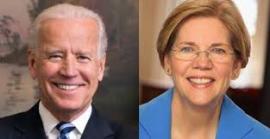
Douglas Schoen, a former advistor to Bill Clinton, predicts in a column in the Wall Street Journal that Hillary Clinton may not be her party’s nominee. He suggests that if Sanders wins California, which he may well do, Clinton, with her legal problems and negative ratings in the polls, may be dumped and the convention could choose Vice-President Joe Biden and Senator Elizabeth Warren. Schoen says in a Fox News interview that Biden is “chomping at the bit.”
This scenario may be unikely, in a year when politics has brought us many unlikely developents, but it's worth thinking through. Certainly Sanders' supporters should think about how they would react to such a development.
.jpg)
Let’s call a spade a spade. What has just happened in Brazil, with the dismissal of the elected president, Dilma Rousseff, is a coup. A coup which is pseudo-legal, “constitutional”, “institutional”, parliamentary, anything you want, but a coup all the same.

On May 9, 2016, the New Jersey State Senate approved by a vote of 39-0 S1923, a bill prohibiting the investment of state pension and annuity funds in companies that boycott Israel or Israeli businesses. One of the bill's sponsors was liberal stalwart and Democratic Majority Leader Loretta Weinberg. Among the co-sponsors were Democratic Senate President Stephen Sweeney and Republican Minority Leader Tom Kean Jr. There is a similar bill in the Assembly, A925, still in committee. [Update: The bill was released by the Assembly committee on May 19, 2016.] Both bills are an affront to basic principles of human rights that many NJ liberals seem to support everywhere else in the world except when it comes to Israel-Palestine. And both bills are an affront as well to the First Amendment.
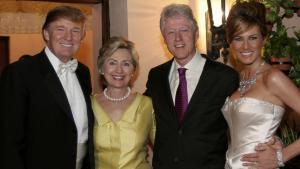
The Question of the Lesser Evil
In a recent article for Counterpunch, Gary Leupp details the long history of Hillary Clinton’s foreign policy record and concludes with the question: is the possibility of her winning the general election in November 2016 really that much less frightening than the possibility that Donald Trump does? Here, we want to explore a potential answer to that question.

[This article will appear in the Summer 2016 issue of New Politics. Corrections since it was initially posted have been included.]
The world today is faced with crises on virtually every front, and any assessment of the foreign policy positions of the two major parties’ 2016 presidential candidates must be measured against how well they respond to these crises.
- « Newer Posts
- 1
- …
- 14
- 15
- 16
- 17
- 18
- 19
- 20
- …
- 28
- Older Posts »