Category: Electoral Politics
 Some New Politics readers will recognize the title of this article as a paraphrase of Hal Draper’s “Two Souls of Socialism,” which appeared in New Politics in 1966. The first version, however, appeared in the socialist student magazine Anvil in 1960, just as a new generation of youthful activists was emerging, inspired to a large extent by the civil rights movement.
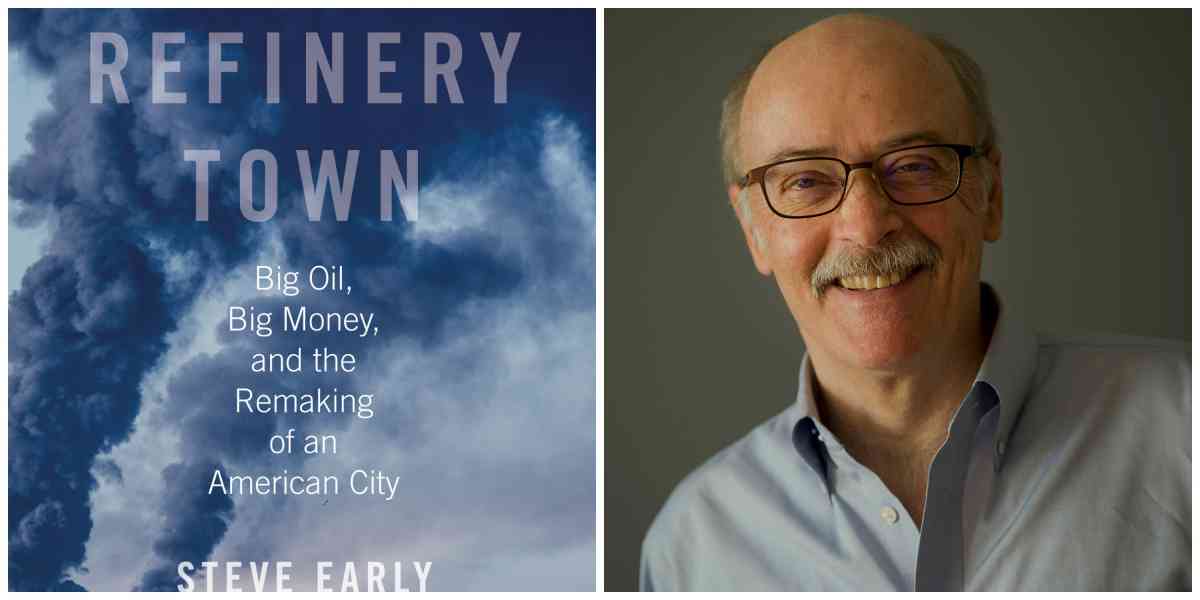
Mohsen Abdelmoumen: You have written a book about the city of Richmond, California, where you live, prefaced by Senator Bernie Sanders: Refinery Town: Big Oil, Big Money, and the Remaking of an American City. This book shows us the experience of this city that has won struggles such as raise the local minimum wage, defeat a casino development project, challenge home foreclosures and evictions, and seek fair taxation of Big Oil and Big Soda. Can we say that the Richmond experience should inspire progressive activists in other cities around the world?

In the early hours of November 27th, employees at the Consumer Financial Protection Bureau (CFPB) woke up to a world of contested allegiances. Advocated by Senator Elizabeth Warren and set up by the Dodd-Frank Wall Street Reform and Consumer Protection Act, CFPB was created in 2011 as an independent Federal agency tasked with protecting consumers in the financial sector. Since it was this sector’s predatory exploitation of low-income racialized communities that triggered the subprime mortgage crisis, this agency was intended to regulate finance across consumer services like mortgages, student loans, and credit cards. As such, the founding of the agency received large support from consumer groups and their Democratic allies in the Federal administration. Republicans, for their part, dutifully (and unsurprisingly) rendered the agency as another burden on the “free” market.[i] Such conflicts are hardly news and government employees are in this sense always in the precarious position that their jobs might be discarded with every new administration. Rarely, however, do these conflicts take the absurd character we could witness the following few days.
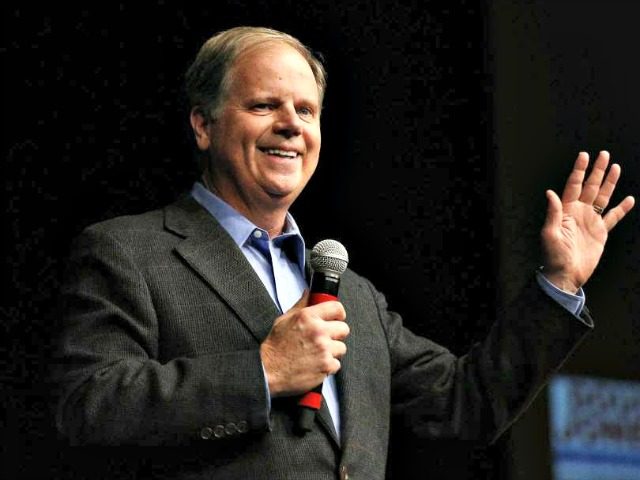
Though we wouldn’t know it from mainstream media coverage, the sigh of relief many progressives will breathe at Moore’s defeat should be tempered with the knowledge that Jones will likely not be a reliable ally on issues on which the Democrats should all be expected to fight the GOP and Trump. An exit poll of voter opinions showed over 40% of Alabama voters, Democrats and Republicans alike, gave an unfavorable rating to both parties.

Mexicans, worse off than at any time in the last 100 years, are asking themselves as the July 2018 elections approach: Can Mexico change? Can an election change Mexico?
Mexico is a disaster. It has become increasingly violent, the economy grows too slowly to absorb the ever-expanding workforce, and wages are below those of China, though costs are more like those in the United States.
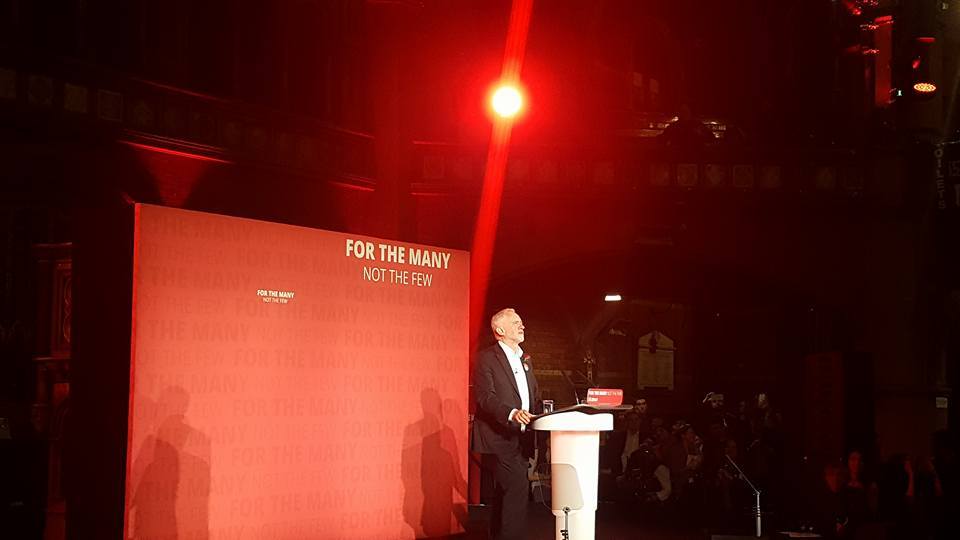
It is now seven months since Theresa May called a general election with the aim of increasing her majority and the Daily Mail published a front page headlined “Crush the Saboteurs”. The spring of this year, as regards parliamentary politics, seems like another world.

Congress was given a chance to stand up for basic humanity and the Constitution, but instead chose to lay an egg, a rotten one at that. It rejected a chance to use the War Powers Act to halt U.S. collaboration with Saudi Arabia’s ruthless war and siege tactics in Yemen. Instead it passed a resolution that could have been written by the Saudi kingdom’s lawyers and publicists.
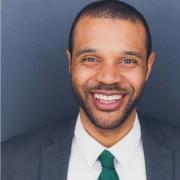
Jabari Brisport, a member of the Democratic Socialists of America (DSA), made an extraordinarily strong showing in his first bid for the New York City Council. Running on both the Green Party and Socialist lines in Crown Heights, District 35 of Brooklyn where he grew up, Jabari won almost 30 percent of the vote, receiving 8,619 votes. He was defeated by Democrat Laurie Cumbo, who took 68 percent of the vote while the Republican Christine Parker got just 4 percent.
Jabari ran as a socialist in a diverse district with a mixed population of African Americans, Afro-Caribbeans, orthodox and Hassidic Jews, upper middle class white newcomers, and young hipsters. The district has a population of 124,170, larger than many cities. The 2017 election saw one of the lowest turnouts in years. Only about 22 percent of the 5,053,842 registered voters in New York City as a whole cast ballots in the election.
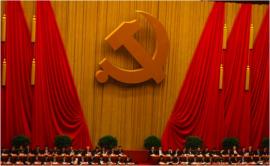
This article was received before the official announcement of the new leadership. – DL
In a highly choreographed ritual, seven suited men will this Wednesday stride onto a stage in Beijing, hair dyed jet black, led, naturally, by Chinese President Xi Jinping. What to the casual observer appears to be a rigid, inconsequential ceremony is in fact the unveiling of the most powerful political body on earth.
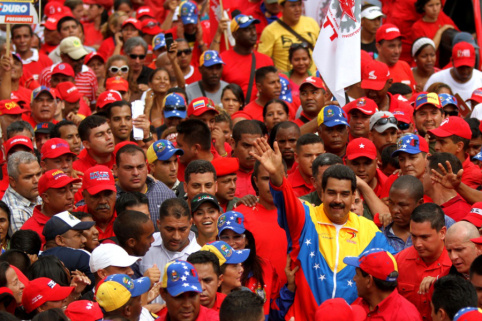
The political crisis that has been shaking Venezuela for months is at the heart of a war of information and propaganda, which is even inviting itself, albeit for other purposes, into the French political debate. Beyond binary discourses, we wanted to take the risk of complexity with Fabrice Andreani, doctoral student in Lyon-II University, who is working on the Bolivarian revolution. [CQFD]
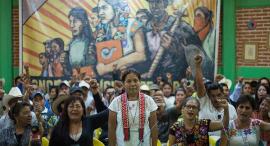 The Zapatista Army of National Liberation (EZLN), which led an armed uprising in Mexico’s southern-most state of Chiapas in 1994, and which has since then spent its time organizing autonomous communities in that state, is now putting forward an indigenous woman candidate for president in the 2018 elections. The Zapatistas hold the Mexican government and the country’s political parties in utter disdain, both for their corruption and for their disregard for the people they supposedly represent. The Zapatistas also reject elections and voting on principle. So, while they are putting forward health worker María de Jesús Partricio for president, they are not actually trying to elect her.
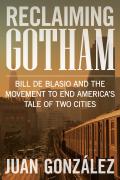
Juan Gonzalez. Reclaiming Gotham: Bill de Blasio and The Movement to End America’s Tale of Two Cities. New York: New Press, 2017.
There is no better role model for aspiring radical scribes than Juan Gonzalez. The country’s leading Latino journalist is cohost of Democracy Now!, a former columnist for the New York Daily News, and twice winner of the Polk Award for his investigative reporting. Not many veterans of campus and community struggles in the Sixties and workplace organizing in the 1970s later moved into mainstream journalism with such distinction, Gonzalez has managed to combine daily newspapering with continued dedication to the cause of labor and minority communities.
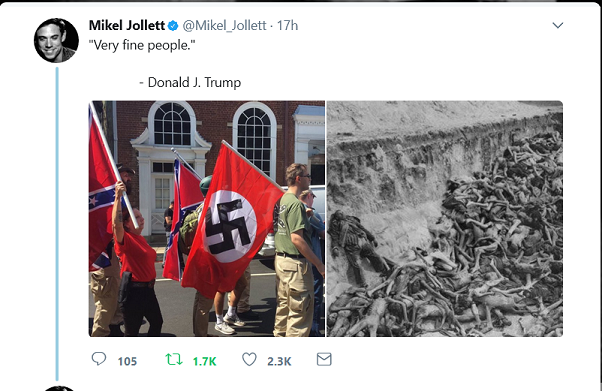 Amidst so much to read and digest about events in Charlottesville and Trump’s response to them, and what seems (but is not) a new, highly violent emergence of neo-Nazis, the KKK, and white supremacist organizations, this blog by Adam Shatz on the website of the London Review of Books seems to me one of the more eloquent, insightful analyses.

President Donald Trump’s failure for two days to condemn the violent Ku Klux Klan, neo-Nazis, and "alt-right" white supremacists, one of whom murdered a woman in Charlottesville, has led to a major development as sections of the capitalist class have begun to abandon him. While some top Republican leaders have taken a stronger stand against Trump in recent days, several major corporate leaders have deserted him. They have done in part because of his flirtation with fascism, but also because Trump and his administration—his embarrassing tweets, the constant circus, the Korea war scare, the Russian imbroglio—makes it impossible for the Republicans to advance their pro-business agenda. If the relationship between Trump and corporate leaders continues to unravel, this could lead to a more rapid collapse of the Trump presidency than had previously seemed possible.
On Sunday 30 July, so-called elections took place to a so-called Constituent Assembly in Venezuela. It is important, for the future, the revolution, and democracy, not to fool ourselves about the meanings of the words being used here.
For all Venezuelans, there can be no doubt: what was elected today has nothing in common with a sovereign constituent assembly. By “a sovereign constituent assembly.” we mean one which exercises power.
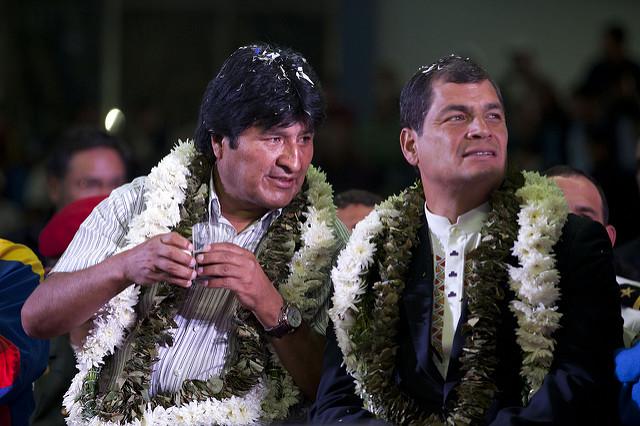
As rightwing governments take power in Argentina, Brazil, and elsewhere across the region, Ecuador’s leftwing Alianza País (Country Alliance, AP) and Bolivia’s Movimiento al Socialismo (Movement Towards Socialism, MAS) and Bolivia have managed to hold onto power.
Jeffery R. Webber. The Last Day of Oppression, and the First Day of the Same: The Politics and Economics of the New Latin American Left. Chicago: Haymarket, 2017. 327 pages. Index. Tables.
Beginning in the late 1990s the Pink Tide began to roll in across much of South America, bringing to power elected leftist governments in Argentina, Bolivia, Brazil, Chile, Ecuador, Uruguay and Venezuela. While these administrations were not all the same—Argentina and Brazil appeared to be more social democratic and Bolivia and Venezuela more radical—they represented a new moment in the history of the Latin American Left.
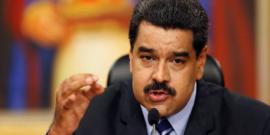 In recent weeks, a number of Venezuelan specialists on the left side of the political spectrum have published and posted pieces that place them in an anti-Chavista, “ni-ni” position that consists of “a plague on both your houses” with regard to Maduro and the Venezuelan opposition. Certainly, at this moment the Chavistas are playing hard ball; the options available to them are limited.

At one level, France’s 2017 elections were a huge triumph for global capital. A young and very modern neoliberal candidate, Emmanuel Macron, won huge majorities for his new political party, On the Move (En Marche), in both the presidential and the legislative elections. At another level, however, Macron’s pathway forward is fraught with challenges, both from a long stagnant economic and a restive French public, many of whom stayed away from the final round of voting.
 The following is an excerpt from a book about Trump, The Establishment, and the Resistance, that will be published in French by Syllepse early next year. – Dan La Botz
The Fourth of July celebrates the launching of the American Revolution and the founding of the nation. Americans have long prided themselves on having the most democratic country on earth, a model for the world. Yet, while American politicians and the media today frequently praise the “founding fathers” of the United States for establishing the country’s democratic institutions, the truth is that nothing could have been further from their minds.
Democratic Socialists of America (DSA) is singular on the left as being both a broad radical socialist organization, encompassing left social democrats, Marxists and even a smattering of anarcho-syndicalists, combined with a strong face toward electoral politics. But an electoral orientation per se is not and cannot be the common denominator of our work. It is true that without an electoral face, any political organization is hamstrung and those on the left who argue that support for any Democrat anywhere is treasonous paint themselves into a corner. Electoral politics on the level it can be rationally conducted is worth doing. That, for me, is not in dispute. Its place in our work is what is problematic. Thinking in terms of power is about more than electioneering.
- « Newer Posts
- 1
- …
- 11
- 12
- 13
- 14
- 15
- 16
- 17
- …
- 28
- Older Posts »