Category: Electoral Politics
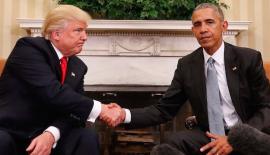
Happy Thanksgiving! As we celebrate the America’s founding myth of the Pilgrim Fathers welcomed by the Indians, the National Guard, militarized local police and (unlicensed) security guards continue to brutalize unarmed Standing Rock Sioux Indians (and members of dozens of other tribes) protesting the construction of the unapproved Dakota Access Pipeline on their sacred lands and water sources.[1]

Post-election left analyses have accurately identified many of the immediate causes for our current debacle. Voter suppression, the Electoral College, the Democratic Party, the Clinton campaign, Hillary Clinton, labor leaders, hacked emails, FBI chief James Comey, Democratic primary voters who voted for Clinton, minority voters who didn’t turn out in sufficient numbers — the list goes on. And all of these deserve blame. But I’ve seen very little self-reflection from the left. There have been some vigorous defenses of left actions, but little self-criticism and little to suggest that the same mistakes won't be repeated again.
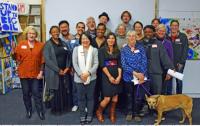
As Kermit the Frog, America’s most famous Muppet, says: “it’s not easy being green.”
Preliminary results of the Green Party’s latest national campaign confirm the reality of his observation. The Party’s much-touted goal was getting 5% of the vote on Nov. 8, so it could qualify for $10 million in federal funds for 2020 campaigning and maintain broad nationwide ballot access.
How Trump Won: Seizing the Anti-Establishment Ground through Racial and Economic Nationalism
On November 8, voters in the United States narrowly elected an openly racist, misogynist and nativist candidate for president. Donald Trump succeeded in defining himself as an anti-establishment candidate who will end dynastic rule in Washington, D.C., by elites who care little for “forgotten Americans.”
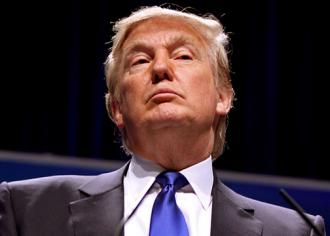
1. The election of Donald Trump as president of the United States is a shocking and dangerous turn of events–not only for the U.S., but for the entire world. It is a decisive shift, representing the latest failure of center-right and center-left parties in the advanced capitalist countries in the wake of the Great Recession, opening the way for the triumph of a candidate who used right-wing populism to stoke racism, xenophobia and reaction.
Like millions of people here and around the world, we woke up this morning dismayed and frightened that Donald Trump has been elected President. Whatever we each thought of the Democratic Party and of Hillary Clinton, none of us wanted to believe that a plurality of voters could bring themselves to vote for Trump. His victory is part of a global pattern of an ascendant, populist right, following in the wake of the similarly unexpected vote in favor of Brexit in the UK, and, like Brexit, it is being celebrated by right wing nationalist leaders in Europe like Marine Le Pen.
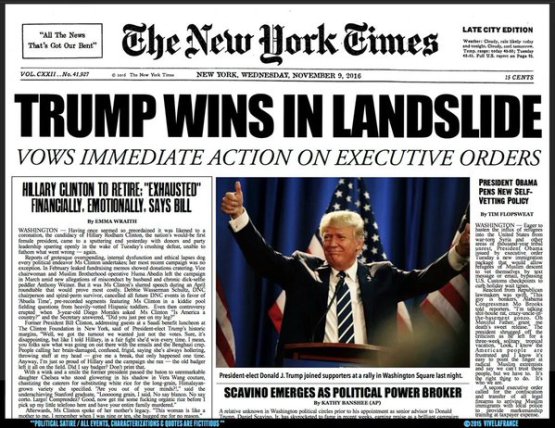
Dear Friends and Comrades,
Today is a terrible one for America and the world.
I joined the Peace and Freedom Party under the guidance of leaders of the International Socialists (IS), including Mike Parker and Jack Weinberg, in 1967-68. This was my only real involvement in a third party. It was not only long ago, it was a different context: there was a large, lively left movement, which at the time appeared to be still growing (we hoped).
Thus the P & F was conceived of—and briefly was—a movement party. That’s why it may be worth a look back.
To get the party on the ballot in California, we had to get people to change their party registration, via a registrar, often from Democratic, to P & F. Some 107,000 did so in California, which was remarkable. The same year George Wallace used the same procedure to get an almost exact number of registrants for his party.
I recall an IS member, J.B., said to me “I just wish we had his demographics!” So true.
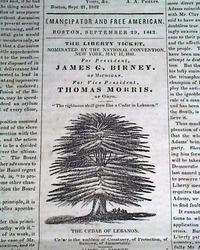
Imagine that it is 1840 and someone approaches you on the street and hands you a flyer for James G. Birney, the presidential candidate of the new Liberty Party. The flyer says that the Liberty Party opposes slavery. It is the only party that does.
The Democrats and the Whigs–the two parties of the two-party system of that time–supported slavery, not to the same degree perhaps, but neither party opposed slavery. The Liberty Party is new and small, tiny. It’s candidate Birney has absolutely no chance to win the election. But he stands opposed to slavery. Who will you vote for on voting day in 1840?
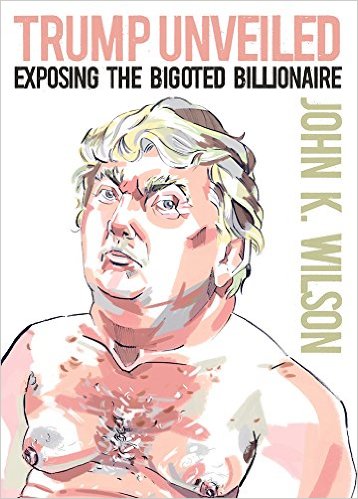
John K. Wilson. Trump Unveiled: Exposing the Bigoted Billionaire. New York: OR Books, 2016. 256 pp.
November 8 is show time. What will the time tell? The egregious Hillary Rodham Clinton will likely be elected president over the menacing tin pot Donald Trump. Clinton may be the shoddy Brand X, but corporate capital will sleep soundly in its bed with a Clinton presidency and even a Democratic Senate. Working families will be screwed again, but with more finesse than under a solipsistic Trump diktat. Sure, Hillary’s evasions and saccharine pronouncements pale in comparison to Trump’s Orwellianisms, his fabrications and the unsubtle subtext of his real stance, to “Make America White again.” No wonder Hillary will win. And by default.
Isn’t political life at the top grand?
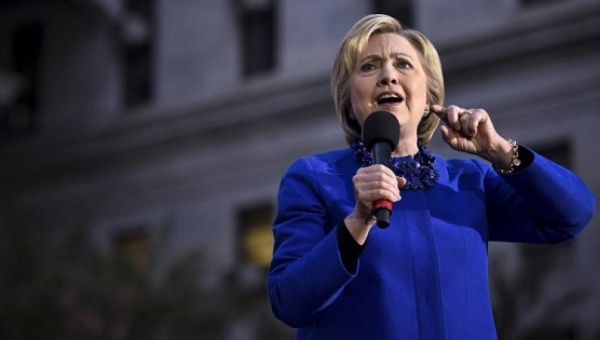 On October 6, 2008, an executive with Citigroup sent John Podesta, then co-chair of Barack Obama’s transition team, a list of possible cabinet appointments. There were still 29 days left in the hard-fought campaign. But the list, according to the New Republic, was almost entirely on the money; for who went on to fill senior posts in the Obama Administration, including Rahm Emanuel as chief of staff, Eric Holder as attorney general, Susan Rice as U.N. ambassador, and Janet Napolitano to lead Homeland Security.
 The night of the penultimate presidential debate I was at a screening of the Brazilian film Aquarius, which tells the story of a woman fighting a corrupt development company to remain in her apartment building. During the Q&A session with the director and force-of-nature actress Sonia Braga, a handful of demonstrators stood up, silently, holding “Fora Temer” signs to protest the government that has illegally installed itself in Brazil. Within sixty seconds Lincoln Center had the NYPD to escort them out, against Braga’s objections, and the Q&A continued with police watching from the edges of aisles.
In general, analyses of Brazil’s current political and economic crisis emphasize the economic policy “errors” of the government, inherited by President Dilma Rousseff of the Workers’ Party (PT) from her predecessor, Luíz Inácio Lula da Silva. While it is true that certain federal policy decisions have interfered with the dynamics of the Brazilian distributive conflict, this focus on political regulation is far too narrow to illuminate the complexity of the current crisis. These explanations tend to obscure the changes in class structure that took place during the Lula era (2002-2010), and to overlook the impact of the international economic crisis. Indeed, such analyses fail to explain how the relationship between political regulation and economic accumulation not only failed to pacify class conflict but radicalized it.
Several left arguments on the U.S. election frankly leave me baffled.
 In presidential election years, by Labor Day most US labor unions have long halted organizing, shifting most of their human and financial resources to elect a Democrat to the White House. Members are told having a Democratic president will give us — that is, union officials — access to politicians with whom they can negotiate over labor’s concerns.
In his useful and perceptive review of Empowering Progressive Third Parties in the United States, David Finkel claims that I endorse the "ultra-left conclusion of historian Eric Chester’s True Mission that the concept of a national labor party has always been a ploy to keep labor ensnared and subordinate to the Democrats."
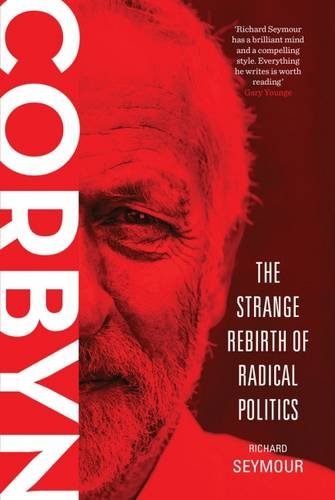
Richard Seymour, Corbyn: The Strange Rebirth of Radical Politics. New York: Verso, $19.95. 256pp.
This time last year I believed Jeremy Corbyn was wrong to stand for the Labour leadership; he would, I thought, get a derisory vote and merely reinforce right-wing hegemony and the marginalisation of the Labour left. Since then the unexpected has happened, and perhaps we should all be a bit cautious in pronouncing on what is and is not possible.
According to a recent GenForward survey by political scientist Cathy Cohen’s Black Youth Project, based at the University of Chicago, young people across the board, dissatisfied with both the Democrats and the Republicans, are eager for a fundamental political change. That is the good news.
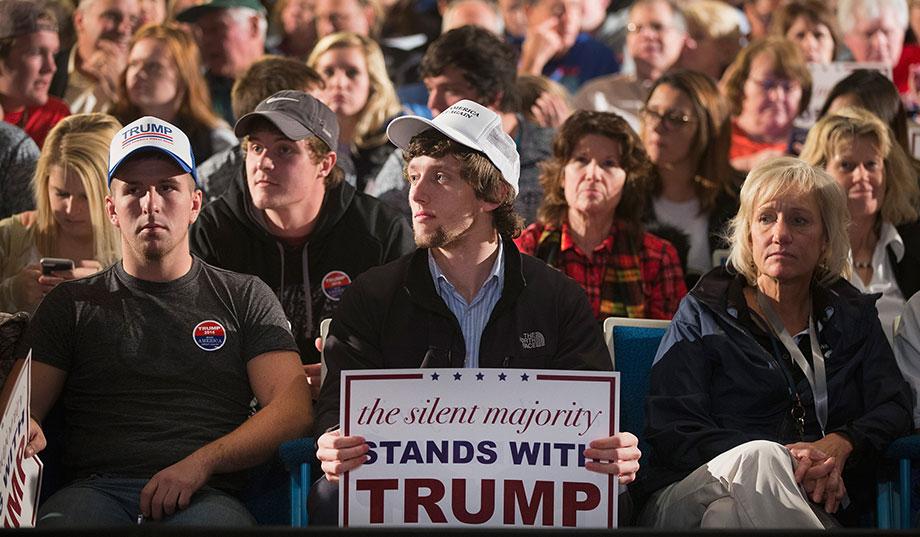
Before embarking on my current career, I worked as a labor organizer, mostly in West Virginia and Ohio. In the course of doing that work, I probably did two thousand “housevisits” with people I was attempting to organize. The purpose of these meetings was to understand people’s motivations and interests in order to assess how they would vote in a union recognition election (as the union president once said to the organizers: “I don’t care if you lose, I care if you can’t count”) and assess their leadership potential for either the union’s organizing committee or for management’s anti-union efforts.
On July 26, concurrent to the Democratic National Convention’s star-studded attempt to make everybody forget everything that transpired during the primary, New York Mag published a great piece on the Florida senatorial race. What they call “the second-strangest campaign of the season” is worth reading about for a few reasons; because the general election might be able to defeat Marco Rubio’s mercurial reentry into national politics and hand a rare Florida win to the Democrats; because Alan Grayson — the $16-million-tax-haven owner, who, policywise, lands on the left wing of the Democratic Party — is great entertainment; and because Grayson’s primary rival, Patrick Murphy, is a quiet, but powerful, signal of where the Dems are headed.
The enduring cliche of the 2016 election is a comment by Trump that provokes outrage, rebukes, and the declaration: “He’s gone too far.”
- « Newer Posts
- 1
- …
- 13
- 14
- 15
- 16
- 17
- 18
- 19
- …
- 28
- Older Posts »