Category: Electoral Politics
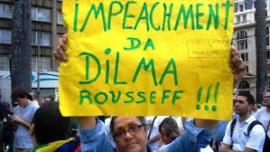 Brazil’s president, Dilma Rousseff of the Workers Party (PT) will very likely be impeached today, leading to her immediate, temporary removal from office and to a trial that could remove her permanently. Waldir Maranhao, the acting speaker of the lower house, had annulled the impeachment process just a couple of days ago, but then Renan Calheiros, the head of the Senate, said that he would proceed with the impeachment anyway, and it is going forward. This impeachment, which the left calls a kind of golpe de estado or coup d’état could be the end of Dilma’s presidency and the beginning of a new rightwing government that will impose greater austerity and do so by repressing the social movements.
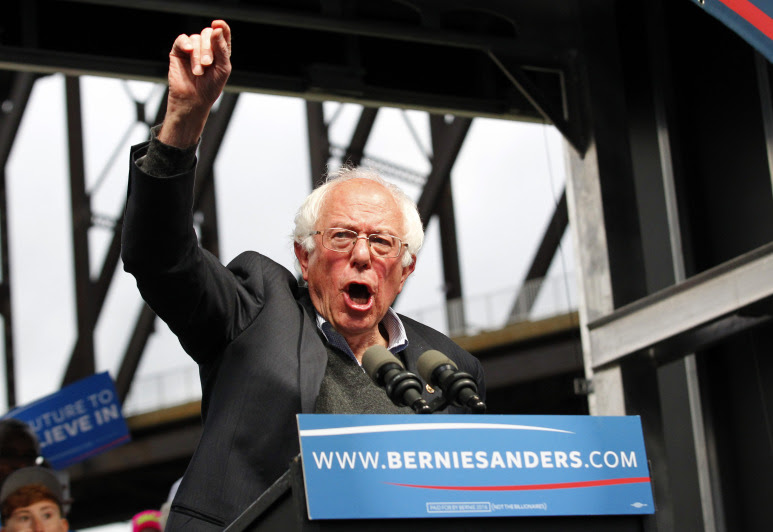
I’m not feeling the Bern anymore. The Bern has gone away. The Bern has turned to heartburn, if not yet reflux.
 I was invited to speak here in Rio de Janeiro by the Socialism and Freedom Party (Partido Socialismo e Liberdade, PSOL) and spoke last night to an enthusiastic and very well informed crowd of about 200 students at the university (UFRJ). I also sat down to talk with PSOL leaders and activists here about the local political situation and the social movements. So here are my impression, though they are just impressions of the political situation, of the teachers' strike, and of the school occupations.
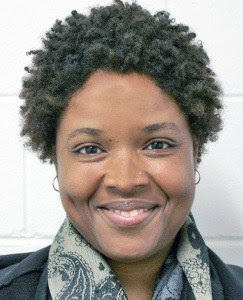
TNS: First question, why were you chosen to be Mimi Soltysik’s running mate?
Mimi reached out to me about the campaign following my run for County Sheriff in Milwaukee. He said that he’d followed my campaign and really liked the fact that we took a very grassroots, people-centered approach. He felt that I would make a good running mate based on work I was involved in in Milwaukee, and the fact that I ran for sheriff unapologetically as a socialist.
“We’re going all the way to the convention,” said Larry Cohen, former President of the Communications Workers of America and Senior Advisor to the Sanders campaign. “We’re working to see that Sanders wins the Democratic Party nomination, but that’s not all we’re doing. We’re going beyond to build a democracy movement in this country.”
Cohen was speaking, just before the opening of the Labor Notes Conference, to some 125 union activists and local leaders who gathered for four hours at the Hilton Hotel in Chicago on Friday, April 1 at the Labor for Bernie and Beyond meeting. They met to discuss the next stages and of the Sanders campaign as well as the future prospects for the movement of union activists who support him. The meeting was convened by Cohen and 23 other national or local union offices.
Interview by Jim Brash of North Star Editorial Board, February 26, 2016
Questions posed to Rachel Jackson, State Facilitator, Green Party Oklahoma Cooperative Council about their endorsement of Bernie Sanders
1. Is the endorsement of Bernie a tactical move?
Our endorsement of Bernie Sanders in the Oklahoma Democratic Primary accomplishes two goals: 1.) to find a way to participate electorally given our state’s repressive ballot access laws, and 2.) to build a base to strengthen our efforts to reform those ballot access laws.
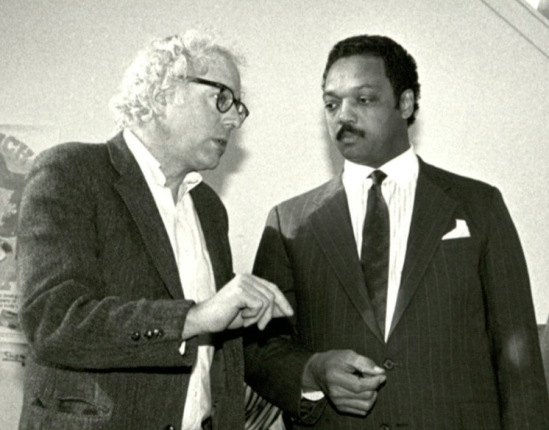
I must admit that I’m somewhat reluctant to write a response to my friend Barry Finger’s response to my article in the Winter 2016 issue of New Politics on Bernie Sanders while the Democratic presidential candidate race between Hillary Clinton and Sanders is still going on. Nevertheless, I will do so.
First, it should now be clear, in the wake of Sanders’ victories in yesterday’s Democratic caucuses, that Barry’s assertion that “the Sanders challenge within the Democratic Party has come to its natural conclusion” is not justified. Let’s not make grand pronouncements of this sort until we’re far closer to the Democratic National Convention.
Part 9 of A New Politics in America. This concludes the series. All nine parts can be fond on the New Politics website, newpol.org
So what does this era of a new politics in America mean? How significant are new right and new left in America today? Where do we go from here? What are we in the left to do? Should we be building progressive Democratic Party campaigns? Should we just go back to building the movements? Or is there another option? To figure this out, we have to understand that though we are in a new political era, many of the old problems still remain.
This is part 8 of A New Politics in America. Find previous parts on newpol.org.
Hillary—Establishment and Dynasty
The tremendous success of the Bernie Sanders campaign—in turning out tens of thousands to his rallies, getting millions to contribute to his campaign, and winning an impressive number of states and delegates—is primarily due to his clear message: his call for a progressive economic program to provide jobs, universal health care, and free higher education, as well as an end to the role of money in politics, and an insistence on an end to structural racism, in particular racist police violence. Yet there is also no doubt that many have turned to Sanders because they do not want the Democrats’ presidential candidate to be Hillary Clinton, whom they see as embodying all that they despise about the American political system.
There is much to admire and learn from in Jason Schulman’s article “Bernie Sanders and the Dilemma of the Democratic ‘Party.’,” not least of which is Jason’s implicit insistence that the base of any future American left is composed of people who are currently in the liberal wing of the Democratic Party, and in its best elements represented by the Sanders’ insurgency. Obvious as this might be to readers of New Politics, this is still a disputed opinion on the radical left in America. We – Jason and I – both look forward to that movement developing a breakaway consciousness as it confronts an implacable Democratic establishment proudly wedded to the status quo.
This is party 7 of A New Politics in America. Part 6 and links to earlier parts can be found here.
Progressive Politics
Occupy, though it had eschewed politics, had important political ramifications. A few liberal Democrats soon appeared to give expression to the new movements within their rightward moving party.
This is Part 6 of A New Politics in America. Part 5 and links to early parts can be found here.
The Tea Party
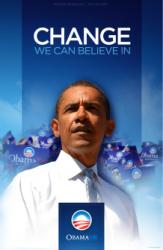
The Great Recession and the government’s response to it gave a new impetus to the right. President Barack Obama’s election in 2008 in the midst of the recession proved an ideal catalyst for the bringing together of a new far right movement.
This is Part 5 of A New Politics in America. Part 4 and links to earlier parts can be found here.
If American politics have changed in the 2010s, however, it is in large measure due to disappointment in the Obama presidency. Many Americans thought in 2008 that they had elected a progressive, but they soon found out that the new president was nothing of the kind.
_1968.png)
This is the fourth part of A New Politics in America. Earlier parts of the series can be found here.
The Republican Party responded to the white middle class and working class voters who had lost status, income, and pride in their country by working to turn their disappointment and depression into ressentiment and political power. Richard Nixon famously first saw how whites' resentment could be turned in the Republicans' direction during his 1968 presidential campaign, adopting the “southern strategy” of winning over the South’s racist white voters—the former Dixiecrats of the Democratic Party.
This is the third part of A New Politics in America. Part 1 looked at the Civil Rights movement and the White Backlash; Part 2 examined the impact of the economic crisis of the 1970s; Part 3 discusses the decline in American power, and then turns back to look at how all three elements contributed to the growth of a New Right from the 1960s to the 1980s.
The United States: A Declining World Power
While the United States remained a world power—and the greatest military power on earth after the fall of the Soviet Union in 1991—U.S. military might did not necessarily always lead to military victory and modern weapons could not always ensure its place as the leading world power.
This is the second part of an article about the new politics in America today. The first part can be found here.
Deindustrialization and Downsizing Gut the Labor Movement
The second development that led to a new far right was the economic crisis of the 1970s, or, to be specific, the two recessions of the 1974-75 and 1979-82. These two downturns caused employers to close steel mills, auto plants and other manufacturing plants throughout the Northeast and the Midwest with a devastating impact on the working class and on the labor movement.
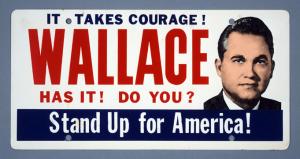
This is the first part of an article about the new politics in America today.
The presidential election campaign of 2016 represents a turning point in American politics, raising issues and political agendas that would have been unthinkable in the United States only a few years ago. The major media and the public debate whether or not Republican Donald Trump is a fascist, while at the same time there is a discussion about whether Democrat Bernie Sanders’ version of democratic socialism is the answer to the country’s problems. Trump’s political rallies have, at his instigation, become violent and he now threatens to send his followers to disrupt Sanders’ rallies.
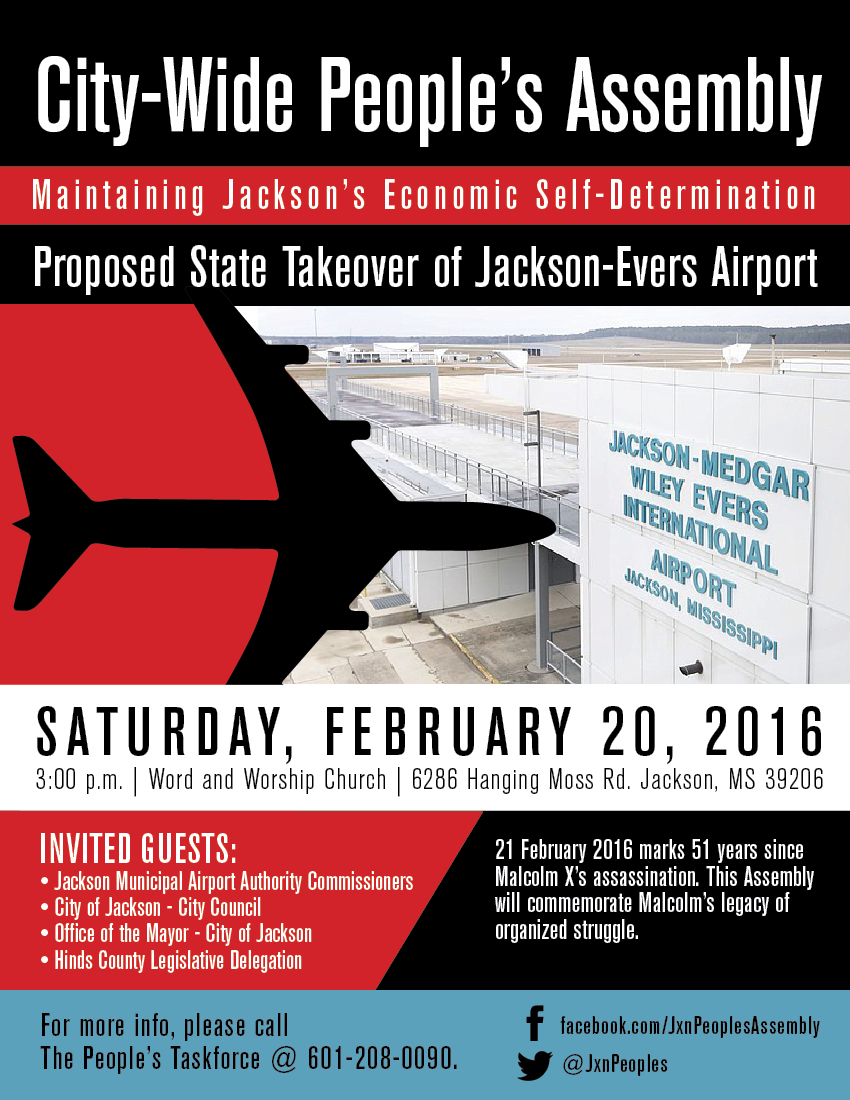 The racist and utterly reactionary Republican legislative majorities that dominate the South are on an aggressive march this legislative session. From Texas to Florida, Arkansas to Virginia, and all the states in-between, they are employing cut-throat strategies and tactics to pass a package of regressive, exploitative and outright anti-human legislation drawn up by the likes of ALEC (the American Legislative Exchange Council)[1] and other right-wing think tanks. They are attacking the right to vote, Black voting districts, the right to education, access to housing, workers rights to organize themselves, wage protections, alternative energy plans, marriage equality, and the list goes on.
The following piece was written for Kojkkino, the theoretical magazine of the Greek organization DEA. Though quite long, it does not claim to cover all sides of the question. Indeed, it’s the kind of article that is never really finished and that has to be constantly reworked and supplemented. Its main objective is to stimulate collective thinking about the lessons of the successes and failures of the NPA from its birth to the present day.
Radical Left organizations in Europe have tended to focus their attention on the major political and electoral experiences that have stood out in the recent period – beginning with Syriza in Greece, Podemos in the Spanish State and the Left Bloc in Portugal, and often also including Die Linke in Germany, Rifondazione Comunista in Italy, the Red-Green Alliance in Denmark (RGA) and others. This is entirely justified. Still, other attempts at “doing something new” merit analysis, even where their successes were fewer or shorter-lived. They provide food for thought about a broader range of national contexts.

A while ago, I wrote a piece here that, among other things, argued that if Bernie Sanders were to lose the Democratic primary he should not, as he has promised several times to do, support Hillary Clinton for President. Many people on the Left, most recently Chris Hedges in an article for Truthdig, have argued that this promise makes Sanders a wolf-in-sheep’s clothing for the Left, and that he will inevitably betray the movement supporting him and the ideals he has campaigned on. For Hedges and others, this promise (along with running as a Democrat) is precisely why the Left should not be supporting Sanders and his campaign at all. While I disagree with Hedges that we should not support Sanders because of this promise, we should absolutely be wary of the likely possibility that he will keep this terrible promise; Sanders if anything has a tendency to keep his word. This is what he is known for, after all—being the rare honest politician.
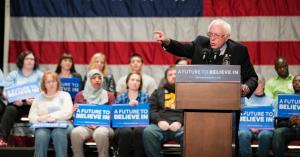
The Sanders campaign has certainly sharpened the contradictions, hasn’t it? It’s been very clarifying to see Hillary Clinton and her surrogates running against single-payer and free college, with intellectual cover coming from Paul Krugman and Vox. Expectations, having been systematically beaten down for 35 years, must be beaten down further, whether it’s Hillary saying that to go to college one needs some “skin in the game,” or Rep. John Lewis reminding us that nothing is free in America. A challenge from the left has forced centrist Democrats to reveal themselves as proud capitalist tools.
- « Newer Posts
- 1
- …
- 15
- 16
- 17
- 18
- 19
- 20
- 21
- …
- 28
- Older Posts »