
Category: Electoral Politics
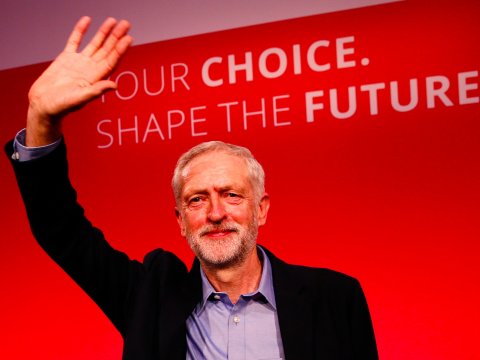
The 8 June election result has re-energised Labour’s activist base and helped put basic working-class demands back on the agenda. The increase in turnout among young voters, and the huge Labour lead among young voters, signal a major shift in British politics. All of this opens up a new period of Labour revival and recomposition.
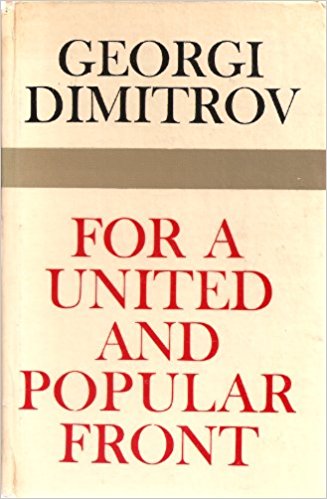
A few days ago, Paul Krehbiel—a member of the Committees of Correspondence, an organization with roots in a split from the Communist Party USA in 1991—had an essay posted on Portside entitled "United and Popular Front: Lessons from 1935-2017."
The good news this May was that French voters rejected far-right Marine Le Pen by a two-to-one margin in the second round of the Presidential election.
The bad news was that France ended up electing Emanuel Macron, an efficient technocrat who consciously incarnates French capital’s need to eliminate the "French exception" and level the wages, rights and benefits of the French common people down to the average of the European Union (which includes Romania and Bulgaria).
Since 2004, members of the Richmond Progressive Alliance (RPA) have won ten out of the sixteen city council and mayoral races they have contested in their majority minority city of 110,000.

The time has come to bid farewell to a moribund party that lacks imagination, courage and gusto
The distinctive feature of these bleak times is the lack of institutional capacity on the left – the absence of a political party that swings free of Wall Street and speaks to the dire circumstances of poor and working people. As the first 100 days of the plutocratic and militaristic Trump administration draw to a close, one truth has been crystal clear: the Democratic party lacks the vision, discipline and leadership to guide progressives in these turbulent times.

Tens of thousands of Americans in some 200 cities and towns from New York to San Francisco participated in “Tax Day” marches on Saturday, April 15 to demand that President Donald Trump release information about his tax payments. Some protestors marched at the White House and others at the Trump mansion at Mar-a-Lago, Florida.
Largely organized through Democratic Party groups like Indivisible, the Tax Day demonstrations were peaceful but spirited affairs. Protestors around the country chanted slogans such as “No more secrets, no more lies.” Many carried signs and banners reading “What are you hiding?” and “Show your taxes!” One sign read “King George didn’t listen to us either,” a reference to the taxation issues of the 1760s that led to the American Revolution of 1776.
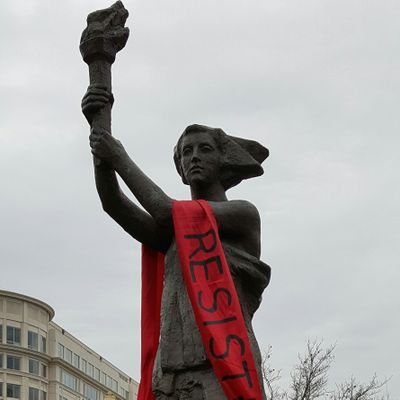
The first few weeks of Donald Trump’s presidency has seen an amazing explosion of mobilizing to oppose him and his administration on oh-so-many levels. And that has been heartening.
But it is not enough.

In his article calling on socialists to run in Democratic primaries, Daniel Moraff argues that some of the barriers to running candidates in Democratic primaries, such as money and incumbency, also apply to third parties. So they do. He points to the fact that socialist and community organizer Debbie Medina got 40.56% of the vote in the 2016 NY State Senate race in Brooklyn’s 18th District as opposed to 13% for a Green candidate for mayor in Baltimore. So, it’s easier to run as a Democrat.

On the curious collaboration between the cultural left and the economic right, and how to overcome it.
For all the hideous acts of Trump’s administration over the past six weeks there’s something of a silver lining to our current political moment: we’re now witnessing the emergence of what may well prove to be the most energetic and popular protest movement since the 1960s. And yet it’s worth wondering what, broadly speaking, this dissent will stand for apart from spirited opposition to Trump and his administration.

Night had fallen on the Atlanta Stadium in the city of Buenos Aires on November 19, and as “The Internationale” began to blare from the loudspeakers, more than twenty thousand people at the Trotskyist Left Front rally stood up, their fists held high, to sing the international workers’ anthem with a single voice.
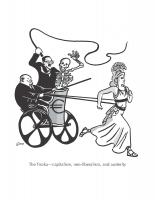
In very different ways, Helena Sheehan’s The Syriza Wave: Surging and Crashing with the Greek Left and Looting Greece: A New Financial Imperialism Emerges by Jack Rasmus look back over the period of the Greek debt crisis, and the parallel rise and fall of Syriza, and try to take stock.

Donald Trump likes to think that he has not only won an election but “built a movement.” And to judge by his first week in the White House office, he has — just not in the way he thinks.

It’s been two weeks since Donald Trump’s inauguration sparked some of the largest rallies in American history. Each week since has also seen demonstrations, culminating in those that broke out at airports across the country at the end of January to protest the president’s new Muslim ban barring travel from seven predominantly Muslim countries. Mass protests are in large measure a bellwether of popular sentiment. They carry an implicit threat that politicians who defy the will of the people will be voted out, but that threat must be channeled strategically, or it will dissipate.
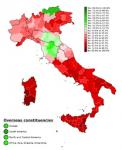
On December 4, 2016, the Italian electorate was asked to vote on a government-proposed constitutional reform, and the vote dealt the government and Prime Minister Matteo Renzi’s plans a ringing blow. The referendum was a political gambit on which the PM bet everything, yet 59.1 percent of voters rejected the reform. Barely an hour after the polls closed, Renzi announced his resignation.

Donald Trump takes office on January 20, setting up the most right-wing, racist government in modern American history, but he will not go unchallenged. That challenge is already in motion.
This year’s elections are the culmination of the long-standing economic and cultural grievances of America’s industrial workers, a subclass largely composed of white men from the Rust Belt whose factories have been asset-stripped and sent abroad and whose unions or small businesses, pensions, and prospects have been decimated. They are not the poorest of the poor—not even the poorest of the white poor. They are not from places where the economic conditions are the worst, but they are from places where uncertainty about the future of industrial jobs is most acute.
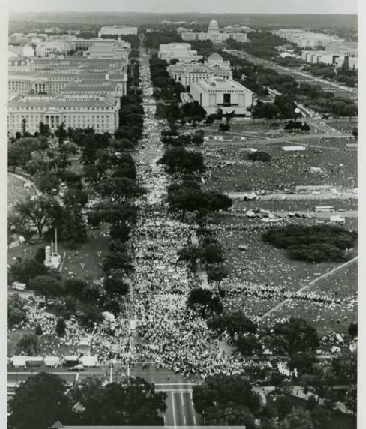 The Women’s March was glorious. Yes, I disagree with much said in the speeches, but that wasn’t an issue because like the vast majority of people who participated, I didn’t go to hear celebrities or politicians talk. I participated to show my rage and frustration at Donald Trump and the policies he and the GOP are preparing to impose on us. Women like me, disgusted, dismayed, enraged at Donald Trump’s misogyny, which the GOP has endorsed, flooded to this demonstration.
We brought family, friends, supporters, male and female, protesting the human rights and climate deniers whom Trump has brought with him into office. There was some diversity but this was primarily a march of young White women who carried signs about their bodies, “Pussy power” being the most prominent at the New York march. “Pussy power” strikes me as especially apt. Like women who fight patriarchy, it’s naughty. It evokes the strength in numbers. Most of all, the march birthed a new social movement which will owe its life to pussy.
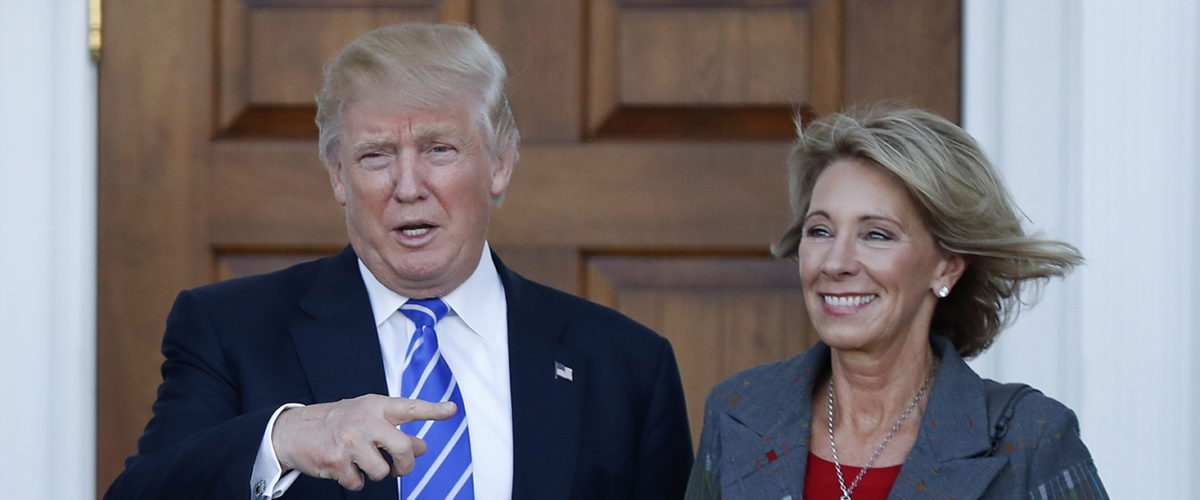
What makes Nikhil Goyal’s analysis of the dangers in Trump’s selection of Betsy DeVos for Secretary of Education so useful, beyond its incisive discussion of education reform, is that it captures the essence of the conundrum liberals face about fighting Trump on his Achilles heel: the grip the wealthy and powerful have on government which he will tighten.

After tens of thousands of young people rushed to the streets to denounce Trump’s election, “Sanderista” Tulsi Gabbard’s made different kind of headlines. She answered Donald Trump’s call and went to a vetting meeting. Yes, after the election all the Democrat pols gave the usual clichés about cooperation with Trump on certain matters, as if Trump were just some other Republican. That’s bad enough, but this was something more. Gabbard was actually looking to join the Trump Administration. She denies it. She ludicrously claims this was just a meeting to talk about Syria and the need for peace. As if “peace” was uppermost in Trump’s mind now. As if he wasn’t spending all his time visiting Alt-Right sewers and billionaire clubs to staff his cabinet.
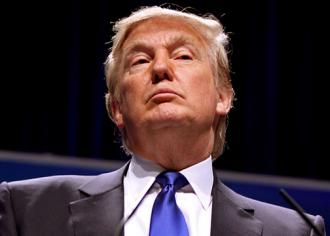 We all know very well by now that the white working class did not cause Trump to win the elections. Article after article have made the case, typically pointing to Nate Silver’s finding that the median household income of Trump supporters in the Republican primary was $72,000, roughly $10,000 more than the median household income for all whites. In the general election, Clinton won the majority of all voters earning $50,000 or less. Trump supporters are many things. They are undoubtedly whiter. They are also less likely to be educated and more likely to work in blue-collar jobs. But there’s one thing they’re not: overwhelmingly working-class.
In recent months I’ve been thinking a lot, more than usual, of Anthony Mazzocchi, longtime official of the Oil, Chemical, and Atomic Workers International Union, leading presence in the movement for occupational health and safety, and one of the very brightest lights of a serious working-class politics in the post-World War II era until his too-early death in 2002. Tony often observed, regarding capital’s revanchist attack on working people that has steadily intensified over the last four decades, that what we would now call the neoliberal Democrats had nothing to offer those who have been or fear being ground into the dust by the juggernaut. He cautioned that, if the left and the labor movement didn’t find ways to connect with that growing population of those hurting and to offer credible explanations of the sources of their condition and plausible strategies for fighting back, other, nasty and dangerous tendencies would. That perspective reflected a deeper view of politics that guided the thousands of us who, for nearly all the 1990s and most of the first decade of this century, struggled to articulate and advance an unambiguously working-class politics through the effort to build an independent Labor Party, of which Tony was the “Founding Brother” and animating force. In the 2015 issue of the Socialist Register, Mark Dudzic and I laid out an assessment of the state of the left and labor movement in the U.S. and the challenges that face us that is rooted in that perspective.
- « Newer Posts
- 1
- …
- 12
- 13
- 14
- 15
- 16
- 17
- 18
- …
- 28
- Older Posts »
