Category: Electoral Politics
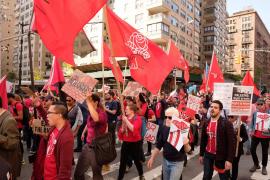
I appreciate Dan La Botz' well-reasoned article, but do not agree with his conclusion.
As usual, Dan's argument is judicious and clear, courteous to other points of view. Such civility is essential to maintaining the health and vitality of a diverse big tent organization like the Democratic Socialist of America (DSA).

On June 26th, Alexandria Ocasio-Cortez defeated, against all odds, the incumbent Congressman from New York’s 14th district, a safe Democratic seat, in the party’s primary. Spectacular as it was to see a Democratic political boss (the “King of Queens”) humbled by a left-wing challenger, the real spoils of this victory do not lie in the House seat itself.

Dan's sober and sobering comment on why he opposed an endorsement by DSA of the Cynthia Nixon campaign to dethrone Andrew Cuomo, New York's corporate deny-the-corporate-class-nothing's two-term governor [see "Why I voted Against Endorsing Cynthia Nixon"] is sharply and smartly posed. It deserves a similar if brief reply, one crafted in what I hope encapsulates the same spirit.
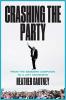 This memoir of sorts by Fordham University sociology professor Heather Gautney, who became a policy fellow in Bernie Sanders’ Washington DC office and a volunteer researcher and organizer for his unexpectedly popular 2016 presidential campaign, has a very specific focus: to “offer insights from up-close work with Bernie, mixed in with historical and sociological analysis, to perform an autopsy of the 2016 election” (2). Given the sheer number of insightless (to put it mildly) autopsies that have been proffered across the political spectrum—perhaps none more useless than Hillary Clinton’s own What Happened (Simon & Schuster, 2017)—Gautney’s book is more than welcome and even slightly overdue.
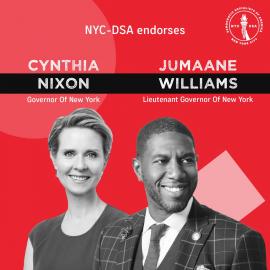
The leadership of the New York City chapter of the Democratic Socialists of America (DSA) voted this past weekend by a two-thirds majority to endorse Cynthia Nixon in the Democratic Primary race for New York State governor. The decision reflected similar majorities for Nixon among the total membership of the New York City branches. An accompanying motion also passed that linked DSA’s work on the Nixon campaign to the Julia Salazar campaign in the Democratic Primary for State Senate and tied it to our organization’s support for the New York State Health Act and the a city campaign create for expanded rent stabilization.
Since the majority of my fellow New York City socialists voted to endorse Nixon, I feel obligated as a member of the City Leadership Committee (CLC) to explain to our members why I cast my vote against, as did eleven other members of the 34-member body, while one person abstained.
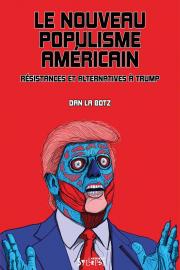
Dan La Botz is a member both Solidarity and of the Democratic Socialist of America (DSA), and a co-editor of New Politics. Trained as a historian of the United States and Mexico, he is also a teacher in the graduate Labor Studies program of the Murphy Institute of the City University of New York. New Politics interviews him here about his new book The New American Populism: Resistance and Alternatives to Trump (Nouveau populisme américain: Résistances et alternatives à Trump).
New Politics: You’ve written a book on Donald Trump and the Resistance that most of won’t be able to read because it has only been published in French. In this book you discuss both the rise of the new populism of Sanders and Trump and its social and historical roots, but you also look at the Resistance and discuss its strengths and weaknesses, as well as examining the strategies of the left and its future. That’s a lot. Tell us a little about your book. What distinguishes it from the many books on Trump that have hit the market since he became president?

The leftist candidate Andres Manuel López Obrador, has been carried to victory in the Mexican presidential election by an enormous popular outpouring of voters hoping to improve their lives and those of their fellow citizens. Promising to drive out the political mafia that runs the country, to end the pervasive corruption in government, and to bring an end to the violence that in the last dozen years has taken more than 250,000 lives, AMLO, the left’s perennial candidate, won such a decisive victory this time that the Mexican establishment finally had to recognize his achievement.

Jacobin published on June 9 an essay by Catarina Príncipe under the title “The Portuguese Myth.” We’ve deeply appreciated her thoughts on the political changes in the country since 2015, considering it was written by a spokesperson for a minority current inside the Left Bloc, a status Príncipe failed to mention. This should have been stated, for transparency’s sake, since Príncipe offered an alternative political resolution and a competing list for the leadership of the Party in 2016, which were defeated.1
Gayle McLaughlin. Winning Richmond: How a Progressive Alliance Won City Hall. Hard Ball Press, 2017. 306 pp.
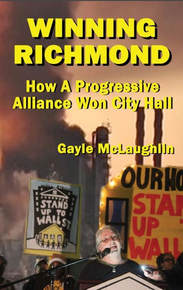
On August 6, 2012, an elephantine plume of black smoke rose over Richmond, California, sending some 15,000 people suffering from respiratory distress to area hospitals. Most of the city’s 110,000 inhabitants received “shelter-in-place” warnings to stay indoors and tape their windows shut to avoid breathing the deadly fumes. The smoke came from a massive fire at Chevron’s giant fuel-processing facility in the city, caused by slack maintenance and slacker management oversight. It wasn’t the first or the last mishap at the refinery. Since 1989, 14 such eruptions have been reported. In Richmond at least, the enemy has a name and a besmirched face.
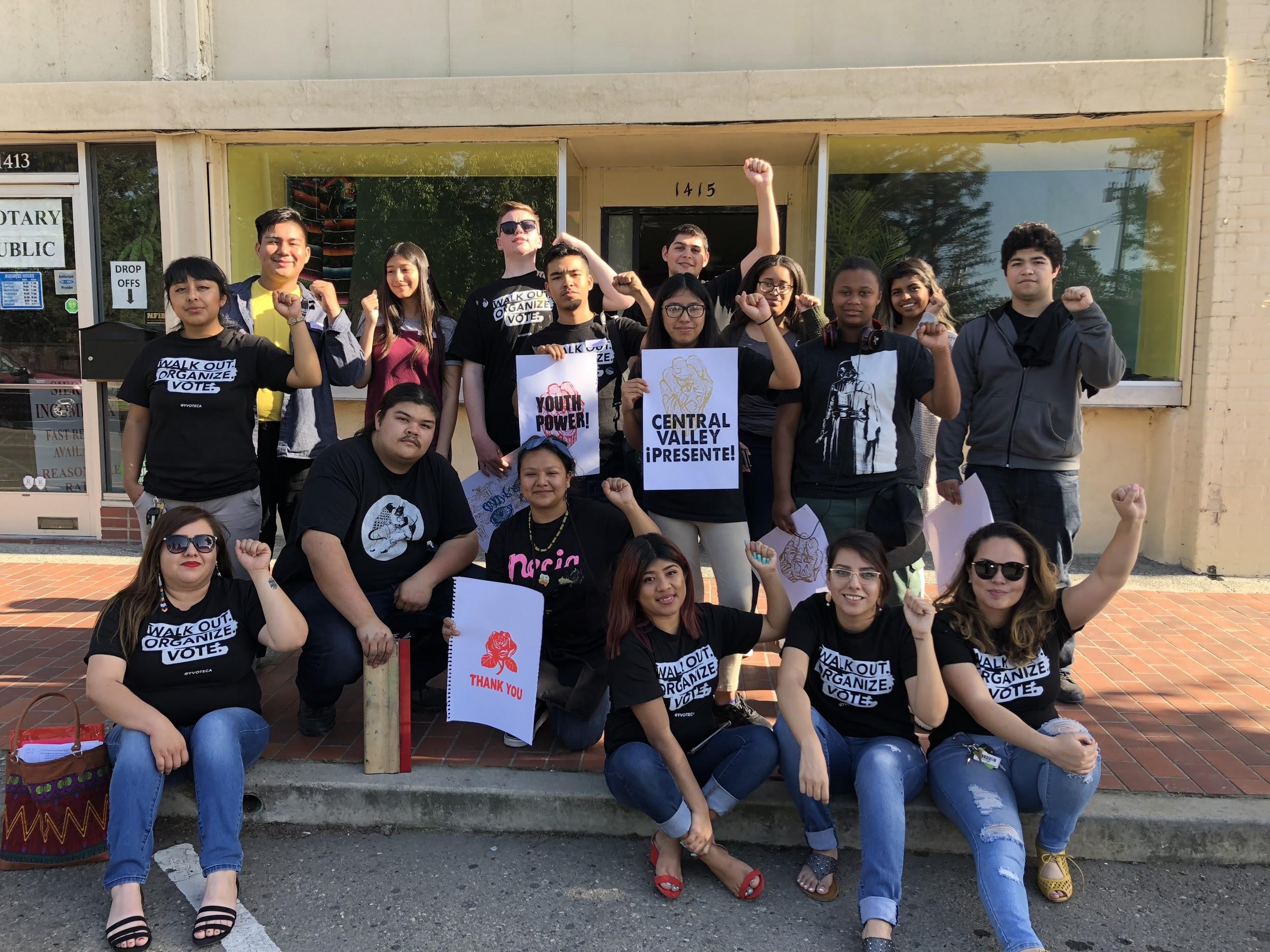
Driving down Route 99 highway, miles upon miles of flat land sprouting grapes, nuts, lemons, and tomatoes line the stretch of land next to the hot asphalt. Highlighted within this landscape of farmland and truck filled, busy highways are youth. Strong, beautiful, Black and Brown young people unapologetically organizing amidst big agriculture and quiet towns. They are organizing for a Central Valley that provides all its residents with what they need to be whole. These young people, full of wisdom and fire, are ready to reclaim the region as their own, creating from the soil rich land a movement that pushes forward their vision of a California for all. At the center of this energy and youth-led, transformative movement is 99Rootz.

In a political culture shaped by big money, entrepreneurial candidacies, single-issue campaigning, and union dis-unity, you can run but not hide from crowded fields of Democrats. In many current primary races, they are all claiming to be “progressive,” even as they raise and spend millions of dollars competing against each other—money that might have been better spent on actual movement building?
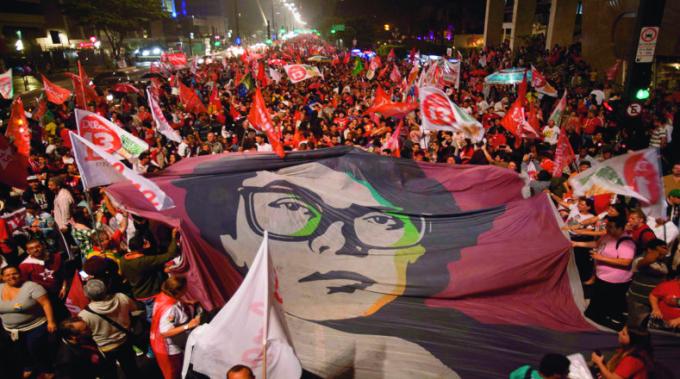
Brazilian socialist Andressa Alegre spoke to Solidarity about the experience with the governments led by the Brazilian Workers’ Party (PT) between 2003 and 2016.
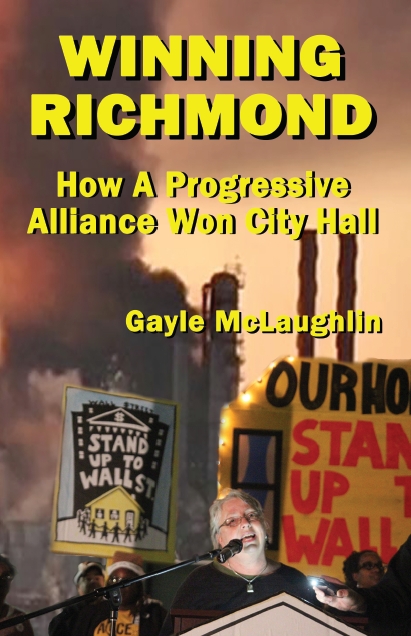
Review: Winning Richmond: How a Progressive Alliance Won City Hall by Gayle McLaughlin. Hardball Press, 2018.
Well before the Trump era, U.S. presidents from both major parties failed to address urban problems or made them worse. Congress, state legislatures, and governors weren't much better. The job of fighting poverty, inequality, and environmental degradation shifted to the municipal level, where activist mayors have tried to mobilize the limited resources of local government on behalf of neglected constituents and causes.
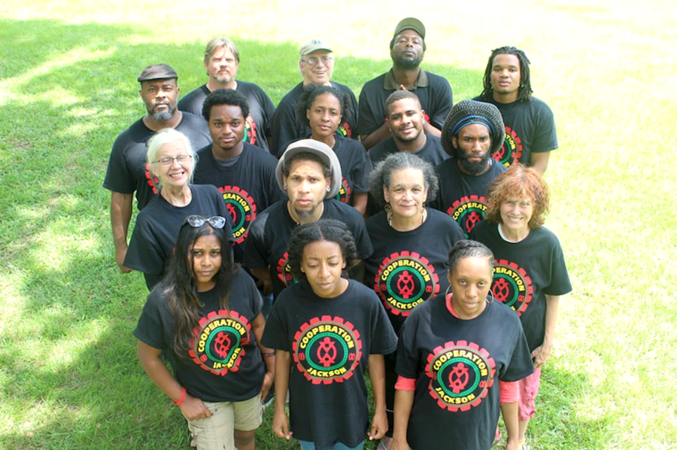
Well before the Trump era, U.S. presidents from both major parties failed to address urban problems or made them worse. Governors, members of Congress, and state legislators didn’t perform much better. So the difficult job of fighting poverty, inequality, and environmental degradation shifted to the municipal level, where activist mayors have tried to mobilize the limited resources of local government on behalf of neglected causes and constituents.
 The rise and rule of Donald Trump embodies much that is disturbingly new from his almost daily narcissistic rants on Twitter to his overt racist, misogynist, and xenophobic public pronouncements. On the other hand, there are historic roots to many of the positions articulated by Trump during his presidential campaign and adopted during his presidency.

When it comes to the Russiagate scandal, progressives usually take one of two positions.
They either dismiss the scandal as a lot of hooey, a “nothingburger,” just a way for warmongers and the “Deep State” to revive a cold war between Washington and Moscow. Or they treat the scandal as just a means to an end, a way to cast doubt on the 2016 presidential election, implicate the administration in a variety of crimes, and ultimately impeach the president.
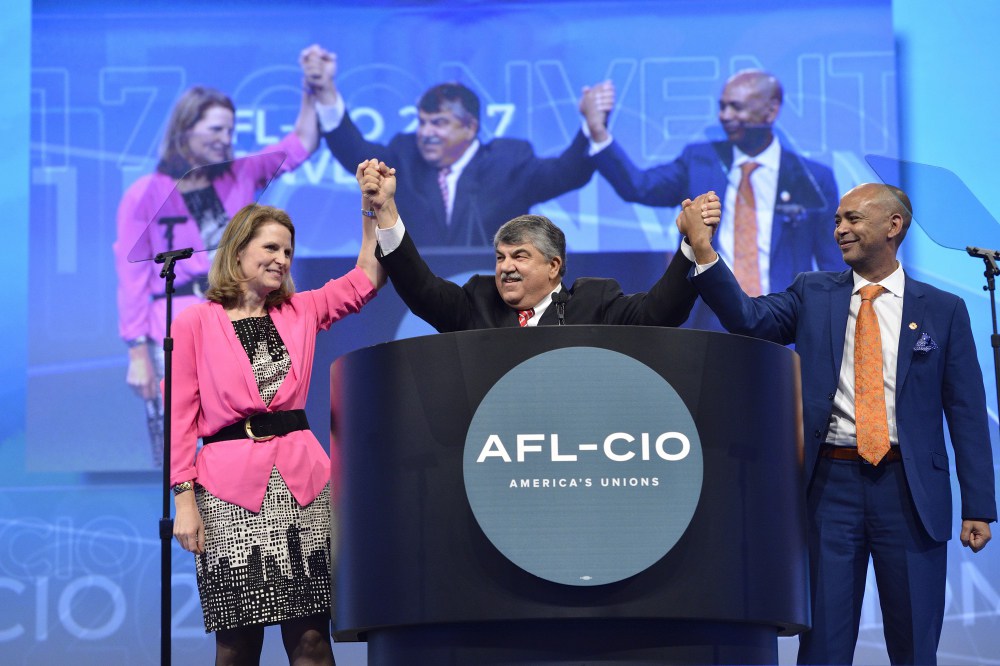
From October 22nd to the 25th, 2017, the AFL-CIO held its quarto-annual convention in St. Louis, Missouri. The choice of city was, if not intentionally, appropriate.
Reply to Dornbush, Elliott-Negri, and Lewis
Dornbush, Elliott-Negri, and Lewis are right that ideology is not enough and an analysis of “the actual, material terrain” is necessary. Simply repeating the well-known realities of the first-past-the-post U.S. electoral system that favors the two-party duality is not such an analysis. It’s old news. Not altogether wrong, but still yesterday’s political science.
I first met Kim Moody some 50 years ago. He was then organizing chapters of the California-based Peace and Freedom Party as an alternative to the Democratic war machine. If memory serves, he came to Park Slope, Brooklyn, then a predominantly Irish and Italian working-class neighborhood—not the gentrified picture from House Beautiful it has since morphed into—but also inhabited by a smattering of déclassé radicals. Moody wanted to interest a few of us in taking up the electoral mantle.
 After a huge bump in membership thanks to Bernie Sanders, and an even bigger one thanks to Donald Trump, the DSA continues to grow. Since its national convention in August, membership has increased from 25,000 to 30,000. We have known since 2011 that millennials have a more positive association with the word “socialism” than the word “capitalism”;1 Sanders gave this demographic shift from the cold war era a political expression, and DSA has given it an organizational expression. Now thousands on the left are scrambling to answer the question, “What do we do with this newfound energy?”
 Some New Politics readers will recognize the title of this article as a paraphrase of Hal Draper’s “Two Souls of Socialism,” which appeared in New Politics in 1966. The first version, however, appeared in the socialist student magazine Anvil in 1960, just as a new generation of youthful activists was emerging, inspired to a large extent by the civil rights movement.
- « Newer Posts
- 1
- …
- 10
- 11
- 12
- 13
- 14
- 15
- 16
- …
- 28
- Older Posts »