Category: Left Politics
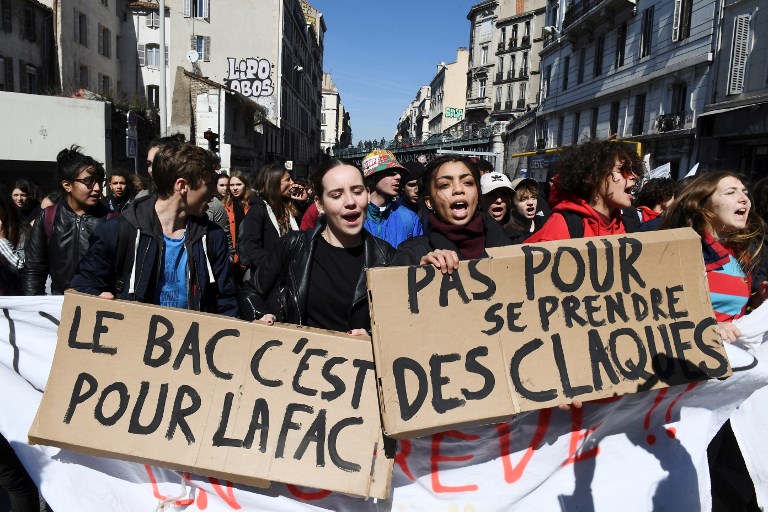
Not an April Fool’s joke. Here are the facts: Four days ago (March 29) the ultra-conservative Dean of the Montpellier University Law School was summoned to police headquarters, interrogated, hauled into court, and held over in jail for arraignment by the Chief Prosecutor – all on the complaint of nine student strikers, who claim to have been brutally assaulted with Dean Philippe Pétel’s active complicity while ‘occupying’ a school auditorium.

Well before the Trump era, U.S. presidents from both major parties failed to address urban problems or made them worse. Governors, members of Congress, and state legislators didn’t perform much better. So the difficult job of fighting poverty, inequality, and environmental degradation shifted to the municipal level, where activist mayors have tried to mobilize the limited resources of local government on behalf of neglected causes and constituents.

On 14 March, Marielle Franco, a city councillor in Rio de Janeiro, Brazil, of the Socialism and Freedom Party, was assassinated. In a piece originally published on the website of the Brazilian New Socialist Organisation (NOS) and republished here from the website Esquerda Online, Giambatista Brito argues that her death marked a new low in the country’s descent into political repression following the coup d’état of 2015. Translation by Max Leak.

Why are voices on the left still justifying the Syrian regime's indiscriminate bombardment of Eastern Ghouta?
As the death toll in the Damascus' suburb of Eastern Ghouta reached nearly 700 in two weeks and continues to rise, many so-called progressive voices continue to justify the carnage.

On the Southern Poverty Law Center website, this rather odd statement can be read:
Yesterday, Friday, March 9, we published an article entitled “The multipolar spin: how fascists operationalize left-wing resentment.” After receiving some concerns about the article from Max Blumenthal that evening, we took it down, pending further review.
The article was written by Alexander Reid Ross as a follow-up to earlier articles for SPLC titled “The Internet Research Agency: behind the shadowy network that meddled in the 2016 Elections” and “The far-right influence in pro-Kremlin media and political networks.” Subsequent to the removal of the latest, the other two have been removed as well.
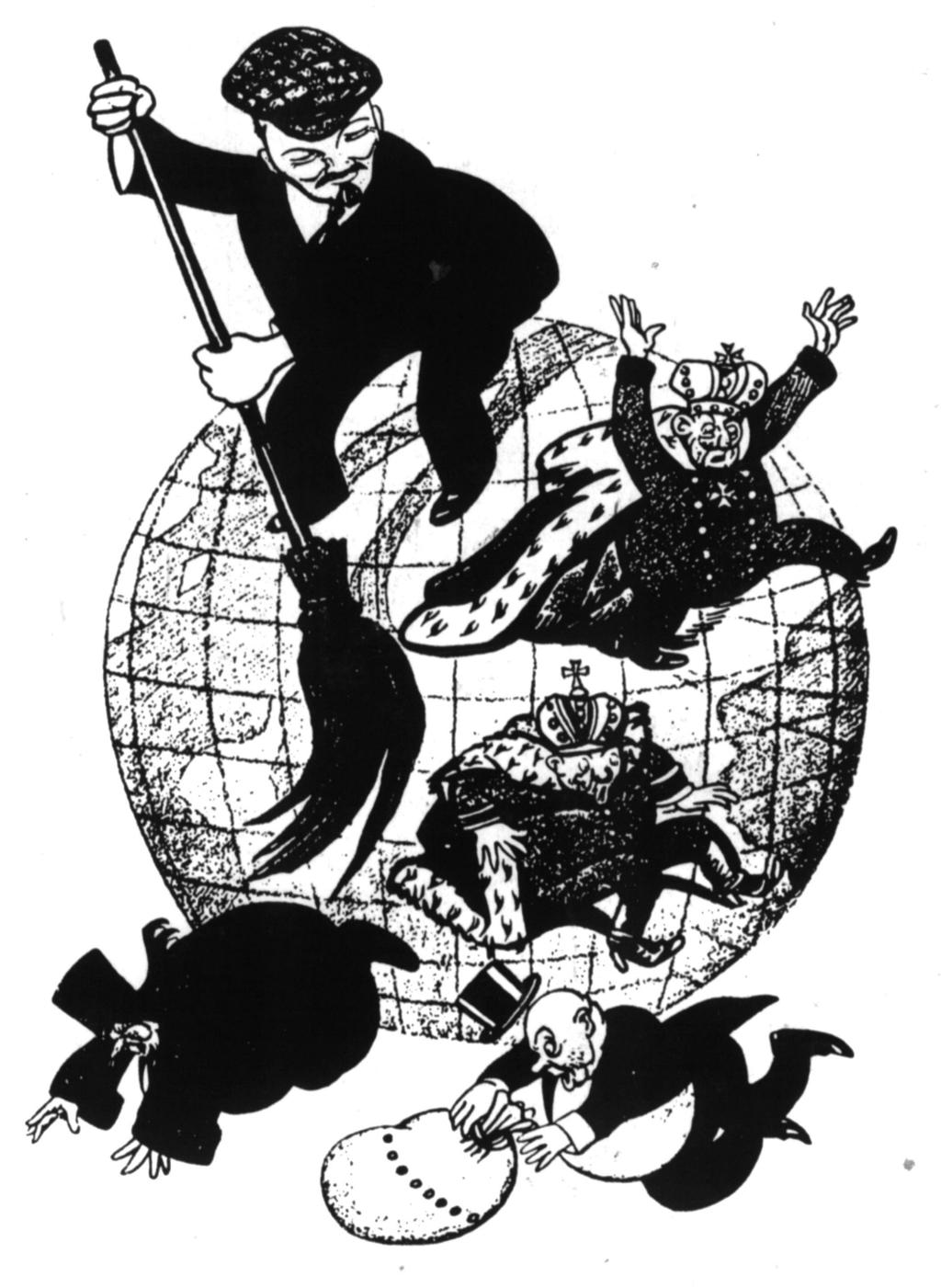
Often, it seems that the legacy of the Russian Revolution of November 1917 lays like a dead weight upon the living. Everywhere voices are raised – from anarchists to social democrats and from liberals to conservatives – telling us that we need to jettison its legacy of authoritarian socialism, of prison camps, and ultimately, of economic and social collapse. At the same time, the left of today stands for grassroots democracy, opposition to war and imperialism, opposition to racial and gender oppression, and once we move to the left of social democracy, abolition of capitalism and of the state.

Raoul Peck’s The Young Karl Marx is the best buddy movie since George Roy Hill’s Butch Cassidy and the Sundance Kid in 1969. It’s also among the most important films in decades, bringing to a mass audience not just the revolutionary ideas of Marx and his friend and collaborator Frederick Engels in the early days of modern capitalism, but an approach to politics and history that still has no peer. Charting the world as he saw it, Marx wrote: “Accumulation of wealth at one pole is at the same time accumulation of misery, agony of toil, slavery, ignorance, brutality, mental degradation, at the opposite pole.” Has anything changed?
The mode-of-production concept that Marx develops in Capital (although the idea is present earlier) is the essential methodological tool for understanding history, different societies, and the possibilities for social change.
IN 1942 British economist John Maynard Keynes got an advance preview of Lord William Beveridge’s report, Social Insurance and Allied Services. In it, Beveridge proposed a comprehensive system of social security that ran the gamut from full employment to national health care so as to eliminate “Want, Disease, Ignorance, Squalor, and Idleness” from the United Kingdom.

When it comes to the Russiagate scandal, progressives usually take one of two positions.
They either dismiss the scandal as a lot of hooey, a “nothingburger,” just a way for warmongers and the “Deep State” to revive a cold war between Washington and Moscow. Or they treat the scandal as just a means to an end, a way to cast doubt on the 2016 presidential election, implicate the administration in a variety of crimes, and ultimately impeach the president.
Introduction
By Aaron Amaral
The largest single day of anti-war protest in human history took place on February 15, 2003, almost fifteen years ago. Millions of people rallied and demonstrated internationally, in more than 600 cities, with the goal of preventing the then-pending U.S. invasion of Iraq. These protests failed to stop the coming imperial misadventure, and more than a half million people were killed as a direct result, with millions more displaced, killed, or maimed in the geopolitical ructions that since followed. Explaining the specific failure of the anti-war movement to stop the invasion in 2003 requires an analysis that is beyond the scope of the following article. What Julius Jacobson’s piece does offer is insight into the left’s failures to build a sustainable anti-war and anti-imperialist movement since.

"The socialists consider it their principal, perhaps even their only, duty to promote the growth of this consciousness among the proletariat, which for short they call its class consciousness. The whole success of the socialist movement is measured for them in terms of the growth in class consciousness of the proletariat. Everything that helps this growth they see as useful to their cause; everything that slows it down as harmful."
—George Plekhanov

The situation in Syria is incredibly complex, so it’s not surprising that there are conflicting interpretations of different pieces of information. But, sometimes, a claim is so clearly without merit, so obviously ludicrous, that those who promote it mark themselves, at best, as individuals wholly uninterested in examining evidence when a dubious claim conforms to their preconceived notions, or, at worst, as scoundrels.
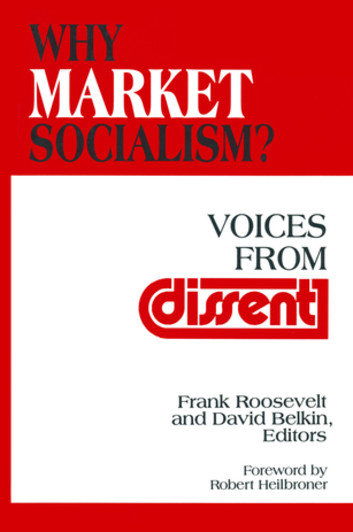
In “Our Road to Power,” an article from the most recent issue of Jacobin, Vivek Chibber makes some very familiar arguments about socialism and “central planning.” One hardly has to quote him—they’ve been repeated many times since Alec Nove’s The Economics of Feasible Socialism appeared in 1983.

As an employee at a large state university, I have to attend a myriad of trainings, on everything from fire safety to preventing workplace discrimination. The mood at these trainings is typically sour, the participation minimal and perfunctory, and the information provided mostly inadequate to the topics discussed. I know what P.A.S.S. stands for, but that knowledge is not going to make me any less terrified if I ever have to use a fire extinguisher. That being said, at least I know what the purposes of these trainings are: to give a false sense of security, to prevent lawsuits, to feed the bureaucratic apparatus, etc. They’re excruciating to sit through, but their existence makes enough sense.
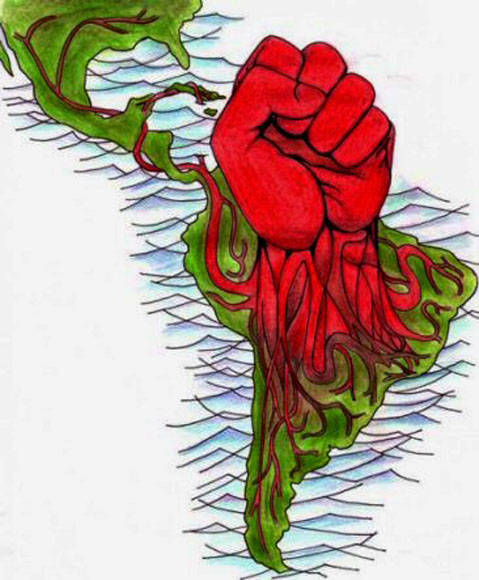
This is an excerpt from Webber's article From Nuestra América to Abya Yala: Notes on Imperialism and Anti-imperialism in Latin America across Centuries in the newest issue of Viewpoint.

The Future Historians’ International Study Group and Collaborative Writing Project has obtained the following excerpts from the 2117 high school history book “Then, Now and How.” The title of this chapter is “#MeToo and the origins of today’s egalitarian society.”
For more information, go to http://futurehistorians.org/
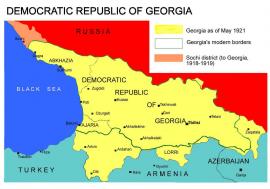
Eric Lee. The Experiment: Georgia’s Forgotten Revolution, 1918-1921. London: Zed Books, 2017. 259 pages. Timeline. Notes. Index. (For further information see: http://www.ericlee.info/theexperiment/)
In his new book The Experiment: Georgia’s Forgtten Revolution, 1918-1921 the journalist and historian Eric Lee does two things. First, he tells the little known and complicated story of the Georgian Revolution and the short-lived independent state that it created.

Mohsen Abdelmoumen: You have written a book about the city of Richmond, California, where you live, prefaced by Senator Bernie Sanders: Refinery Town: Big Oil, Big Money, and the Remaking of an American City. This book shows us the experience of this city that has won struggles such as raise the local minimum wage, defeat a casino development project, challenge home foreclosures and evictions, and seek fair taxation of Big Oil and Big Soda. Can we say that the Richmond experience should inspire progressive activists in other cities around the world?
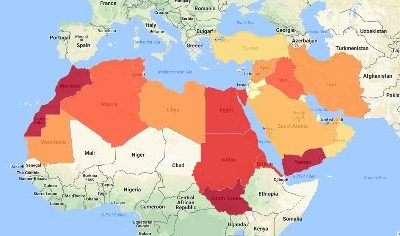
We are an alliance of Middle Eastern socialists opposed to all the international and Middle Eastern regional imperialist powers and their wars, whether the U.S., Russia and China or Israel, Saudi Arabia, Iran and Turkey. We also oppose other authoritarian regimes such as Assad’s in Syria and El Sisi’s in Egypt as well as religious fundamentalism whether of ISIS, Al Qaeda, Hezbollah or the Muslim Brotherhood. Although the Muslim Brotherhood and Hezbollah consider themselves gradualists and oppose the Jihadism of Al Qaeda and ISIS, all of these organizations share the goal of establishing a state based on Shari’a Law and preserving the current capitalist order.
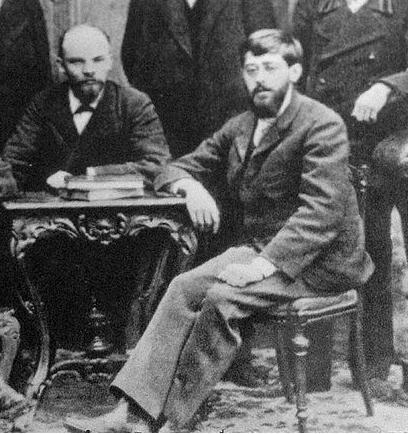
The greatest flaw of Mitchell Cohen’s “What Lenin’s Critics Got Right” in the most recent Dissent is that it repeats what Lars T. Lih, independent researcher and author of Lenin Rediscovered:‘What Is To Be Done’ In Context (Haymarket, 2008) and a biography of Lenin (Reaktion Books, 2011), calls the “standard textbook interpretation” of Lenin’s thought and, by extension, Bolshevism as a movement.
- « Newer Posts
- 1
- …
- 29
- 30
- 31
- 32
- 33
- 34
- 35
- …
- 48
- Older Posts »