
Category: Left Politics
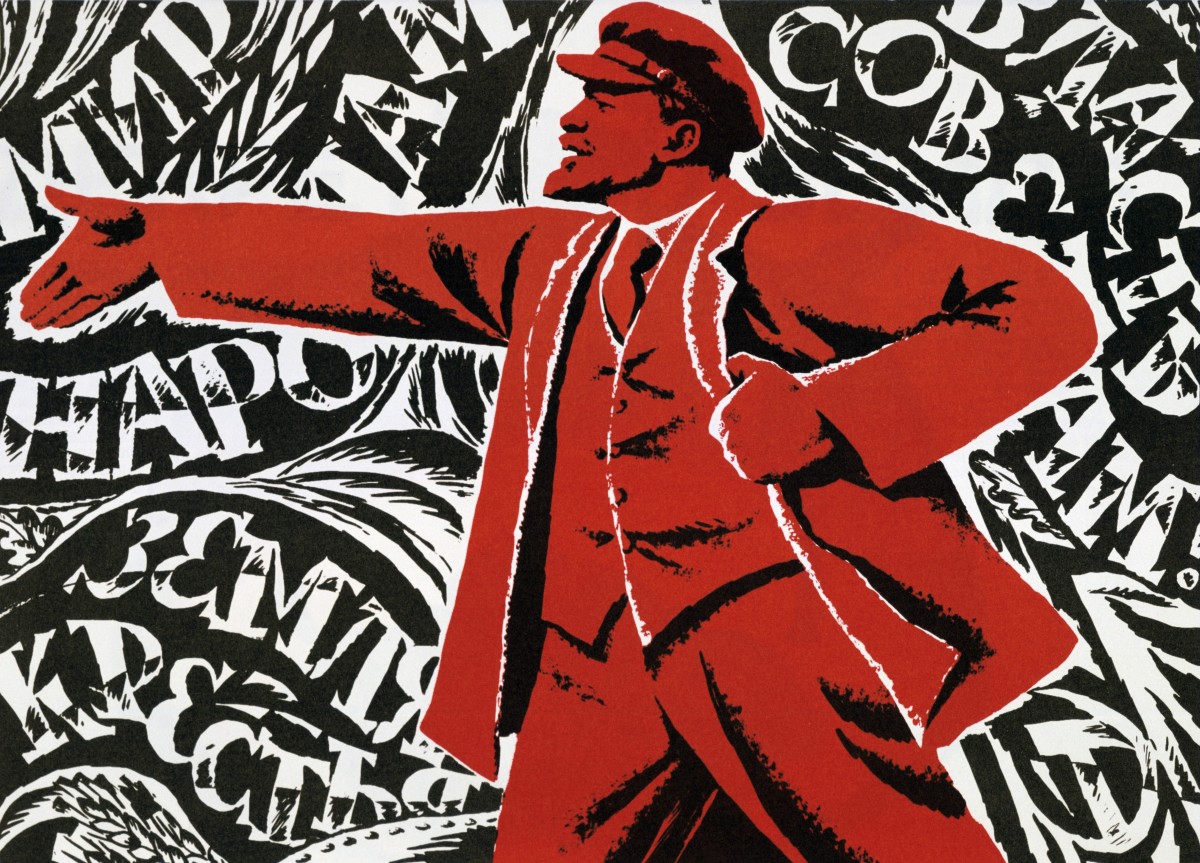
Muraskin and Epstein criticize Harrison’s view of the Russian Revolution; Harrison replies.

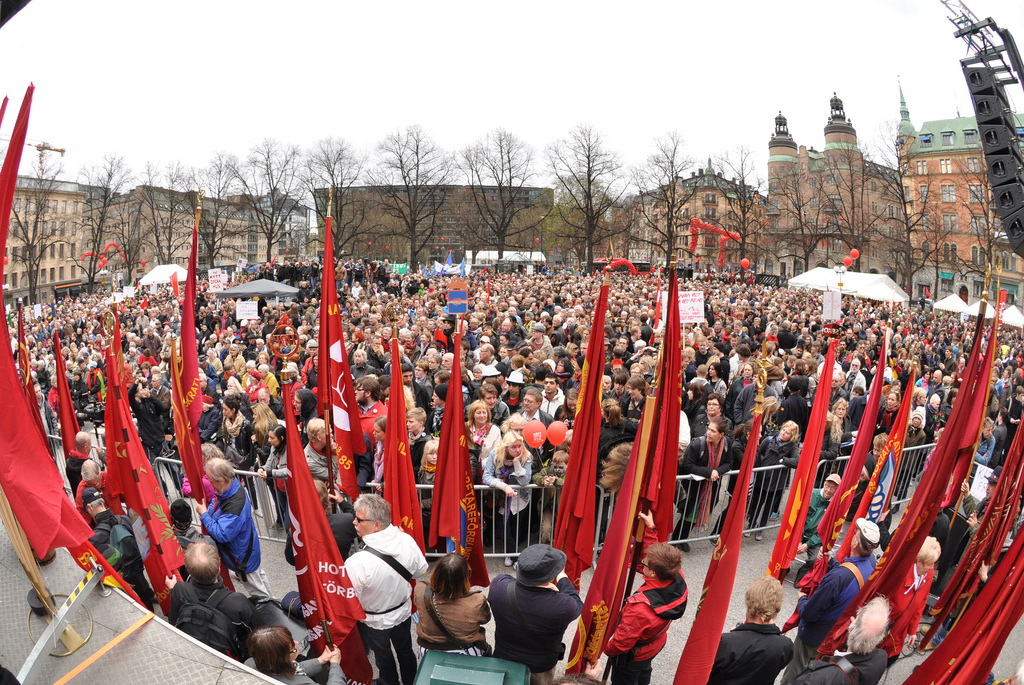
The Wage-Earner Funds in Sweden is one of the few serious attempts in an advanced capitalist society to socialize the means of production. Developed by Rudolf Meidner and Anna Hedborg, two economists at the powerful social-democratic union confederation LO, the
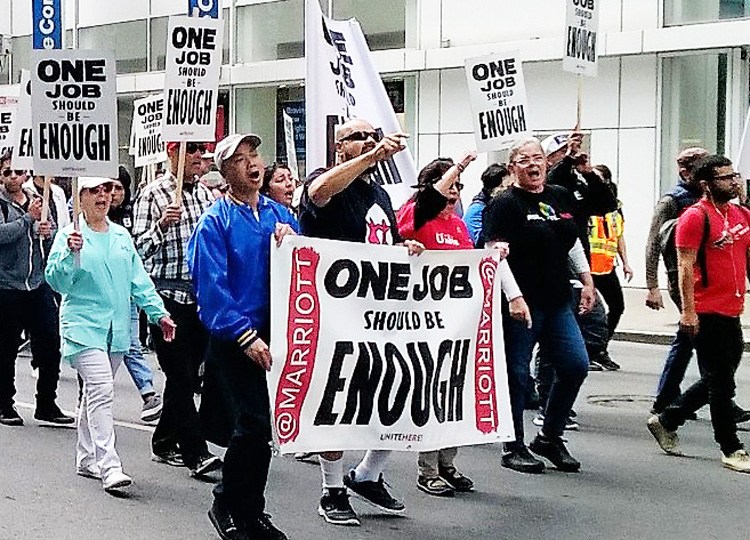
Organized labor has an opportunity to play an important role in the upcoming selection of a presidential candidate in the Democratic Party’s primaries and the eventual November 3, 2020 U.S. presidential election. The stakes couldn’t be higher, not only for

My 2017 Catalyst article, “The Panthers Can’t Save Us Now,” was addressed to a specific conundrum within contemporary left politics and anti-policing struggles in particular: that is, the strategic problem of building a counterpower capable of winning in the context

As the war in Syria draws to a close, the debate on the U.S. left over that conflict seems as intractable as ever.

The deaths of Rosa Luxemburg and Karl Liebknecht have haunted the imagination of the left for a century. Joe Sabatini reviews a recent publication exposing the events of their deaths, Klaus Gietinger’s The Murder of Rosa Luxemburg, as well as providing an introduction to some of the literary works inspired by the events of 15 January 1919.

 With the revival of the socialist movement in the U.S., and the phrase “political revolution” having briefly entered the political mainstream as a result of Bernie Sanders’ Presidential campaign, it’s a good idea for contemporary socialists to look back upon the political strategies of our predecessors to examine what they thought “revolution” signified, and to draw appropriate conclusions.

Randy Shaw, Generation Priced Out: Who Gets to Live in the New Urban America. University of California Press, 2018. 304 pp.
When millennials head home for the holidays this month, many who are city dwellers will be hosted by parents or grand-parents whose housing is far more spacious and financially secure than their own. Even guests with well-paid jobs in relatively stable rental markets will cast an envious eye at the benefits of baby boomer house buying decades ago.

FOR IMMEDIATE RELEASE: January 7, 2019
Press contact: Katie Horvath, katie.s.horvath@gmail.com, 720-838-8051
-
Local direct democracy groups across North America are assembling a revolutionary confederation
-
A congress of these grassroots organizations will be take place September 18-22, 2019, in Detroit, MI
-
Individuals can join and will be given guidance and support to organize where they live and work

Kim Moody’s “Rank and File Strategy” has influenced much of DSA’s approach to labor organizing. To draw out what he calls socialist “class consciousness,” Moody recommends fomenting member-led struggles in unions that advance self-empowerment. By joining “transitional organizations,” or rank-and-file reform caucuses such as Teamsters for a Democratic Union (TDU), he believes, workers gain experience directly confronting management over working conditions. These organizations prepare workers for larger fights to come.

It has been two years since the explosive surge of the Democratic Socialists of America, now the largest socialist organization in the United States and the largest since the 1940s. And DSA has had some remarkable successes. Today as the country turns its attention to the presidential election of 2020, we ask: How DSA is doing? What is it accomplishing? And where is it going? What do the various caucuses and political tendencies within DSA propose as a future direction for the group? Is there a genuine left wing of DSA, and if not, what is the alternative?

The environmental policy centerpiece of the incoming Democratic House of Representatives is what’s now known as “The Green New Deal.” But it’s already hit deeply polarizing pushback from the old-line Democratic leadership. And it faces divisive jockeying over the future of nuclear power.
 Priscilla Murolo is a professor of history at Sarah Lawrence College, where she formerly directed the graduate program in Women’s History. She also teaches in the Union Leadership and Activism Master’s Program at the University of Massachusetts. Beginning in the 1960s, she has been involved in the women’s movement, labor organizing and many community campaigns and organizations.

Comrades and Friends of MST (Landless Rural Workers' Movement) around the World,
We would like to share some of our views on this delicate moment of Brazilian politics in the last week of the election campaign:

A World to Win: The Life and Works of Karl Marx
By Sven-Eric Liedman
Translated by Jeffrey N. Skinner
Part of the Marx 200 series
Verso Books, 2018, 768 pages, $40 hardcover.
Amid an outpouring of discussion and new works marking the bicentennial of Karl
By Sven-Eric Liedman
Translated by Jeffrey N. Skinner
Part of the Marx 200 series
Verso Books, 2018, 768 pages, $40 hardcover.
Amid an outpouring of discussion and new works marking the bicentennial of Karl

Wealthy Bay Area investor David Crane is a leading promoter of the neoliberal agenda within the California Democratic Party. A former advisor to Republican governor Arnold Schwarzenegger, Crane is a widely-published critic of state and local tax initiatives, publicly-funded health care, public education, public employees and their pensions. He raises lots of money for “courageous” candidates willing to put “citizen interests” ahead of such “special interest” causes.

David McReynolds was the first “Old Leftist” I ever met, back in 1996, at one of a number of ill-fated 1990s meetings of representatives of socialist organizations in New York City hoping for some sort of “left unity” around a common project. Strictly speaking, David wasn’t an “Old Leftist” – that label was affixed to members of the Socialist Party (SP), Communist Party (CP) or the Trotskyist grouplets of the 1930s and 1940s. David was “inbetween” the Old and New Lefts, joining both the SP and the radical-pacifist War Resisters League (WRL) in 1951.
 “The problem of the twentieth century is the problem of the color-line.” —W.E.B. Du Bois
Shortly before protesters gathered around the world on the eve of the Global Climate Action Summit, an ecosocialist friend commented on the pointlessness of engaging in more “feel good” marches. Something struck me as horribly wrong about this casual dismissal of mass actions in which we take to the streets to bear witness to the mounting opposition to global ecocide.

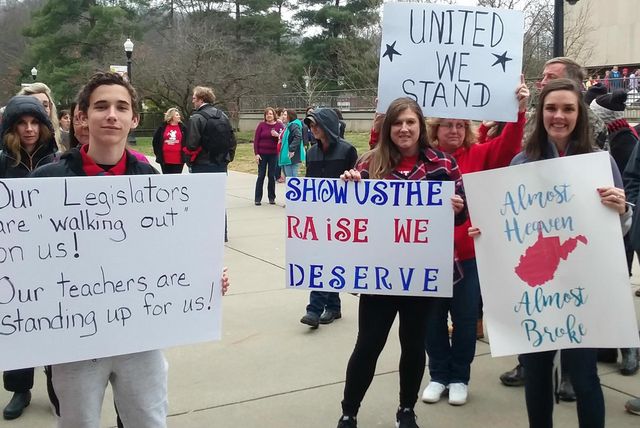 As the French get ready for the “rentrée” – the annual back-to-school/back-to-work day following the August vacation – social peace appears to reign in the land. The long-expected militant strikes and struggles against the neo-liberal counter-reforms introduced by President Macron early last Spring have failed to materialize. Surprisingly, the Macron government successfully force-marched its anti-labor, anti-welfare, pro-business agenda through parliament with little effective resistance by the unions and Left parties. Meanwhile, in the U.S., a wave of spontaneous teachers’ strikes spread from West Viriginia to other conservative ‘Red’ states, winning significant victories and surprising the media and the labor leadership. The contrast is surprising.
- « Newer Posts
- 1
- …
- 26
- 27
- 28
- 29
- 30
- 31
- 32
- …
- 48
- Older Posts »
