Category: Left Politics
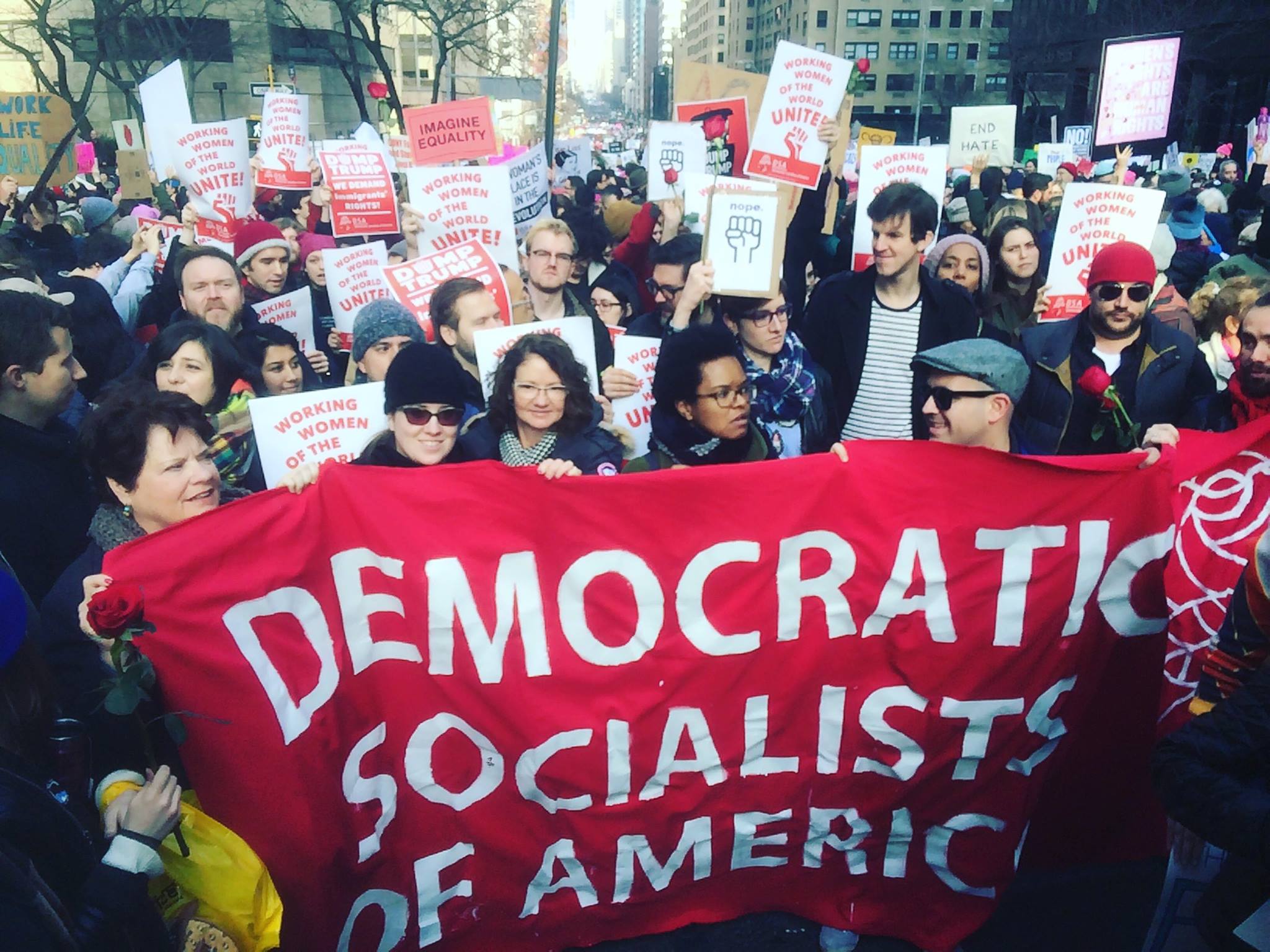
The Democratic Socialists of America (DSA) has emerged as the largest socialist organization in the United States since the collapse of the Communist Party (CP) in the mid-1950s. While Bernie Sanders’ ‘democratic socialist’ campaign for president in 2016 laid much of the groundwork for DSA’s growth, it was Donald Trump’s election to the presidency that boosted its membership from 6,700 in 2016 to around 48,000 members today.

Dan's sober and sobering comment on why he opposed an endorsement by DSA of the Cynthia Nixon campaign to dethrone Andrew Cuomo, New York's corporate deny-the-corporate-class-nothing's two-term governor [see "Why I voted Against Endorsing Cynthia Nixon"] is sharply and smartly posed. It deserves a similar if brief reply, one crafted in what I hope encapsulates the same spirit.

What is the state of the popular rebellion in Nicaragua? What brought about the rebellion? Who is involved in the rebellion? Who are the most important national and international actors? And what is the nature of the Left’s debate over Nicaragua?
President Daniel Ortega’s government has succeeded—for now—in stopping the Nicaragua’s popular rebellion after four months of the most severe repression, including killings, kidnappings, and torture of the regime’s opponents by both the police and paramilitary forces.
 This memoir of sorts by Fordham University sociology professor Heather Gautney, who became a policy fellow in Bernie Sanders’ Washington DC office and a volunteer researcher and organizer for his unexpectedly popular 2016 presidential campaign, has a very specific focus: to “offer insights from up-close work with Bernie, mixed in with historical and sociological analysis, to perform an autopsy of the 2016 election” (2). Given the sheer number of insightless (to put it mildly) autopsies that have been proffered across the political spectrum—perhaps none more useless than Hillary Clinton’s own What Happened (Simon & Schuster, 2017)—Gautney’s book is more than welcome and even slightly overdue.
Why the United States has not developed a permanent socialist movement has perplexed activists and theorists for more than a century. Paul Le Blanc takes up that query as an activist who wants to see an anti-capitalism mass movement take shape in twenty-first century America. To that end, he investigates some of the moments when the possibility of a significant left presence in the United States seemed at hand. He focuses on what made those movements viable and what thwarted their long-term success. The volume’s fourteen essays were written over a period of thirty years, from 1986 to 2015.
 Dehumanization is the word that best captures our present moment. How else to describe separating children as young as two or three from their parents and throwing them in cages and detention centers just because their families are fleeing severe persecution? It isn’t just about Trump; it’s also about the tens of millions in the U.S. who are avidly supporting his policies. How could this be happening?
In May 2017, Left politics in Brazil were pretty bleak. It was almost a year after the impeachment of President Dilma Rousseff of the Brazilian Workers Party (PT), whose ousting from power brought along with it an onslaught of austerity policies.2

It is the sixtieth anniversary of Raya Dunayevskaya’s Marxism and Freedom, a work both of its time and ahead of its time.
 Translated from Spanish by Fred Murphy
Writing about Nicaragua is as painful and sad as it is indispensable. Memories of the Sandinista Revolution are still alive for the generation that lived through it. To remain silent would be an affront to those who took part in that memorable insurrection against Somoza.

Left Voice speaks with Marxist labor historian Nelson Lichtenstein on the lessons of the Teachers’ Spring and the signs of a resurgent labor movement in the U.S.

The following text appeared on OpenDemocracy, and features a review by Gabriel Levy of Ilya Budraistkis’ book Dissidents Among Dissidents, a new collection of essays published in Russian in 2017 by Free Marxist Publishers. It was originally published on People and Nature.
This new collection of essays seeks to rebalance our understanding of dissent in the late Soviet Union, drawing attention to democratic socialists from the 1950s into the 1980s.

This presentation was given at the June 30, 2018, DSA Lower Manhattan Branch meeting/picnic.
When I was in college and the Vietnam War was raging, I was president of the campus’s SDS chapter. I remember lunching with the head of our local Young Democrats. He was a decent enough liberal who also opposed the war but told me he could never be a radical because he didn’t believe in class struggle. I told him it was less a matter of what he and I believed than in what leading sections of the ruling class thought and did.
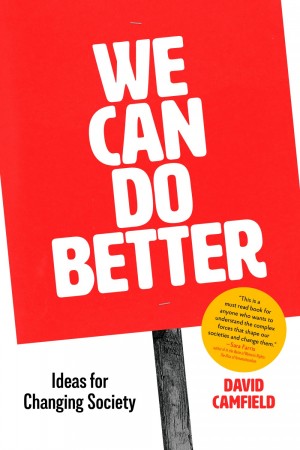
David Camfield. We Can Do Better: Ideas for Changing Society. Halifax & Winnipeg: Fernwood Publishing, 2017. 168 pp.
The breathtakingly rapid changes in the capitalist world around us has left basic political education by the revolutionary left trailing behind.

When I was a union rep, one of my most challenging assignments was assisting a Communications Workers of America (CWA) bargaining unit at a Boston-area telemarketing firm. Most CWA members in New England had call center jobs at the phone company, with good pensions, health insurance, and full-time salaries. As service reps, they fielded in-coming calls from customers with problems, questions, or new orders to place. In contrast, the telemarketing staff only interacted with the public, on behalf of various clients, via out-bound calling. Like the workers depicted in Boots Riley’s hilarious new film, Sorry to Bother You, they made cold calls to people who did not want to bothered, at dinner time or anytime, with a pitch for a new product, service, or donation to a political cause.

Jacobin published on June 9 an essay by Catarina Príncipe under the title “The Portuguese Myth.” We’ve deeply appreciated her thoughts on the political changes in the country since 2015, considering it was written by a spokesperson for a minority current inside the Left Bloc, a status Príncipe failed to mention. This should have been stated, for transparency’s sake, since Príncipe offered an alternative political resolution and a competing list for the leadership of the Party in 2016, which were defeated.1
Rohini Hensman. Indefensible: Democracy, Counterrevolution, and the Rhetoric of Anti-Imperialism. Haymarket Books, 2018. 400 pp.
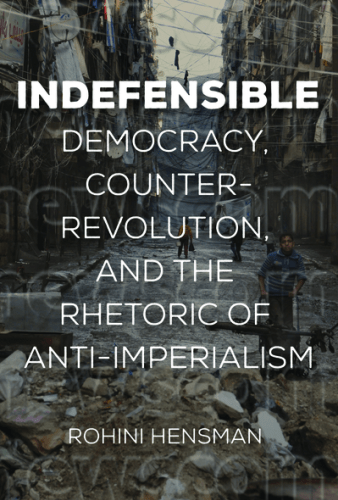
Rohini Hensman starts off her book with two simple questions: How has the rhetoric of anti-imperialism come to be used in support of anti-democratic counterrevolutions around the world? And what can we do about it?
Gayle McLaughlin. Winning Richmond: How a Progressive Alliance Won City Hall. Hard Ball Press, 2017. 306 pp.
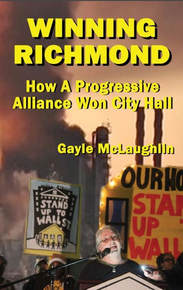
On August 6, 2012, an elephantine plume of black smoke rose over Richmond, California, sending some 15,000 people suffering from respiratory distress to area hospitals. Most of the city’s 110,000 inhabitants received “shelter-in-place” warnings to stay indoors and tape their windows shut to avoid breathing the deadly fumes. The smoke came from a massive fire at Chevron’s giant fuel-processing facility in the city, caused by slack maintenance and slacker management oversight. It wasn’t the first or the last mishap at the refinery. Since 1989, 14 such eruptions have been reported. In Richmond at least, the enemy has a name and a besmirched face.
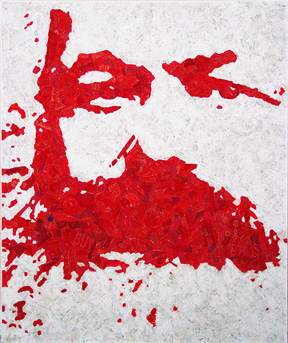
No one should underestimate the changes in the social world occurring since Marx’s day, or overestimate to what extent we find ready-made answers to contemporary issues in his writings. Nonetheless, Marx’s analysis uncovers essential features and defining tendencies of capitalism far better than alternative frameworks.
Below is the text of Frieda Afary’s presentation to a group of international labor activists on June 10, 2018.
Reprinted from New Politics, Spring 1967, pages 95-97 
Making It, by Norman Podhoretz, Random House, New York, 1967. 360 pp. $6.95.
Tynan Left and Right by Kenneth Tynan, Atheneum, New York, 1967. 479 pp. $8.95.
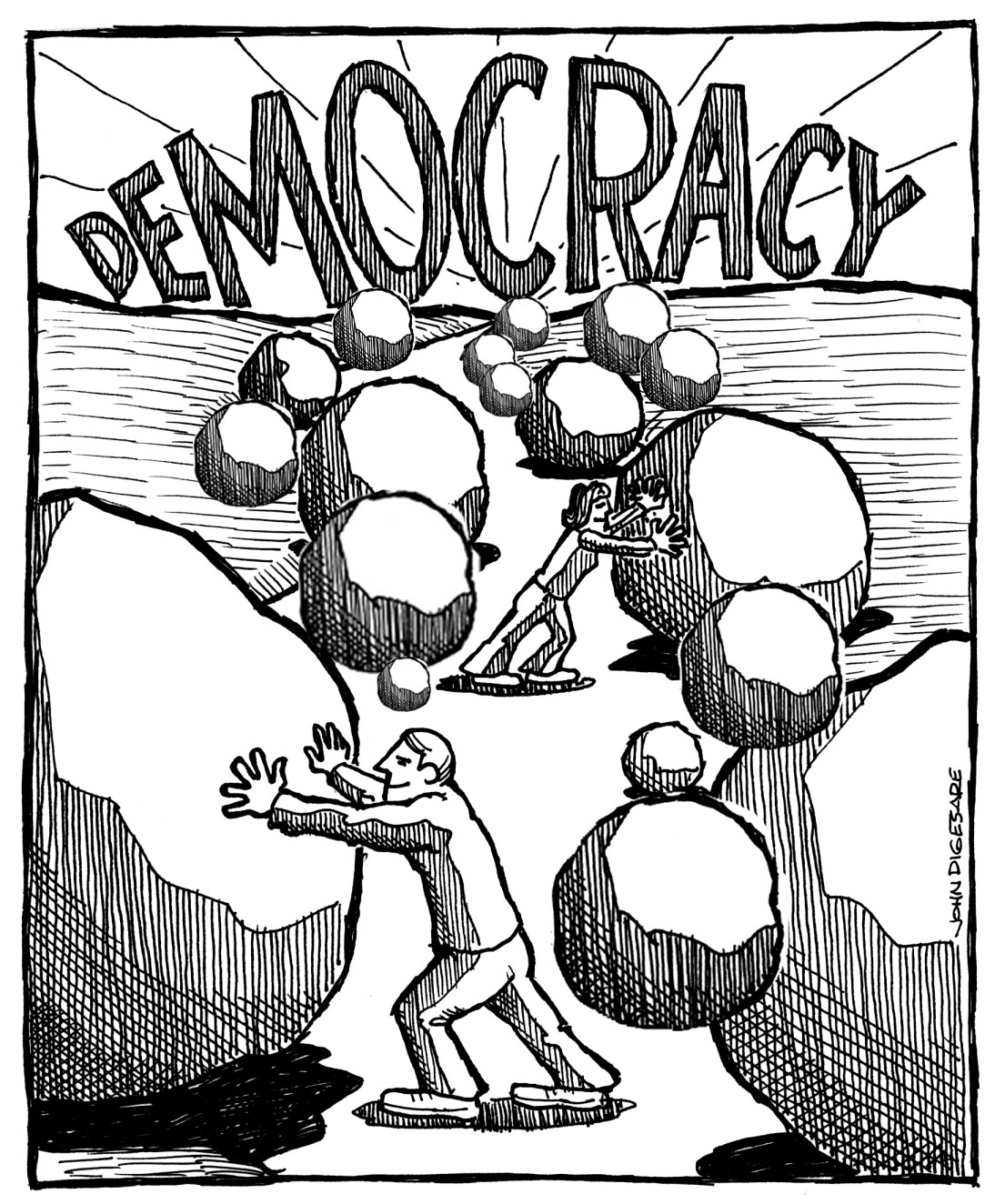
Last fall 15,000 scientists issued a second dire notice to humanity that we are on a collision course with the limits of our planet. They concluded, “To prevent widespread misery, humanity must practice a more environmentally sustainable alternative to business as usual,” including “reassess[ing]… the role of an economy rooted in growth.” That means that we have to challenge capitalism; there is no capitalism without growth. Rosa Luxemburg’s statement on the eve of World War I that the choice is between socialism or barbarism was never more true. But today our struggle is about our very existence.
- « Newer Posts
- 1
- …
- 27
- 28
- 29
- 30
- 31
- 32
- 33
- …
- 48
- Older Posts »