Category: Left Politics
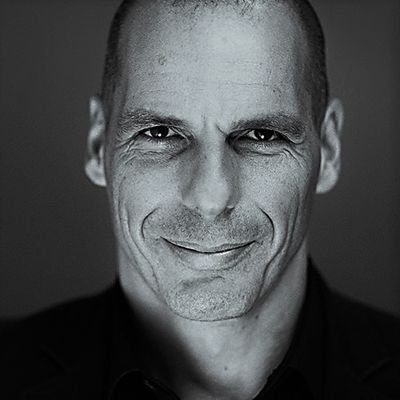
Adults in the Room: My Battle with the European and American Deep Establishment
By Yanis Varoufakis
Farrar, Straus and Giroux, 2017
And The Weak Suffer What They Must?
By Yanis Varoufakis
Nation Books, 2016
Along with French economist Thomas Piketty, former Greek finance minister Yanis Varoufakis is making economics sexy again. Journalists enjoyed snapping photos of Varoufakis, clad in a black leather coat, commuting to the finance ministry’s offices on his Yamaha motorcycle. But his short tenure in the Greek government was marked by clashes with the country’s creditors and ultimately with the leadership of Syriza, the left-wing party that came to power in Greece in early 2015.

John E. Chiaradia was a longtime reader and sometime contributor to New Politics.
How does one come to political activism? Are we influenced by the times, by our personal experiences, by some innate quality within us, or are each of these just the necessary ingredients of activism? John (Giovanni) Emilio Chiaradia left Italy as a child, a political refugee from mid-20th-century Italian fascism. His family escaped the turmoil engulfing their country for the welcoming haven of the United States, landing in New York City and eventually settling in central California. There they were once again confronted by nationalist politics and uprooted from their home. They were compelled to leave California following the bombing of Pearl Harbor as John’s mother, Antoinette, was not yet a naturalized citizen. In the wake of the war, the US government deemed all non-naturalized people from Axis countries, and even citizens in the case of Japanese Americans, to be potential threats to national security. They were commanded to vacate a 100-mile exclusion zone from the west coast. The family was forced to leave what few possessions they had and return to the Bronx.
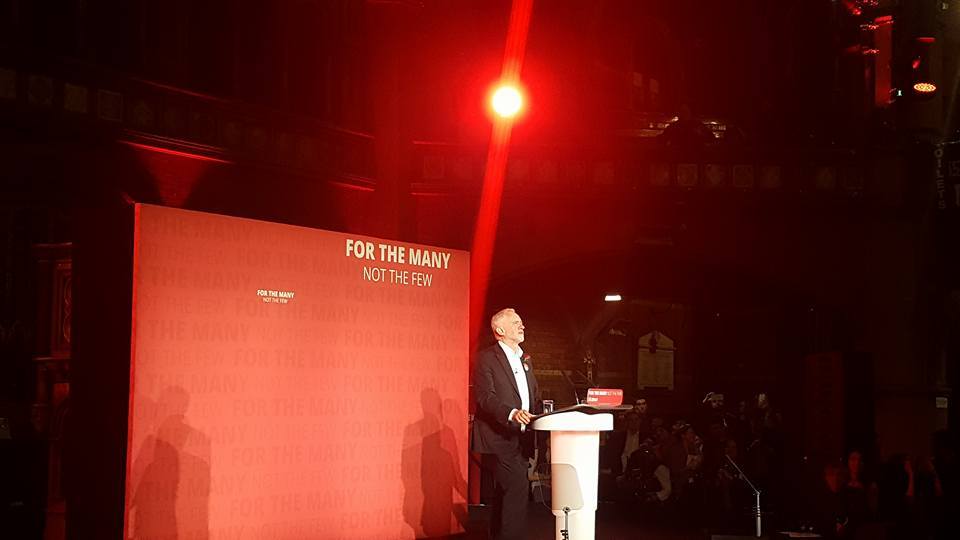
It is now seven months since Theresa May called a general election with the aim of increasing her majority and the Daily Mail published a front page headlined “Crush the Saboteurs”. The spring of this year, as regards parliamentary politics, seems like another world.
 The Russian Revolution, the only—if only briefly—successful workers’ revolution took place in the era of photography and film, consequently thousands of hours of film footage from the revolutionary period existed. In the late 1920s, as the revolution’s red star was fading, a Russian-born man decided to collect as much as possible of the existing film—some of it shot by individuals, some by governments, some by new agencies, some by who-knows-who. Eventually, over 50 years this man collected some 271 motion picture film reels. He was a fanatic. Glad he was.
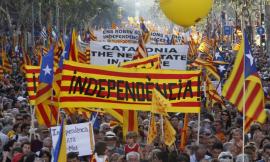
Dan La Botz, a co-editor of New Politics, interviewed Josep María Antentas, teacher of Sociology at the Universitat Autònoma de Barcelona (UAB) and anticapitalist activist.
DL: The Catalan independence movement and its suppression by the Spanish state have garnered the attention of the world. What has been your attitude toward the question of Catalonia?
JMA: My traditional position is the defense of the right to self-determination, with the idea that when a group wises to exercise this right its position must be made specific. In the current situation and since the independence movement began in 2012, the defense of a “Yes” vote has a more democratic content than the “No” vote, which is associated exclusively with the reactionary defense of the Constitution and the political regime.
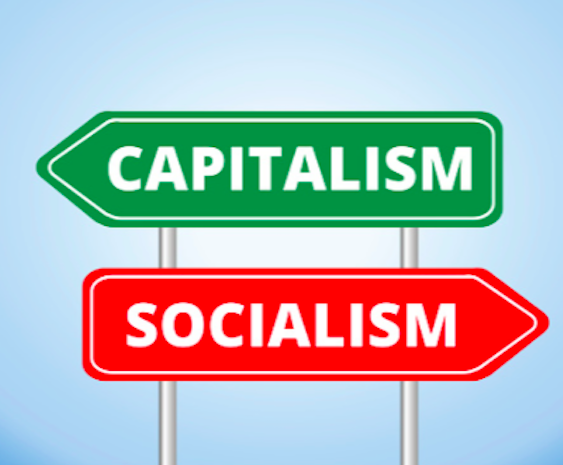
Bennett Muraskin:
I look at the world for many decades now and do not see evidence that the class struggle is alive and well, except to the extent that workers are on the losing end. But even more than that, it does not appear that the class struggle is playing a key role anywhere in the world. All of the major conflicts are being fought on national, ethnic and/or religious grounds. In these conflicts, whether they are in Syria, Afghanistan, Yemen, Niger or even Catalonia, workers line up with their tribe.
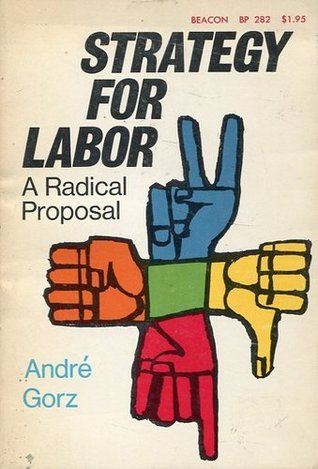
This August a hundred years ago, Lenin began to pen The State and Revolution in exile once more following a crippling defeat. Just one month prior, workers had risen and laid siege to government posts, but didn't know what to do beyond that. History didn't come down from above and give them a revolutionary society. This became obvious after the government sent troops to quell the uprising. The Bolsheviks, for their part, were caught off guard, and the workers’ movement underwent yet another cycle of repression.

We need a socialism that goes beyond capitalism. And not just for moral reasons.
John Judis has all the right intentions. He’s looking at the resurgence of openly democratic socialist currents in the United States with a mix of excitement and trepidation. Excitement, because he knows how desperately the country’s workers need social reforms. Trepidation, because he worries that the new left might fall into the familiar traps of insularity and sectarianism.
.j.jpg)
Following recent elections that were widely boycotted, a Constituent Assembly charged with rewriting the Venezuelan constitution met in early August. Venezuelan President Nicolás Maduro called for the Constituent Assembly in May, proposing it as a solution to the crisis that Venezuela has faced in recent years. The U.S., the right-wing opposition in Venezuela and the Washington's European and Latin American allies denounced the Constituent Assembly as an undemocratic power grab. When the "Constituent" convened, the Trump administration announced new sanctions against Venezuela.

After reaching 25,000 members, DSA held its largest bi-annual National Convention with the hopes of creating the political clout necessary to shift the country toward a socialist vision that exceeds that of social-democratic capitalism. The four days reenergized old chapters and allowed new chapters to recognize the potential of a national organization. Overall, DSA has effectively begun resurrecting the socialist movement in the United States. All DSA members should be proud of this achievement. We should, however, be cautious in overestimating the outcomes of the convention. For behind the great rejuvenation that occurred in Chicago there were also ideological and structural currents that may limit DSA in the long run.
The socialist movement in the United States took a big step forward this past weekend as almost 700 delegates representing over 25,000 members of the Democratic Socialists of America (DSA) met at the organization’s biennial national convention in Chicago. This convention, the first since DSA more than tripled in size following last year’s election, brought together delegates from all of the country’s major cities and many towns large and small.
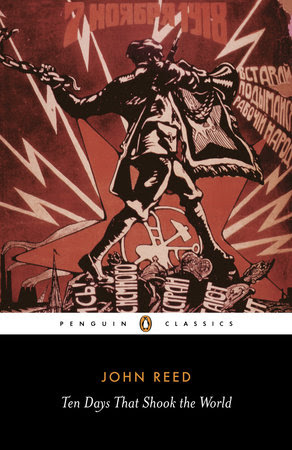 Ten Days That Shook the World By John Reed(Introduction by Vladimir Ilyich Lenin and A. J. P. Taylor) Penguin Classics / Random House, 368 pages revised ed., 2007 (originally published 1919) Paperback: $13.44 (available from numerous retailers) ISBN: 978-1420-930-252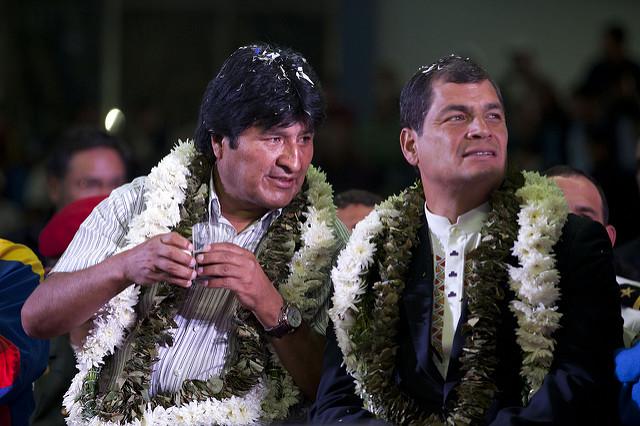
As rightwing governments take power in Argentina, Brazil, and elsewhere across the region, Ecuador’s leftwing Alianza País (Country Alliance, AP) and Bolivia’s Movimiento al Socialismo (Movement Towards Socialism, MAS) and Bolivia have managed to hold onto power.
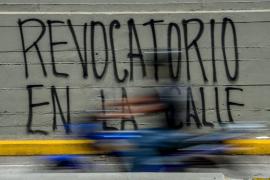
The Bolivarian revolution led by Hugo Chavez from 1999, opened a new chapter in the global struggle for social justice. For anti-capitalists across the world, his ‘21st century socialism’ pointed ahead to a new kind of power, defined in the Bolivarian Constitution as “participativa y protagonista” – a participatory democracy in which the people were the active subjects.
It is hard to reconcile that hope with the realities of Venezuela today. The spokespersons of the new State continue to proclaim their revolutionary credentials. Yet they oversee a society in profound and worsening crisis, where hunger has reappeared in a country which just four years ago was congratulated by the U.N. for its virtual elimination of extreme poverty. The right wing media – nationally and internationally – have taken great delight in publishing photographs of food queues marshalled and overseen by armed National Guards. The supporters of Chavismo instinctively refuse to believe the images. But the social crisis they symbolize is real.
 In recent years, Rosa Luxemburg’s name has gradually become more prominent in Chinese academia. A number of influential academic journals have even opened up research columns paying tribute to the revolutionary theorist, nearly a century after the first discussion of her work in China. This should be regarded as a second revival of the research on her in China. Compared with the other leading figures in the history of the international communist movement, whether worldwide or just in China, the present "Rediscover Luxemburg" phenomenon is unique. Regarding other leading figures, there have not been so many ups and downs.

At one level, France’s 2017 elections were a huge triumph for global capital. A young and very modern neoliberal candidate, Emmanuel Macron, won huge majorities for his new political party, On the Move (En Marche), in both the presidential and the legislative elections. At another level, however, Macron’s pathway forward is fraught with challenges, both from a long stagnant economic and a restive French public, many of whom stayed away from the final round of voting.
In the foreword to Subversive Lives: A Family Memoir of the Marcos Years, the authors write it “was not intended to be about communists and communism”—still the book provides remarkable insights into the Philippine communist movement. The book is a collective memoir of the surviving Quimpo family, relating their lives during the years of the Marcos dictatorship from the early seventies to the mid-eighties. With many of the siblings involved in the revolutionary movement, their memories furnish stories of underground organizing, imprisonment and torture, repression and resistance.
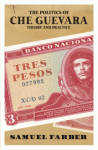
In Latin America we have a saying, “Poner el dedo en la llaga,” a phrase that means to call attention to a delicate or worrisome point. However, llaga means literally an open sore or ulcer. I believe that Cuban socialist and scholar Samuel Farber puts his finger indeed on a significant sore point in revolutionary history with his latest book, The Politics of Che Guevara: Theory and Practice. While recognizing the undeniable determination, egalitarianism, and selflessness of Che Guevara in his fight against imperialism, Farber meticulously exposes the contradictions of Che’s thought and the political, economic, and social detours that Guevara took in his honest quest for a better world.

Democratic Socialists of America (DSA) is singular on the left as being both a broad radical socialist organization, encompassing left social democrats, Marxists and even a smattering of anarcho-syndicalists, combined with a strong face toward electoral politics. But an electoral orientation per se is not and cannot be the common denominator of our work. It is true that without an electoral face, any political organization is hamstrung and those on the left who argue that support for any Democrat anywhere is treasonous paint themselves into a corner. Electoral politics on the level it can be rationally conducted is worth doing. That, for me, is not in dispute. Its place in our work is what is problematic. Thinking in terms of power is about more than electioneering.
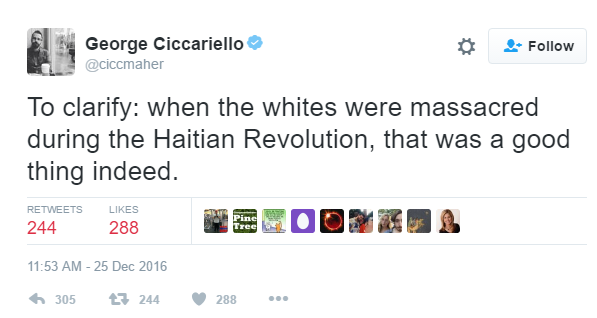
Over the past few years, the following sequence has occurred often enough to have become a familiar pattern.
- « Newer Posts
- 1
- …
- 30
- 31
- 32
- 33
- 34
- 35
- 36
- …
- 48
- Older Posts »