Category: Left Politics
As Kermit the Frog, America’s most famous Muppet, says: “it’s not easy being green.”
Preliminary results of the Green Party’s latest national campaign confirm the reality of his observation. The Party’s much-touted goal was getting 5% of the vote on Nov. 8, so it could qualify for $10 million in federal funds for 2020 campaigning and maintain broad nationwide ballot access.
 On October 6, 2008, an executive with Citigroup sent John Podesta, then co-chair of Barack Obama’s transition team, a list of possible cabinet appointments. There were still 29 days left in the hard-fought campaign. But the list, according to the New Republic, was almost entirely on the money; for who went on to fill senior posts in the Obama Administration, including Rahm Emanuel as chief of staff, Eric Holder as attorney general, Susan Rice as U.N. ambassador, and Janet Napolitano to lead Homeland Security.

For many years now Nicaraguans on both the right and the left have referred to Daniel Ortega, a leader of the Sandinista Revolution of 1979, as a “dictator.” Now it appears that when country votes on November 6, he may succeed in becoming the country’s virtual monarch. Dan La Botz, author of the new book What Went Wrong? The Nicaraguan Revolution: A Marxist Analysis, asks here how the Nicaraguan revolution was betrayed and what ideas and decisions of the Sandinistas themselves were responsible for the betrayal.
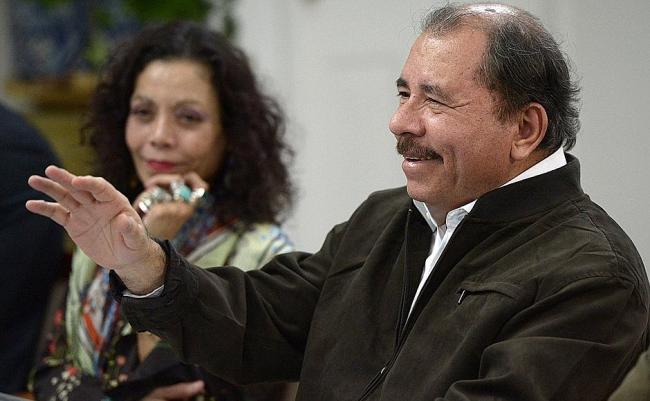
On July 29th, Sandinista President Daniel Ortega unseated 16 opposition members and 12 alternates from Nicaragua’s legislature, eliminating one of the few remaining obstacles to one-party rule. Days later, Ortega named his wife, Rosario Murillo, as his vice presidential running mate for the November elections. Political analysts inside and outside of the country see the move as an attempt to secure a line of family succession, as Ortega, 70, enters the final years of his political career.
My most enduring memory of the student movement was of the power and the creativity that it brought. At Millbank, on Day X, in the university occupations. It was what some of us called a ‘magic moment’, where political space-time seemed to curve around us, where it felt that we might win, and that what we did mattered. While there was a degree of naive optimism that fueled that, there was also truth. Others had those moments during the 2011 riots, during 1968. Having that momentary power taken from you is painful – we don’t realise how little power we have until we glimpse it.
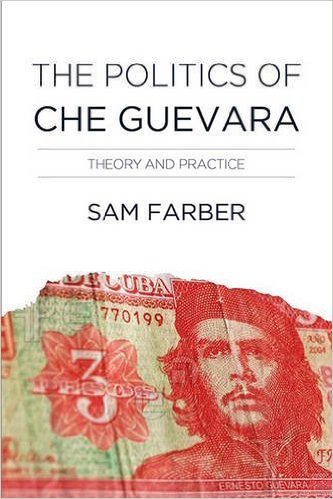
Samuel Farber, The Politics of Che Guevara: Theory and Practice. Chicago: Haymarket Books, 2016. 192pp. $16.95
For two generations of activists, Ernesto Che Guevara has symbolized a kind of selfless heroism. His relative youth at his death in 1967 (he was 38) conserved his air of rebelliousness and the image of a man interested only in the struggle, rather than in power. Yet Sam Farber who acknowledges these qualities, describes him early in his new book, The Politics of Che Guevara, as “irremediably undemocratic”. The contradiction is striking and central to Farber’s critical analysis of Che’s life as a revolutionary.

The Syrian Revolution has tested the left internationally by posing a blunt question: Which side are you on? Do you support the popular struggle against dictatorship and for democracy? Or are you with Bashar al-Assad's brutal regime, his imperial backer Russia, his regional ally Iran and Iran's proxies like Hezbollah from Lebanon?
Tragically, too many have failed this test.
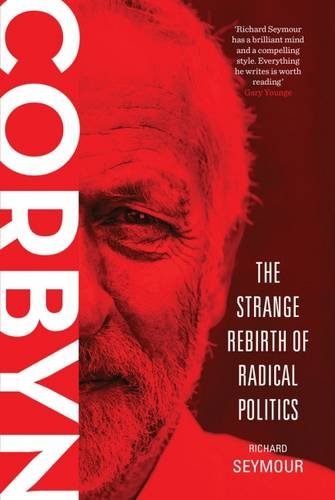
Richard Seymour, Corbyn: The Strange Rebirth of Radical Politics. New York: Verso, $19.95. 256pp.
This time last year I believed Jeremy Corbyn was wrong to stand for the Labour leadership; he would, I thought, get a derisory vote and merely reinforce right-wing hegemony and the marginalisation of the Labour left. Since then the unexpected has happened, and perhaps we should all be a bit cautious in pronouncing on what is and is not possible.
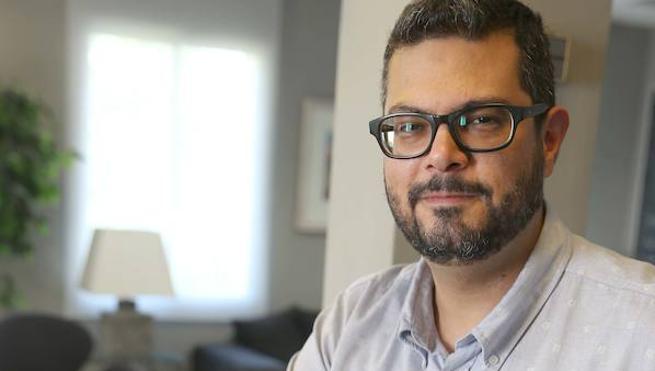
When the 15-M movement broke out onto the streets across Spain in 2011, it didn’t coalesce into a series of political parties on either end of the political spectrum. In fact, there was a common declaration that stood out among all of the indignados: “They don’t represent us”.
I. Introduction
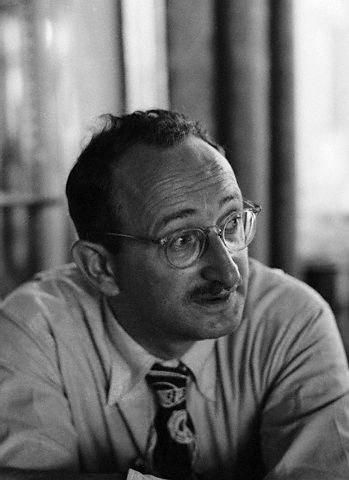
When the politics of Sidney Hook, a public intellectual and philosopher, are remembered today, they are generally associated with a right-wing variant of social democracy which was compatible with both neoconservatism and McCarthyism.

According to a recent GenForward survey by political scientist Cathy Cohen’s Black Youth Project, based at the University of Chicago, young people across the board, dissatisfied with both the Democrats and the Republicans, are eager for a fundamental political change. That is the good news.
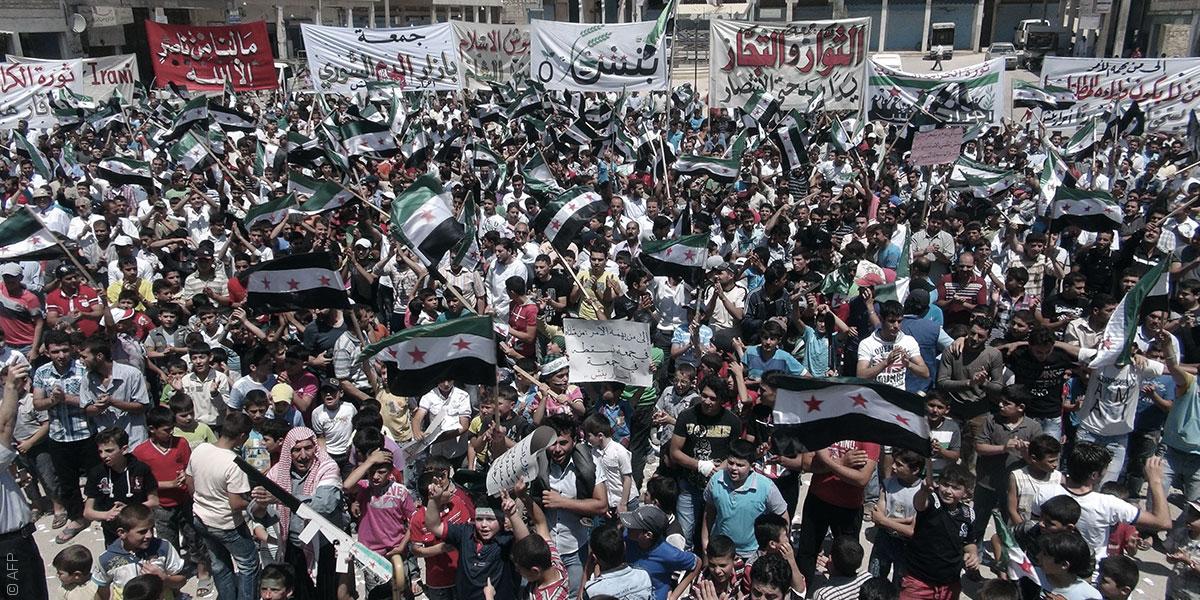
“But then came Syria, and my hypocrisy and the fragility of those ideals became exposed,” wrote Palestinian activist Budour Hassan in her latest brilliant piece entitled “how the Syrian Revolution has transformed me”.
Bernie Sanders’ campaign for a “political revolution” lit up the 2016 primary election season like a meteor across the sky. Contrary to conventional wisdom that he’d peak and fade early, Sanders’ challenge to the Democratic party machine lasted throughout the primaries. Surpassing all expectations, he won 23 primary and caucus contests, raised an astonishing $222 million almost exclusively in small donations, and gathered over 1800 pledged delegates.
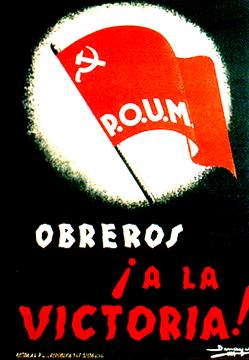
On 18 July 1936, part of the Spanish army, backed by the upper classes and the Catholic church, rose up with the intention of ending the country’s experiment in democracy and social reform (the Second Republic 1931-6). The resulting civil war would be one of the pivotal events of the 20th century. For some it was the rehearsal for the Second World War, for others the “last great cause”.

As the US primary season closes we are faced with a bitter choice between an uninspiring Democrat and a shockingly popular racist demagogue. As such, writers on the Left are bracing for the general election and lining up behind one of two supposed “strategies”: Fight the Right and Bernie or Bust.
 The American left is today confronted with a situation it has not dealt with in some time—something approaching broader political relevance. From the rise of Occupy to Black Lives Matter to the Bernie Sanders campaign, movements of the left are having a sustained impact on American politics that they have not had for decades.
Wilson’s recollections of his association with Correspondence newsletter that was published in Detroit, Michigan, from 1959 to 1967, and of C.L.R. James.
 This essay was originally a talk at the conference held at the New School for Social Research on April 21-22, 2016.
 At this moment I find myself swinging between optimism fueled by the previously unimaginable appeal of Bernie Sanders’ “socialism,” the energized base of young people attracted to his campaign, this evidence that the neoliberal consensus is dead, and despair about the HUGE gap between this political opening and the organizational capacity of the revolutionary socialist left. Like many others, I’m asking: can anything be done?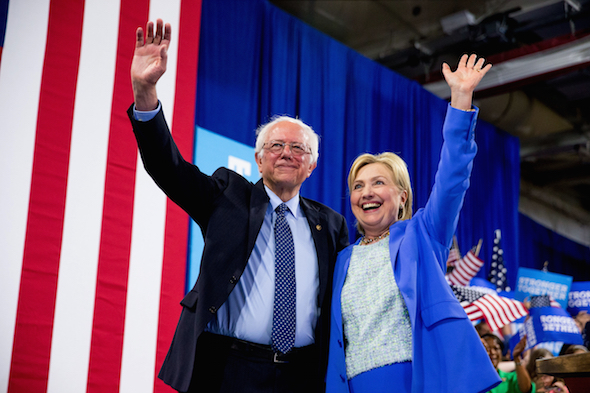
What an embarrassment for Bernie Sanders and those, myself included, who thought he would not descend so cravenly into the swamp of political sellout.
With abstention up by 4% from the last parliamentary elections in the Spanish state on December 20, 2016 (69.84% participation against 73.2%), the results of what we might call a “second round”, with the right wing Popular Party (PP) increasing its number of votes (600,000 extra votes and 33% of voters) and its number of seats to 137 (against 123 previously), and a Socialist Party (PSOE) which, despite losing 100,000 votes (22.7% of voters) and five seats, remains the second biggest political force in the country.
- « Newer Posts
- 1
- …
- 32
- 33
- 34
- 35
- 36
- 37
- 38
- …
- 48
- Older Posts »