
Category: Left Politics

The 8 June election result has re-energised Labour’s activist base and helped put basic working-class demands back on the agenda. The increase in turnout among young voters, and the huge Labour lead among young voters, signal a major shift in British politics. All of this opens up a new period of Labour revival and recomposition.
A few days ago, Paul Krehbiel—a member of the Committees of Correspondence, an organization with roots in a split from the Communist Party USA in 1991—had an essay posted on Portside entitled "United and Popular Front: Lessons from 1935-2017."
Since 2004, members of the Richmond Progressive Alliance (RPA) have won ten out of the sixteen city council and mayoral races they have contested in their majority minority city of 110,000.

Raoul Peck’s powerful documentary “I Am Not Your Negro,” which was nominated for an Academy Award, has brought the great writer James Baldwin (1924-1987) to a new generation of Americans who may have been unfamiliar with Baldwin’s life and writings. “I Am Not Your Negro” presented Baldwin as a powerful voice of the black liberation movement, but hardly mentioned his longtime commitment not only to full equality for black Americans, but also to socialism.
Baldwin wrote in No Name in the Street that he had been a "convinced fellow traveler" at 13 who had marched in the May Day parade and then became a "Trotskyite" by age nineteen. Too young to have been involved in Harlem’s Communist Party in the 1930s, he claimed to have been a member of the Young People’s Socialist League, but that has never been confirmed.
Alex Kolokotronis is a 1st year PhD student in Political Science at Yale. He self-identifies as a libertarian socialist and is interested in studying anarchist movements, post-state forms of governance and public power, and associationist self-managed socialism. He is the co-founder of Student Organization for Democratic Alternatives (SODA), a group dedicated to implementing participatory budgeting and participatory democracy at the university level. Participatory budgeting is a directly democratic process by which ordinary people get to deliberate and decide how to allocate a designated budget. He previously worked in Worker Cooperative Development with Make the Road New York and the New York City Network of Worker Cooperatives.
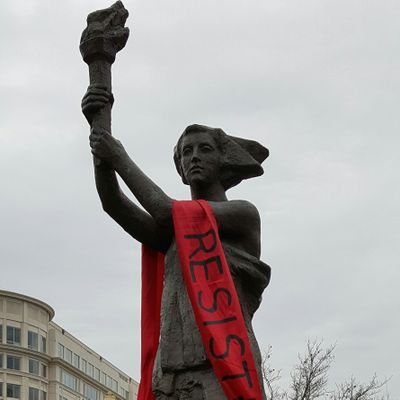
The first few weeks of Donald Trump’s presidency has seen an amazing explosion of mobilizing to oppose him and his administration on oh-so-many levels. And that has been heartening.
But it is not enough.

Jason Schulman is a member of the Democratic Socialists of America, co-editor of New Politics, and author of Neoliberal Labour Governments and the Union Response (Palgrave Macmillan, 2015).
He spoke to Workers’ Liberty about the challenges facing the left in America under Donald Trump's presidency.
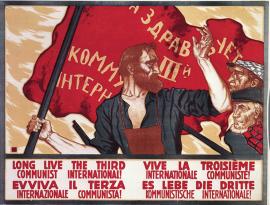
Book Review – John Riddell (editor and translator), To the Masses: Proceedings of the Third Congress of the Communist International, 1921 (Brill/Haymarket, 2016), £39.99.
To the Masses is the last volume of a hugely ambitious project to make the proceedings of the (four) congresses of the Communist International held during Lenin’s time available in English. It’s an extraordinary achievement for John Riddell, a Canadian revolutionary socialist historian and activist.
In very different ways, Helena Sheehan’s The Syriza Wave: Surging and Crashing with the Greek Left and Looting Greece: A New Financial Imperialism Emerges by Jack Rasmus look back over the period of the Greek debt crisis, and the parallel rise and fall of Syriza, and try to take stock.

One hundred years ago the most democratic revolution in history took place. Led by the Bolshevik Party, the Russian working class, allied with the peasantry and organized into mass democratic institutions—the soviets—took power.
One hundred years ago, in exile in Zurich during the spring of 1916, Lenin started writing one of his most important and influential works, his pamphlet on imperialism. What is the relevance of this work today?
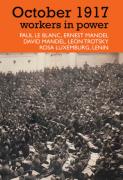
Fred Leplat and Alex de Jong, eds. October 1917 – Workers in Power. London: Merlin Press, the IIRE and Resistance Books, 2016. 256 pages
Nearly a century ago, the workers and peasants of Russia overthrew the Provisional Government and established the world’s first socialist republic. It was a seminal moment in human history. For the capitalists of the world, it was an event to be feared and they marshaled their forces to contain Bolshevism.
I
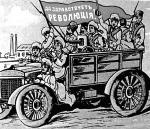
During the tumultuous years that followed the horrors of World War I, especially in the period of 1917 to the early 1920s, the Russian working class became an inspiration to workers around the world.
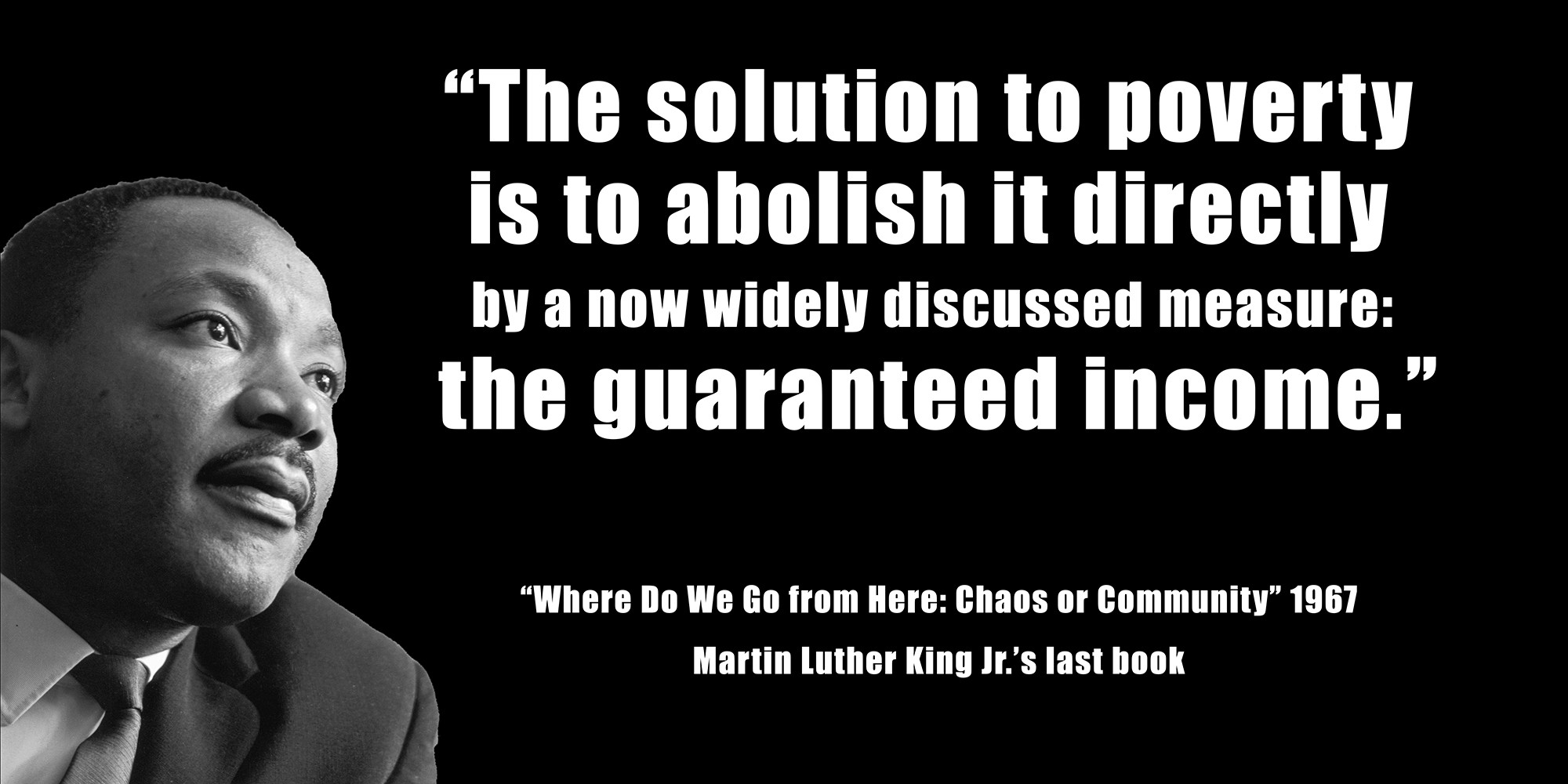
Marking an anniversary of a book’s publication is, appropriately, reserved for books that were widely read when they first appeared many years ago. Books we commemorate with an anniversary are ones that ushered in a new way of thinking and influenced the way society tries to make sense of the world. Martin Luther King Jr.’s last book, Where Do We Go from Here: Chaos or Community did neither of these things.
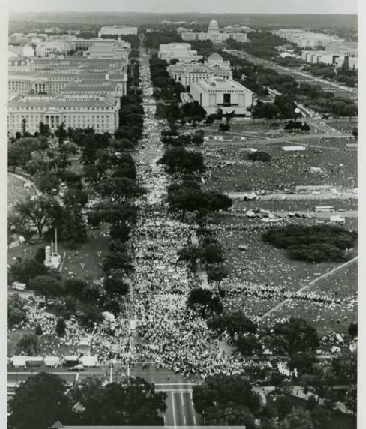 The Women’s March was glorious. Yes, I disagree with much said in the speeches, but that wasn’t an issue because like the vast majority of people who participated, I didn’t go to hear celebrities or politicians talk. I participated to show my rage and frustration at Donald Trump and the policies he and the GOP are preparing to impose on us. Women like me, disgusted, dismayed, enraged at Donald Trump’s misogyny, which the GOP has endorsed, flooded to this demonstration.
We brought family, friends, supporters, male and female, protesting the human rights and climate deniers whom Trump has brought with him into office. There was some diversity but this was primarily a march of young White women who carried signs about their bodies, “Pussy power” being the most prominent at the New York march. “Pussy power” strikes me as especially apt. Like women who fight patriarchy, it’s naughty. It evokes the strength in numbers. Most of all, the march birthed a new social movement which will owe its life to pussy.

What explains the enthusiasm in certain quarters of the left for Vladimir Putin and Russia?
[Note: This article is forthcoming in the Winter 2017 issue of New Politics.]
What explains the enthusiasm in certain quarters of the left for Vladimir Putin and Russia? Why do some cheer on Russian bombing in Syria, dismissing out of hand the evidence from Physicians for Human Rights, Amnesty International, and Human Rights Watch1 that they are criminally targeting hospitals? Why do some try to justify Russia’s takeover of Crimea or its blatant intervention in Ukraine?


Trump is President. To avoid repeating the causes of Trump winning requires knowing what the causes were.
We all know very well by now that the white working class did not cause Trump to win the elections. Article after article have made the case, typically pointing to Nate Silver’s finding that the median household income of Trump supporters in the Republican primary was $72,000, roughly $10,000 more than the median household income for all whites. In the general election, Clinton won the majority of all voters earning $50,000 or less. Trump supporters are many things. They are undoubtedly whiter. They are also less likely to be educated and more likely to work in blue-collar jobs. But there’s one thing they’re not: overwhelmingly working-class.
A refreshing, unconventional view, with none of the usual leftist idolizing of Castro. We talk about Fidel's popularity in Cuba among the older generation, his success in standing for Cubans against U.S. designs, the dictatorial power he seized and some of the huge moves he made in Africa, some good, some awful (Eritrea, Syria, Ortega's Nicaragua today).

Post-election left analyses have accurately identified many of the immediate causes for our current debacle. Voter suppression, the Electoral College, the Democratic Party, the Clinton campaign, Hillary Clinton, labor leaders, hacked emails, FBI chief James Comey, Democratic primary voters who voted for Clinton, minority voters who didn’t turn out in sufficient numbers — the list goes on. And all of these deserve blame. But I’ve seen very little self-reflection from the left. There have been some vigorous defenses of left actions, but little self-criticism and little to suggest that the same mistakes won't be repeated again.
- « Newer Posts
- 1
- …
- 31
- 32
- 33
- 34
- 35
- 36
- 37
- …
- 48
- Older Posts »
