Category: Civil Liberties/Repression


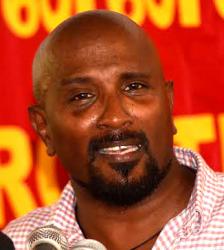
ImageThe case of Kumar Gunaratnam (KG) is a typical example of justice turning into its opposite. The Kegalle magistrate gave his verdict on March 31 imposing one year imprisonment and Rs. 50,000 fine on Kumar Gunaratnam for violation of immigration law, i.e., overstaying visa.

It appears to be a simple technical issue. Mr. Noel Mudalige, an Australian citizen, was granted visitor visa to enter Sri Lanka. After a month, he refused to go back and expressed his willingness to stay in Sri Lanka even requesting dual visa status as a first step. He was arrested and the police filed a case against him for defying immigration law of Sri Lanka. Hence, one may argue that the verdict given by the Magistrate is absolutely valid and legal. However, the real story behind this case has revealed time and again the true nature of the Sri Lankan democracy in its neoliberal phase.

Image

This is the second of three book reviews that will look at what Mexican intellectuals on the left have written in an attempt to understand Ayotzinapa and what it symbolizes and signifies for their country and its future. The first review appeared here. – DL

Manuel Aguilar Mora and Claudio Albertani, eds., La noche de Iguala y el despertar de México. Mexico: Juan Pablos Editor, 2015. Pp. 382. Photographs. Illustrations. Maps. Tables. (Available only in Spanish at this time.)

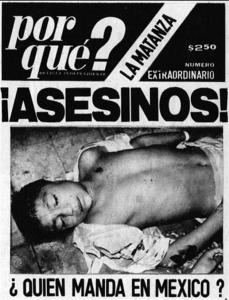
The Night of Iguala and the Awakening of Mexico (as we translate the title of this book), like Sergio Aguayo’s From Tlatelolco to Ayotzinapa, deals with the horrifying killing of six people and forced disappearance of 43 students of the Ayotzinapa Rural Teachers College in the town of Iguala, Guerrero on September 26, 2014.

Image

This is the first of three book reviews that will look at what Mexican intellectuals on the left have written in an attempt to understand Ayotzinapa and what it symbolizes and signifies for their country and its future. – DL

Sergio Aguayo. De Tlatelolco a Ayotzinapa: Las violencias del Estado. Editorial Ink, 2015. (This book in Spanish is available in several formats including Kindle, which is how the reviewer read it.)

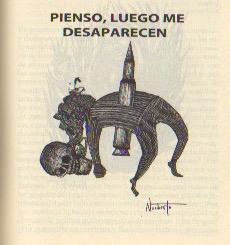
The horrifying killing of six people and forced disappearance of 43 students of the Ayotzinapa Rural Teachers College in the town of Iguala, Guerrero on September 26, 2014 had a dramatic impact on Mexico.

Image

“We are being targeted for contract killing ordered by the judiciary and the armed forces. Our lives are hanging by a thread.”

Image

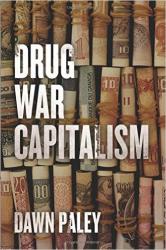
Dawn Paley. Drug War Capitalism. Oakland: AK Press, 2014. Notes. Index.

Dawn Paley’s Drug War Capitalism presents an overview of the drug wars in several Latin American countries: Columbia, Mexico, Guatemala, and Honduras. Mexico receives the most attention, and Paley provides a wealth of information from a variety of sources documenting the impact of the war-on-drugs on Mexican society and on the role of the United States. She focuses especially on the relationship between the drug business, government policies, and the militarization of Latin American societies, elucidating the role of U.S. policies such as Plan Mérida. She demonstrates the nefarious part played by the U.S. government’s overall structuring of both the drug market and the drug war by elaborating on both the military and civilian aspects of U.S policy in an attempt to prove her thesis, which is the war on drugs forms part of a plan—or if not a plan at least a process—that furthers capitalism, especially its expansion “…into new or previously inaccessible territories and social spaces.” (p. 15) Paley’s book contributes to, but does not resolve the debate over the relationship between drug dealers, capitalism, and the state.


Image

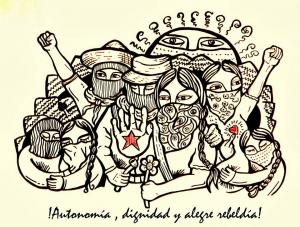
Twenty years ago the Mexican government signed the San Andrés Accords Regarding the Rights and Culture of the Indigenous that granted autonomy to Indian communities. Yet today, some argue that the indigenous people of Mexico, who represent about 10 to 15 percent of the population of the country, are worse off than they were then. What happened and where are things now?

Image

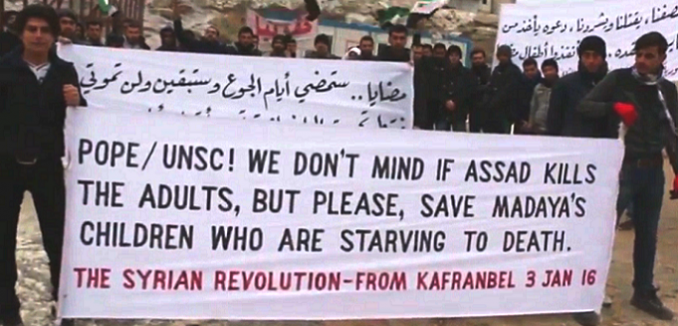
Throughout the world, people have been shocked by the scenes of starving people in the Madaya concentration camp in southern Syria, besieged by the Assad regime and its allied death-squad Hezbollah (which has invaded Syria from Lebanon). Some 40,000 people are trapped, besieged and starved as a weapon of war by the dictatorship which has used every conceivable means to maintain its power over the last five years; people are reported to be eating grass, insects and cats and dogs.

Yet it appears that the main task confronting leftists – i.e., opponents of exploitation, oppression and injustice, advocates of a “another world is possible” – is once again to find whatever excuses, whatever obfuscation, whatever mitigation they can on behalf of the tyrannical fascist regime responsible.

Image

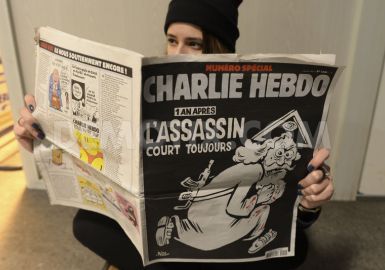
Two French Islamist gunmen of Algerian descent entered a newspaper office in Paris a year ago today and gunned down a generation of Europe’s greatest political cartoonists – many from an anarchist, anti-racist tradition  – along with their co-workers and those protecting them, who also included people of Algerian descent.  In case anyone is confused about the politics of this – it was a far right attack on the left

Image

Mahmoud Beheshti Langroodi has been on hunger strike in Evin prison since November 26, 2015. His health has severely been deteriorated but he has refused to stop his hunger strike.

In a statement from Evin Prison on December 2, 2015, Mr. Beheshti Langroodi announced: “I hereby declare: I, Mahmoud Beheshti Langroodi, who have spent 25 years of my life teaching children of this land, and have more than 15 years of trade union activities in support of our esteemed teachers, have been on hunger strike since Thursday, November 26, 2015 (Azar 5, 1394), to protest against an unjust verdict of “9 year imprisonment” by Judge Salavati in a trial that lasted a few minutes, hoping that authorities, especially judicial authorities, after hearing my cry for justice, take actions ‘to vacate the prison sentence until a judicial review by a competent court with a jury is conducted publically’.”

Image

In this statement, socialist organizations from the Middle East to Europe to North America speak out against war, racism and repression.

WE FIGHT dictatorships, imperialist aggression and Daesh [the Islamic State in Iraq and Syria, or ISIS]. We reject the politics of "national security," racism and austerity. It's time to mobilize!

Image

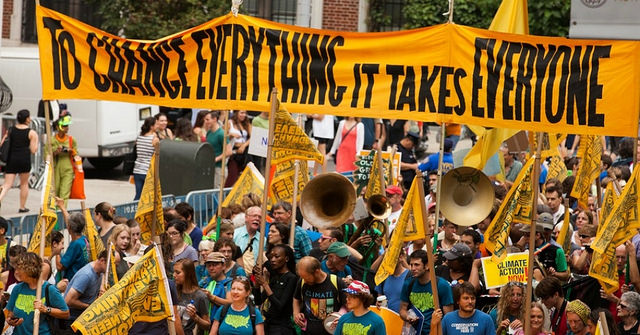
An international coalition of NGOs, civil society groups and political figures such as Naomi Klein and Susan George have called on the French president to lift the ban on protests during the COP 21 climate talks in Paris, which began on November 30th.

Following November’s terror attacks in Paris, the French government has imposed a temporary state of emergency that has prevented any protests from taking place in France. The local coaltion of NGOs and trade unions in in France, Climat 21, had planned a series of protests in Paris before, during and at the end of the climate talks which have now been banned.

Image

The November 13 attacks in Paris: the terror of the Islamic State, the state of emergency in France, our responsibilities

November 13 represents a change in the national and international political situation. The Islamic State (IS, Daesh) has struck again; and even more strongly. In January, the targets were the journalists of Charlie Hebdo, police and Jews. This time, it was the youth of the country that was the target. They did not kill just anyone, just anywhere: they attacked young people, young people in all their colours, whatever their origins, their religion (if they had one), their political beliefs. At least 130 dead, over 350 wounded – at the very least a thousand direct witnesses of the carnage. Many of us have relatives among the victims and, if not, we have friends who have. The shock wave, the emotion, is profound.

Image

The despicable ISIS attacks on Paris and elsewhere have unleashed intensified war and imperialist machinations over Syria and Iraq, as well as repression of immigrants and renewed Islamophobia. Can the left oppose the carnage on all sides without losing sight of its emancipatory aims?

Image

Almost a century ago, the socialist journalist John Reed wrote of the Industrial Workers of the World, popularly known as the Wobblies, “Remember, this is the only American working-class movement which sings.  Tremble then at the IWW, for a singing movement is not to be beaten.”  On the other hand, the sheriff of San Diego complained of his jails filled with Wobblies, “I do not know what to do.  I cannot punish them.  Listen to them singing all the time, and yelling and hollering, and telling the jailers to quit work and join the union.”

Image

In response to the failure of the state to manage and dispose of accumulated trash, a series of protests erupted in Lebanon in August 2015 demanding the toppling of the Lebanese corrupt regime and the basic rights for water, electricity and a clean healthy environment. This article provides an overview of the strategies used by the state to dismantle the protest movements, a class reading of the social movements three months into the protests, and an analysis of the strengths and achievements of the demonstrations.

A still undetermined number of supporters, activists, and sympathizers of two Brazilian left-wing political parties, the Socialism and Freedom Party (PSOL, Partido Socialismo e Liberdade) and the Unified Socialist Workers’ Party (PSTU, Partido Socialista dos Trabalhadores Unificado), are being charged by the State Prosecutor's offices (Ministérios Públicos) of Rio de Janeiro and São Paulo for having made small donations to these two parties during the 2014 elections.

Image

One of the activists linked with PSOL, Lucas Mourão, being charged by the Electoral State Prosecutor's office (Ministério Público Eleitoral) of Rio de Janeiro, explained his case on his Facebook page on October 15. He says in 2014 he donated R$60 (about US$15) to the campaigns of Jean Willys and Tarcísio Mota, two PSOL candidates running for, respectively, Federal Deputy and Governor of Rio de Janeiro.

Image

The English translation of this article was originally published by International Boulevard

From Al Safir Al Arabi

Behind the violence shaking occupied Jerusalem, writes Haneen Naamnih in Al Safir Al Arabi, is a vast colonial enterprise slowly remaking the city.

Image

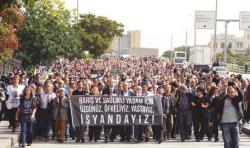
The October 10 Labor, Peace, and Democracy Rally in Turkey’s capital of Ankara was called to demand an end to the violent policies of the Turkish state. Organized by trade union federations and progressive organizations, the demonstration was also supported by the People’s Democracy Party (HDP), a leftwing pro-Kurdish party consistently demonized in recent months by the ruling Justice and Development Party (AKP).

Image

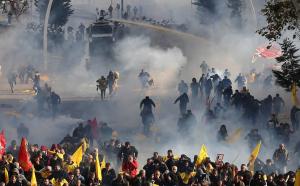
Strikes, boycotts, marches and demonstrations were held throughout Turkey on Oct. 12 in protest against the massacre at the Labor, Peace and Democracy Rally in Ankara on October 10 that killed at least 97 people, with funerals of the victims being held one after another, daily Hürriyet reported.

Turkey’s leading labor unions and professional organization–the Confederation of Public Sector Trades’ Unions (KESK), the Confederation of Progressive Trade Unions of Turkey (DİSK), the Turkish Medical Association (TTB) and the Union of Chambers of Turkish Engineers and Architects (TMMOB)—called for a nationwide strike and boycott for Oct. 12 and 13 to protest the massacre. The Revolutionary Workers Party has issued this statement. –  Dan La Botz, Co-Editor

Image

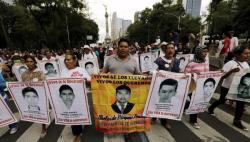
One month from today marks the first anniversary of the horrific state crime perpetrated against the students of the Ayotzinapa teachers' college in Mexico. 

On September 26 and 27, 2014, Mexican police attacked protesting students from Ayotzinapa in the state of Guerrero. The police killed six people, including three students and three bystanders. They forcibly disappeared 43 Ayotzinapa students, who remain missing.

May First/People Link is being attacked in a Denial of Service attack that is unprecedented in its length and viciousness. We have been fighting off this attack for over three weeks now.

We are convinced that the attack is political. We know how the attackers are targeting us, we know they are targeting the entire organization’s systems and we know that they are carefully monitoring our responses because they are quickly adapting to every move our technologists make to return us to service.