Category: Civil Liberties/Repression
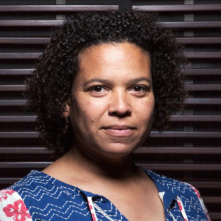
Rachel Herzing lives and works in Oakland, CA, where she fights the violence of policing and imprisonment. She is a co-founder of Critical Resistance, a national grassroots organization dedicated to abolishing the prison industrial complex and the Co-Director of the StoryTelling & Organizing Project, a community resource sharing stories of interventions to interpersonal harm that do not rely on policing, imprisonment, or traditional social services. The following interview was conducted by the True Leap Publishing Collective.

On July 29th, Sandinista President Daniel Ortega unseated 16 opposition members and 12 alternates from Nicaragua’s legislature, eliminating one of the few remaining obstacles to one-party rule. Days later, Ortega named his wife, Rosario Murillo, as his vice presidential running mate for the November elections. Political analysts inside and outside of the country see the move as an attempt to secure a line of family succession, as Ortega, 70, enters the final years of his political career.
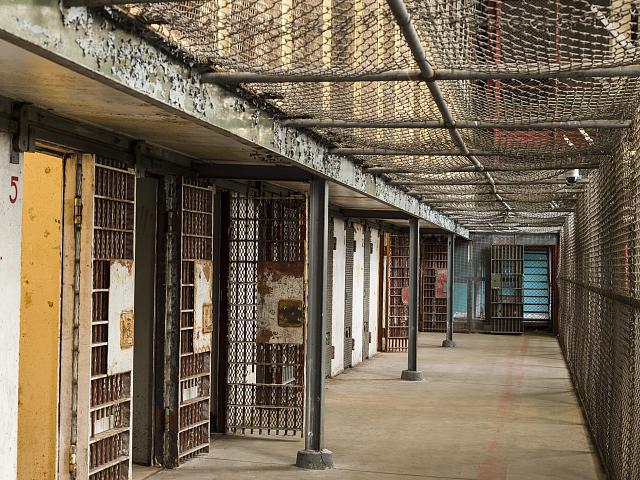
On the 45th anniversary of the Attica Prison rebellion in 1971, Process speaks with seven scholars of the carceral state about prisoners’ organizing in the 1960s and 1970s and movements protesting mass incarceration today. This is the first of a three-part series, guest edited for Process by Jessie Kindig. Check out parts two and three.
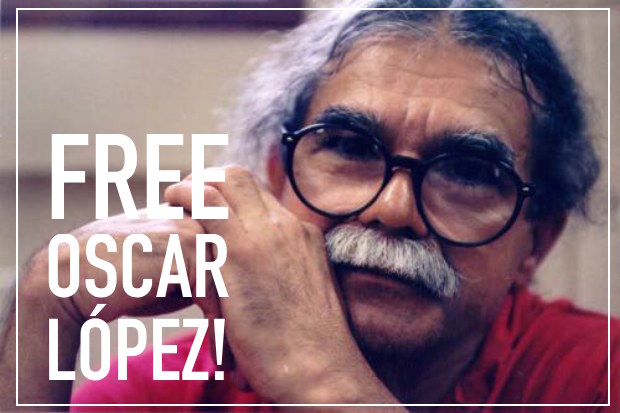
Oscar López Rivera is the longest-held Puerto Rican political prisoner in U.S. history. He has now served 35 years in U.S. federal prisons, including 12 in solitary confinement. The movement calling for his release has intensified, broadened and strengthened in the last few years.
Little has been written about the historical relationship between the movement against the Dakota Access Pipeline and the longer histories of Oceti Sakowin (The Great Sioux Nation) resistance against the trespass of settlers, dams, and pipelines across the Mni Sose, the Missouri River. This is a short analysis of the historical and political context of the #NoDAPL movement and the transformative possibilities of the current struggle.

The 2016-2017 academic year has just started in occupied Palestine, and with it come the hopes and dreams of young students, but also the daily challenges of walking to school past Israeli soldiers, or driving through checkpoints in the West Bank, or assigning a culturally and politically relevant curriculum in annexed East Jerusalem, where Israel is trying to impose an Israeli curriculum in Palestinian schools.

Below we print a summary of a longer article by two Iranian socialists who are opposed to Iran’s military intervention in Syria. Their article is followed by a response from Frieda Afary and Joseph Daher.
Labor for Black Lives – a multi-ethnic network of workers in solidarity with the movement for Black lives, against capitalist exploitation and racist injustice and all oppression – fully endorses the Prison Strike, to begin on September 9, 2016, in which prisoners across the United States are organizing to end prison slavery and mass incarceration. We join our voices and forces with those, including 800+ prisoner members of the IWW's Incarcerated Workers Organizing Committee (IWOC), who say THIS STOPS TODAY.

We reproduce here the political resolution of the Sixth Congress of the Russian Socialist Movement (RSD), which was held in Moscow on May 8 and 9, published on May 12 on the RSD website [1] with the following statement:“This is our analysis of current trends in the evolving political system of Putinism (the ”patriotic consensus“), its socio-economic course, its growing militarization, its fears in the face of social revolt, as well as the state of the forces opposed to the regime.”
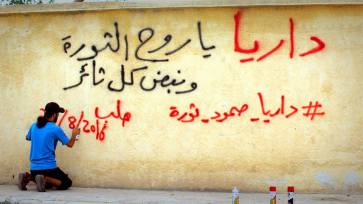 Four years following its liberation, the predominantly agricultural town of Daraya, strategically located near the capital, has fallen to the regime. A deal was reached to evacuate the 4,000-8,000 civilians remaining from a pre-uprising population of 300,000. The local fighters who defended their town so courageously will go to Idlib and join the resistance there.
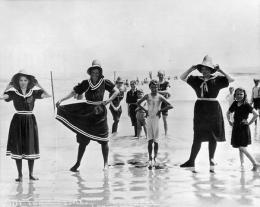
This essay was originally written as a letter to the editor of La Gazette de Montpelier. Translated from the French by Nancy Holmstrom.
As a retired American historian, specialized in French civilization, and for the past 20 a resident at the Mediterranean costal town of Palavers-les-Flots, permit me to remind the mayors of our beach towns as well as the Prime Minister of the Republic, of a little historic fact forgotten by those who make an affair of state of modest women who wish to remain covered when they take their children bathing at the beach. This practice is nothing new. It was in almost identical dress that my grandmother and my aunts went bathing around 1900, without anyone being scandalized. (see the attached photo). On the contrary, in that period and up to the 1960s, the girl who wanted to present herself (except on nudist beaches) in a bikini risked being reprimanded by the police and given a ticket – as happened to a woman in a burkini yesterday at Cannes.
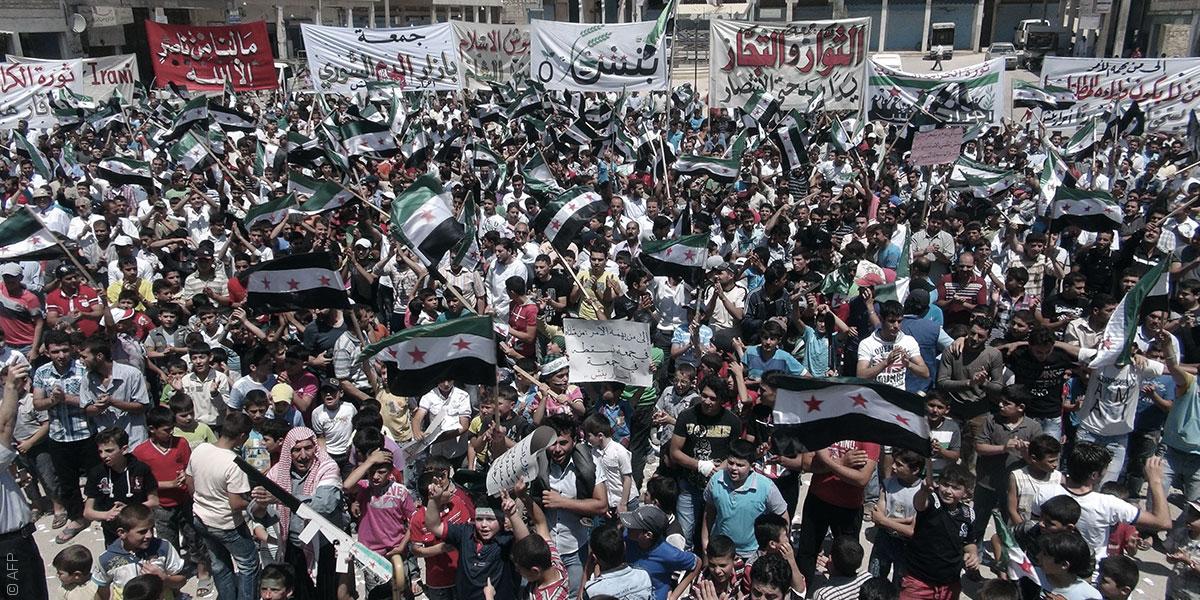
“But then came Syria, and my hypocrisy and the fragility of those ideals became exposed,” wrote Palestinian activist Budour Hassan in her latest brilliant piece entitled “how the Syrian Revolution has transformed me”.

Activists in New York City seeking to defund the police have successfully occupied City Hall Park for a week and seen one of their demands met with the resignation of Commissioner Bill Bratton. While blocking roads and highways has been the tactic of choice for Black Lives Matter since it gained national attention two years ago, the recent deaths of Alton Sterling and Philando Castile have sparked the resurgence of a tactic many thought had been left behind in Zuccotti Park.
When I was writing the following lines two years ago, I was almost able to see the smirk on the face of some of my comrades who would subsequently read them:
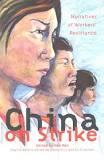 China has the world’s largest population, about 1.4 billion people, with a working age population of about 950 million, hundreds of millions of them wage laborers. Most of us know little about the Chinese workers or the recent workers’ movement that has developed so rapidly, especially since the 1990s.
Wilson’s recollections of his association with Correspondence newsletter that was published in Detroit, Michigan, from 1959 to 1967, and of C.L.R. James.

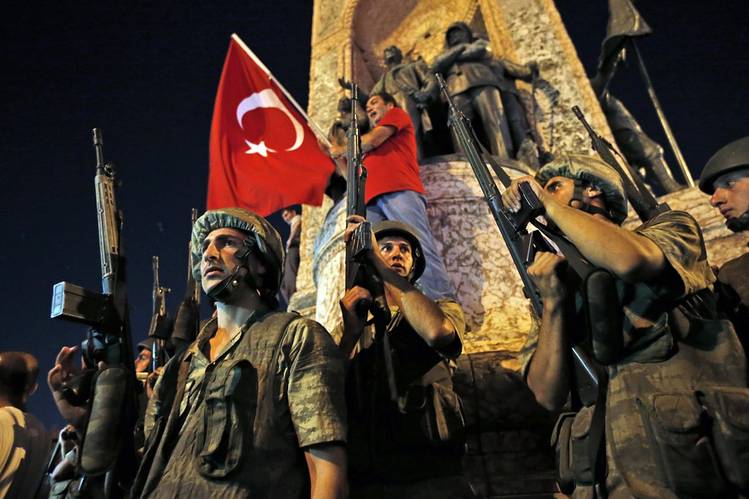
People in Turkey are no strangers to military coups. Following more than twenty-five years of single-party rule after the establishment of the Turkish Republic in 1923, a coup in 1960 toppled the government of the Democratic Party. In 1971, 1980, and 1997 the military either overthrew or deposed sitting governments.
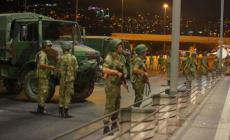
On the night of July 15, the Turkish society watched a military coup attempt, live on TV. For some it was so difficult to make sense of it that they chose to interpret the whole event as “staged”, being a member of a society inclined towards conspiracy theories. How could one call this a real military coup?
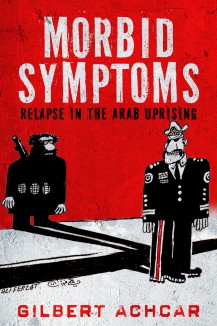
Gilbert Achcar, Morbid Symptoms: Relapse in the Arab Uprising. Stanford: Stanford Univeristy Press, 2016. 240 pp. $21.95.
The title of Gilbert Achcar’s latest book is derived from Gramsci’s Prison Notebooks: “The crisis consists precisely in the fact that the old is dying and the new cannot be born, in this interregnum a great variety of morbid symptoms appear”.

When protesters developed a platform to end police violence in the wake of the 2014 police shooting of 18-year-old Michael Brown in Ferguson, Missouri, the first of their 10 demands was to end “broken windows” policing, the law enforcement paradigm marked by aggressive policing of minor offenses and heavy police presence in low-income Black communities.1
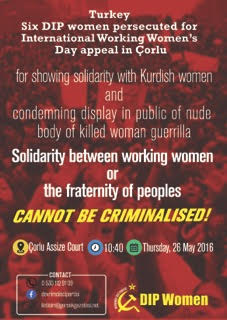 Dear Comrades and Friends,
Six women members of the Revolutionary Workers’ Party (DIP) of Turkey are being persecuted for their activity around the International Working Women’s Day. They are now being tried in court for support to and propaganda of terrorism simply because they have expressed solidarity with Kurdish women brazenly repressed and humiliated by security forces.
- « Newer Posts
- 1
- …
- 11
- 12
- 13
- 14
- 15
- 16
- 17
- …
- 19
- Older Posts »