
The New Politics Summer 2026 issue is now in the hands of subscribers, featuring articles on Democracy versus Degeneration in the United States (with contributions by Dan La Botz, Ellen Schrecker on McCarthyism Then and Now interviewed by Elizabeth Rapaport, Ben Silverman on the fascism debate, Samuel Farber on free speech, Samuel Barney on rural prisons, and Raoul Cansino and Bill Kelly on nativism), Imperialism Around the World (with articles by Lisbeth Moya González on Cuba, Husam Mahjoub on Sudan, Siyavash Shahabi and imperialism and the working class, and Matt Benson on the Mapuche in Chile), interviews on labor struggles and Russian political prisoners, a history of the International Socialists, review essays by Frieda Afary on AI, Javier Sethness on Western Marxism, and Peter Drucker on Molly Crabapple, as well as reviews on Ukraine, the Teamsters for a Democratic Union, white rage, South Asia, and Afghanistan, plus a letter on women under the Taliban.
You can help us by making your tax-deductible donation here. Or by subscribing (see options here). Or by doing both. If you’ve already done so, you can close this annoying box with the satisfaction of knowing that you’ve helped us to persist in defending and exploring “socialism from below.”

 For Iran, the U.S. withdrawal from the 2015 Nuclear Agreement will mean crushing sanctions and direct or continued indirect war declared by Israel and Saudi Arabia with U.S. support. For the Middle East, it will mean further destruction and regional imperialist competition. For the world, it will mean further division between the U.S. and the European Union and further global imperialist competition.


 On March 19th, 2018, Gov. Phil Bryant of Mississippi signed into law the earliest abortion ban in the United States, restricting abortions after 15 weeks in the entire state. The day after, the Supreme Court housed debate on the legality of a California law regulating speech at anti-abortion crisis pregnancy centers, which required that they present information about affordable abortion, contraception, and prenatal care, and to display signs saying that they are not a licensed medical clinic, in cases where they are not. This has re-ignited debate over the appropriate stance for the left to take on abortion, and whether there is space on the left for anti-abortion views.
 When I write for New Politics, I tag my blogs with key words. I wonder how many other Left publications include "teachers unions" under "labor" or include "education" as a separate topic and run critical analyses—as we do?
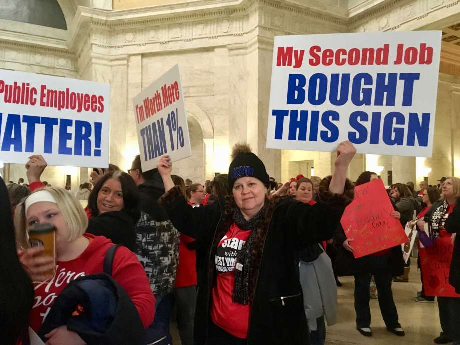
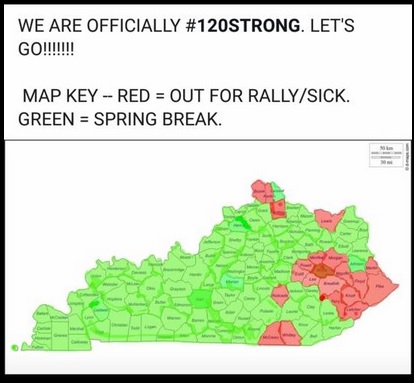 Teachers in Oklahoma and Kentucky massed in their respective state capitols on April 2, to demand GOP legislatures revoke bills damaging to education passed in virtual stealth. The spark plug in Kentucky is a group of activist parents with teachers, #SaveOurSchools Kentucky. In both states the movement has been organized outside the official teachers unions, using social media as well as traditional organizing techniques of talking with colleagues and neighbors about the issues. Another struggle of teachers is simmering, near boil, in Arizona.

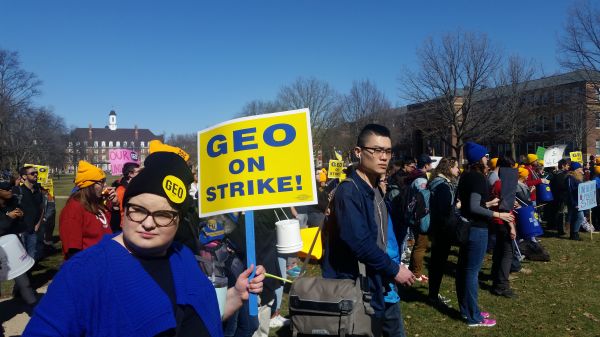 Amidst an upsurge of militancy among educators in places like West Virginia and the UK, graduate students in the US Midwest carried through the longest strike in University of Illinois history.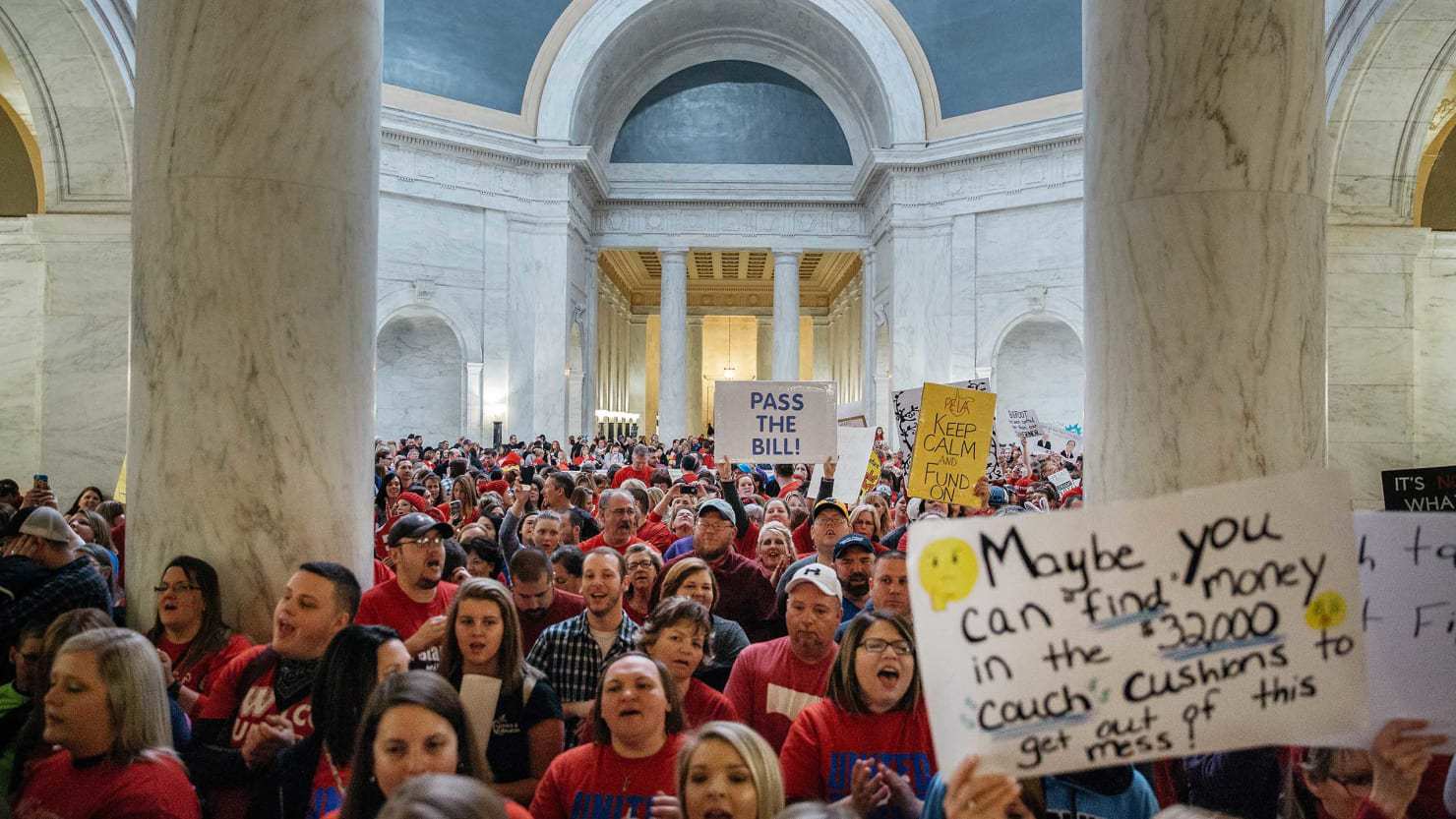
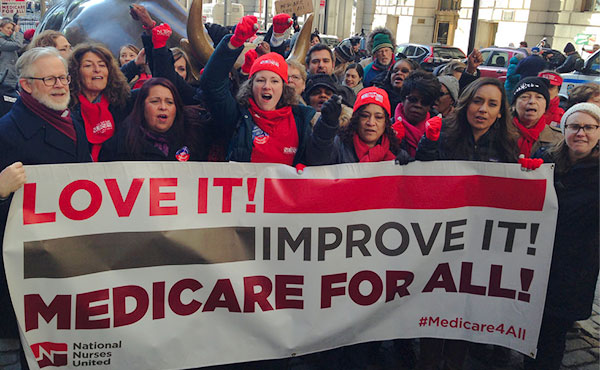 Healthcare is the crossroads where the assault on workers meets the juggernaut of “crony capitalism.” That’s the term used by the mainstream neo-classical and Nobel prize-winning economist Angus Deaton to describe the coziness between the healthcare industry and its government “regulators.” In fact, Deaton argues, how healthcare is financed and delivered is a driver of inequality.