Place: North America

Like the Arab Spring, the U.S. “Education Spring” was an explosive wave of protests. Statewide teacher walkouts seemed to arise out of nowhere, organized through Facebook groups, with demands for increased school funding and political voice for teachers. Though the walkouts confounded national media outlets, which had little idea how to explain or report on the movements, for parent and teacher activists who have been organizing against reforms in public education over the past four decades, the protests were understandable, if unexpected. What was surprising was their breadth of support (statewide), their organizing strategy (Facebook), and their breathtakingly rapid spread.
 Labor is prior to, and independent of, capital. Capital is only the fruit of labor and could never have existed if labor had not first existed. Labor is the superior of capital and deserves much the higher consideration. – Abraham Lincoln
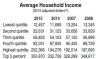
The Federal Reserve Board, the bankers’ bank, has put out figures and reports showing that even before the Trump regime, the rich were acquiring a larger share of the nation’s total income and wealth. The September 2017 Federal Reserve Bulletin reports that “the distribution of income and wealth has grown increasingly unequal in recent years.”1 Other government reports show that many continue to live in poverty and lack shelter and an adequate amount of food.

Sitting alone in my room watching videos on YouTube, hearing sounds from across the hall of my roommate watching Netflix, the obvious point occurs to me that a key element of the demonic genius of late capitalism is enforcing a crushing passiveness on the populace.
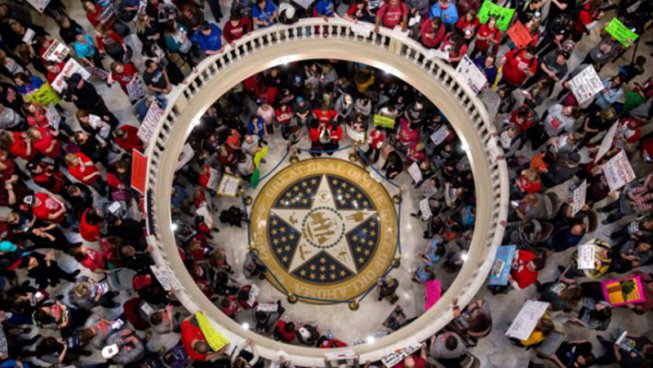
Left Voice speaks with Marxist labor historian Nelson Lichtenstein on the lessons of the Teachers’ Spring and the signs of a resurgent labor movement in the U.S.
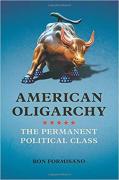
Ron Formisano. American Oligarchy: The Permanent Political Class. Urbana, Illinois: University of Illinois Press, 2017. Notes. Index. $19.95
Consumers of left-wing media are well aware that America is an oligarchy, not a democracy. Everyone with a functioning cerebrum, in fact, should be aware of it by now: even mainstream political scientists recognize it, as shown by a famous 2014 study by Martin Gilens and Benjamin I. Page. Nevertheless, it is important to continue to publicize the oligarchical character of the United States, in order to delegitimize the institutions that have destroyed democracy (insofar as it ever existed) and inspire people to take action to restore it. Ron Formisano’s book American Oligarchy: The Permanent Political Class (2017) is a valuable contribution to this collective project.
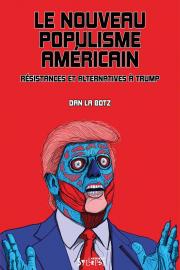
Dan La Botz is a member both Solidarity and of the Democratic Socialist of America (DSA), and a co-editor of New Politics. Trained as a historian of the United States and Mexico, he is also a teacher in the graduate Labor Studies program of the Murphy Institute of the City University of New York. New Politics interviews him here about his new book The New American Populism: Resistance and Alternatives to Trump (Nouveau populisme américain: Résistances et alternatives à Trump).
New Politics: You’ve written a book on Donald Trump and the Resistance that most of won’t be able to read because it has only been published in French. In this book you discuss both the rise of the new populism of Sanders and Trump and its social and historical roots, but you also look at the Resistance and discuss its strengths and weaknesses, as well as examining the strategies of the left and its future. That’s a lot. Tell us a little about your book. What distinguishes it from the many books on Trump that have hit the market since he became president?
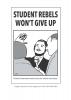
— Reprinted from New Politics, vol. VI, no. 3, #23, Summer 1967 (printed June 1968)
At 4 am on April 30 [1968], my wife and I stood with tears streaming down our faces on the corner of Amsterdam Avenue and 117th Street, watching the last of the Fayerweather Hall sit-ins being tossed into waiting police vans. We were not the only ones crying, nor were the tears merely those of pity or self-pity. There was also anger, frustration, and actual joy. The incredible—and inevitable—had happened; the “Big Bust” had come. Seven hundred and twenty student and faculty protesters were under arrest; more than 130 had been beaten up, some quite badly. The last illusions about what was happening were shed.

Adapted from a presentation to the Chicago Convention of the International Marxist-Humanist Organization, July 13, 2018.
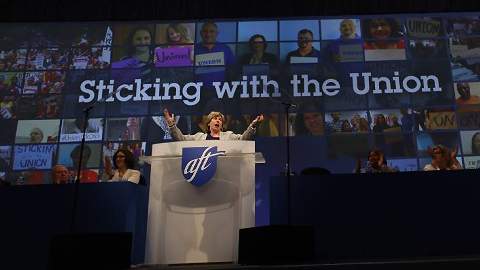
Reflecting on the days I spent as a delegate during the AFT national convention in Pittsburgh (held July 13-16), I was reminded of the fall of the Berlin Wall and the collapse of Soviet Communism in 1989-90. No one predicted it, and it seemed to come out of nowhere. But peace activists in the West who organized international support for struggles of dissidents in the Soviet Union and Eastern Europe saw the social ferment.

2,342 refugee and migrant children were kidnapped at the hands of the state at the US-Mexico border between May and June. Attorney General Jeff Sessions announced a zero tolerance policy that separated mainly Central American refugee children from their parents, as migrant adults were criminally prosecuted with many thrown into federal prisons. Hundreds are toddlers under the age of 4 or even babies as young as 4 months old. The average age of the children is 8. The regime also lied and said that parents who asked for asylum at regular border crossings would not be separated from their children while they did exactly that.

When I was a union rep, one of my most challenging assignments was assisting a Communications Workers of America (CWA) bargaining unit at a Boston-area telemarketing firm. Most CWA members in New England had call center jobs at the phone company, with good pensions, health insurance, and full-time salaries. As service reps, they fielded in-coming calls from customers with problems, questions, or new orders to place. In contrast, the telemarketing staff only interacted with the public, on behalf of various clients, via out-bound calling. Like the workers depicted in Boots Riley’s hilarious new film, Sorry to Bother You, they made cold calls to people who did not want to bothered, at dinner time or anytime, with a pitch for a new product, service, or donation to a political cause.
This article will appear in the Summer 2018 issue of New Politics.
Gayle McLaughlin. Winning Richmond: How a Progressive Alliance Won City Hall. Hard Ball Press, 2017. 306 pp.
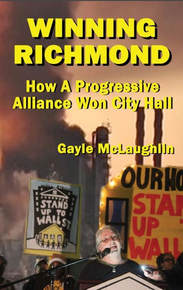
On August 6, 2012, an elephantine plume of black smoke rose over Richmond, California, sending some 15,000 people suffering from respiratory distress to area hospitals. Most of the city’s 110,000 inhabitants received “shelter-in-place” warnings to stay indoors and tape their windows shut to avoid breathing the deadly fumes. The smoke came from a massive fire at Chevron’s giant fuel-processing facility in the city, caused by slack maintenance and slacker management oversight. It wasn’t the first or the last mishap at the refinery. Since 1989, 14 such eruptions have been reported. In Richmond at least, the enemy has a name and a besmirched face.
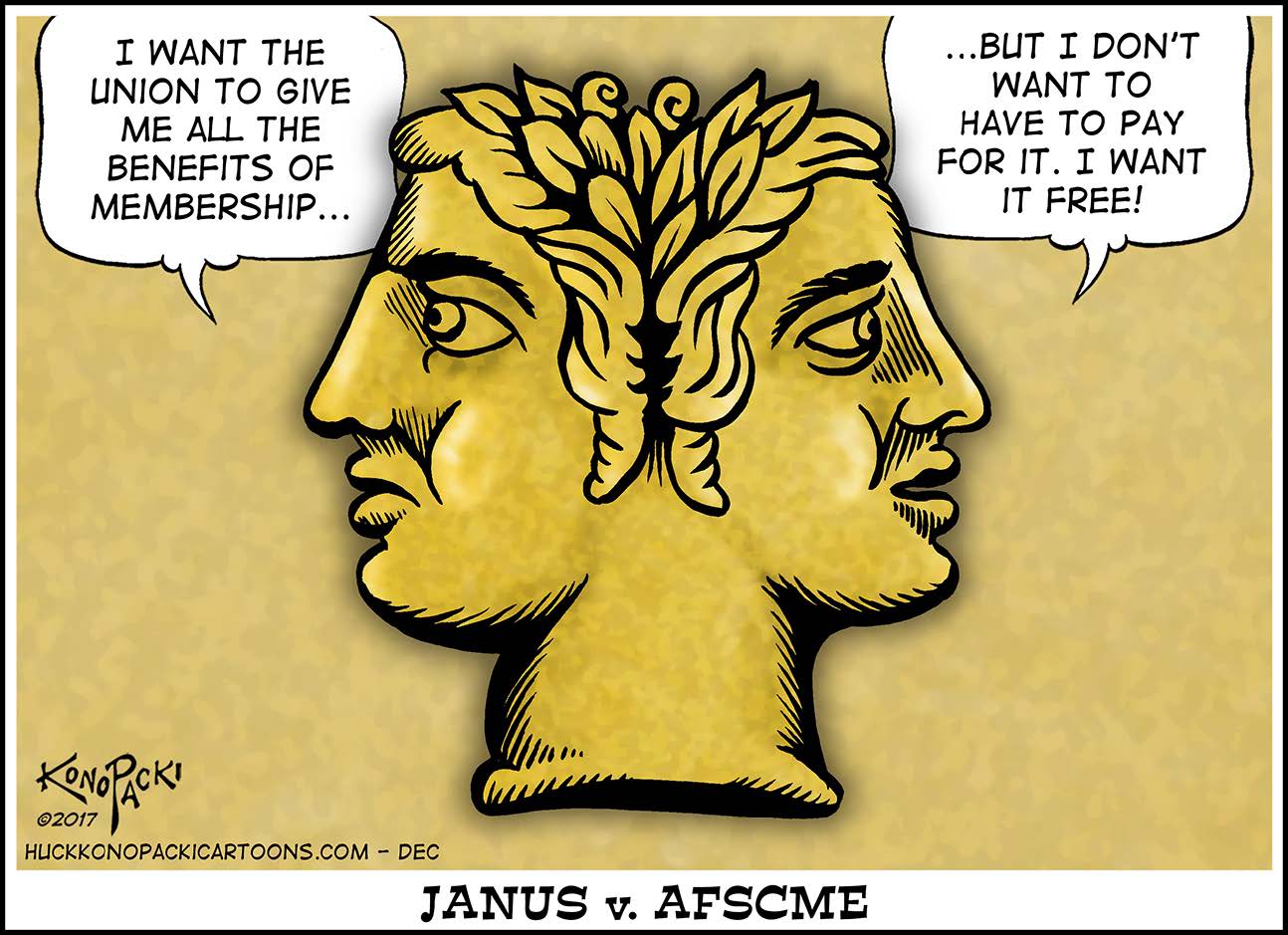 The Supreme Court’s long-anticipated – and feared by progressives – decision outlawing the collection of fees in public employee unions equivalent to costs of collective bargaining was met with indignant or defiant words, rightly decrying this attack on organized labor. The response, though, has mirrored what has been missing in labor’s understanding of how we got to this point and what we need to climb out – and win.
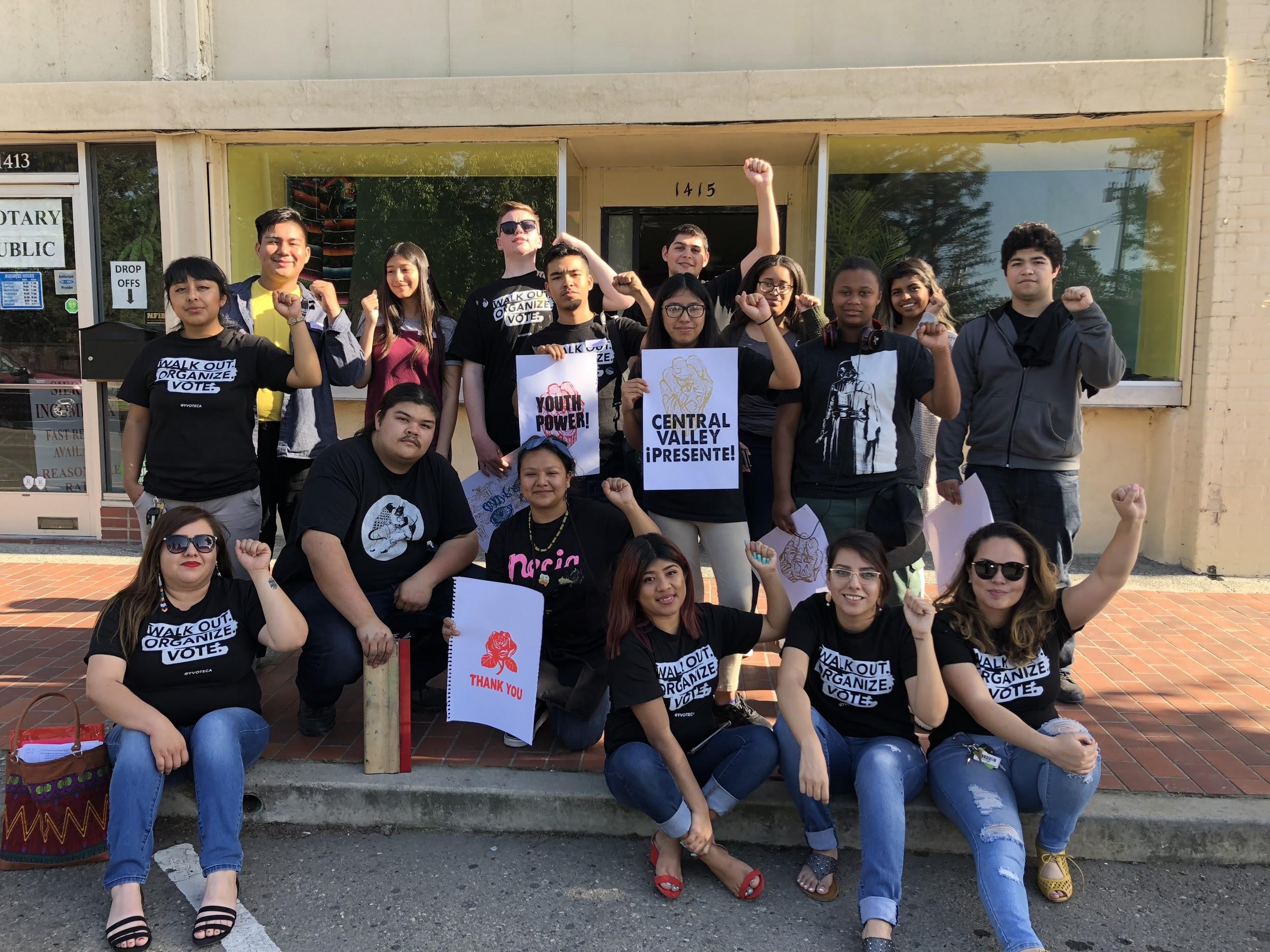
Driving down Route 99 highway, miles upon miles of flat land sprouting grapes, nuts, lemons, and tomatoes line the stretch of land next to the hot asphalt. Highlighted within this landscape of farmland and truck filled, busy highways are youth. Strong, beautiful, Black and Brown young people unapologetically organizing amidst big agriculture and quiet towns. They are organizing for a Central Valley that provides all its residents with what they need to be whole. These young people, full of wisdom and fire, are ready to reclaim the region as their own, creating from the soil rich land a movement that pushes forward their vision of a California for all. At the center of this energy and youth-led, transformative movement is 99Rootz.

Alex Pareene, first of Wonkette, then Gawker, then Salon, then back to Gawker, then a stillborn First Run Media project, and now Splinter News is a great pundit.
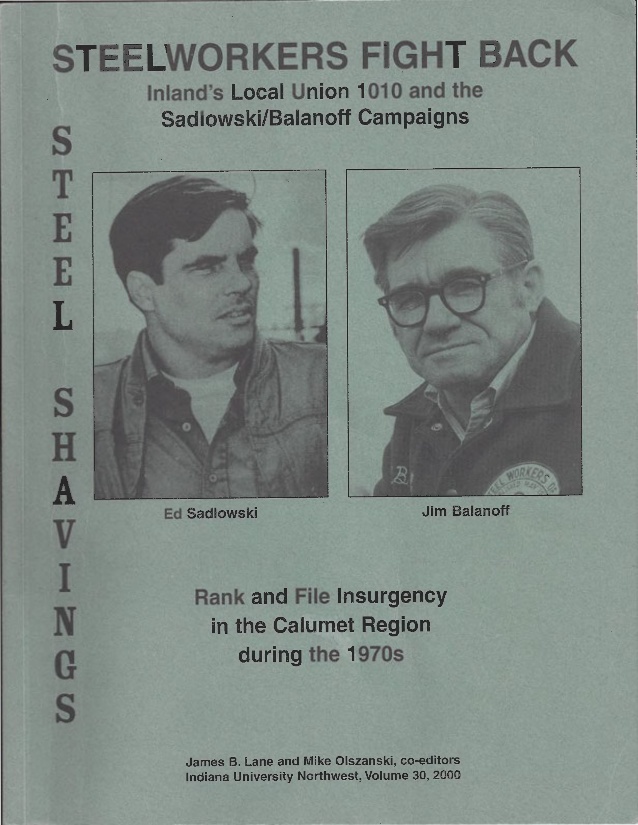
In progressive circles in the upper midwest today, if you’ve heard the name Sadlowski, it’s probably because you were involved in the Wisconsin labor uprising of 2011, where you might have linked arms with AFSCME organizer and state capitol occupier Edward A. Sadlowski. Or maybe you applauded the electoral victory of his sister, Susan Sadlowski Garza, when she won a Chicago city council seat four years later, as a standard bearer for her union, the Chicago Teachers.
Reprinted from New Politics, Spring 1967, pages 95-97 
Making It, by Norman Podhoretz, Random House, New York, 1967. 360 pp. $6.95.
Tynan Left and Right by Kenneth Tynan, Atheneum, New York, 1967. 479 pp. $8.95.

Brooklyn College sociology professor Alex Vitale’s provocative new book, The End of Policing, comes amid the national debate about deadly force by police and the rise of the Black Lives Matter movement. But Vitale — one of the country’s fiercest advocates of police reform over the past 25 years — thinks police killings are a symptom of a much broader issue. As the coordinator of the Policing and Social Justice Project at Brooklyn, he argues that police in recent decades have taken on a “warrior mentality” that is fundamentally incompatible with the ideal of equal justice. And he thinks the solutions typically advocated by progressives are not the real answer. Following are edited excerpts of Vitale’s recent appearance on the CUNY Book Beat podcast.

US President Donald Trump’s ripping up of the Iran nuclear pact, his shocking relocation of the US Embassy to Jerusalem, and Israeli Prime Minister Netanyahu’s equally shocking mass murder of peaceful Palestinian demonstrators has revealed the utter depravity of today’s rulers. Despite their sometimes chaotic and reckless appearance, however, these moves amount to nothing short of a breathtaking attempt by the US, with its Israeli and Saudi allies, to realign Middle East politics by creating an uncontested hegemony for the entire region. To this end, Iran must be crushed as a rival subimperialist power, Russia and Turkey dealt in or sidelined, and both the remainder of the Arab revolutions and newly resurgent Palestinian movement repressed.
- « Newer Posts
- 1
- …
- 30
- 31
- 32
- 33
- 34
- 35
- 36
- …
- 73
- Older Posts »