
Place: North America
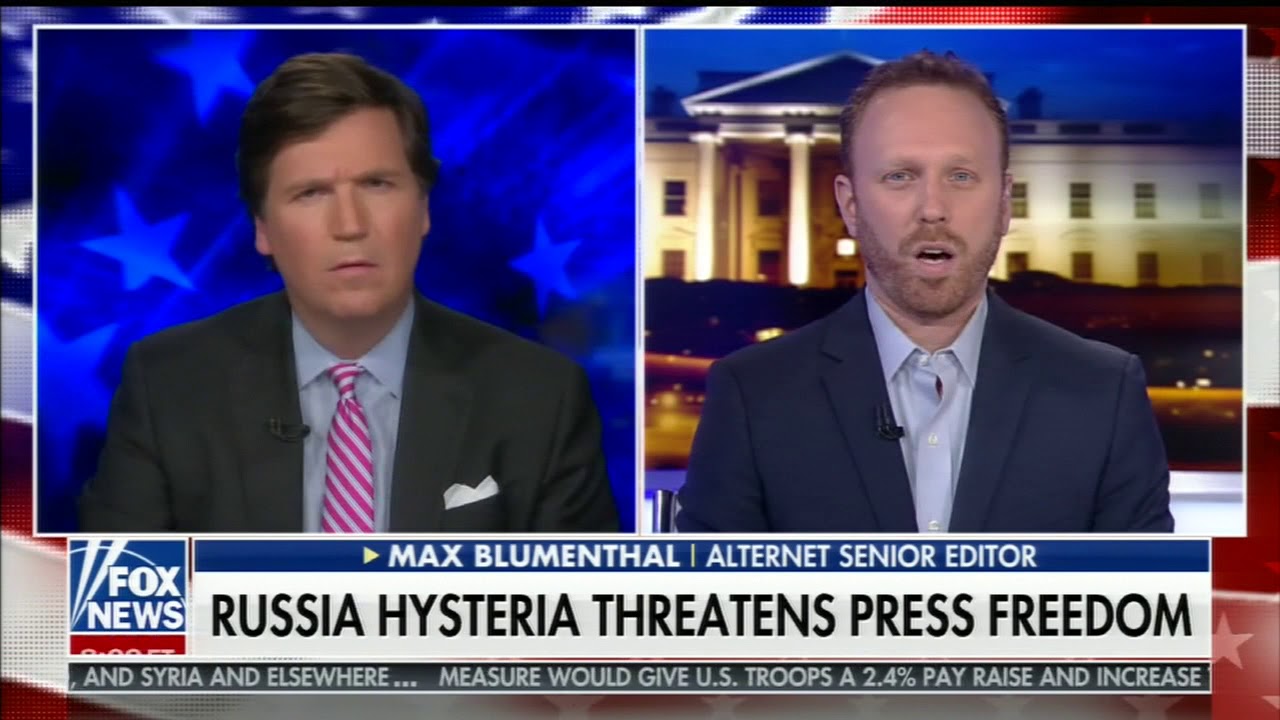
On the Southern Poverty Law Center website, this rather odd statement can be read:
Yesterday, Friday, March 9, we published an article entitled “The multipolar spin: how fascists operationalize left-wing resentment.” After receiving some concerns about the article from Max Blumenthal that evening, we took it down, pending further review.
The article was written by Alexander Reid Ross as a follow-up to earlier articles for SPLC titled “The Internet Research Agency: behind the shadowy network that meddled in the 2016 Elections” and “The far-right influence in pro-Kremlin media and political networks.” Subsequent to the removal of the latest, the other two have been removed as well.
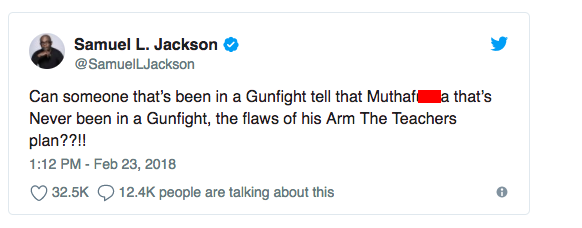
The call to “arm the teachers” started as another stink bomb President Donald Trump lobbed into the crowd at a conservative rally. But somehow, the concept cycled through the 24-hour news loop and, within a few hours, became a ubiquitous meme. Now, the morally repugnant idea of gun-toting teachers in America’s schools has taken center stage in the nation’s macabre debate on gun safety.
 The rise and rule of Donald Trump embodies much that is disturbingly new from his almost daily narcissistic rants on Twitter to his overt racist, misogynist, and xenophobic public pronouncements. On the other hand, there are historic roots to many of the positions articulated by Trump during his presidential campaign and adopted during his presidency.

Raoul Peck’s The Young Karl Marx is the best buddy movie since George Roy Hill’s Butch Cassidy and the Sundance Kid in 1969. It’s also among the most important films in decades, bringing to a mass audience not just the revolutionary ideas of Marx and his friend and collaborator Frederick Engels in the early days of modern capitalism, but an approach to politics and history that still has no peer. Charting the world as he saw it, Marx wrote: “Accumulation of wealth at one pole is at the same time accumulation of misery, agony of toil, slavery, ignorance, brutality, mental degradation, at the opposite pole.” Has anything changed?

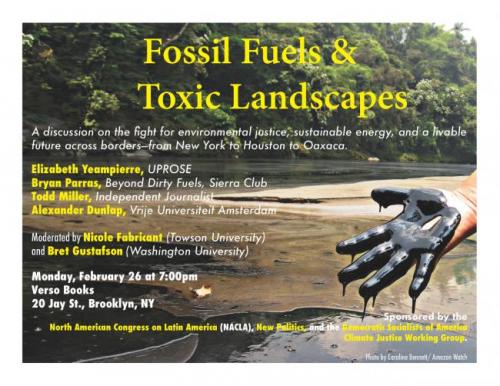
In an era when the federal government is increasingly dominated by fossil-fuel interests that limit regulation of oil rigs and pipelines, the environmental justice movement seems to have diminished significantly.

We working people live in darkening times. When the Trump presidency ends in four years—if it does—we may no longer have an organized labor movement. As one of my colleagues, Ed Ott of the Murphy Institute, the City University of New York’s labor school, said to me, “We are at the beginning of the end of the U.S. labor movement based on a partnership with capital.” We are at the twilight of an era. Labor unions and collective bargaining stand to be swept away, and with them the institutions that have sheltered us in the workplace and provided us with a modicum of job security, living wages, health insurance, and pension benefits.
Introduction
By Aaron Amaral
The largest single day of anti-war protest in human history took place on February 15, 2003, almost fifteen years ago. Millions of people rallied and demonstrated internationally, in more than 600 cities, with the goal of preventing the then-pending U.S. invasion of Iraq. These protests failed to stop the coming imperial misadventure, and more than a half million people were killed as a direct result, with millions more displaced, killed, or maimed in the geopolitical ructions that since followed. Explaining the specific failure of the anti-war movement to stop the invasion in 2003 requires an analysis that is beyond the scope of the following article. What Julius Jacobson’s piece does offer is insight into the left’s failures to build a sustainable anti-war and anti-imperialist movement since.
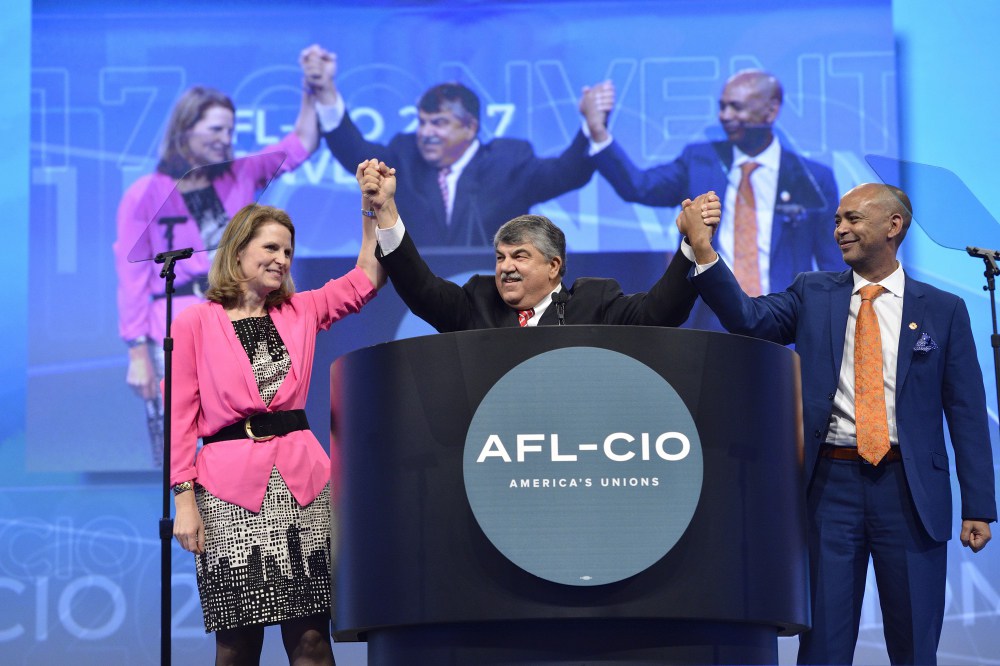
From October 22nd to the 25th, 2017, the AFL-CIO held its quarto-annual convention in St. Louis, Missouri. The choice of city was, if not intentionally, appropriate.
Reply to Dornbush, Elliott-Negri, and Lewis
Dornbush, Elliott-Negri, and Lewis are right that ideology is not enough and an analysis of “the actual, material terrain” is necessary. Simply repeating the well-known realities of the first-past-the-post U.S. electoral system that favors the two-party duality is not such an analysis. It’s old news. Not altogether wrong, but still yesterday’s political science.
I first met Kim Moody some 50 years ago. He was then organizing chapters of the California-based Peace and Freedom Party as an alternative to the Democratic war machine. If memory serves, he came to Park Slope, Brooklyn, then a predominantly Irish and Italian working-class neighborhood—not the gentrified picture from House Beautiful it has since morphed into—but also inhabited by a smattering of déclassé radicals. Moody wanted to interest a few of us in taking up the electoral mantle.
 After a huge bump in membership thanks to Bernie Sanders, and an even bigger one thanks to Donald Trump, the DSA continues to grow. Since its national convention in August, membership has increased from 25,000 to 30,000. We have known since 2011 that millennials have a more positive association with the word “socialism” than the word “capitalism”;1 Sanders gave this demographic shift from the cold war era a political expression, and DSA has given it an organizational expression. Now thousands on the left are scrambling to answer the question, “What do we do with this newfound energy?”
 Some New Politics readers will recognize the title of this article as a paraphrase of Hal Draper’s “Two Souls of Socialism,” which appeared in New Politics in 1966. The first version, however, appeared in the socialist student magazine Anvil in 1960, just as a new generation of youthful activists was emerging, inspired to a large extent by the civil rights movement.

As an employee at a large state university, I have to attend a myriad of trainings, on everything from fire safety to preventing workplace discrimination. The mood at these trainings is typically sour, the participation minimal and perfunctory, and the information provided mostly inadequate to the topics discussed. I know what P.A.S.S. stands for, but that knowledge is not going to make me any less terrified if I ever have to use a fire extinguisher. That being said, at least I know what the purposes of these trainings are: to give a false sense of security, to prevent lawsuits, to feed the bureaucratic apparatus, etc. They’re excruciating to sit through, but their existence makes enough sense.
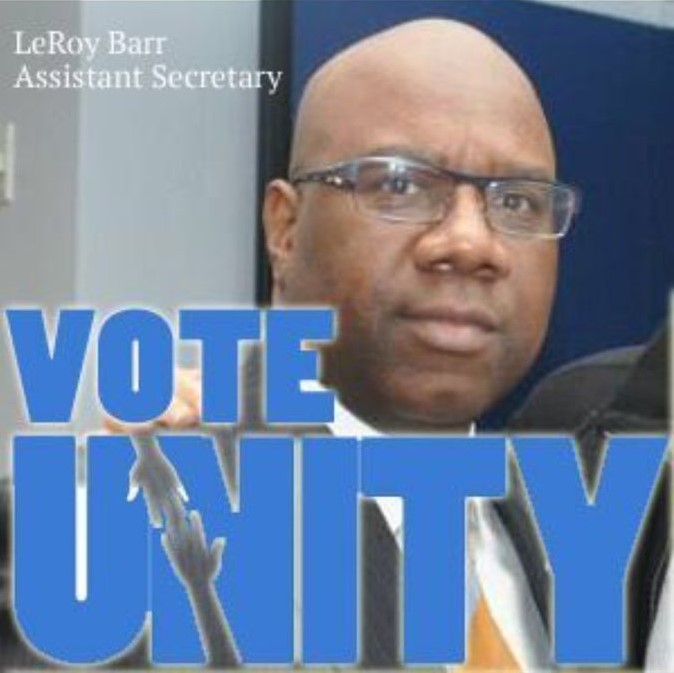 In its January meeting, after a pro-forma discussion, the Delegate Assembly of the UFT (United Federation of Teachers), which still has the legal right to bargain collectively on behalf of New York City's teachers, voted down a resolution to work with community groups to support Black Lives Matter in the schools in February. LeRoy Barr, UFT's assistant secretary, co-staff director, and Chairperson of the Unity Caucus, gave the UFT leadership's rationale for rejecting the motion. Support for BLM was, he contended, a splinter issue, divisive, at a time when the union had to stay focused on what was key, the Janus decision and the threat to collective bargaining rights.

The victory of Democrat Phil Murphy in the New Jersey gubernatorial election this past November makes it quite likely that recreational marijuana will be legalized in the Garden State. Public opinion in the state has clearly been ready for a change in the drug war model of prohibition – with even Murphy’s Republican opponent having called for decriminalization.
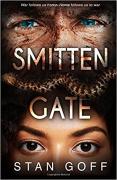
The author himself lets you know at the start that this book is going to be very harsh. After the end of the chapter titles, Stan Goff writes, “Warning to readers who have experienced violent trauma or sexual assault. This book contains portrayals of extreme violence, including combat, murder, and rape.” His purpose is not to titillate, but to reveal. There are some brief loving sexual passages, but the descriptions of sexual violence and killings are there to repel you.
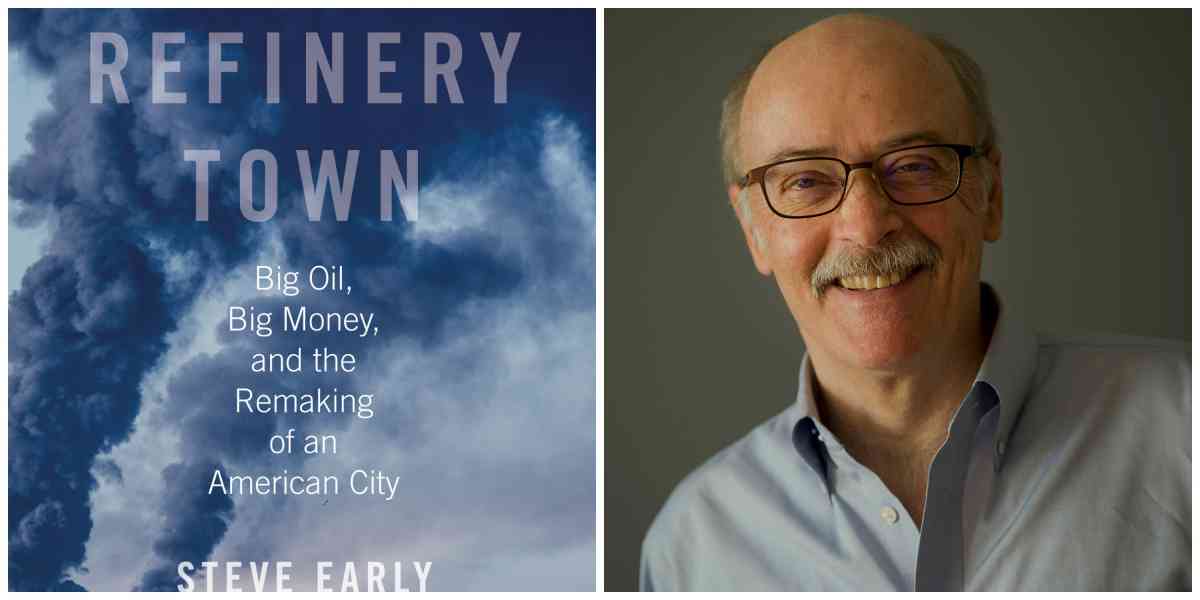
Mohsen Abdelmoumen: You have written a book about the city of Richmond, California, where you live, prefaced by Senator Bernie Sanders: Refinery Town: Big Oil, Big Money, and the Remaking of an American City. This book shows us the experience of this city that has won struggles such as raise the local minimum wage, defeat a casino development project, challenge home foreclosures and evictions, and seek fair taxation of Big Oil and Big Soda. Can we say that the Richmond experience should inspire progressive activists in other cities around the world?

The Work of Art in the Age of Mechanical Reproduction
Walter Benjamin was one of the great analysts of liberal capitalism during a time when its days seemed numbered and fascism was ascendant across Europe. Much of his work is taken up with looking at how the cultural products and processes characteristic of a civilization are reflective of the inner psychic and spiritual tensions roiling beneath the surface of hegemonic ideologies.
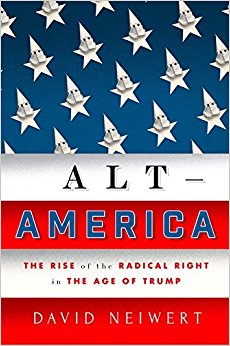
David Neiwart, Alt-Right: The Rise of the Radical Right in the Age of Trump. Verso Books, 2017.
Think of this book as a basket of deplorables. It’s thick on illuminating descriptions of renascent white nationalists, gun-enamored militia poseurs, conspiracy-theory mongers, Ku Klux Klansmen and women, Christian Identitarians and proto-Nazis benefitting from and legitimized by the sordid presidency of Donald Trump. It’s thin on explaining why such phenomena persist or have arisen as political thuggery in 21st-century America.
The US administration has annexed the Syrian conflict to its own war on terror. It has tried to impose its battle on Syrians so that they will abandon their own battle against the tyrannical discriminatory Assadist junta. … [but] the war on terror is centred around the state; it is a statist conception of the world order which strengthens states and weakens communities, political organizations, social movements, and individuals… In the record of this endless fight against terrorism there has not been a single success, and thus far three countries have been devastated over its course (Afghanistan, Iraq and Syria).”[1]
– Yassin al-Haj Saleh, former Syrian Communist dissident who spent 16 years in Assad’s dungeons
Introduction

This article deals with a specific aspect of the US role in the Syrian conflict: its drive to co-opt the Free Syrian Army (FSA) into a proxy force to fight only the jihadist forces of Jabhat al-Nusra (now Jabhat Fatah al-Sham, or JFS) and the Islamic State (ISIS/Daesh), while giving up their fight against the Assad regime.
- « Newer Posts
- 1
- …
- 32
- 33
- 34
- 35
- 36
- 37
- 38
- …
- 73
- Older Posts »
