Place: North America
 Since Donald Trump’s election in November, 2016, more than 150 university campuses in North America have been postered or fliered by white supremacist, neo-Nazi, or white nationalist groups. Most common have been flierings by American Vanguard, a Neo-Nazi formation with paramilitary characteristics, and Identity Europa, a self-proclaimed white nationalist fraternity founded by a former acolyte of Ku Klux Klan leader David Duke.
In the early hours of November 27th, employees at the Consumer Financial Protection Bureau (CFPB) woke up to a world of contested allegiances. Advocated by Senator Elizabeth Warren and set up by the Dodd-Frank Wall Street Reform and Consumer Protection Act, CFPB was created in 2011 as an independent Federal agency tasked with protecting consumers in the financial sector. Since it was this sector’s predatory exploitation of low-income racialized communities that triggered the subprime mortgage crisis, this agency was intended to regulate finance across consumer services like mortgages, student loans, and credit cards. As such, the founding of the agency received large support from consumer groups and their Democratic allies in the Federal administration. Republicans, for their part, dutifully (and unsurprisingly) rendered the agency as another burden on the “free” market.[i] Such conflicts are hardly news and government employees are in this sense always in the precarious position that their jobs might be discarded with every new administration. Rarely, however, do these conflicts take the absurd character we could witness the following few days.

John E. Chiaradia was a longtime reader and sometime contributor to New Politics.
How does one come to political activism? Are we influenced by the times, by our personal experiences, by some innate quality within us, or are each of these just the necessary ingredients of activism? John (Giovanni) Emilio Chiaradia left Italy as a child, a political refugee from mid-20th-century Italian fascism. His family escaped the turmoil engulfing their country for the welcoming haven of the United States, landing in New York City and eventually settling in central California. There they were once again confronted by nationalist politics and uprooted from their home. They were compelled to leave California following the bombing of Pearl Harbor as John’s mother, Antoinette, was not yet a naturalized citizen. In the wake of the war, the US government deemed all non-naturalized people from Axis countries, and even citizens in the case of Japanese Americans, to be potential threats to national security. They were commanded to vacate a 100-mile exclusion zone from the west coast. The family was forced to leave what few possessions they had and return to the Bronx.
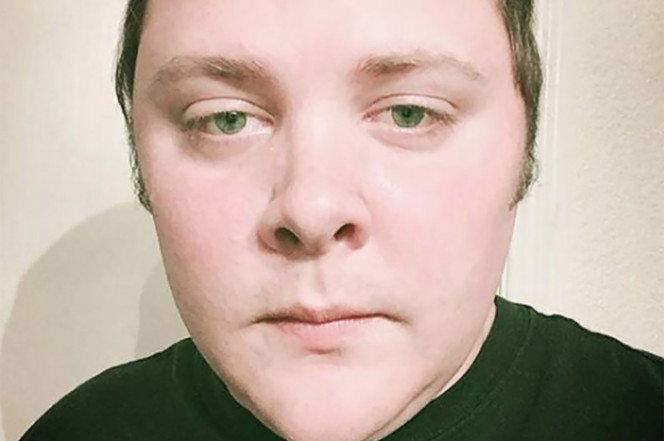
On November 5, 2017, 26-year-old Devin Kelley killed 26 people and injured 20 others attending Sunday church services at the First Baptist Church in Sutherland Springs, TX. This small, unincorporated community is 30 miles southeast of San Antonio and, in 2000, its population was but 362 people. Sadly, Kelley is the latest, but not the last lone-wolf terrorist to engage in the mass killing of Americans.
The Janus case before the Supreme Court will deny public employee unions the right to require non-union members to pay their share of the union’s costs to negotiate on behalf of everyone in the bargaining unit.
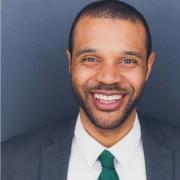
Jabari Brisport, a member of the Democratic Socialists of America (DSA), made an extraordinarily strong showing in his first bid for the New York City Council. Running on both the Green Party and Socialist lines in Crown Heights, District 35 of Brooklyn where he grew up, Jabari won almost 30 percent of the vote, receiving 8,619 votes. He was defeated by Democrat Laurie Cumbo, who took 68 percent of the vote while the Republican Christine Parker got just 4 percent.
Jabari ran as a socialist in a diverse district with a mixed population of African Americans, Afro-Caribbeans, orthodox and Hassidic Jews, upper middle class white newcomers, and young hipsters. The district has a population of 124,170, larger than many cities. The 2017 election saw one of the lowest turnouts in years. Only about 22 percent of the 5,053,842 registered voters in New York City as a whole cast ballots in the election.
The exploding national debate about workplace harassment of women by powerful bosses or male co-workers is a great opening for unions to demonstrate their importance as one form of protection against such abuse.
Unfortunately, when unions are not pro-active on this front in their dealings with management or, worse yet, allow bullying or sexual harassment among staff or members, their credibility and appeal as a sword and shield for women (or anybody else) is greatly reduced.
Do we need the police? Brooklyn College sociologist Alex S. Vitale poses that question vividly in his book: Are the police guarantors of social peace or its disruptors? Is the force’s mandate to serve the public equally and fairly, or to act as social-control agents, protecting property and its few owners at the expense of the many?
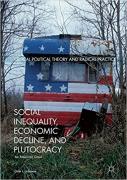
Dale L. Johnson. Social Inequality, Economic Decline, and Plutocracy: An American Crisis. Palgrave Macmillan, 2017. 240 pp. Index, Appendix. $159
Social Inequality is not for the faint-hearted. It covers the major political-economic issues of our time, from the structural changes in the economics of capitalism, to class structure, the imperialist state, and the distortions of capitalist culture. The author, a veteran scholar-activist of the New Left generation who now lives in Costa Rica[1], ends with a plea for resistance to our oligarchic “hegemon” and suggests a series of tactics to help us on the road.
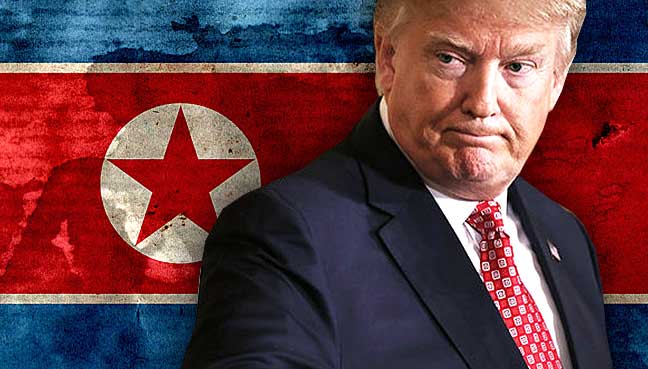 U.S. President Donald Trump crossed to new stage in the annals of warmongering in his United Nations speech of September 19 when he declared, “The United States has great strength and patience, but if it is forced to defend itself or its allies, we will have no choice but to totally destroy North Korea.” This threat to incinerate an entire nation of 25 million people amounts to nothing less than genocide. At the UN itself, the speech was met with stunned silence, with one major exception, vigorous applause from the militaristic Prime Minister of Israel, Benjamin Netanyahu.
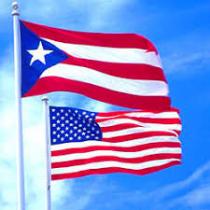
“We’re American citizens. How can Trump turn his back on us?” This is one of the pleas I’m hearing over and over again about the humanitarian crisis in Puerto Rico caused by Hurricane Maria. While it is a distasteful display of colonialist racism that the Trump administration takes its time to decide how much help Puerto Rico deserves, after pulling out the stops for Miami and Houston, ostensibly because there’s not “a really big ocean” separating them from Washington, it’s kind of par for the course. Our citizenship has always been second-class.
This August a hundred years ago, Lenin began to pen The State and Revolution in exile once more following a crippling defeat. Just one month prior, workers had risen and laid siege to government posts, but didn't know what to do beyond that. History didn't come down from above and give them a revolutionary society. This became obvious after the government sent troops to quell the uprising. The Bolsheviks, for their part, were caught off guard, and the workers’ movement underwent yet another cycle of repression.
From the Steering Committee of Solidarity
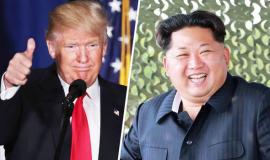
If it weren’t frightening, it would be funny: “Big Twit Calls Out Rocket Man,” as Donald Trump ramps up his insults and threats of war against North Korea. Let’s look at some of the issues behind the antics and escalating rhetoric.
It’s really impossible to assess the chances of an actual war on the Korean peninsula, but while it may be a low-probability event its consequences would be utterly catastrophic. All the establishment media, of course, breathlessly consider whether the North Korean regime and its “beloved leader” Kim Jong-un are a direct threat to the United States — as if U.S. imperialism didn’t threaten North Korea and a whole bunch of other countries. It’s simply taken as given that rich and powerful states have an inherent right to self-defense and security, and others don’t.
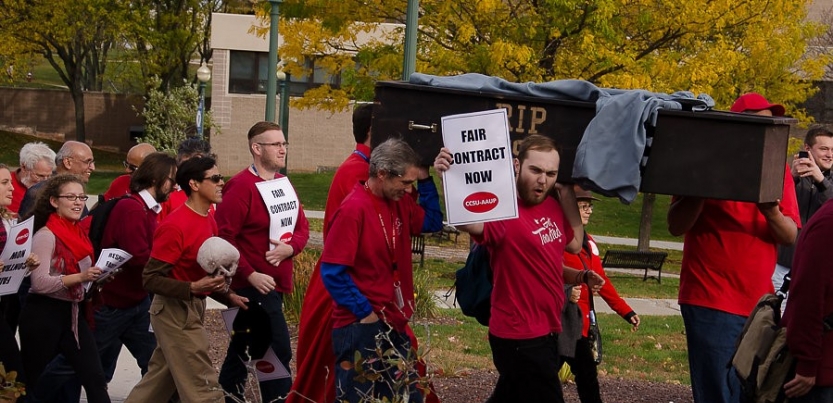
For the third time in eight years, public sector workers in Connecticut have voted for concessions. State employees have sacrificed a total of $7 billion to close budget deficits in 2009, 2011, and now 2017.
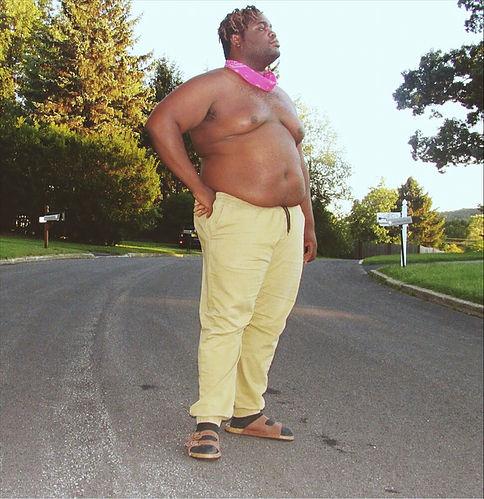
This work is a creative nonfiction work which highlights the imperialist white supremacist capitalist colonial gaze of the Black male body, conventional beauty standards, systemic weightism, and instances of subversion against these oppressive norms in appreciating my body for the way it is.
We need a socialism that goes beyond capitalism. And not just for moral reasons.
John Judis has all the right intentions. He’s looking at the resurgence of openly democratic socialist currents in the United States with a mix of excitement and trepidation. Excitement, because he knows how desperately the country’s workers need social reforms. Trepidation, because he worries that the new left might fall into the familiar traps of insularity and sectarianism.
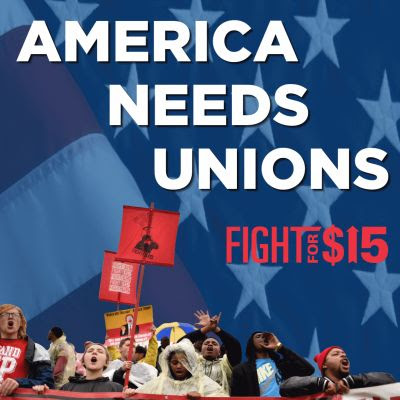 Labor Day 2017 is a sobering moment for people who care about human dignity, social justice, peace, and a life-sustaining environment. While powerful elites who control government so as to safeguard capitalism are driving civilization towards barbarism and the planet to extinction, Trump’s election has spurred widespread protests. Vigorous social movements are challenging Trump’s and the GOP’s retrograde policies and politics: corrupt, xenophobic, racist, misogynist, malevolent. Sparked by Bernie Sanders’ campaign, we’re seeing a new embrace of socialism, especially among younger activists.
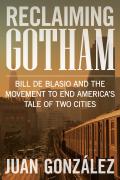
Juan Gonzalez. Reclaiming Gotham: Bill de Blasio and The Movement to End America’s Tale of Two Cities. New York: New Press, 2017.
There is no better role model for aspiring radical scribes than Juan Gonzalez. The country’s leading Latino journalist is cohost of Democracy Now!, a former columnist for the New York Daily News, and twice winner of the Polk Award for his investigative reporting. Not many veterans of campus and community struggles in the Sixties and workplace organizing in the 1970s later moved into mainstream journalism with such distinction, Gonzalez has managed to combine daily newspapering with continued dedication to the cause of labor and minority communities.
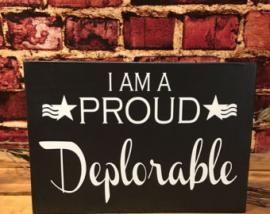 In a recent article from Politico, a new poll was discussed that suggests that nearly half, 49 percent, of Trump supporters believe that he won the popular vote in the 2016 election. (He didn’t; he lost by nearly three million votes.) Spurred on by Trump’s claims that millions (!) of people voted illegally in the election, this portion of Trump’s base have been lied to and misled by a politician they think they can trust. What are we to make of this?
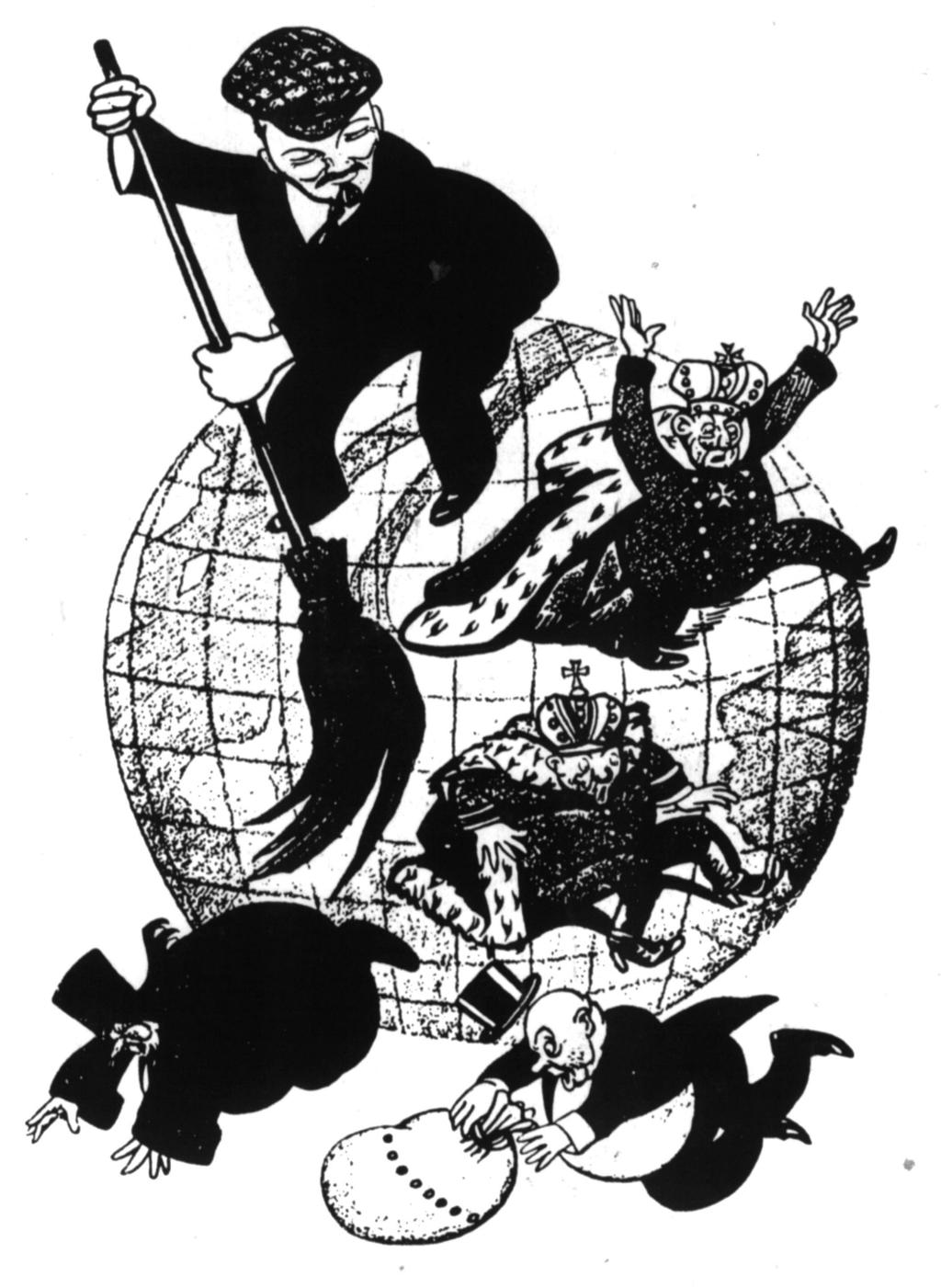
Just before Christmas, on December 21, 1917, a strange freighter pulled into Elliott Bay in Seattle. This vessel bore an unfamiliar flag—a red flag. This was a Russian ship, the Shilka, out of Vladivostok, Russia. Only a few weeks before, on November 7, the Bolshevik Revolution had taken place in Russia and its leader, Vladimir Lenin, proclaimed a workers' and farmers' state.
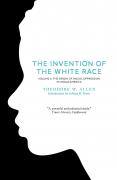
Theodore W. “Ted” Allen (1919-2005) was an anti-white supremacist, working class intellectual and activist. He developed his pioneering class struggle-based analysis of “white skin privilege” beginning in the mid-1960s; authored the seminal two-volume The Invention of the White Race in the 1990s; and consistently maintained that the struggle against white supremacy was central to efforts at radical social change in the United States. Born on August 23, 1919, in Indianapolis, Indiana, he grew up in Paintsville, Kentucky and Huntington, West Virginia and, after moving to New York City, lived his last fifty-plus years in the Crown Heights section of Brooklyn.
- « Newer Posts
- 1
- …
- 33
- 34
- 35
- 36
- 37
- 38
- 39
- …
- 73
- Older Posts »