Place: North America
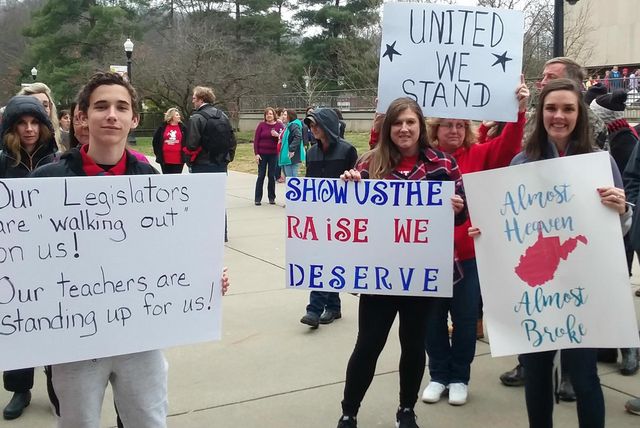 As the French get ready for the “rentrée” – the annual back-to-school/back-to-work day following the August vacation – social peace appears to reign in the land. The long-expected militant strikes and struggles against the neo-liberal counter-reforms introduced by President Macron early last Spring have failed to materialize. Surprisingly, the Macron government successfully force-marched its anti-labor, anti-welfare, pro-business agenda through parliament with little effective resistance by the unions and Left parties. Meanwhile, in the U.S., a wave of spontaneous teachers’ strikes spread from West Viriginia to other conservative ‘Red’ states, winning significant victories and surprising the media and the labor leadership. The contrast is surprising.

New Politics sponsor Jesse Lemisch died on August 25, 2018. He will be greatly missed as a radical historian, a friend, and a tireless fighter for socialism (and history!) from below.
Here are memories from two friends.
 The Obamas’ deal with Netflix is the culmination of a worrisome turn in contemporary documentary.
Since the announcement in May of Former President Barack and First Lady Michelle Obama’s multi-year production deal to produce narrative and documentary films and series with Netflix, there has been remarkably little conversation about it. Admittedly, there isn’t any work to evaluate just yet, but the news does raise enormously important questions in and of itself.

Berkeley (California) was probably a unique political-cultural milieu in the U.S. in the 1960s, both before and after 1968. It was part of the larger political-cultural scene of the San Francisco Bay Area from 1945 onward. The Bay Area at the time was a relative backwater in the U.S., compared to the East coast. The area had, however, seen one of the biggest general strikes of the 1930s, when the Communist Party-influenced ILWU (International Longshore Workers Union) helped bring San Francisco to a halt in 1934, including mass street battles with the police.

I once asked a class at a prison in Washington State how they would describe the relationship between capitalism and incarceration. “They get you coming and going,” someone quickly offered.

Early Friday morning, socialist, photographer, and lifetime War Resisters League member David McReynolds — committed pacifist + socialist — passed peacefully at the age of 88. David was on WRL staff for a large part of his life and remained within our community long, long after.
Presente.
As written by WRL Member Ed Hedemann.

I appreciate Dan La Botz' well-reasoned article, but do not agree with his conclusion.
As usual, Dan's argument is judicious and clear, courteous to other points of view. Such civility is essential to maintaining the health and vitality of a diverse big tent organization like the Democratic Socialist of America (DSA).

Many would like to believe that this American period of rampant national-conservatism is nothing more than a short stay in Republican purgatory. It is a reassuring idea that in a few years, as today’s progressive youth becomes a large part of the electorate, the United States will become a shining example of tolerant and progressive prosperity. Just as neo-conservatives envision a global American hegemony built on capitalism and military strength, some progressives have adopted a belief that the United States is destined to reach national political moksha with strong welfare, a prosperous middle class, and minority rights; the nasty racists and homophobes, the “deplorables”, will soon be outnumbered so vastly in the face of common-sense political ideology that the right will simply cease to exist. Unfortunately, this prophecy has proven a myth for millennials—and the nascent Generation Z doesn’t appear to have better prospects.

A Forum on the Teachers Rebellion in the United States with Tithi Bhattacharya, Eric Blanc, Kate Doyle Griffiths, Lois Weiner. Edited and introduced by Jeffery R. Webber
Few anticipated a labour upsurge in the United States in early 2018, and fewer still expected a blaze to ignite among teachers in West Virginia, or for it to spread to Oklahoma, Arizona, Kentucky, and Colorado. Ellen David Friedman poses one of the questions which immediately springs to mind: “why is this stunning revolt occurring where unions are weak, where labor rights are thin, and where popular politics are considered to be on the Right?”[1]
Joanne Landy (1941-2017) and Thomas Harrison (1948-) became socialists as teenagers and have remained involved in the democratic left ever since. They were active in the student protest movement at the University of California at Berkeley in the 1960s, where they met and became close friends and collaborators. During the 1970s, they became increasingly interested in the issue of labor rights in Central and Eastern Europe, and they worked to link democratic and social justice struggles in the Eastern Bloc with social movements in the United States, the West, and the Third World. Until Joanne Landy’s death in October 2017, they were co-directors of the Campaign for Peace and Democracy (CPD), which was founded in 1982. Initially, the organization was called the Campaign for Peace and Democracy/East and West, but with the end of the Cold War the title was shortened.

On June 26th, Alexandria Ocasio-Cortez defeated, against all odds, the incumbent Congressman from New York’s 14th district, a safe Democratic seat, in the party’s primary. Spectacular as it was to see a Democratic political boss (the “King of Queens”) humbled by a left-wing challenger, the real spoils of this victory do not lie in the House seat itself.
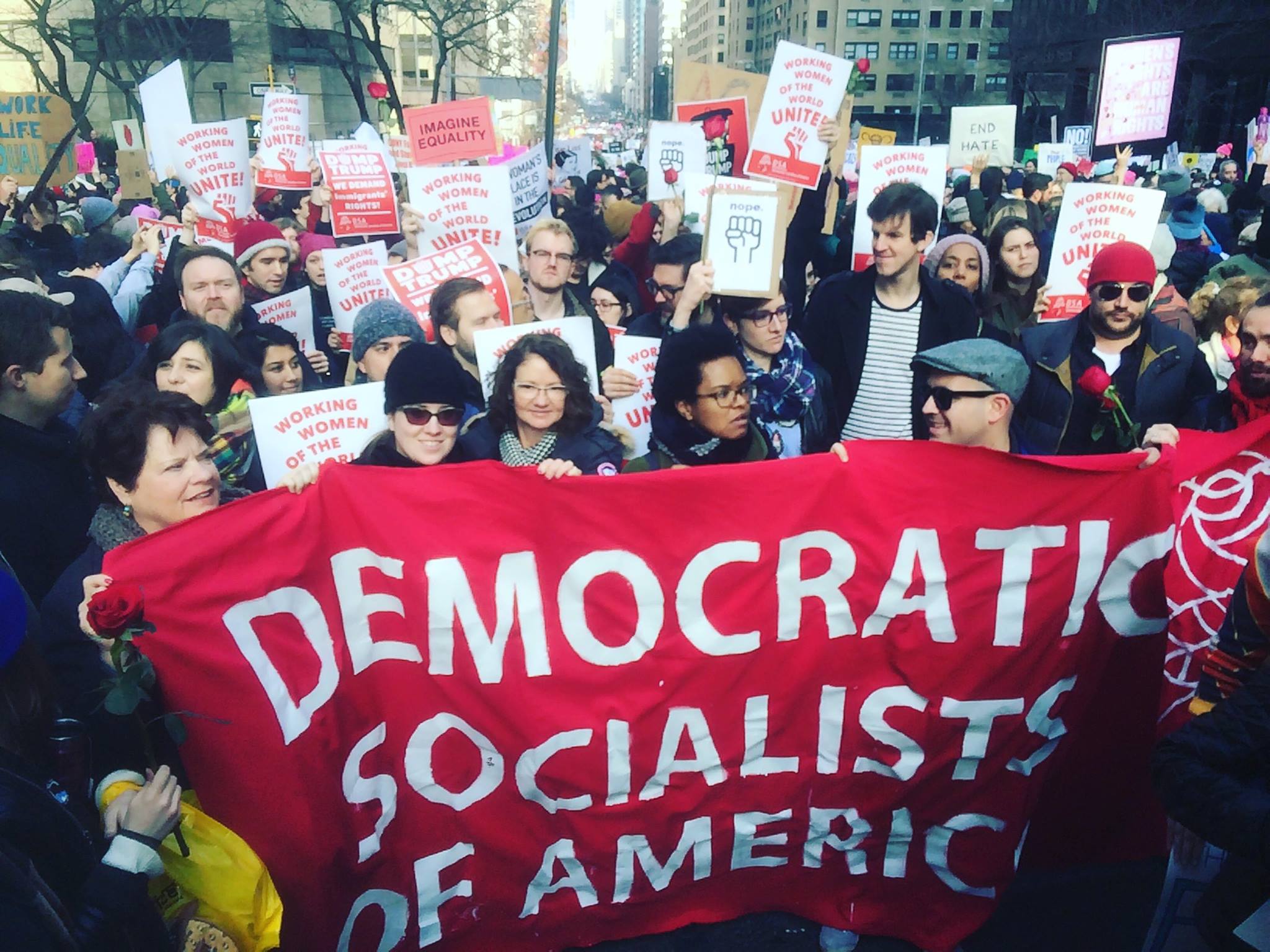
The Democratic Socialists of America (DSA) has emerged as the largest socialist organization in the United States since the collapse of the Communist Party (CP) in the mid-1950s. While Bernie Sanders’ ‘democratic socialist’ campaign for president in 2016 laid much of the groundwork for DSA’s growth, it was Donald Trump’s election to the presidency that boosted its membership from 6,700 in 2016 to around 48,000 members today.

Dan's sober and sobering comment on why he opposed an endorsement by DSA of the Cynthia Nixon campaign to dethrone Andrew Cuomo, New York's corporate deny-the-corporate-class-nothing's two-term governor [see "Why I voted Against Endorsing Cynthia Nixon"] is sharply and smartly posed. It deserves a similar if brief reply, one crafted in what I hope encapsulates the same spirit.
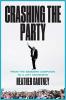 This memoir of sorts by Fordham University sociology professor Heather Gautney, who became a policy fellow in Bernie Sanders’ Washington DC office and a volunteer researcher and organizer for his unexpectedly popular 2016 presidential campaign, has a very specific focus: to “offer insights from up-close work with Bernie, mixed in with historical and sociological analysis, to perform an autopsy of the 2016 election” (2). Given the sheer number of insightless (to put it mildly) autopsies that have been proffered across the political spectrum—perhaps none more useless than Hillary Clinton’s own What Happened (Simon & Schuster, 2017)—Gautney’s book is more than welcome and even slightly overdue.
Why the United States has not developed a permanent socialist movement has perplexed activists and theorists for more than a century. Paul Le Blanc takes up that query as an activist who wants to see an anti-capitalism mass movement take shape in twenty-first century America. To that end, he investigates some of the moments when the possibility of a significant left presence in the United States seemed at hand. He focuses on what made those movements viable and what thwarted their long-term success. The volume’s fourteen essays were written over a period of thirty years, from 1986 to 2015.

More than a hundred years ago, the muckraking journalist Upton Sinclair worked undercover for several weeks in the cattle slaughterhouses of Chicago. The result was his melodramatic but revelatory novel The Jungle, a work Jack London called the “Uncle Tom’s Cabin of wage slavery.” Sinclair’s narrative depicted the brutal working conditions endured by East European immigrants on the killing floor, engaging in back-breaking, dangerous, and tedious labor for subsistence wages.

Steve Fraser is a weathered veteran of the New Left and many subsequent movements, author of shrewd books on the acquisitive ruling class and also of the outstanding biography of famed left-leaning labor giant Sidney Hillman, among other works. Here he once again ranges far, but also comes close to home, his own personal home space.

After the Singapore meeting between Trump and Kim Jong-un, questions loom large. What is the path ahead for North Korea? What chances are there for a lasting peace on the Korean Peninsula? South Korean socialists weigh in.
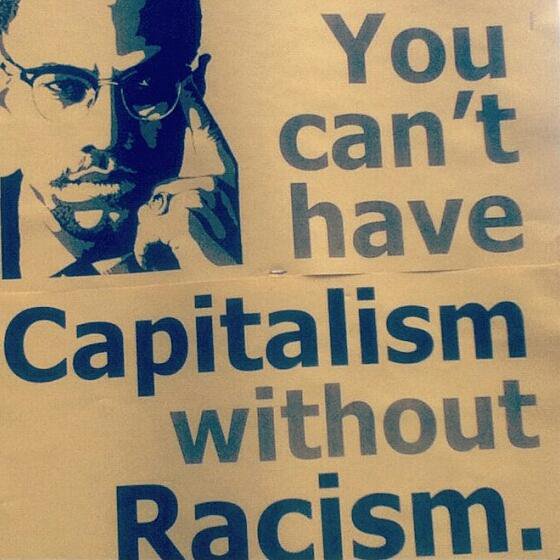
Introduction and My Experiences
“It is our duty to fight for our freedom. It is our duty to win. We must love and protect one another other. We have nothing to lose but our chains”.
You may recognize this as the rallying cry for the Black liberation movement in the United States, as written by Assata Shakur.
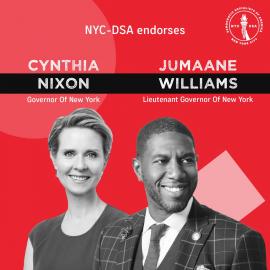
The leadership of the New York City chapter of the Democratic Socialists of America (DSA) voted this past weekend by a two-thirds majority to endorse Cynthia Nixon in the Democratic Primary race for New York State governor. The decision reflected similar majorities for Nixon among the total membership of the New York City branches. An accompanying motion also passed that linked DSA’s work on the Nixon campaign to the Julia Salazar campaign in the Democratic Primary for State Senate and tied it to our organization’s support for the New York State Health Act and the a city campaign create for expanded rent stabilization.
Since the majority of my fellow New York City socialists voted to endorse Nixon, I feel obligated as a member of the City Leadership Committee (CLC) to explain to our members why I cast my vote against, as did eleven other members of the 34-member body, while one person abstained.

Lawrence Brown associate professor of public health in the School of Community Health and Policy at Morgan State University. He is the grandson of sharecroppers who lived in the Mississippi Delta and a native of West Memphis, Arkansas. He is a historian, critical geographer, and political economist who sees public health from a critical, interdisciplinary perspective and advocates for holistic approaches to healing the Black communities of Baltimore. His book The Black Butterfly: Why We Must Make Black Neighborhoods Matter (Johns Hopkins Press) is forthcoming.
- « Newer Posts
- 1
- …
- 29
- 30
- 31
- 32
- 33
- 34
- 35
- …
- 73
- Older Posts »