Online Features
 The rise and rule of Donald Trump embodies much that is disturbingly new from his almost daily narcissistic rants on Twitter to his overt racist, misogynist, and xenophobic public pronouncements. On the other hand, there are historic roots to many of the positions articulated by Trump during his presidential campaign and adopted during his presidency.
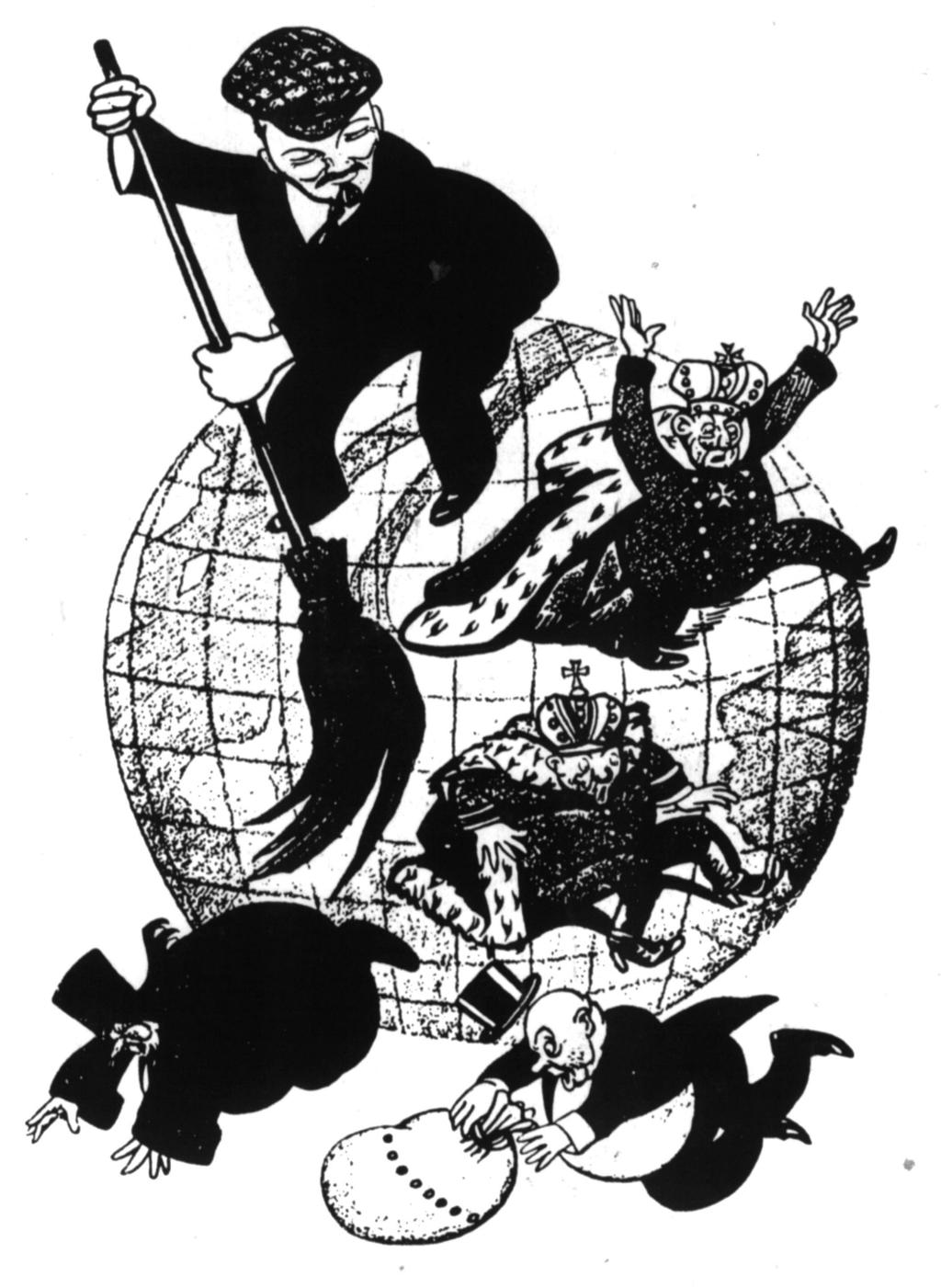
Often, it seems that the legacy of the Russian Revolution of November 1917 lays like a dead weight upon the living. Everywhere voices are raised – from anarchists to social democrats and from liberals to conservatives – telling us that we need to jettison its legacy of authoritarian socialism, of prison camps, and ultimately, of economic and social collapse. At the same time, the left of today stands for grassroots democracy, opposition to war and imperialism, opposition to racial and gender oppression, and once we move to the left of social democracy, abolition of capitalism and of the state.
While accepting an Honorary Oscar this past November, the great film director Charles Burnett spent some time reflecting on his formative years as a film student at UCLA. It was there that he and his colleagues not only learned

Raoul Peck’s The Young Karl Marx is the best buddy movie since George Roy Hill’s Butch Cassidy and the Sundance Kid in 1969. It’s also among the most important films in decades, bringing to a mass audience not just the revolutionary ideas of Marx and his friend and collaborator Frederick Engels in the early days of modern capitalism, but an approach to politics and history that still has no peer. Charting the world as he saw it, Marx wrote: “Accumulation of wealth at one pole is at the same time accumulation of misery, agony of toil, slavery, ignorance, brutality, mental degradation, at the opposite pole.” Has anything changed?
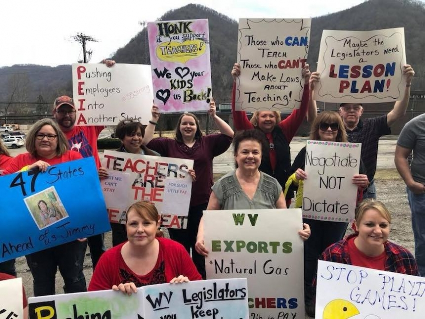 As the AFL-CIO holds its day of action across the US, protesting what has been cast as a likely loss in the Janus case, which the Right intends to use to destroy labor and the Left, a movement of school employees in West Virginia is showing organized labor what it means to be a union without the right to strike and without collective bargaining.

When it comes to the Russiagate scandal, progressives usually take one of two positions.
They either dismiss the scandal as a lot of hooey, a “nothingburger,” just a way for warmongers and the “Deep State” to revive a cold war between Washington and Moscow. Or they treat the scandal as just a means to an end, a way to cast doubt on the 2016 presidential election, implicate the administration in a variety of crimes, and ultimately impeach the president.
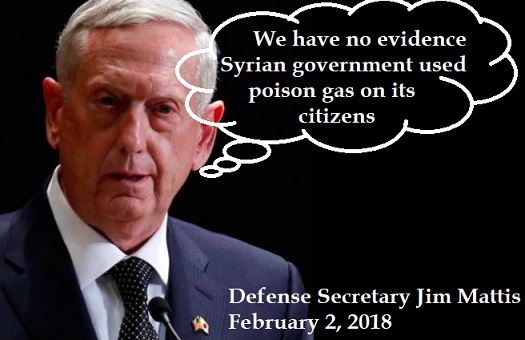
The situation in Syria is incredibly complex, so it’s not surprising that there are conflicting interpretations of different pieces of information. But, sometimes, a claim is so clearly without merit, so obviously ludicrous, that those who promote it mark themselves, at best, as individuals wholly uninterested in examining evidence when a dubious claim conforms to their preconceived notions, or, at worst, as scoundrels.
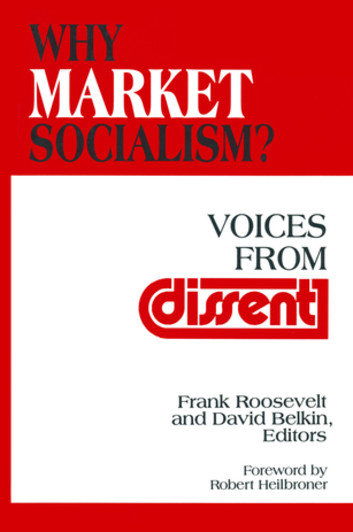
In “Our Road to Power,” an article from the most recent issue of Jacobin, Vivek Chibber makes some very familiar arguments about socialism and “central planning.” One hardly has to quote him—they’ve been repeated many times since Alec Nove’s The Economics of Feasible Socialism appeared in 1983.
Gilbert Achcar is Professor of Development Studies at SOAS, University of London, as well as a well-known author focusing on the Middle East and the Arab World. He met with Syrian Corner during Syria Awareness Week 2018. Achcar posits that the Syrian conflict is far from over and that for Bashar al-Assad to establish a new political framework, an accord between the US and Russia is necessary. Achcar says the role of Iran in a future Syria is one of the key issues at stake, and discusses the Turkish war against the PYD, the regional role of Saudi Arabia, the international peace conferences for Syria, the recent demonstrations in Iran, and the new US foreign policy for the Middle East in the interview below.
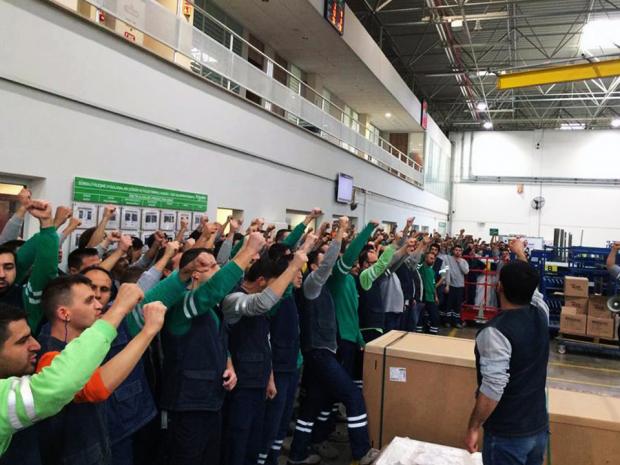
Hands off the metalworkers’ strike in Turkey!
Government ban means AKP despotism serves the bosses!
International solidarity with metalworkers of Turkey!
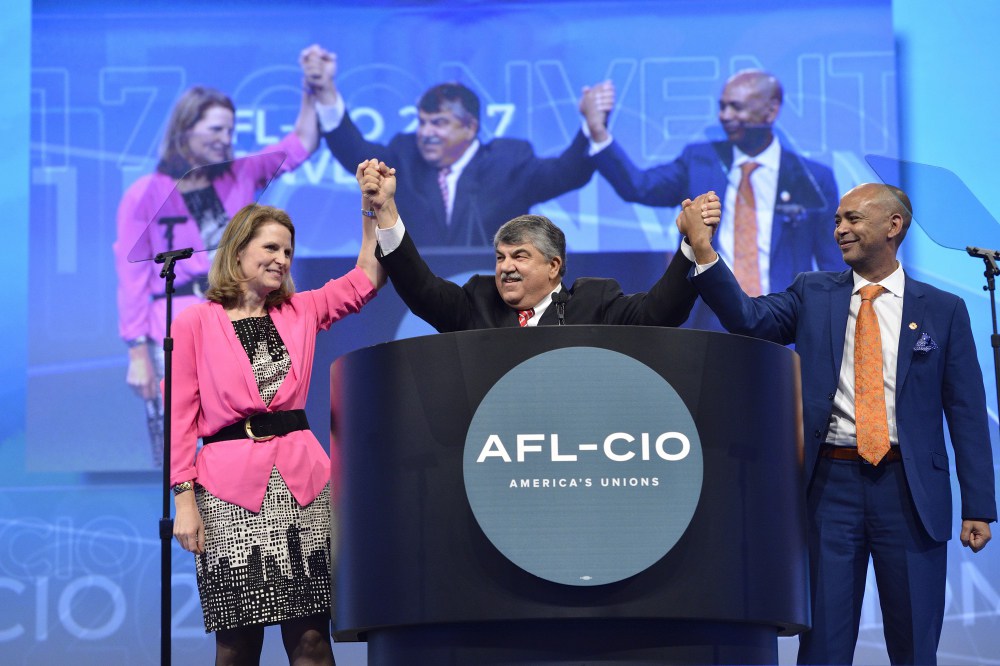
From October 22nd to the 25th, 2017, the AFL-CIO held its quarto-annual convention in St. Louis, Missouri. The choice of city was, if not intentionally, appropriate.

The danger of nuclear war is present today more than ever with Trump’s threats against North Korea and Iran. Without precedent in US history, the president openly states that he is willing to wage war and destroy a nation for US interests, disregarding his allies’ wishes. Trump not only follows the advice of his buddy Benjamin Netanyahu about the Iran nuclear deal, but he also announces that Jerusalem is the capital of Israel. He remains ahead of schedule on the opening of the US embassy there as well as cutting off funding for Mahmoud Abbas for a Palestinian state, unless he bows to Israel and respects Trump. At same time, his military commander General Jim Mattis announces that the US should be ready for war at any moment.
- « Newer Posts
- 1
- …
- 120
- 121
- 122
- 123
- 124
- 125
- 126
- …
- 227
- Older Posts »