Online Features

As an employee at a large state university, I have to attend a myriad of trainings, on everything from fire safety to preventing workplace discrimination. The mood at these trainings is typically sour, the participation minimal and perfunctory, and the information provided mostly inadequate to the topics discussed. I know what P.A.S.S. stands for, but that knowledge is not going to make me any less terrified if I ever have to use a fire extinguisher. That being said, at least I know what the purposes of these trainings are: to give a false sense of security, to prevent lawsuits, to feed the bureaucratic apparatus, etc. They’re excruciating to sit through, but their existence makes enough sense.
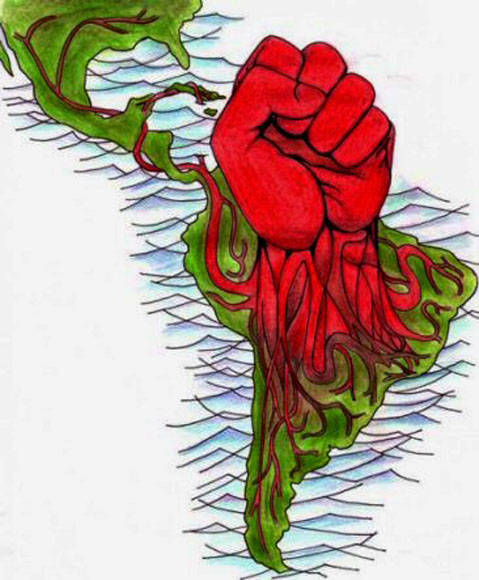
This is an excerpt from Webber's article From Nuestra América to Abya Yala: Notes on Imperialism and Anti-imperialism in Latin America across Centuries in the newest issue of Viewpoint.
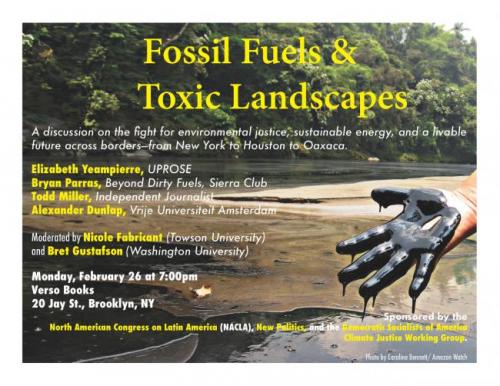
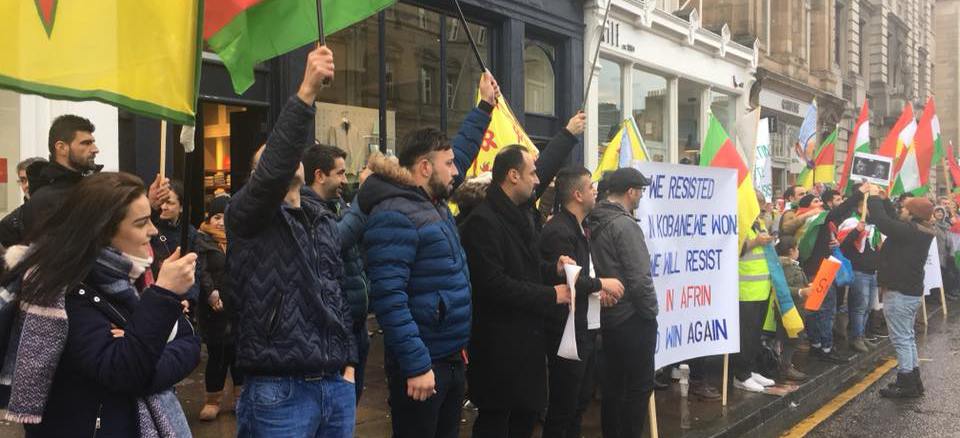
We, the Alliance of Middle Eastern Socialists, oppose the various military attacks on Afrin, Idlib and Eastern Ghouta and support all the innocent civilians in Syria. . . There has been a consensus between all the international and regional powers on the necessity to liquidate the revolutionary popular movements initiated in Syria in March of 2011 . . .
 In its January meeting, after a pro-forma discussion, the Delegate Assembly of the UFT (United Federation of Teachers), which still has the legal right to bargain collectively on behalf of New York City's teachers, voted down a resolution to work with community groups to support Black Lives Matter in the schools in February. LeRoy Barr, UFT's assistant secretary, co-staff director, and Chairperson of the Unity Caucus, gave the UFT leadership's rationale for rejecting the motion. Support for BLM was, he contended, a splinter issue, divisive, at a time when the union had to stay focused on what was key, the Janus decision and the threat to collective bargaining rights.

The victory of Democrat Phil Murphy in the New Jersey gubernatorial election this past November makes it quite likely that recreational marijuana will be legalized in the Garden State. Public opinion in the state has clearly been ready for a change in the drug war model of prohibition – with even Murphy’s Republican opponent having called for decriminalization.
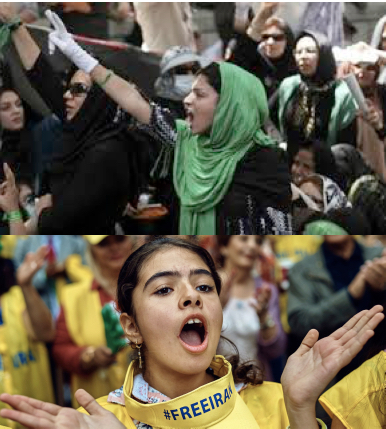
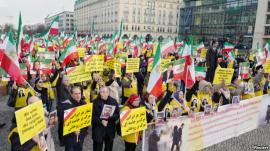
We, the Alliance of Middle Eastern Socialists, support the popular protests in Iran and call on progressives in the region and throughout the world to stand in solidarity with them as well. We believe it is an absolute necessity to build regional and global solidarity with anti-authoritarian struggles for democracy, social justice and equality, and to oppose patriarchy, racism, sectarian or homophobic discrimination and prejudice. We hope that the current protests in Iran will force the Iranian regime to withdraw its military and financial support for the murderous regime of Bashar al-Assad in Syria, and to end its reactionary interventions in the region. We also hope that the efforts by some elements to inject anti-Arab chauvinism into the movement will be rejected in order to reach out to grassroots struggles across the region.
An Alternative to the Politics of “National Security” Emerges
Days of protests in Iran have caught statesmen, analysts and observers by surprise, even though the anti-austerity and anti-establishment sentiments behind this primarily working-class revolt have been brewing for years. All the same, surprise is not a common reaction across the media.

The author himself lets you know at the start that this book is going to be very harsh. After the end of the chapter titles, Stan Goff writes, “Warning to readers who have experienced violent trauma or sexual assault. This book contains portrayals of extreme violence, including combat, murder, and rape.” His purpose is not to titillate, but to reveal. There are some brief loving sexual passages, but the descriptions of sexual violence and killings are there to repel you.

Vivek Chibber’s “Our Road to Power” published recently in Jacobin—oddly enough written as a commemoration of the Russian Revolution of October 1917—codifies a strategy for what is one of the dominant tendencies in the American left today: social democracy. The principal argument of “Our Road to Power” (a title chosen by Jacobin’s editors, perhaps alluding to German Social Democrat Karl Kautsky’s The Road to Power) is that a “ruptural strategy” is off the agenda. By “ruptural strategy” Chibber means one that is predicated upon a crisis of the economic and political system leading to the breakdown or to the overthrow of the state. Chibber believes that since the power of the state is so great today—because of its legitimacy, its coercive power, and its power of surveillance—a revolutionary strategy is ruled out. It would be, he says, “hallucinatory” to think otherwise.

The Future Historians’ International Study Group and Collaborative Writing Project has obtained the following excerpts from the 2117 high school history book “Then, Now and How.” The title of this chapter is “#MeToo and the origins of today’s egalitarian society.”
For more information, go to http://futurehistorians.org/
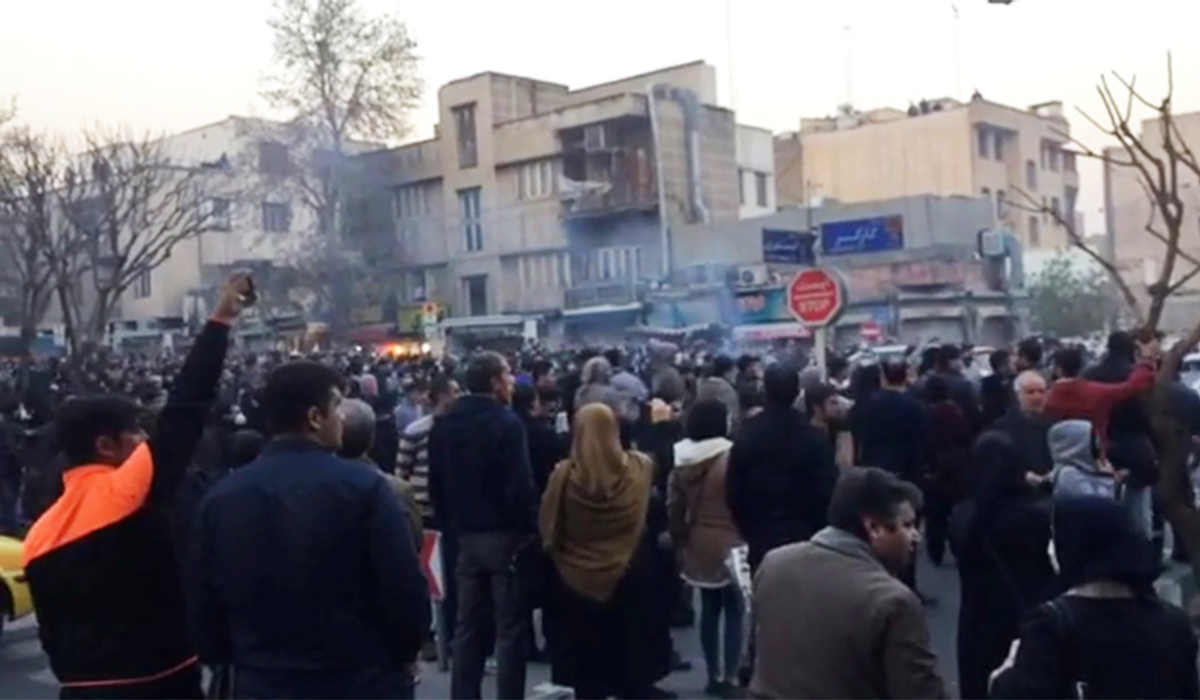
Over the New Year, a wave of protests has erupted in Iran, as people in towns all over the country took to the streets to air their grievances.
Many protests were about basic economics – unemployment or low pay, high prices for basic foodstuffs like eggs – but there have also been reports about political aspects to the protests.
- « Newer Posts
- 1
- …
- 121
- 122
- 123
- 124
- 125
- 126
- 127
- …
- 227
- Older Posts »