Online Features
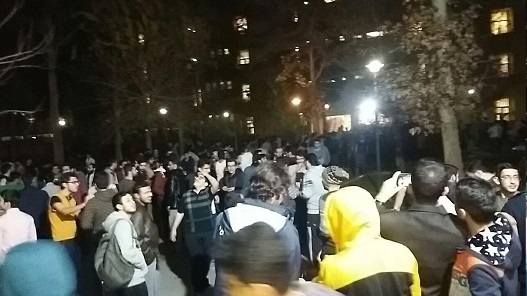
Since Thursday December 28 the Iranian people have engaged in extensive protests against the government of religious despotism in Iran. These protests have continued in full force in tens of Iranian cities, from north to south and from east to west of the country. The protests started with slogans against poverty, rising prices and unemployment, and in no time attacked the entire Islamic Republic as the prime destroyer of people’s lives.
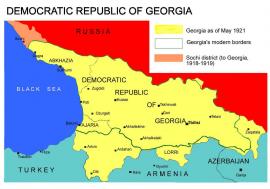
Eric Lee. The Experiment: Georgia’s Forgotten Revolution, 1918-1921. London: Zed Books, 2017. 259 pages. Timeline. Notes. Index. (For further information see: http://www.ericlee.info/theexperiment/)
In his new book The Experiment: Georgia’s Forgtten Revolution, 1918-1921 the journalist and historian Eric Lee does two things. First, he tells the little known and complicated story of the Georgian Revolution and the short-lived independent state that it created.
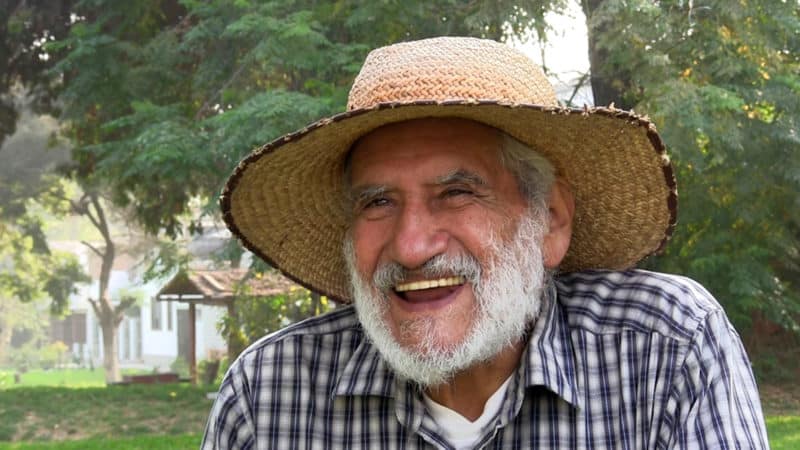
On a gray Saturday afternoon in Lima, Peru, this past April, I received a phone call from Hugo Blanco, veteran guerilla and survivor of multiple death sentences. “You wanted to talk?” he asked. “Come over now.” An hour later, after a ride through the city’s torturous streets, I was in the plaza in front of his house, an unpretentious single-level in a middle-class neighborhood north of the colonial center. I knocked and collected myself; I hadn’t actually expected him to respond to my request.
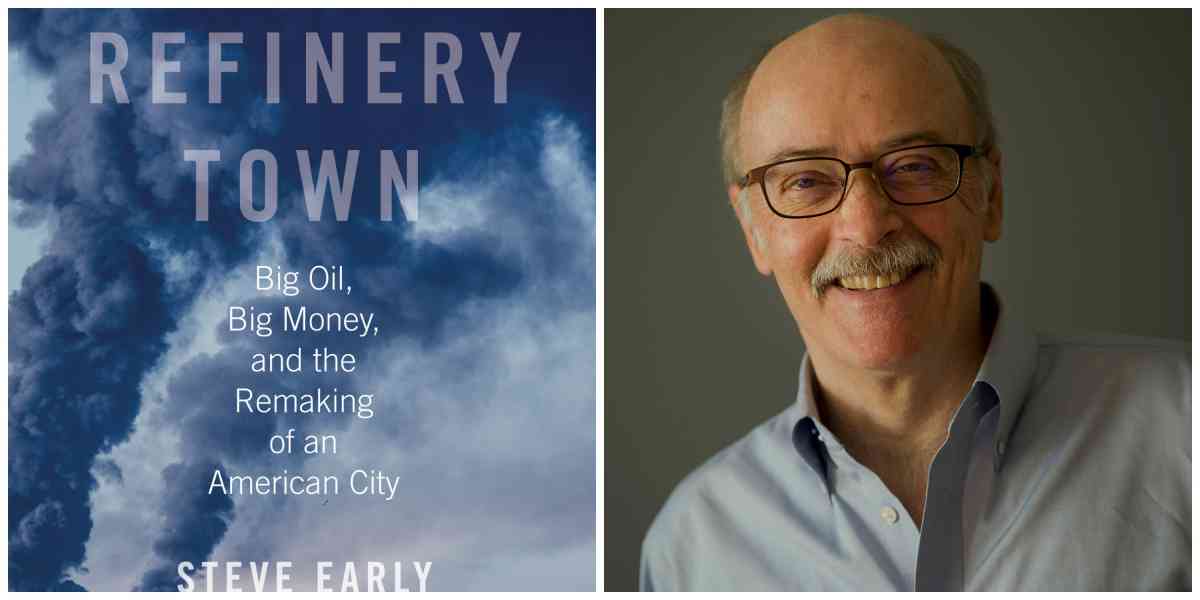
Mohsen Abdelmoumen: You have written a book about the city of Richmond, California, where you live, prefaced by Senator Bernie Sanders: Refinery Town: Big Oil, Big Money, and the Remaking of an American City. This book shows us the experience of this city that has won struggles such as raise the local minimum wage, defeat a casino development project, challenge home foreclosures and evictions, and seek fair taxation of Big Oil and Big Soda. Can we say that the Richmond experience should inspire progressive activists in other cities around the world?

The Work of Art in the Age of Mechanical Reproduction
Walter Benjamin was one of the great analysts of liberal capitalism during a time when its days seemed numbered and fascism was ascendant across Europe. Much of his work is taken up with looking at how the cultural products and processes characteristic of a civilization are reflective of the inner psychic and spiritual tensions roiling beneath the surface of hegemonic ideologies.
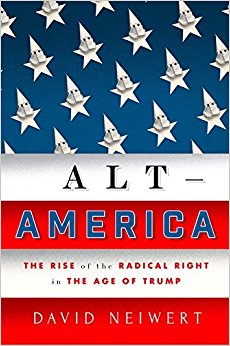
David Neiwart, Alt-Right: The Rise of the Radical Right in the Age of Trump. Verso Books, 2017.
Think of this book as a basket of deplorables. It’s thick on illuminating descriptions of renascent white nationalists, gun-enamored militia poseurs, conspiracy-theory mongers, Ku Klux Klansmen and women, Christian Identitarians and proto-Nazis benefitting from and legitimized by the sordid presidency of Donald Trump. It’s thin on explaining why such phenomena persist or have arisen as political thuggery in 21st-century America.
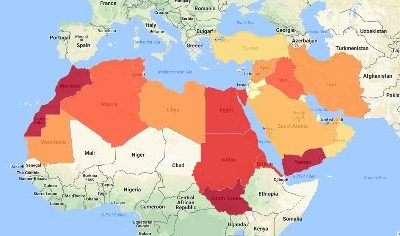
We are an alliance of Middle Eastern socialists opposed to all the international and Middle Eastern regional imperialist powers and their wars, whether the U.S., Russia and China or Israel, Saudi Arabia, Iran and Turkey. We also oppose other authoritarian regimes such as Assad’s in Syria and El Sisi’s in Egypt as well as religious fundamentalism whether of ISIS, Al Qaeda, Hezbollah or the Muslim Brotherhood. Although the Muslim Brotherhood and Hezbollah consider themselves gradualists and oppose the Jihadism of Al Qaeda and ISIS, all of these organizations share the goal of establishing a state based on Shari’a Law and preserving the current capitalist order.
The US administration has annexed the Syrian conflict to its own war on terror. It has tried to impose its battle on Syrians so that they will abandon their own battle against the tyrannical discriminatory Assadist junta. … [but] the war on terror is centred around the state; it is a statist conception of the world order which strengthens states and weakens communities, political organizations, social movements, and individuals… In the record of this endless fight against terrorism there has not been a single success, and thus far three countries have been devastated over its course (Afghanistan, Iraq and Syria).”[1]
– Yassin al-Haj Saleh, former Syrian Communist dissident who spent 16 years in Assad’s dungeons
Introduction
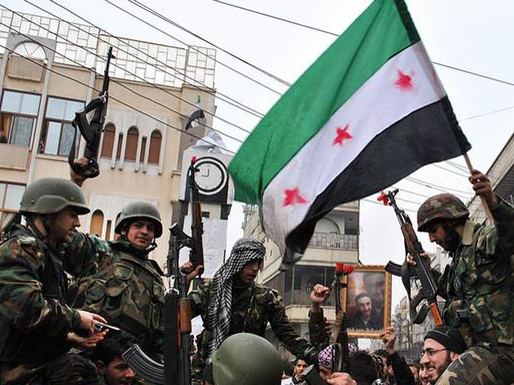
This article deals with a specific aspect of the US role in the Syrian conflict: its drive to co-opt the Free Syrian Army (FSA) into a proxy force to fight only the jihadist forces of Jabhat al-Nusra (now Jabhat Fatah al-Sham, or JFS) and the Islamic State (ISIS/Daesh), while giving up their fight against the Assad regime.
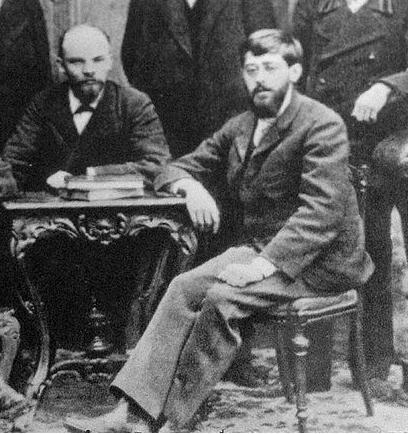
The greatest flaw of Mitchell Cohen’s “What Lenin’s Critics Got Right” in the most recent Dissent is that it repeats what Lars T. Lih, independent researcher and author of Lenin Rediscovered:‘What Is To Be Done’ In Context (Haymarket, 2008) and a biography of Lenin (Reaktion Books, 2011), calls the “standard textbook interpretation” of Lenin’s thought and, by extension, Bolshevism as a movement.
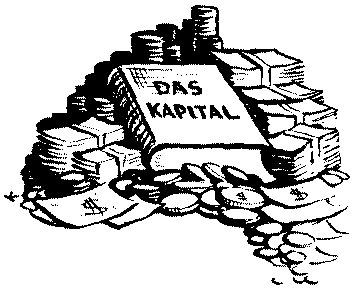
What does it mean to celebrate and concretize for today Marx’s greatest work, Capital, Vol. I? Such a discussion is terribly important at this juncture, when we are in a new situation where even some sectors of the right have started to attack neoliberalism. The Brexit vote in the UK, the large vote for Le Pen in France despite her eventual defeat by a neoliberal candidate, and above all, the Trump campaign have placed on the agenda a new form of right-wing populism with neofascist overtones that breaks with some key features of neoliberalism, such as free trade pacts, somewhat more open borders, and “humanitarian” intervention. At the same time, Trump as president has put forth an incoherent agenda that contains major continuities with neoliberal austerity and old-style militarism, above all in the attempt to gut Obamacare.
 Since Donald Trump’s election in November, 2016, more than 150 university campuses in North America have been postered or fliered by white supremacist, neo-Nazi, or white nationalist groups. Most common have been flierings by American Vanguard, a Neo-Nazi formation with paramilitary characteristics, and Identity Europa, a self-proclaimed white nationalist fraternity founded by a former acolyte of Ku Klux Klan leader David Duke.
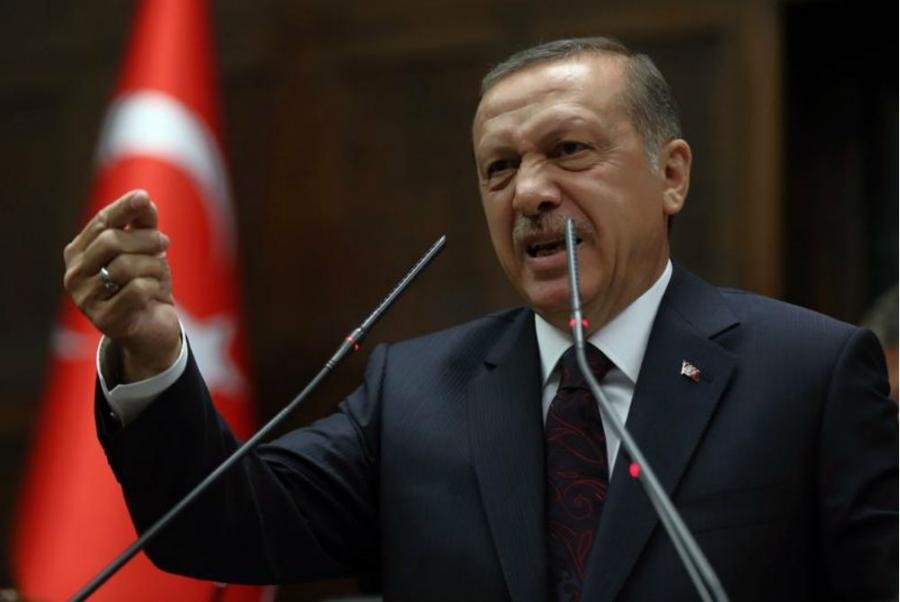 Peaceful protest carries no guarantee against violence. In mid-May, Recep Tayyip Erdoğan, the president of Turkey, came to the United States to meet with Donald Trump, who had made haste to congratulate him on winning a referendum in April. Its provisions would – according to the Venice Commission of the Council of Europe – undercut “the model of a democratic presidential system based on the separation of powers” and thereby “risk degeneration into an authoritarian presidential system.”
- « Newer Posts
- 1
- …
- 122
- 123
- 124
- 125
- 126
- 127
- 128
- …
- 227
- Older Posts »