Online Features
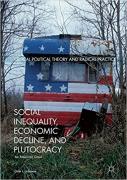
Dale L. Johnson. Social Inequality, Economic Decline, and Plutocracy: An American Crisis. Palgrave Macmillan, 2017. 240 pp. Index, Appendix. $159
Social Inequality is not for the faint-hearted. It covers the major political-economic issues of our time, from the structural changes in the economics of capitalism, to class structure, the imperialist state, and the distortions of capitalist culture. The author, a veteran scholar-activist of the New Left generation who now lives in Costa Rica[1], ends with a plea for resistance to our oligarchic “hegemon” and suggests a series of tactics to help us on the road.
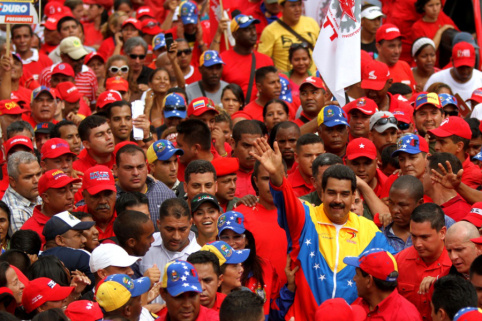
The political crisis that has been shaking Venezuela for months is at the heart of a war of information and propaganda, which is even inviting itself, albeit for other purposes, into the French political debate. Beyond binary discourses, we wanted to take the risk of complexity with Fabrice Andreani, doctoral student in Lyon-II University, who is working on the Bolivarian revolution. [CQFD]
The #MeToo campaign on social media, women sharing of experiences of sexual harassment, shows how a new generation of women, with male supporters, demands that we examine systemic sexual oppression. We will undoubtedly hear complaints that #Me2 is unwarranted. One predictable trope from the Right is what we heard in response to Trump’s pawing and groping: "These are personal matters, not issues that our society has to address. This is life. Get over it."
 (Normally my writing, especially when facing new situations,is the result of discussions with my comrades. But these days we are practically incommunicado. That’s why even more than in other cases, this article is entirely my responsibility. And, at the same time, I write with incomplete informatioin, the result of the same lack of communication, and therefore everything that I write is, even more than usual, subject to future correction. – RB)
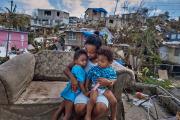
Crises raise new, sharp problems that unveil and accentuate both the admirable and the negative aspects of the societies they affect. They also pose new tasks and offer new perspectives on already established plans. The case of Puerto Rico and the effect and response to the strike by Hurricane María is no exception.
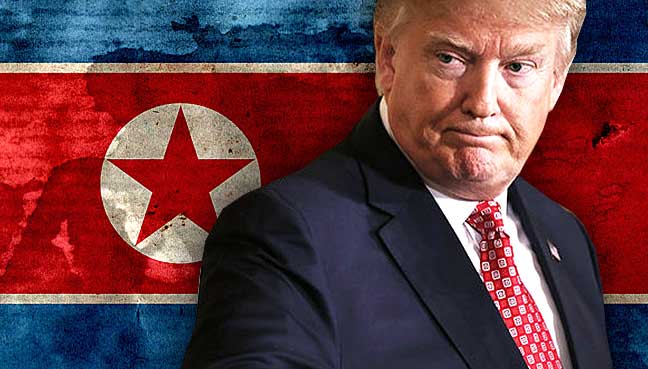 U.S. President Donald Trump crossed to new stage in the annals of warmongering in his United Nations speech of September 19 when he declared, “The United States has great strength and patience, but if it is forced to defend itself or its allies, we will have no choice but to totally destroy North Korea.” This threat to incinerate an entire nation of 25 million people amounts to nothing less than genocide. At the UN itself, the speech was met with stunned silence, with one major exception, vigorous applause from the militaristic Prime Minister of Israel, Benjamin Netanyahu.
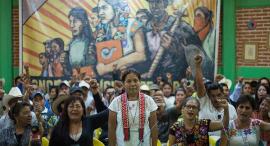 The Zapatista Army of National Liberation (EZLN), which led an armed uprising in Mexico’s southern-most state of Chiapas in 1994, and which has since then spent its time organizing autonomous communities in that state, is now putting forward an indigenous woman candidate for president in the 2018 elections. The Zapatistas hold the Mexican government and the country’s political parties in utter disdain, both for their corruption and for their disregard for the people they supposedly represent. The Zapatistas also reject elections and voting on principle. So, while they are putting forward health worker María de Jesús Partricio for president, they are not actually trying to elect her.
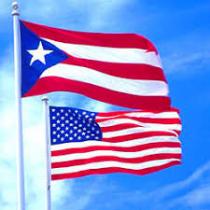
“We’re American citizens. How can Trump turn his back on us?” This is one of the pleas I’m hearing over and over again about the humanitarian crisis in Puerto Rico caused by Hurricane Maria. While it is a distasteful display of colonialist racism that the Trump administration takes its time to decide how much help Puerto Rico deserves, after pulling out the stops for Miami and Houston, ostensibly because there’s not “a really big ocean” separating them from Washington, it’s kind of par for the course. Our citizenship has always been second-class.
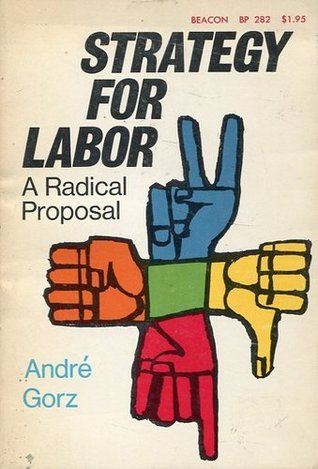
This August a hundred years ago, Lenin began to pen The State and Revolution in exile once more following a crippling defeat. Just one month prior, workers had risen and laid siege to government posts, but didn't know what to do beyond that. History didn't come down from above and give them a revolutionary society. This became obvious after the government sent troops to quell the uprising. The Bolsheviks, for their part, were caught off guard, and the workers’ movement underwent yet another cycle of repression.
From the Steering Committee of Solidarity
If it weren’t frightening, it would be funny: “Big Twit Calls Out Rocket Man,” as Donald Trump ramps up his insults and threats of war against North Korea. Let’s look at some of the issues behind the antics and escalating rhetoric.
It’s really impossible to assess the chances of an actual war on the Korean peninsula, but while it may be a low-probability event its consequences would be utterly catastrophic. All the establishment media, of course, breathlessly consider whether the North Korean regime and its “beloved leader” Kim Jong-un are a direct threat to the United States — as if U.S. imperialism didn’t threaten North Korea and a whole bunch of other countries. It’s simply taken as given that rich and powerful states have an inherent right to self-defense and security, and others don’t.
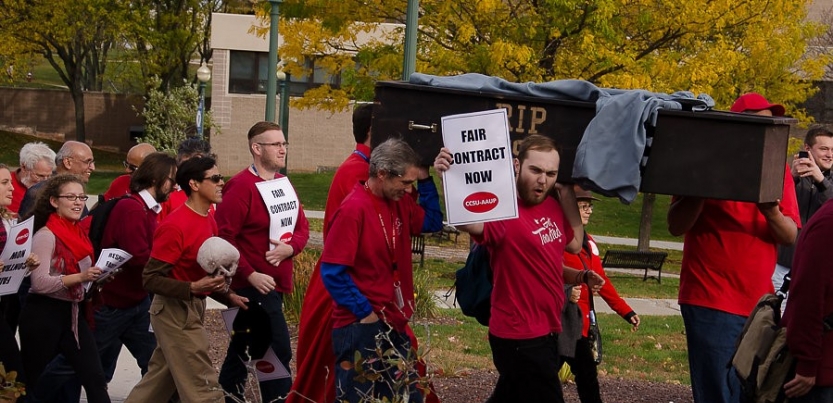
For the third time in eight years, public sector workers in Connecticut have voted for concessions. State employees have sacrificed a total of $7 billion to close budget deficits in 2009, 2011, and now 2017.
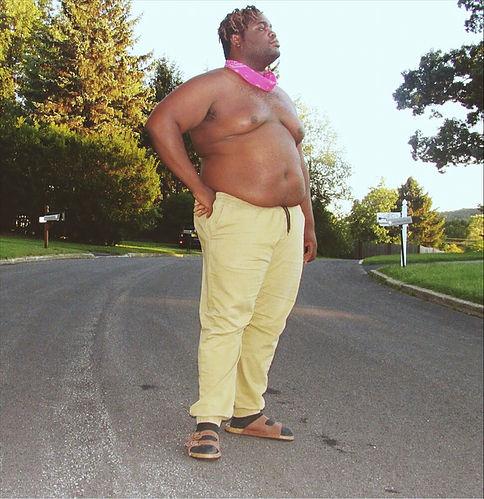
This work is a creative nonfiction work which highlights the imperialist white supremacist capitalist colonial gaze of the Black male body, conventional beauty standards, systemic weightism, and instances of subversion against these oppressive norms in appreciating my body for the way it is.
- « Newer Posts
- 1
- …
- 125
- 126
- 127
- 128
- 129
- 130
- 131
- …
- 227
- Older Posts »