Online Features
We need a socialism that goes beyond capitalism. And not just for moral reasons.
John Judis has all the right intentions. He’s looking at the resurgence of openly democratic socialist currents in the United States with a mix of excitement and trepidation. Excitement, because he knows how desperately the country’s workers need social reforms. Trepidation, because he worries that the new left might fall into the familiar traps of insularity and sectarianism.
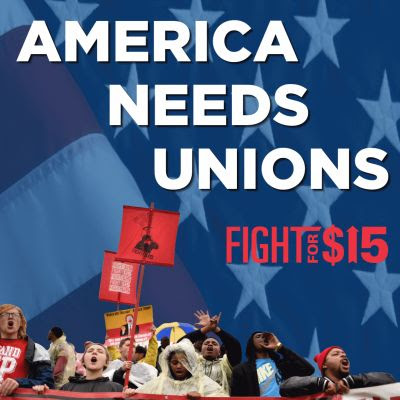 Labor Day 2017 is a sobering moment for people who care about human dignity, social justice, peace, and a life-sustaining environment. While powerful elites who control government so as to safeguard capitalism are driving civilization towards barbarism and the planet to extinction, Trump’s election has spurred widespread protests. Vigorous social movements are challenging Trump’s and the GOP’s retrograde policies and politics: corrupt, xenophobic, racist, misogynist, malevolent. Sparked by Bernie Sanders’ campaign, we’re seeing a new embrace of socialism, especially among younger activists.
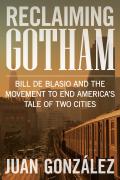
Juan Gonzalez. Reclaiming Gotham: Bill de Blasio and The Movement to End America’s Tale of Two Cities. New York: New Press, 2017.
There is no better role model for aspiring radical scribes than Juan Gonzalez. The country’s leading Latino journalist is cohost of Democracy Now!, a former columnist for the New York Daily News, and twice winner of the Polk Award for his investigative reporting. Not many veterans of campus and community struggles in the Sixties and workplace organizing in the 1970s later moved into mainstream journalism with such distinction, Gonzalez has managed to combine daily newspapering with continued dedication to the cause of labor and minority communities.

Let’s set the scene.
You just had dinner with your family and argued about the viability of the creation of socialism in the United States while fighting off their tired and false rebuttals of human nature as your uncle Steve got broccoli stuck in his teeth. Exhausted from the argument in a way that only your family can cause, you head to your home and get ready for bed. A notification appears on your phone that a new article from Jacobin.
 In a recent article from Politico, a new poll was discussed that suggests that nearly half, 49 percent, of Trump supporters believe that he won the popular vote in the 2016 election. (He didn’t; he lost by nearly three million votes.) Spurred on by Trump’s claims that millions (!) of people voted illegally in the election, this portion of Trump’s base have been lied to and misled by a politician they think they can trust. What are we to make of this?
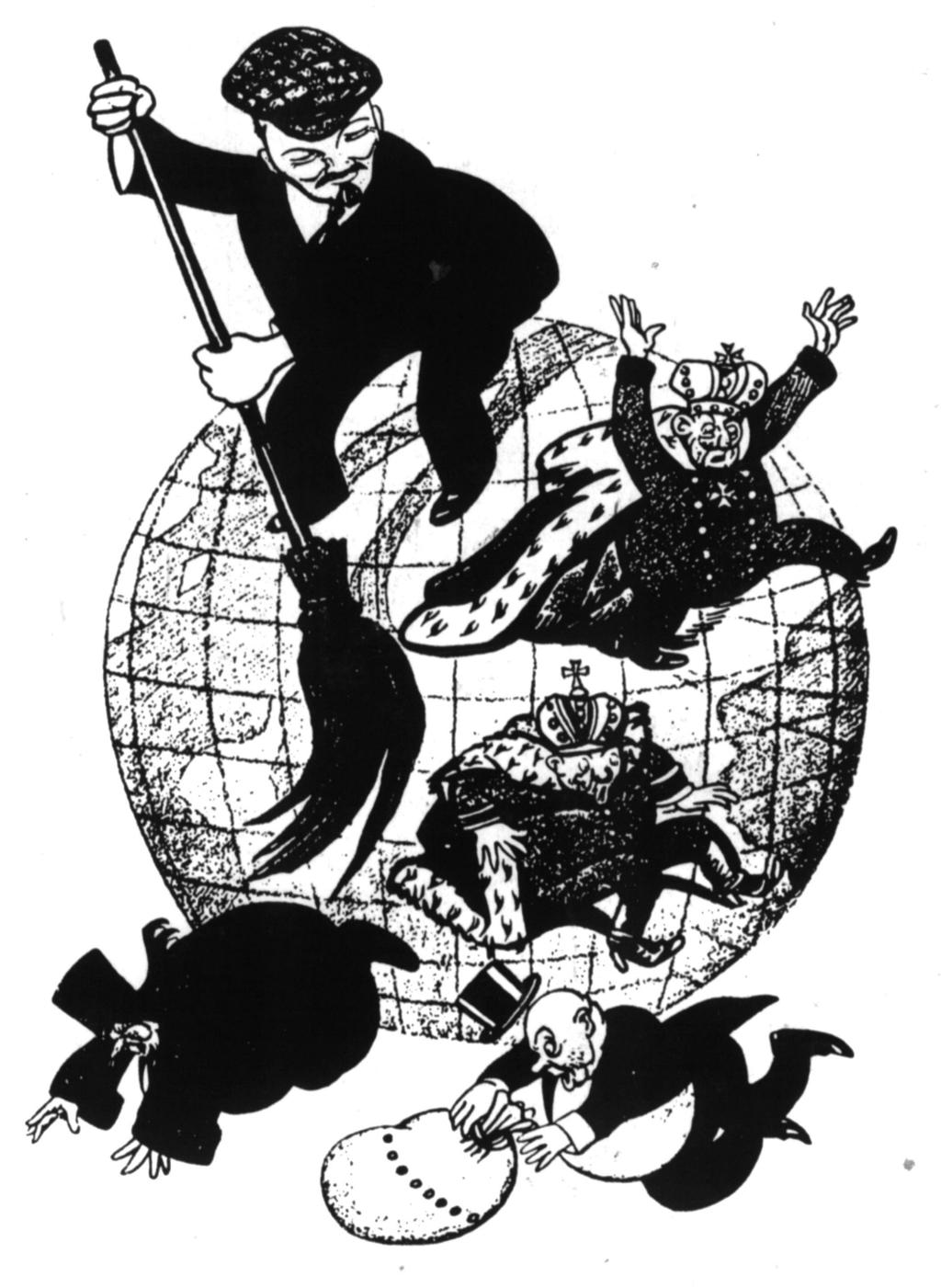

Theodore W. “Ted” Allen (1919-2005) was an anti-white supremacist, working class intellectual and activist. He developed his pioneering class struggle-based analysis of “white skin privilege” beginning in the mid-1960s; authored the seminal two-volume The Invention of the White Race in the 1990s; and consistently maintained that the struggle against white supremacy was central to efforts at radical social change in the United States. Born on August 23, 1919, in Indianapolis, Indiana, he grew up in Paintsville, Kentucky and Huntington, West Virginia and, after moving to New York City, lived his last fifty-plus years in the Crown Heights section of Brooklyn.

A well-researched article by John Eligan in the Aug. 18 N.Y. Times goes beyond denouncing the symbolic racism of Charlotteville’s Confederate statues to expose the more pernicious structural racism embedded in the separate-but-unequal physical segregation of the city. (See “In Charlottesville, Some Say Statue Debate Obscures a Deep Racial Split.”) [1]
Ironically, this segregation was imposed, not during the rise of the KKK in the 1920s, but during the 1960s under the progressive guise of ‘urban renewal.” It was then that the vibrant, relatively prosperous, historical black neighborhoods like Charlotteville’s Vinegar Hill were deliberately razed, left long vacant, and ultimately replaced by soulless public housing and institutional projects.
Cihan Tuğal, The Fall of the Turkish Model: How the Arab Uprisings Brought Down Islamic Liberalism (Verso, 2016).
In the short time since the 2016 publication of Cihan Tuğal’s The Fall of the Turkish Model: How the Arab Uprisings Brought Down Islamic Liberalism, Turkey has endured an attempted coup, nearly a year of rule under a state of emergency, the widespread repression of dissent through imprisonment and mass firings of teachers and civil servants, and a (likely fraudulent) referendum that has institutionalized the autocratic rule of President Tayyip Recep Erdoǧan. Yet, unbelievable as it may seem, these developments are part of a continuum rather than a rupture, and Tuğal’s book is essential—if not unproblematic—reading for understanding contemporary politics in Turkey, the Middle East and North Africa.
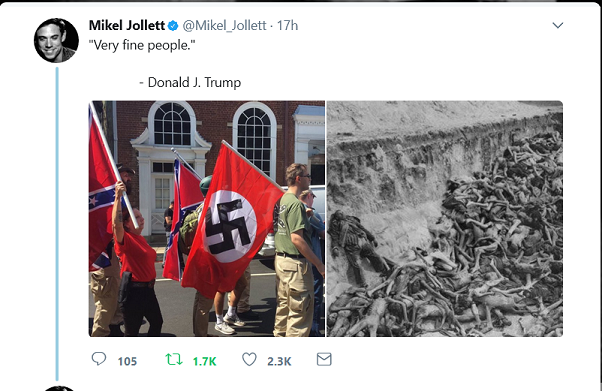 Amidst so much to read and digest about events in Charlottesville and Trump’s response to them, and what seems (but is not) a new, highly violent emergence of neo-Nazis, the KKK, and white supremacist organizations, this blog by Adam Shatz on the website of the London Review of Books seems to me one of the more eloquent, insightful analyses.

President Donald Trump’s failure for two days to condemn the violent Ku Klux Klan, neo-Nazis, and "alt-right" white supremacists, one of whom murdered a woman in Charlottesville, has led to a major development as sections of the capitalist class have begun to abandon him. While some top Republican leaders have taken a stronger stand against Trump in recent days, several major corporate leaders have deserted him. They have done in part because of his flirtation with fascism, but also because Trump and his administration—his embarrassing tweets, the constant circus, the Korea war scare, the Russian imbroglio—makes it impossible for the Republicans to advance their pro-business agenda. If the relationship between Trump and corporate leaders continues to unravel, this could lead to a more rapid collapse of the Trump presidency than had previously seemed possible.
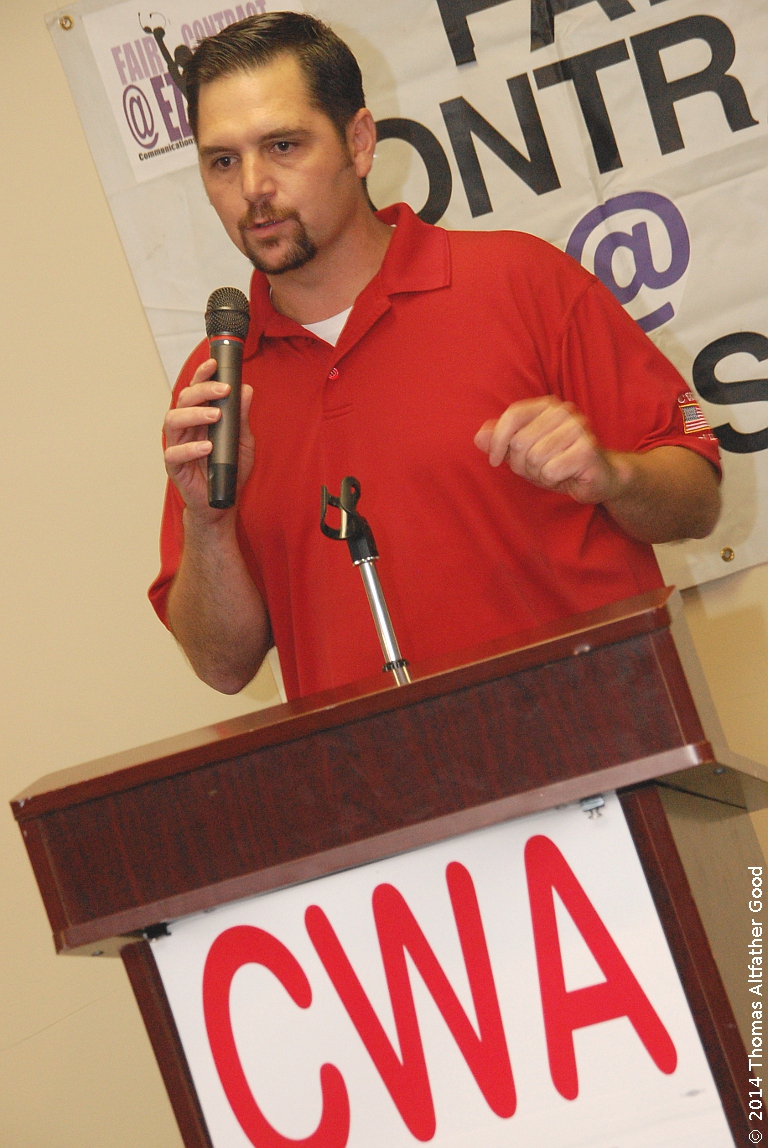
In Staten Island, one union local is propelling a growing labor-community alliance deep in New York’s Republican recesses.
- « Newer Posts
- 1
- …
- 126
- 127
- 128
- 129
- 130
- 131
- 132
- …
- 227
- Older Posts »