Online Features
Democratic Socialists of America (DSA) is singular on the left as being both a broad radical socialist organization, encompassing left social democrats, Marxists and even a smattering of anarcho-syndicalists, combined with a strong face toward electoral politics. But an electoral orientation per se is not and cannot be the common denominator of our work. It is true that without an electoral face, any political organization is hamstrung and those on the left who argue that support for any Democrat anywhere is treasonous paint themselves into a corner. Electoral politics on the level it can be rationally conducted is worth doing. That, for me, is not in dispute. Its place in our work is what is problematic. Thinking in terms of power is about more than electioneering.

For the first time in the six-year Syrian war, the US shot down an Assadist warplane on June 18, in defence of its allies in the Syrian Democratic Forces (SDF), the US-backed military and political front dominated by the Kurdish-led People’s Protection Units (YPG). Assadist warplanes had carried out the highly unusual act of bombing the SDF in the town of Ja’Din, near Tabqa in Raqqa Province.
This video in honor of Joanne Landy was made at the request of Piotr Niemczyk, an activist in the 1980’s in the Polish independent peace group “Freedom and Peace.” It was shown at an event in New York City on June 1, 2017, honoring Joanne Landy.
Over the past few years, the following sequence has occurred often enough to have become a familiar pattern.
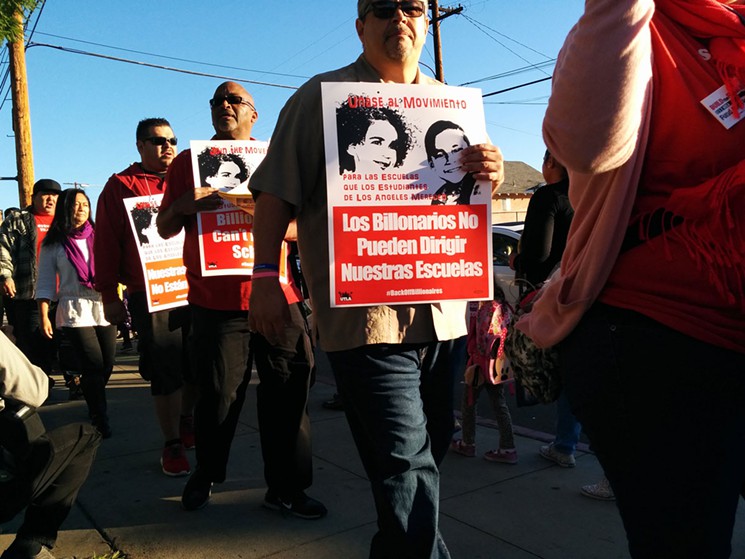
In June, the American Federation of Teachers (AFT) proudly announced that teachers at Cesar Chavez Prep Charter School in Washington, DC charter school were the first to vote to form a charter school union in DC. What the AFT has not discussed was the decision of AFT organizers to withdraw a petition for a vote at a larger DC charter school, at Paul Public Charter School, one of the first charter schools in DC. Meanwhile, teachers in the Chicago Alliance of Charter Teachers and Staff have voted overwhelmingly to merge with the Chicago Teachers Union. Their statement foregrounds the need for union democracy: “If you trust teachers, then you should trust their democratic voice — their union. Unions make schools, both district and charter, work better.”
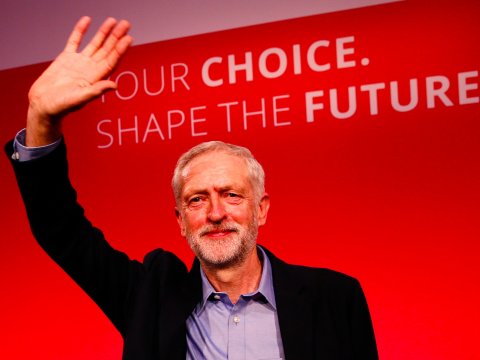
The 8 June election result has re-energised Labour’s activist base and helped put basic working-class demands back on the agenda. The increase in turnout among young voters, and the huge Labour lead among young voters, signal a major shift in British politics. All of this opens up a new period of Labour revival and recomposition.
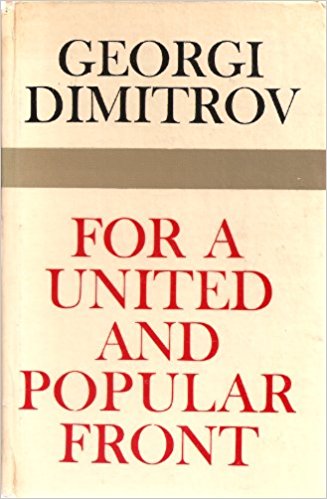
A few days ago, Paul Krehbiel—a member of the Committees of Correspondence, an organization with roots in a split from the Communist Party USA in 1991—had an essay posted on Portside entitled "United and Popular Front: Lessons from 1935-2017."

[The following article was written as a contribution to Solidarity’s pre-convention discussion.]
Foreign policy elites are freaking out:
“President Trump has accomplished an extraordinary amount in a short time. With shocking speed, he has wreaked havoc: hobbling our core alliances, jettisoning American values and abdicating United States leadership of the world. That’s a whole lot of winning — for Russia and China.”
Those are the lamentations of Barack Obama’s national security advisor and ambassador to the United Nations, Susan E. Rice (New York Times, Saturday, June 3, 2017, “To Be Great, America Must Be Good.”)
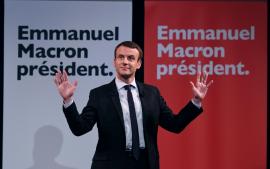
The good news this May was that French voters rejected far-right Marine Le Pen by a two-to-one margin in the second round of the Presidential election.
The bad news was that France ended up electing Emanuel Macron, an efficient technocrat who consciously incarnates French capital’s need to eliminate the "French exception" and level the wages, rights and benefits of the French common people down to the average of the European Union (which includes Romania and Bulgaria).

Fellow socialists and leftists, it is time to dispel that illusion that somehow Putin’s Russia of today is somehow positively connected to the USSR of yesterday. That simply is not the case.
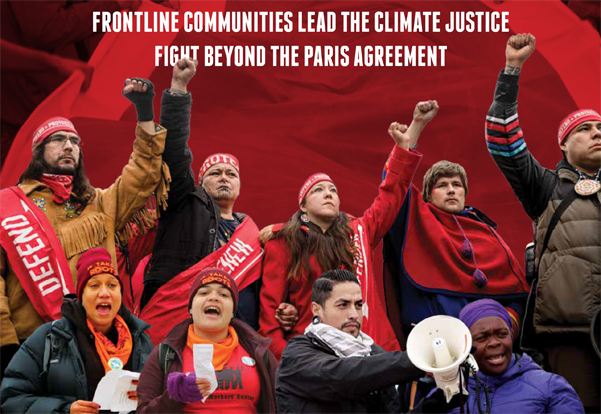
Grassroots Global Justice Alliance condemns Trump's announcement to withdraw the US from the Paris Agreement.
Since 2004, members of the Richmond Progressive Alliance (RPA) have won ten out of the sixteen city council and mayoral races they have contested in their majority minority city of 110,000.
- « Newer Posts
- 1
- …
- 129
- 130
- 131
- 132
- 133
- 134
- 135
- …
- 227
- Older Posts »