Online Features
 During the Chicago Public Schools (CPS) spring break, Sarah Chambers, beloved to her special needs students, well-known (to staff and parents of her school), notorious (to CPS labor relations officials), received a letter saying she was suspended and had to stay away from the school. Though Sarah was an early member of the Caucus of Rank and File Educators (CORE) that is now the CTU’s elected leadership, she remained a teacher of special needs kids who represents her school in the House of Delegates and serves on the union’s Executive Board.
Alex Kolokotronis is a 1st year PhD student in Political Science at Yale. He self-identifies as a libertarian socialist and is interested in studying anarchist movements, post-state forms of governance and public power, and associationist self-managed socialism. He is the co-founder of Student Organization for Democratic Alternatives (SODA), a group dedicated to implementing participatory budgeting and participatory democracy at the university level. Participatory budgeting is a directly democratic process by which ordinary people get to deliberate and decide how to allocate a designated budget. He previously worked in Worker Cooperative Development with Make the Road New York and the New York City Network of Worker Cooperatives.
 We are horrified by the relentless, cruel attacks of the Assad regime, aided by Moscow and Tehran, on the Syrian people. For sheer brutality the butchers in Damascus have few equals in the world today. But we also wholeheartedly condemn U.S. bombing and military forces in Syria, which will kill innocent people and contribute nothing towards a just solution to the Syrian conflict, while at the same time serving to deepen the reactionary U.S. military presence in the Middle East and reinforce Assad’s rhetorical claim that he is defending the Syrian people against Western imperialism, hollow though that claim may be.
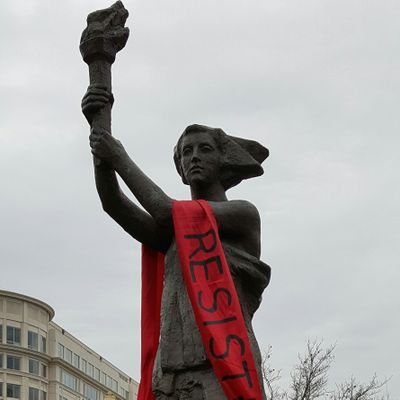
The first few weeks of Donald Trump’s presidency has seen an amazing explosion of mobilizing to oppose him and his administration on oh-so-many levels. And that has been heartening.
But it is not enough.

George Souvlis: By way of introduction, could you explain what personal experiences strongly influenced you, both politically and academically?
Johanna Brenner: I grew up in a staunchly liberal family and remained politically liberal until I joined the movement against the Vietnam war, where I was introduced to anti-imperialist politics and then Marxism and “third-camp” socialism. In the late 60’s I was part of the student left that turned toward organizing the working-class. I was a student at UCLA. We organized student support for a teamster wildcat strike and we had a group called the Student Worker Action Committee that published a newspaper, Picket Line, where we covered different worker and community struggles in Los Angeles. I was rather slow to embrace feminism, but in the 1970’s I got involved with a socialist-feminist group called CARASA (Coalition for Abortion Rights and Against Sterilization Abuse) which began in New York City. Some friends and comrades formed a Los Angeles branch of CARASA and we were able to connect to radical women of color doing community organizing around sterilization abuse in LA. From that point on, I have been deeply immersed in Marxist-feminist theory and politics.

In his article calling on socialists to run in Democratic primaries, Daniel Moraff argues that some of the barriers to running candidates in Democratic primaries, such as money and incumbency, also apply to third parties. So they do. He points to the fact that socialist and community organizer Debbie Medina got 40.56% of the vote in the 2016 NY State Senate race in Brooklyn’s 18th District as opposed to 13% for a Green candidate for mayor in Baltimore. So, it’s easier to run as a Democrat.

Jason Schulman is a member of the Democratic Socialists of America, co-editor of New Politics, and author of Neoliberal Labour Governments and the Union Response (Palgrave Macmillan, 2015).
He spoke to Workers’ Liberty about the challenges facing the left in America under Donald Trump's presidency.
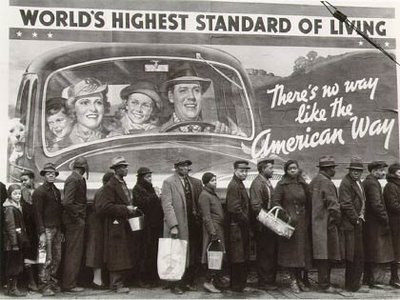
Recently, the economics editor of the Guardian newspaper in the UK, Larry Elliott, presented us with a comparison of the Great Depression of the 1930s and now. In effect, Elliott argued that the world economy was now in a similar depression as then. The 1930s depression started with a stock market crash in 1929, followed by a global banking crash and then a huge slump in output, employment and investment. In that order. The number of bank failures rose from an annual average of about 600 during the 1920s, to 1,350 in 1930 and then peaked in 1933 when 4,000 banks were suspended. Over the entire period 1930-33, one-third of all US banks failed. But it was the stock market crash that was first.
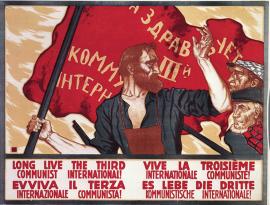
Book Review – John Riddell (editor and translator), To the Masses: Proceedings of the Third Congress of the Communist International, 1921 (Brill/Haymarket, 2016), £39.99.
To the Masses is the last volume of a hugely ambitious project to make the proceedings of the (four) congresses of the Communist International held during Lenin’s time available in English. It’s an extraordinary achievement for John Riddell, a Canadian revolutionary socialist historian and activist.
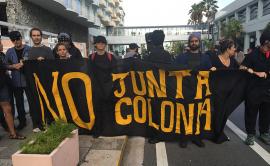
The situation at the University of Puerto Rico is framed within a context of a 10-year economic depression and unsustainable debt crisis, which was meant to be remedied by the 2016 Puerto Rico Oversight Management Economic Stability Act (PROMESA), signed by President Obama, and its federal Fiscal Control Board (Junta de Control Fiscal, the word Junta in Spanish is politically charged). Similar to what was presented at the conference this weekend regarding Greece, South Africa and Mexico, the public university became, throughout the second half of the twentieth century, a vehicle by which many people have escaped poverty.
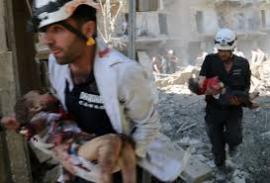
Recently a group called the “Hands Off Syria Coalition” disrupted a performance of Beethoven’s Ninth in Grand Central Station that was done to honor the White Helmets group. The White Helmets, of course, are rescue workers in Syria, of whom 140 have lost their lives while digging out victims of the Syrian regime and of Russian bombs.

On the curious collaboration between the cultural left and the economic right, and how to overcome it.
For all the hideous acts of Trump’s administration over the past six weeks there’s something of a silver lining to our current political moment: we’re now witnessing the emergence of what may well prove to be the most energetic and popular protest movement since the 1960s. And yet it’s worth wondering what, broadly speaking, this dissent will stand for apart from spirited opposition to Trump and his administration.
- « Newer Posts
- 1
- …
- 131
- 132
- 133
- 134
- 135
- 136
- 137
- …
- 227
- Older Posts »