Online Features
[Note: This article is forthcoming in the Winter 2017 issue of New Politics.]
What explains the enthusiasm in certain quarters of the left for Vladimir Putin and Russia? Why do some cheer on Russian bombing in Syria, dismissing out of hand the evidence from Physicians for Human Rights, Amnesty International, and Human Rights Watch1 that they are criminally targeting hospitals? Why do some try to justify Russia’s takeover of Crimea or its blatant intervention in Ukraine?

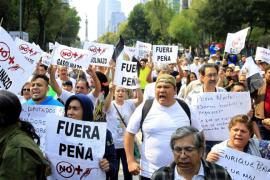
Tens of thousands in every state in Mexico have for the last week joined protests against President Enrique Peña Nieto’s government after it raised prices on gasoline by between 14 and 20 percent and electric rates by 4.5 percent.
The protests so far are not as well organized, as disciplined, or as large as the recent teachers’ strikes over the education reform law or the demonstrations in protest of the forced disappearance of 43 Ayotzinapa Teachers College students, but the demonstrations against the gasolinazo are national in scope and involve broader sectors of society.

Trump is President. To avoid repeating the causes of Trump winning requires knowing what the causes were.
On Christmas Eve, I sent a satirical tweet about an imaginary concept, 'white genocide.' For those who haven't bothered to do their research, “white genocide” is an idea invented by white supremacists and used to denounce everything from interracial relationships to multicultural policies (and most recently, against a tweet by State Farm Insurance). It is a figment of the racist imagination, it should be mocked, and I'm glad to have mocked it.
“This is the end, my only friend, the end/Of our elaborate plans, the end/Of everything that stands, the end/No safety or surprise, the end.” – Jim Morrison, The Doors
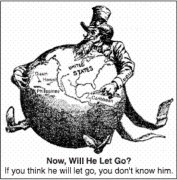
Will Donald Trump’s ascension to the imperial presidency mark the nadir of the declension of the United States as the global hegemon? While Trump’s fantasies about “making America great again” do not explicitly rely on promoting the US as the “indispensable nation,” they, nonetheless, deploy strategies to resurrect the fossil fuel driven expansion of the military industrial state that marked the post-World War II period of US global dominance. Does Trump’s criticism of NATO and “nation building” suggest a less interventionist foreign policy, or does his commitment to white nationalism still augur a redeemer nation, primed to contest those who would challenge US global hegemony? Given the present contradictions of US global hegemony and the policies and posturing of a Trump and his proposed Administration, are we witnessing the end of the American Century and its institutional and ideological commitment to the US as the “indispensable” nation?

Victory….for now
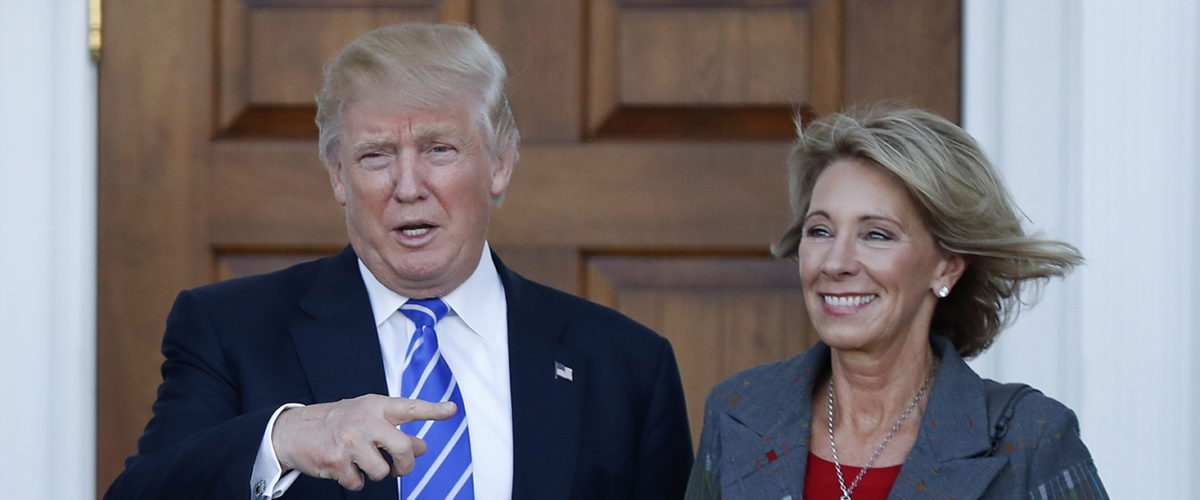
What makes Nikhil Goyal’s analysis of the dangers in Trump’s selection of Betsy DeVos for Secretary of Education so useful, beyond its incisive discussion of education reform, is that it captures the essence of the conundrum liberals face about fighting Trump on his Achilles heel: the grip the wealthy and powerful have on government which he will tighten.

After tens of thousands of young people rushed to the streets to denounce Trump’s election, “Sanderista” Tulsi Gabbard’s made different kind of headlines. She answered Donald Trump’s call and went to a vetting meeting. Yes, after the election all the Democrat pols gave the usual clichés about cooperation with Trump on certain matters, as if Trump were just some other Republican. That’s bad enough, but this was something more. Gabbard was actually looking to join the Trump Administration. She denies it. She ludicrously claims this was just a meeting to talk about Syria and the need for peace. As if “peace” was uppermost in Trump’s mind now. As if he wasn’t spending all his time visiting Alt-Right sewers and billionaire clubs to staff his cabinet.
 We all know very well by now that the white working class did not cause Trump to win the elections. Article after article have made the case, typically pointing to Nate Silver’s finding that the median household income of Trump supporters in the Republican primary was $72,000, roughly $10,000 more than the median household income for all whites. In the general election, Clinton won the majority of all voters earning $50,000 or less. Trump supporters are many things. They are undoubtedly whiter. They are also less likely to be educated and more likely to work in blue-collar jobs. But there’s one thing they’re not: overwhelmingly working-class.
A refreshing, unconventional view, with none of the usual leftist idolizing of Castro. We talk about Fidel's popularity in Cuba among the older generation, his success in standing for Cubans against U.S. designs, the dictatorial power he seized and some of the huge moves he made in Africa, some good, some awful (Eritrea, Syria, Ortega's Nicaragua today).
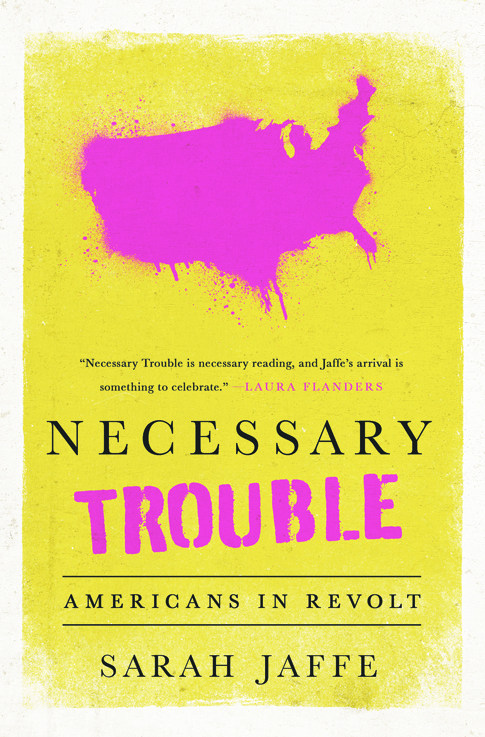
Sarah Jaffe. Necessary Trouble: Americans in Revolt. New York: Nation Books, 2016. 352pp. $26.99
One might be tempted to read Sarah Jaffe’s book with a kind of archaeological nostalgia, to look upon it as a remnant of a bygone-era when the left had confidence in the gains it was making, before a meteor named Trump struck earth.
- « Newer Posts
- 1
- …
- 134
- 135
- 136
- 137
- 138
- 139
- 140
- …
- 227
- Older Posts »