Online Features

The Black Workers for Justice support the struggles of the indigenous peoples to defend their land and treaty rights and their struggles for environmental justice. And in this moment we are in full support of the resistance of the Standing Rock Sioux to the construction of the Dakota Access Pipeline (DAPL). We call on all people to support them politically and materially.
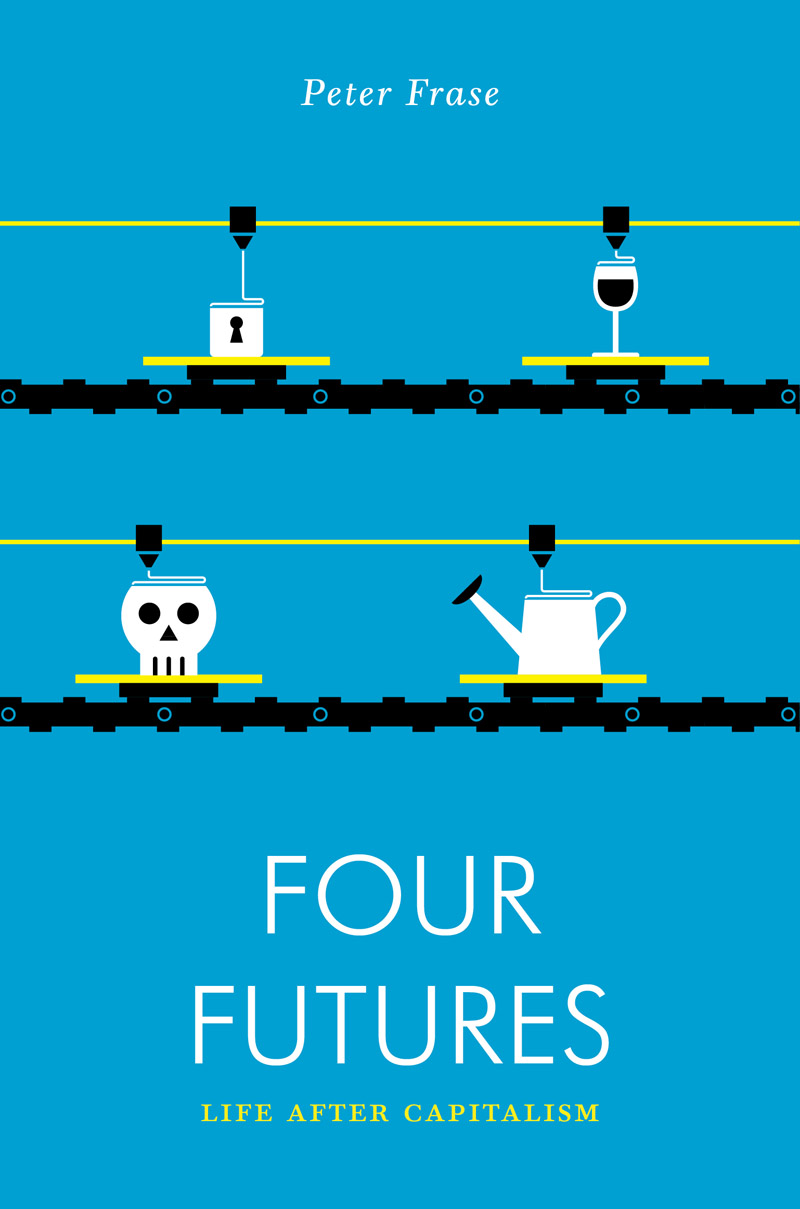 Peter Frase. Four Futures: Life After Capitalism. New York: Verso, 2016. 160pp.
It borders on a disservice to characterize Four Futures: Life After Capitalism as a primer on contemporary political philosophy, since Peter Frase, the author, explodes any expectation of pedantry in his prose, or more importantly, in his approach to political theory, which he calls “social science fiction.”
Though conceived out of conversations concerning the Eurozone crisis in summer 2015, this interview with Nathan Cedric Tankus engages with heightened focus by the left on finance capita. Tankus is research scholar at the Modern Money Network, an organization committed to: “The creation and improvement of monetary and financial institutions governed by the public and directed in support of public purpose; The universal, enforceable and inalienable right of every person to participate in economic life in a manner consistent with basic principles of justice, fairness, equality and dignity; The security of individuals, families and communities, the development of autonomous, non-state entities and the flourishing of civil society as critical components of economic freedom” as well as principles of ecological sustainability and intellectual freedom.
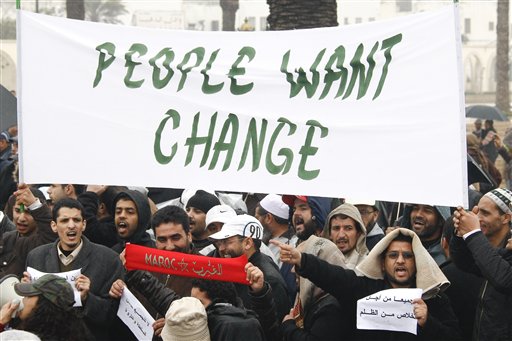 On Wednesday, Oct. 26, the well-known Moroccan historian and human rights activist Maâti Monjib and five of his colleagues were hauled into the High Court at Rabat to answer charges of “attacks on national security” and “receiving foreign funds.” They are facing up to five years in prison for their activities as investigative journalists, human rights advocates and members of the “February 20th Movement” – the Moroccan version of “Arab Spring” of 2011.

Dear Friends and Family,
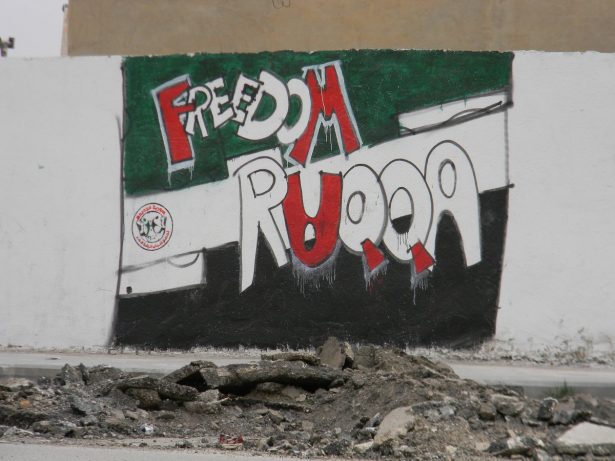
Just hours after Secretary of Defense Ash Carter announced that the United States is preparing to launch an offensive against the Syrian city of Raqqa, Abdalaziz Alhamza, a 25-year-old Raqqa native, spoke to a New York City audience about his hometown. Before the Islamic State captured the city in 2014, he recalled, few people outside of Syria had heard of Raqqa, “but now, most people hear about our city as the capital of ISIS.” Alhamza, an activist-journalist and founding member of the resistance group Raqqa Is Being Slaughtered Silently, or RBSS, has risked his life for the past several years in order to tell a different story. “Almost no one there has joined ISIS. We should be known as the capital of resistance.”
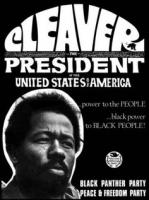
I joined the Peace and Freedom Party under the guidance of leaders of the International Socialists (IS), including Mike Parker and Jack Weinberg, in 1967-68. This was my only real involvement in a third party. It was not only long ago, it was a different context: there was a large, lively left movement, which at the time appeared to be still growing (we hoped).
Thus the P & F was conceived of—and briefly was—a movement party. That’s why it may be worth a look back.
To get the party on the ballot in California, we had to get people to change their party registration, via a registrar, often from Democratic, to P & F. Some 107,000 did so in California, which was remarkable. The same year George Wallace used the same procedure to get an almost exact number of registrants for his party.
I recall an IS member, J.B., said to me “I just wish we had his demographics!” So true.
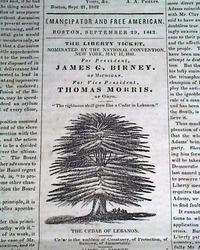
Imagine that it is 1840 and someone approaches you on the street and hands you a flyer for James G. Birney, the presidential candidate of the new Liberty Party. The flyer says that the Liberty Party opposes slavery. It is the only party that does.
The Democrats and the Whigs–the two parties of the two-party system of that time–supported slavery, not to the same degree perhaps, but neither party opposed slavery. The Liberty Party is new and small, tiny. It’s candidate Birney has absolutely no chance to win the election. But he stands opposed to slavery. Who will you vote for on voting day in 1840?
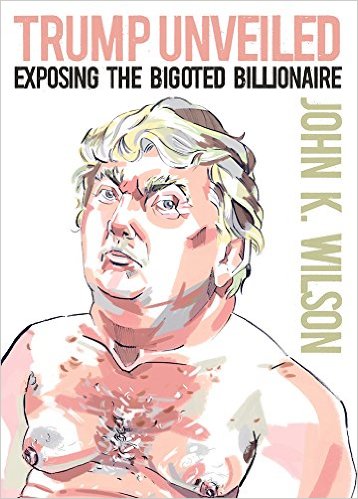
John K. Wilson. Trump Unveiled: Exposing the Bigoted Billionaire. New York: OR Books, 2016. 256 pp.
November 8 is show time. What will the time tell? The egregious Hillary Rodham Clinton will likely be elected president over the menacing tin pot Donald Trump. Clinton may be the shoddy Brand X, but corporate capital will sleep soundly in its bed with a Clinton presidency and even a Democratic Senate. Working families will be screwed again, but with more finesse than under a solipsistic Trump diktat. Sure, Hillary’s evasions and saccharine pronouncements pale in comparison to Trump’s Orwellianisms, his fabrications and the unsubtle subtext of his real stance, to “Make America White again.” No wonder Hillary will win. And by default.
Isn’t political life at the top grand?
 On October 6, 2008, an executive with Citigroup sent John Podesta, then co-chair of Barack Obama’s transition team, a list of possible cabinet appointments. There were still 29 days left in the hard-fought campaign. But the list, according to the New Republic, was almost entirely on the money; for who went on to fill senior posts in the Obama Administration, including Rahm Emanuel as chief of staff, Eric Holder as attorney general, Susan Rice as U.N. ambassador, and Janet Napolitano to lead Homeland Security.
 The night of the penultimate presidential debate I was at a screening of the Brazilian film Aquarius, which tells the story of a woman fighting a corrupt development company to remain in her apartment building. During the Q&A session with the director and force-of-nature actress Sonia Braga, a handful of demonstrators stood up, silently, holding “Fora Temer” signs to protest the government that has illegally installed itself in Brazil. Within sixty seconds Lincoln Center had the NYPD to escort them out, against Braga’s objections, and the Q&A continued with police watching from the edges of aisles.
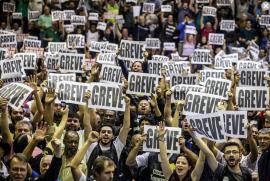
In general, analyses of Brazil’s current political and economic crisis emphasize the economic policy “errors” of the government, inherited by President Dilma Rousseff of the Workers’ Party (PT) from her predecessor, Luíz Inácio Lula da Silva. While it is true that certain federal policy decisions have interfered with the dynamics of the Brazilian distributive conflict, this focus on political regulation is far too narrow to illuminate the complexity of the current crisis. These explanations tend to obscure the changes in class structure that took place during the Lula era (2002-2010), and to overlook the impact of the international economic crisis. Indeed, such analyses fail to explain how the relationship between political regulation and economic accumulation not only failed to pacify class conflict but radicalized it.
- « Newer Posts
- 1
- …
- 136
- 137
- 138
- 139
- 140
- 141
- 142
- …
- 227
- Older Posts »