Online Features
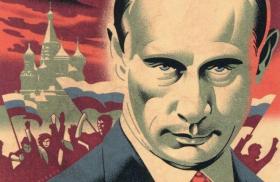 Michel Eltchaninoff. Dans la tête de Vladimir Poutine. Arles: Solin/Actes Sud, 2015. 171pp.
Michel Eltchaninoff’s prize-winning Dans la tête de Vladimir Poutine—In the Head of Vladimir Putin—is a fascinating examination of the development of the Russian president’s ultra-conservative and nationalist ideology from assuming the presidency in 2000 until today.[1] Eltchaninoff, the author of two books about Russian novelist Fyodor Dostoyevsky and many essays, might seem like an unlikely candidate to write an intellectual biography of the twenty-first century president Putin, but as it turns out, Eltchaninoff’s knowledge of nineteenth and twentieth century Russian philosophers makes him the ideal author, because that is where Putin’s ideas come from, Russia’s conservative, religious past.

Little has been written about the historical relationship between the movement against the Dakota Access Pipeline and the longer histories of Oceti Sakowin (The Great Sioux Nation) resistance against the trespass of settlers, dams, and pipelines across the Mni Sose, the Missouri River. This is a short analysis of the historical and political context of the #NoDAPL movement and the transformative possibilities of the current struggle.
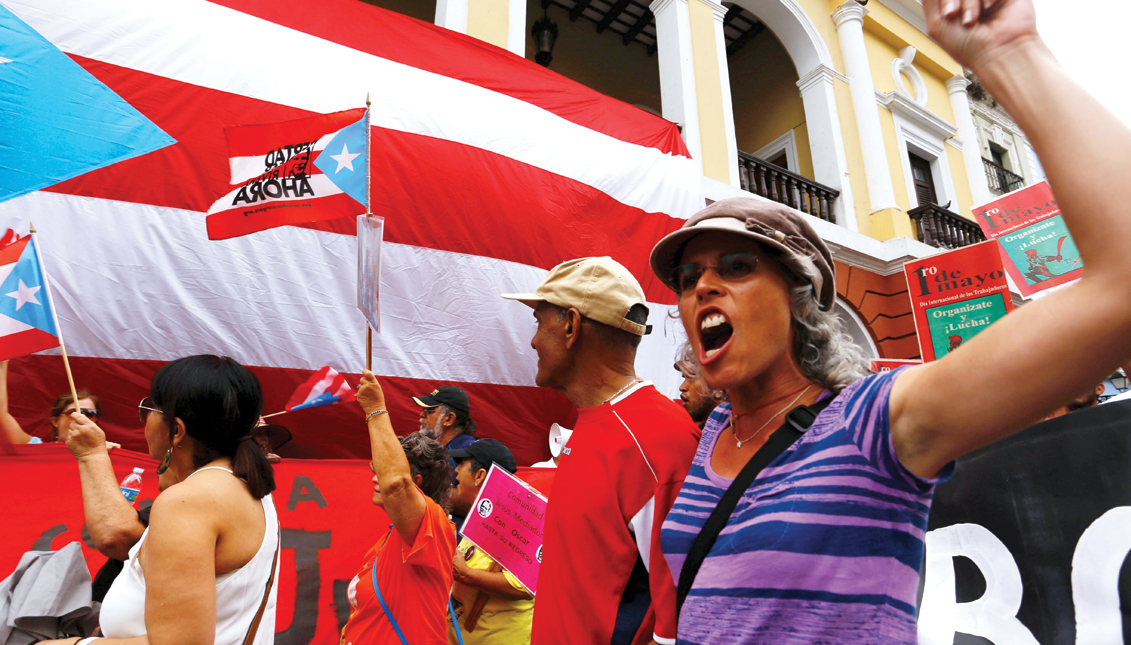
In 2006, the University of North Carolina Press published Puerto Rico in the American Century, a history of Puerto Rico since 1898, written by César J. Ayala and I.

Last April a row engulfed Ken Livingstone, former Labour mayor of London, and Naz Shah, Labour MP for Bradford West, following remarks they made about Israel and Zionism. They were suspended from the Labour Party, with Naz Shah having the parliamentary whip withdrawn. Shah has been reinstated, and though Livingstone has demanded that he too be reinstated, a decision has yet to be made by Labour’s National Constitutional Committee.
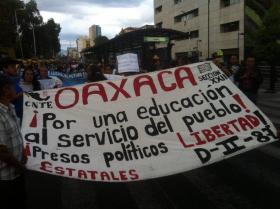 Mexico’s dissident teachers have been engaged in a strike against the Education Reform Law since May 16 of this year–four months! Their strikes of tens of thousands, led by the National Coordinating Committee (la CNTE), a caucus within the Mexican Teachers Union (el SNTE), have also engaged in protest marches, the blocking of highways and railroads, the commandeering of government vehicles, and the occupation of government buildings.
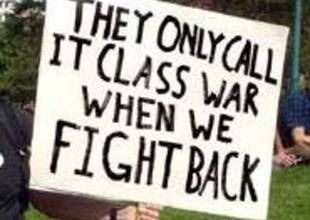
The government has responded by docking teachers’ pay, firing them, sending the police to beat them, and issuing warrants and arresting teacher leaders. One can only call what has gone on in Chiapas and Oaxaca and to a lesser extent in Guerrero and Michoacán class war.
Now there also appear to be death squads carrying out executions of teachers and their allies. So far at least three assassinations have taken place: a teacher, a parent, and a lawyer for the union. This is an ominous and very dangerous escalation of political violence.

The 2016-2017 academic year has just started in occupied Palestine, and with it come the hopes and dreams of young students, but also the daily challenges of walking to school past Israeli soldiers, or driving through checkpoints in the West Bank, or assigning a culturally and politically relevant curriculum in annexed East Jerusalem, where Israel is trying to impose an Israeli curriculum in Palestinian schools.
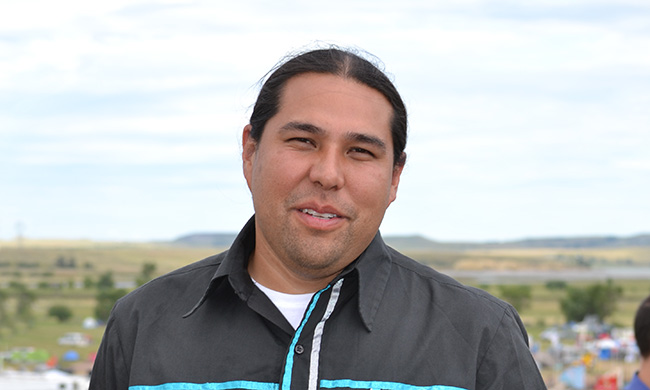
This year’s massive buildup of resistance to the Dakota Access pipeline follows closely on the heels of the victory over Keystone XL pipeline, something often credited to feverish organizing by 350.org. But years before 350’s involvement, there was the Indigenous Environmental Network, which launched that movement and its “Keep It In the Ground” messaging. This time, with nearly 200 tribes unified behind the Standing Rock tribe’s opposition to the pipeline and more than 3,000 people gathered at the Standing Rock Sioux reservation, Native Americans are clearly leading the movement.
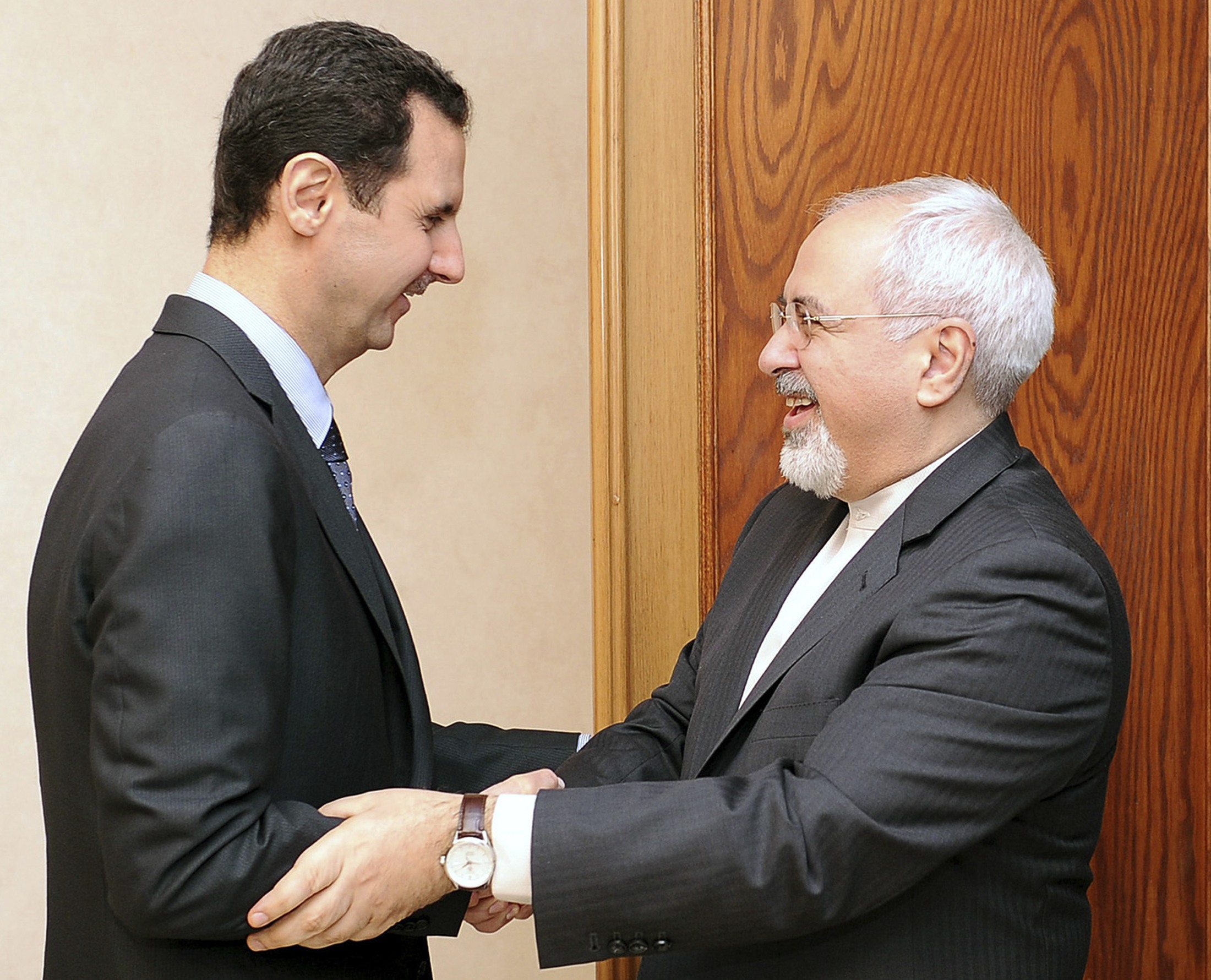
Below we print a summary of a longer article by two Iranian socialists who are opposed to Iran’s military intervention in Syria. Their article is followed by a response from Frieda Afary and Joseph Daher.

My most enduring memory of the student movement was of the power and the creativity that it brought. At Millbank, on Day X, in the university occupations. It was what some of us called a ‘magic moment’, where political space-time seemed to curve around us, where it felt that we might win, and that what we did mattered. While there was a degree of naive optimism that fueled that, there was also truth. Others had those moments during the 2011 riots, during 1968. Having that momentary power taken from you is painful – we don’t realise how little power we have until we glimpse it.
In 2008, the governments of the city of Chattanooga, Hamilton County, the state of Tennessee, and the United States all collaborated to provide Volkswagen (VW) with a $577 million subsidy package, the largest taxpayer handout ever given to a foreign-headquartered automaker in U.S. history. The bulk of the subsidy package, $554 million, came from local and state sources. The federal government also threw in $23 million in subsidies, bringing the grand total of taxpayer money that VW received in 2008 to $577 million.
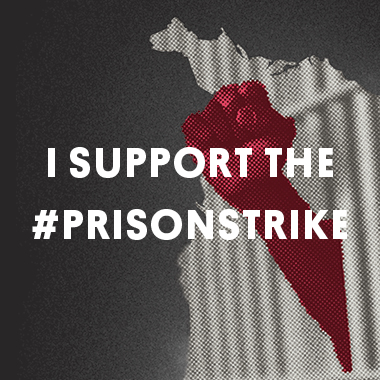
Labor for Black Lives – a multi-ethnic network of workers in solidarity with the movement for Black lives, against capitalist exploitation and racist injustice and all oppression – fully endorses the Prison Strike, to begin on September 9, 2016, in which prisoners across the United States are organizing to end prison slavery and mass incarceration. We join our voices and forces with those, including 800+ prisoner members of the IWW's Incarcerated Workers Organizing Committee (IWOC), who say THIS STOPS TODAY.
- « Newer Posts
- 1
- …
- 138
- 139
- 140
- 141
- 142
- 143
- 144
- …
- 227
- Older Posts »