Online Features
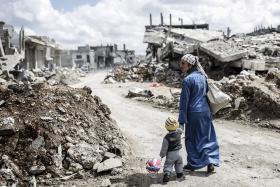 The last terrible terrorist attack by the so-called “Islamic State” (also known as Daech) killed at least 300 people in Baghdad’s central shopping district of Karrada on July 2. It was the worst single car bomb attack in Iraq since U.S. and British led forces toppled the dictator Saddam Hussein 13 years ago and deepened the anger of many Iraqis over the weak performance of the security apparatus. This followed other terrorist attacks in the region and elsewhere. This put forward once more the question on how to answer and end the threat that represents Daech. The Western states led by the USA have shown that they consider Daech as the main enemy for the region of the Middle East and North Africa. Daech constitutes in the opinion of Western officials a source of regional and international instability, particularly with the terrorist attacks in West. However they propose to use the same elements that fueled the development of Daech to try to stop it militarily. This is therefore a recipe for defeat.

For many years now Nicaraguans on both the right and the left have referred to Daniel Ortega, a leader of the Sandinista Revolution of 1979, as a “dictator.” Now it appears that when country votes on November 6, he may succeed in becoming the country’s virtual monarch. Dan La Botz, author of the new book What Went Wrong? The Nicaraguan Revolution: A Marxist Analysis, asks here how the Nicaraguan revolution was betrayed and what ideas and decisions of the Sandinistas themselves were responsible for the betrayal.
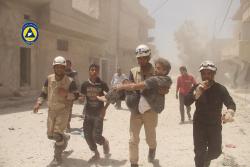
It’s painful to read Scott Ritter’s “The ‘White Helmets’ and the Inherent Contradiction of America’s Syria Policy” and see him joining the ranks of the conspiracists on Syria.

Republican presidential candidate Donald Trump’s bragging about his sexual assaults on women appears to be sparking a revival of the women’s movement.
Trump’s remark that he could “grab women by the pussy”—followed by more women coming forward to describe his sexual assault on them over many years—has led to social media protests and to demonstrations in New York City and Washington, D.C.
Trump’s outrageous remarks prompted women of all ages, races, and ethnicities who had been silent for years and even decades to speak out, sit-in, and protest. We seem to be at a “Women’s Lives Matter” moment and perhaps at the beginning of a new women’s movement.
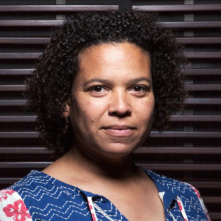
Rachel Herzing lives and works in Oakland, CA, where she fights the violence of policing and imprisonment. She is a co-founder of Critical Resistance, a national grassroots organization dedicated to abolishing the prison industrial complex and the Co-Director of the StoryTelling & Organizing Project, a community resource sharing stories of interventions to interpersonal harm that do not rely on policing, imprisonment, or traditional social services. The following interview was conducted by the True Leap Publishing Collective.
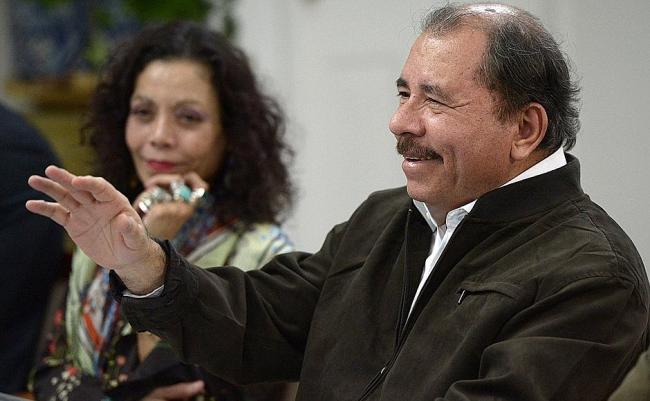
On July 29th, Sandinista President Daniel Ortega unseated 16 opposition members and 12 alternates from Nicaragua’s legislature, eliminating one of the few remaining obstacles to one-party rule. Days later, Ortega named his wife, Rosario Murillo, as his vice presidential running mate for the November elections. Political analysts inside and outside of the country see the move as an attempt to secure a line of family succession, as Ortega, 70, enters the final years of his political career.
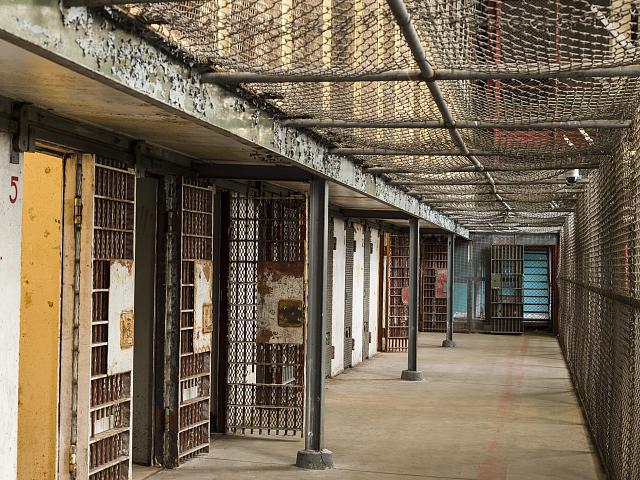
On the 45th anniversary of the Attica Prison rebellion in 1971, Process speaks with seven scholars of the carceral state about prisoners’ organizing in the 1960s and 1970s and movements protesting mass incarceration today. This is the first of a three-part series, guest edited for Process by Jessie Kindig. Check out parts two and three.

Writer and labor organizer, Sara Jaffri, and left-wing political worker and the Punjab Deputy General Secretary of the Awami Workers Party, Alia Amirali talk organizing, feminism and class in Pakistan.
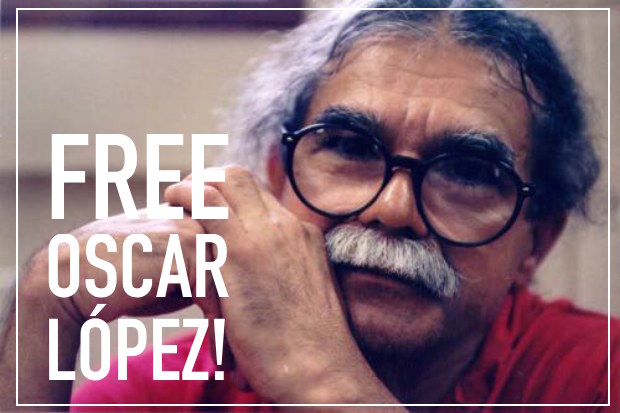
Oscar López Rivera is the longest-held Puerto Rican political prisoner in U.S. history. He has now served 35 years in U.S. federal prisons, including 12 in solitary confinement. The movement calling for his release has intensified, broadened and strengthened in the last few years.
They say that generals usually prepare for the last war. This has happened to the peace movement, too. The anti-war coalitions in the U.S. and UK are acting as if this was 2003 and everyone need to focus on Western imperial adventures. Instead circumstances are quite different. The main carnage right now has little to do with “the Empire”. A dictator from a family dynasty is using his entire military, every weapon the country owns, to bring a nation to heel. He’s assisted (and in some ways commanded) by foreign powers, one semi-fascist, the other a theocracy. The larger anti-war organizations and coalitions have nothing to say or bleat “Our main responsibility is to criticize our own government’s abuses” or airily call for all foreign forces to stop intervening. (There are also the unspeakable organizations licking the dictator’s boot in the name of “anti-imperialism”.)

Several left arguments on the U.S. election frankly leave me baffled.
Dear Readers,
On September 18, I wrote, and the New Politics website of which I am an editor, published an article titled “Mexico’s Teachers Movement; From Class War to Death Squads” that argued that three recent killing appeared to be the result of death squads targeting teachers. While the fact that the three killings took place is not in question, well informed readers in Mexico who have been involved in the teachers movement or in solidarity with it suggest these killings do not seem to be the result of death squads.
These readers argue that while the teacher who was killed may have been targeted for union activity, the other two killings may have had other motives having nothing to do with the union. These readers suggest that while some teachers have been murdered because of their involvement in the teachers movement, many killings that have taken place in Oaxaca, Chiapas, and in other states may have political motives, may be related to the drug cartel violence, or to other violence in the region. I have come to the conclusion that my readers are right and that this article should be corrected: death squads do not appear to be a trend at this time.
I welcome and appreciate your comments and criticisms on the original article, on this correction and the issues raised.
In solidarity, Dan La Botz
- « Newer Posts
- 1
- …
- 137
- 138
- 139
- 140
- 141
- 142
- 143
- …
- 227
- Older Posts »