Online Features
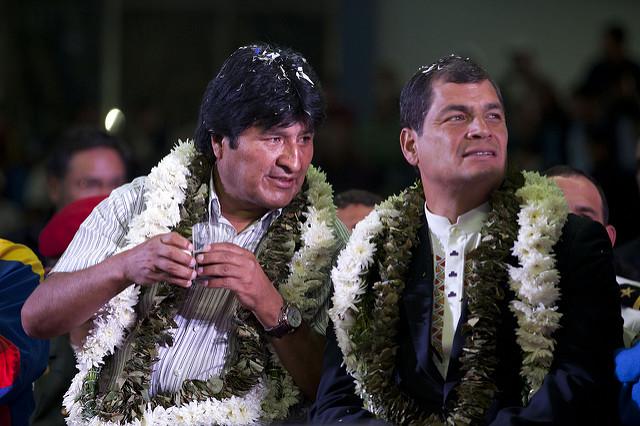
As rightwing governments take power in Argentina, Brazil, and elsewhere across the region, Ecuador’s leftwing Alianza País (Country Alliance, AP) and Bolivia’s Movimiento al Socialismo (Movement Towards Socialism, MAS) and Bolivia have managed to hold onto power.
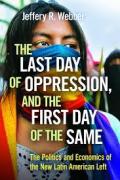
Jeffery R. Webber. The Last Day of Oppression, and the First Day of the Same: The Politics and Economics of the New Latin American Left. Chicago: Haymarket, 2017. 327 pages. Index. Tables.
Beginning in the late 1990s the Pink Tide began to roll in across much of South America, bringing to power elected leftist governments in Argentina, Bolivia, Brazil, Chile, Ecuador, Uruguay and Venezuela. While these administrations were not all the same—Argentina and Brazil appeared to be more social democratic and Bolivia and Venezuela more radical—they represented a new moment in the history of the Latin American Left.
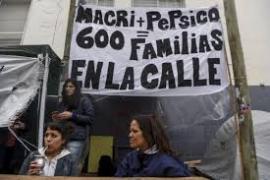
The story of the workers of a PepsiCo factory in Vicente Lopez, Buenos Aires, Argentina may be slightly confusing to those in America where it seems normal for a factory to close, as many did in the financial crash of 2008, without the workers organizing, despite losing valuable employment in a harsh economy. Yet the actions of the nearly 700 laid-off workers since PepsiCo, the second largest food and beverage corporation in the world, decided to move their production to another city south of Buenos Aires, could teach American workers a thing or two.

On the very off chance you haven’t heard, Angela Nagle has come out with her first book: Kill All Normies: Online Culture Wars from 4Chan and Tumblr to Trump and the Alt-Right. Best known for her essays, often on the alt-right, in outlets like Jacobin and The Baffler, the socialist left has been anxious to dive into what appears to be the first book on the alt-right written by one of us — myself included. Ms. Nagle first caught my attention last year with her incredibly insightful essay “The New Man of 4chan,” and I’ve been reading her regularly, and eagerly awaiting this book, ever since.
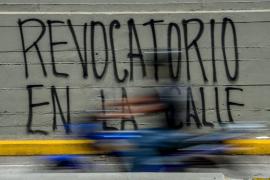
The Bolivarian revolution led by Hugo Chavez from 1999, opened a new chapter in the global struggle for social justice. For anti-capitalists across the world, his ‘21st century socialism’ pointed ahead to a new kind of power, defined in the Bolivarian Constitution as “participativa y protagonista” – a participatory democracy in which the people were the active subjects.
It is hard to reconcile that hope with the realities of Venezuela today. The spokespersons of the new State continue to proclaim their revolutionary credentials. Yet they oversee a society in profound and worsening crisis, where hunger has reappeared in a country which just four years ago was congratulated by the U.N. for its virtual elimination of extreme poverty. The right wing media – nationally and internationally – have taken great delight in publishing photographs of food queues marshalled and overseen by armed National Guards. The supporters of Chavismo instinctively refuse to believe the images. But the social crisis they symbolize is real.

Author's note: "I was asked at a recent New York City Democratic Socialists of America meeting of the Immigration Justice Working Group to say a few words to put our work in historical context and then asked to write up my brief talk so that it might be useful to others."
Our sanctuary work is in a great national and global tradition of humanitarianism and it is consistent with our international socialist principles. Our work, while fighting for the reform of the immigration system, has as its goal the abolition of the capitalist system that causes involuntary mass migration. And while using existing law to defend immigrants and fighting for better laws, we stand opposed to the concept of the national state, which will never respect and defend immigrants as equals in our society.
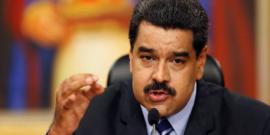 In recent weeks, a number of Venezuelan specialists on the left side of the political spectrum have published and posted pieces that place them in an anti-Chavista, “ni-ni” position that consists of “a plague on both your houses” with regard to Maduro and the Venezuelan opposition. Certainly, at this moment the Chavistas are playing hard ball; the options available to them are limited.
 In recent years, Rosa Luxemburg’s name has gradually become more prominent in Chinese academia. A number of influential academic journals have even opened up research columns paying tribute to the revolutionary theorist, nearly a century after the first discussion of her work in China. This should be regarded as a second revival of the research on her in China. Compared with the other leading figures in the history of the international communist movement, whether worldwide or just in China, the present "Rediscover Luxemburg" phenomenon is unique. Regarding other leading figures, there have not been so many ups and downs.
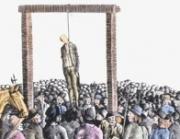
The videoed executions of Philando Castille, Eric Garner, Tamir Rice, and the many, many other heroes whose lives were ended by State violence and class war have resurrected an old ghost of capital punishment in the developed Western World: Public Executions.

At one level, France’s 2017 elections were a huge triumph for global capital. A young and very modern neoliberal candidate, Emmanuel Macron, won huge majorities for his new political party, On the Move (En Marche), in both the presidential and the legislative elections. At another level, however, Macron’s pathway forward is fraught with challenges, both from a long stagnant economic and a restive French public, many of whom stayed away from the final round of voting.

Journalist Seymour Hersh was interviewed by Aaron Maté of the Real News Network on June 26 after he wrote an article called "Trump's Red Line."
 The following is an excerpt from a book about Trump, The Establishment, and the Resistance, that will be published in French by Syllepse early next year. – Dan La Botz
The Fourth of July celebrates the launching of the American Revolution and the founding of the nation. Americans have long prided themselves on having the most democratic country on earth, a model for the world. Yet, while American politicians and the media today frequently praise the “founding fathers” of the United States for establishing the country’s democratic institutions, the truth is that nothing could have been further from their minds.
- « Newer Posts
- 1
- …
- 128
- 129
- 130
- 131
- 132
- 133
- 134
- …
- 227
- Older Posts »