Online Features

In the early hours of November 27th, employees at the Consumer Financial Protection Bureau (CFPB) woke up to a world of contested allegiances. Advocated by Senator Elizabeth Warren and set up by the Dodd-Frank Wall Street Reform and Consumer Protection Act, CFPB was created in 2011 as an independent Federal agency tasked with protecting consumers in the financial sector. Since it was this sector’s predatory exploitation of low-income racialized communities that triggered the subprime mortgage crisis, this agency was intended to regulate finance across consumer services like mortgages, student loans, and credit cards. As such, the founding of the agency received large support from consumer groups and their Democratic allies in the Federal administration. Republicans, for their part, dutifully (and unsurprisingly) rendered the agency as another burden on the “free” market.[i] Such conflicts are hardly news and government employees are in this sense always in the precarious position that their jobs might be discarded with every new administration. Rarely, however, do these conflicts take the absurd character we could witness the following few days.
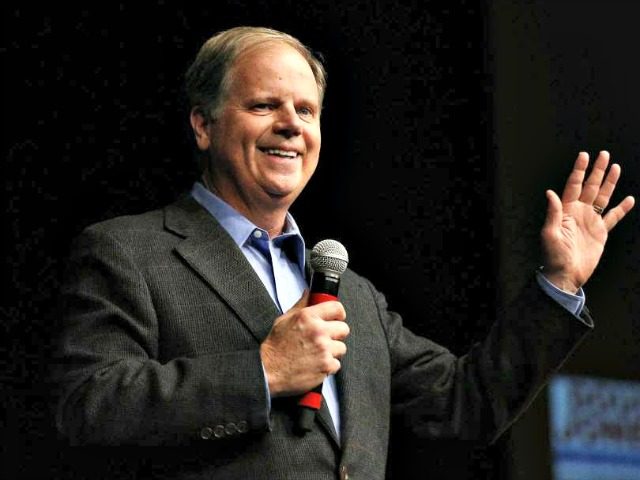
Though we wouldn’t know it from mainstream media coverage, the sigh of relief many progressives will breathe at Moore’s defeat should be tempered with the knowledge that Jones will likely not be a reliable ally on issues on which the Democrats should all be expected to fight the GOP and Trump. An exit poll of voter opinions showed over 40% of Alabama voters, Democrats and Republicans alike, gave an unfavorable rating to both parties.

IF THERE WAS any “Israel-Palestine peace process,” Donald Trump torched it with his December 6 announcement recognizing Jerusalem as the capital of Israel and the transfer of the U.S. embassy to that bitterly contested city. But there are two more important underlying realities.
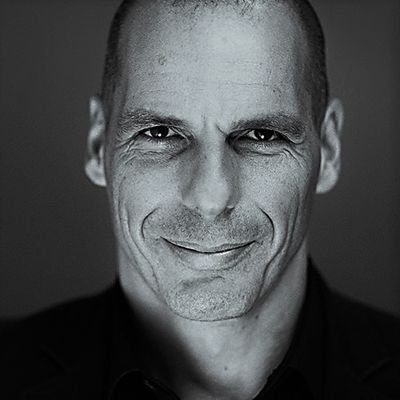
Adults in the Room: My Battle with the European and American Deep Establishment
By Yanis Varoufakis
Farrar, Straus and Giroux, 2017
And The Weak Suffer What They Must?
By Yanis Varoufakis
Nation Books, 2016
Along with French economist Thomas Piketty, former Greek finance minister Yanis Varoufakis is making economics sexy again. Journalists enjoyed snapping photos of Varoufakis, clad in a black leather coat, commuting to the finance ministry’s offices on his Yamaha motorcycle. But his short tenure in the Greek government was marked by clashes with the country’s creditors and ultimately with the leadership of Syriza, the left-wing party that came to power in Greece in early 2015.
 Isolating the situation of Puerto Rico is one of the mechanisms used to seek acceptance of the austerity policies that are now being imposed on the Island.(1) If the crisis is seen as the result of actions by Puerto Ricans or their government — if the responsibility lies, exclusively or fundamentally, in Puerto Rico — then it is logical that it bears the consequences of its own deeds or misdeeds, painful as they may be.

John E. Chiaradia was a longtime reader and sometime contributor to New Politics.
How does one come to political activism? Are we influenced by the times, by our personal experiences, by some innate quality within us, or are each of these just the necessary ingredients of activism? John (Giovanni) Emilio Chiaradia left Italy as a child, a political refugee from mid-20th-century Italian fascism. His family escaped the turmoil engulfing their country for the welcoming haven of the United States, landing in New York City and eventually settling in central California. There they were once again confronted by nationalist politics and uprooted from their home. They were compelled to leave California following the bombing of Pearl Harbor as John’s mother, Antoinette, was not yet a naturalized citizen. In the wake of the war, the US government deemed all non-naturalized people from Axis countries, and even citizens in the case of Japanese Americans, to be potential threats to national security. They were commanded to vacate a 100-mile exclusion zone from the west coast. The family was forced to leave what few possessions they had and return to the Bronx.

Mexicans, worse off than at any time in the last 100 years, are asking themselves as the July 2018 elections approach: Can Mexico change? Can an election change Mexico?
Mexico is a disaster. It has become increasingly violent, the economy grows too slowly to absorb the ever-expanding workforce, and wages are below those of China, though costs are more like those in the United States.
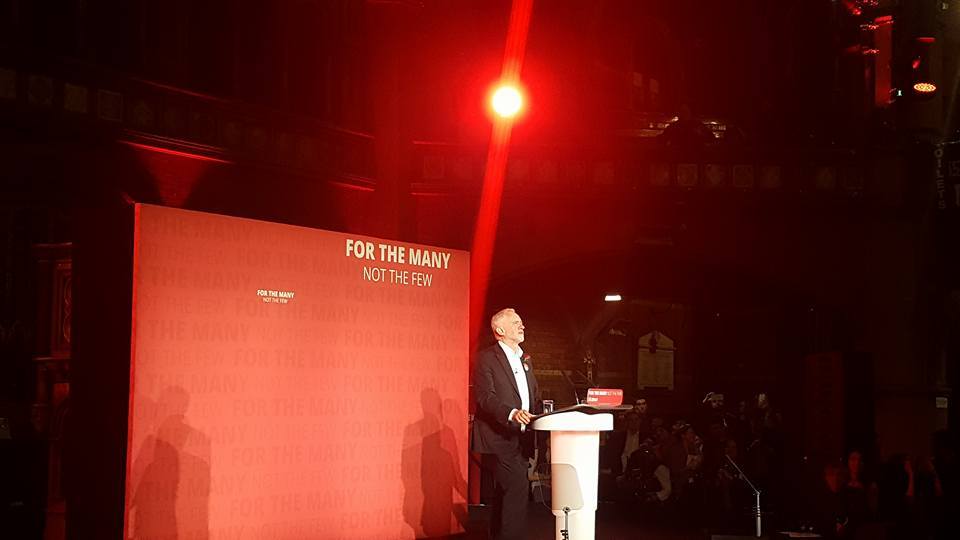
It is now seven months since Theresa May called a general election with the aim of increasing her majority and the Daily Mail published a front page headlined “Crush the Saboteurs”. The spring of this year, as regards parliamentary politics, seems like another world.

Congress was given a chance to stand up for basic humanity and the Constitution, but instead chose to lay an egg, a rotten one at that. It rejected a chance to use the War Powers Act to halt U.S. collaboration with Saudi Arabia’s ruthless war and siege tactics in Yemen. Instead it passed a resolution that could have been written by the Saudi kingdom’s lawyers and publicists.

On November 5, 2017, 26-year-old Devin Kelley killed 26 people and injured 20 others attending Sunday church services at the First Baptist Church in Sutherland Springs, TX. This small, unincorporated community is 30 miles southeast of San Antonio and, in 2000, its population was but 362 people. Sadly, Kelley is the latest, but not the last lone-wolf terrorist to engage in the mass killing of Americans.
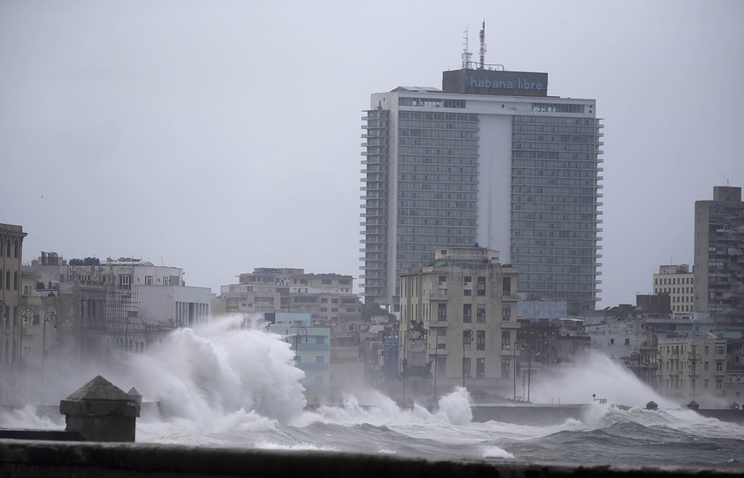
When the decorated “Hero of the Republic of Cuba,” General Ramón Espinosa Martín, rallied his forces in the province of Camagüey in September, it was against an enemy far more dangerous than those he had faced in the Escambray mountains in 1958 during the Cuban Revolution or even in Angola in 1975 resisting US and South African intervention. This enemy was nature itself.
 Loneliness
In Hannah Arendt’s pioneering book The Origins of Totalitarianism, she criticized the failure of many to understand the appeals of fascism to modern citizens. She wrote that many observers gave fairly rote justifications for its rise and appeal in an apparently advanced and enlightened country like Germany, the birthplaces of Goethe, Kant, and Beethoven. Some claimed that it was the depressed economy that was responsible. Others in the German context pointed to defeat and humiliation in the First World War. Some reactionary conservatives claimed it was declining moral standards and the collapse of religiosity. And Arendt accepted that many of these might have something to do with it. But her ultimate explanation was far simpler and yet strangely more acute. Modern Germans were lonely.
- « Newer Posts
- 1
- …
- 123
- 124
- 125
- 126
- 127
- 128
- 129
- …
- 227
- Older Posts »