Category: Labor
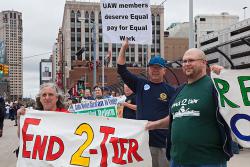
The United Auto Workers union (UAW) has reached a tentative agreement with Fiat Chrysler Automobiles (FCA) and is presenting the proposed contract to its members for a vote beginning this week. The contract affects some 40,000 unionized hourly workers.
At the beginning of the economic crisis in 2007 the UAW agreed to let Fiat Chrysler establish two tiers, that is, workers doing the same job would have different rates of pay, with newer workers sometimes working for $17 an hour while more senior workers might earn as much $28 an hour. Such a system had been introduced earlier in the auto parts plants.
A development which no one expected now appears inevitable. Barring either otherwordly intervention or old-fashioned political dirty tricks, Jeremy Corbyn, long on the left wing of the British Labour Party, is slated to become that party's new leader.
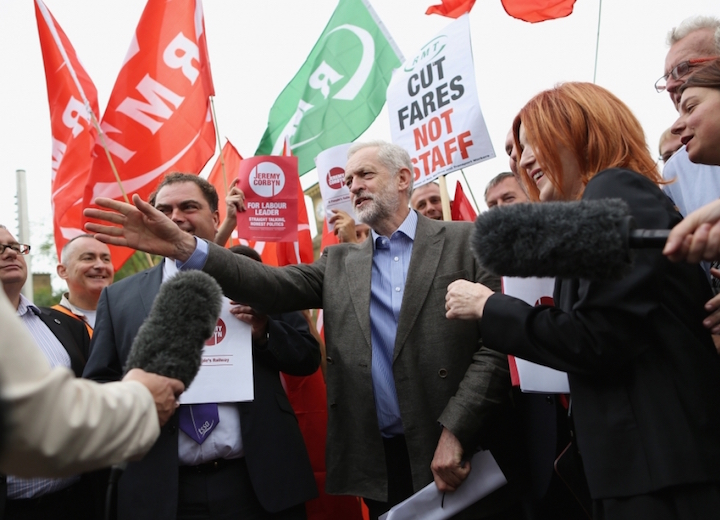
And the rabidly pro-capitalist heirs of long-gone "New Labour" leader Tony Blair, as well as the traditional right wing of the Labour Party, are absolutely apoplectic.
Interview with Arun Gupta, journalist and a founding editor of New York City’s Indypendent newspaper, conducted by Scott Harris:
http://btlonline.org/2015/mp3/150918a-btl-gupta.mp3

It’s been almost three years since the movement for a living wage burst into protest, first in New York City and then in dozens of other cities and towns across the U.S.
Members of the Washington Education Association (WEA), an NEA affiliate in Seattle, are on strike this morning. Picketing has begun outside schools though bargaining has resumed. The demands in this strike show the power of a teachers' union to use the contract to make schools what they should be for all kids. The ones that I think are most significant:
This Labor Day, which sides are you on?
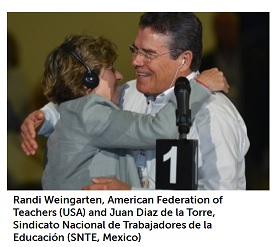 The Education International (EI), the international confederation of teachers unions, held its seventh World Congress in Ottawa over the summer. Though most teachers don’t know this organization exists, and few people write about its activity, what it do
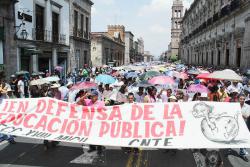
Thousands of teachers in Mexico have gone on strike against the national government’s Education Reform Law, doing so in the face of the militarization and arrest of teacher activists in Oaxaca and firings of teachers who have missed work in other states. The Mexican government and state governments are clearly attempting to break the dissident teachers movement that has for forty years led the fight for union democracy and teacher power.
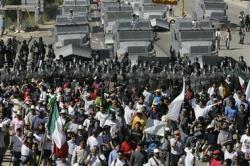
Mexican teachers are mobilizing once again —demonstrating by the tens of thousands—this time against anti-union reforms and the militarization of the state of Oaxaca by its governor Gabino Cué Monteagudo from the center-left Party of the Democratic Revolution (PRD). Nine years after the 2006 teachers’ rebellion, Oaxaca is bracing for another potentially violent conflict.
Ecuador’s Indigenous movements have launched an uprising to challenge the government’s opposition to bilingual education and its support for an extractive-based economy.
On August 2, the Confederation of Indigenous Nationalities of Ecuador (CONAIE) began a march from the southeastern Amazonian province of Zamora Chinchipe that will arrive in the capital city of Quito on August 13. Upon its arrival, the Indigenous march will join a general strike called by the Workers United Front (FUT) in opposition to the government’s labor policies.

United Auto Workers Local 2865 representing 13,000 teaching assistants and other student workers throughout the University of California system, called on the AFL-CIO to end its affiliation with the International Union of Police Associations (IUPA) in a resolution passed by its governing body on July 25. This is the union’s resolution passed by the union:
Statement:
We, UAW Local 2865, call on the American Federation of Labor and Congress of Industrial Organizations (AFL-CIO) to end their affiliation with the International Union of Police Associations.
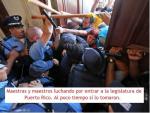 On Monday June 29, the Governor of Puerto Rico, Alejandro García Padilla, delivered a live message to the people of Puerto Rico stating that the government’s $73 billion debt is unpayable. The governor stated, “The public debt, considering the present level of economic activity, is unpayable”.
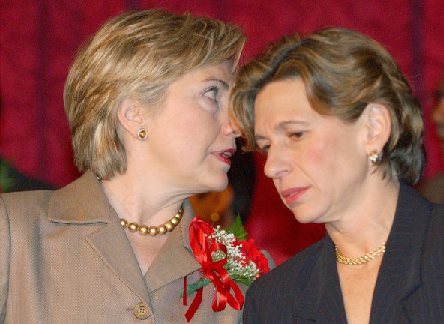 On July 11 the AFT announced its Executive Council “overwhelmingly” endorsed Hillary Clinton for the Democratic nomination for President. It did so, the official announcement reported, on the basis of interviews (not released to members) and the results of a poll.
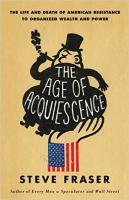
Steve Fraser, The Age of Acquiescence: The Life and Death of American Resistance to Organized Wealth and Power (New York: Little, Brown and Company, 2015)
All of us on the left are all too familiar with the capitalist offensive of the past forty years. Under the banner of “neo-liberalism” capital has rolled back almost every gain working people across the world have made since the 1930s. All sorts of public industries, services and institutions have been privatized, social welfare programs that protected workers from the worst insecurities of the labor-market have been rolled back or simply abolished and unions and working class political parties that had traditionally organized and represented working people have been severely weakened.
Despite widespread d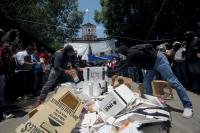 isillusionment with the political system, an organized attempt to prevent the election from taking place in a few states, and continuing economic doldrums, President Enrique Peña Nieto and his Institutional Revolutionary Party (PRI) were the big winners in the Mexican election, followed by the conservative National Action Party (PAN).
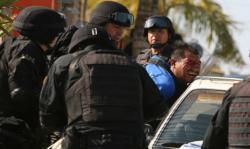
In another attempt to break a strike and keep agribusiness products rolling north into the United States, the Mexican Army and State Preventive Police again attacked hundreds of striking farm workers in the San Quintín Valley of Baja California who had blocked the Trans-Peninsular Highway on May 9. Workers blocked the highway to protest Governor Francisco de Lamadrid’s cancellation of a promised meeting between his government and farm worker leaders.
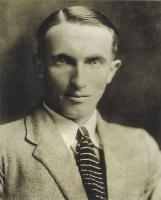
Liam O’Flaherty is regarded as one of Ireland’s finest writers of the twentieth century, but before he rose to literary prominence, O’Flaherty led a little known and short lived occupation of the Rotunda Concert Hall in Dublin city just days after the formation of the Irish Free state in 1922.
Born off the coast of Galway on the Aran Island of Inis Mor in 1896, O’Flaherty served with the Irish Guards during World War I. After experiencing severe shellshock in Flanders he was discharged with a disability pension and led a somewhat nomadic life for the next few years.
A headline in a recent news story about Los Angeles teachers, calling the district’s teaching force “old and costly,” is a companion piece to the New York Times front page article about the Success Academy chain headed by Eva Moskowitz.
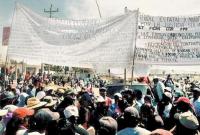
The strike by farmworkers in the San Quintín Valley of Baja California, which began on March 17 stopping production and shipments on 25 farms and costing the companies tens of millions of dollars, has been stalled as the Alliance of National, State, and Municipal Organizations for Social Justice (AONEMJS or Alliance) which leads the movement faces challenges from the state government, the employers, and corrupt labor unions.
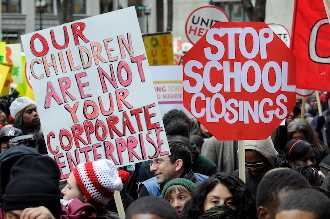 It’s encouraging that US unions are acknowledging the deep crisis facing labor and even the need for union democracy, as Labor Notes contributor Mark Brenner observes in his March 2015 column about the conference organized and hosted by the Albert Shanker Institute, an arm of the American Federation of Teachers (AFT).
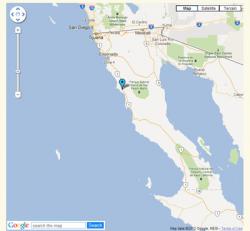
Thousands of farmworkers in the San Quintín Valley of Baja California, just 185 miles south of the U.S. border, struck some 230 farms, including the twelve largest that dominate production in the region, on March 17 interrupting the picking, packing, and shipping of zucchini, tomatoes, berries and other products to stores and restaurants in the United States. The strikers, acting at the peak of the harvest, were demanding higher wages and other benefits to which they are legally entitled such as membership in the Mexican Institute of Social Security (IMSS), the public health system. While there have over the last two decades been several large scale protests by workers in San Quintín, usually riots over the employers failure to pay their employees on time, this is the first attempt by workers to carry out a such strategic strike.
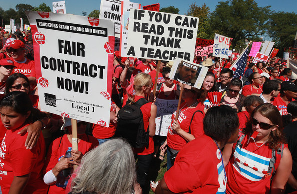 I’m struck by how many of the skills and understandings good teachers acquire can also make them fine union activists. Though they may not realize it, teachers have already learned a great deal about organizing – through their work as teachers.
- « Newer Posts
- 1
- …
- 14
- 15
- 16
- 17
- 18
- 19
- 20
- …
- 26
- Older Posts »