Category: Labor
Review of Picking Up: On the Streets and Behind the Trucks with the Sanitation Workers of New York City By Robin Nagle (Farrar, Strauss and Giroux, 2013).
Rationally, we know garbage isn’t picked up by the faeries, but to much of the public, it might as well be. We “take out” the garbage, but who removes it?
Four Argentine oil workers were convicted last December 12 of having killed a policeman in the midst of a strike and a demonstration demanding the release of a jailed union member. The four—Ramón Cortez, José Rosale, Franco Padilla, and Hugo González—were sentenced to life in prison, while six other defendants were each sentenced to five years in prison on charges of coercion.
It’s hard to overstate how frightened US teachers are in many schools and districts. We know from research that many teachers in schools now chose this career because they love kids and/or their subject matter. Some of activists in social justice causes but many have never taken an interest in what they’ve viewed as “politics,” remote from their work. These teachers aren’t prepared for the ferocity of the attack they’ve experienced, and teachers unions have been so weakened, legally and politically, that teachers
 I emigrated from the United States to Canada in 1974, in the aftermath of the period covered by Benjamin Isitt’s Militant Minority, becoming actively involved in British Columbia’s (BC) social democratic New Democratic Party (NDP) as well as its labor movement. Isitt’s work deepened my understanding of both.
Teacher activists have been buzzing in the blogosphere about AFT President Randi Weingarten’s shift, endorsing a moratorium on linking teacher evaluation to students’ scores on standardized tests and on the new national curriculum, Common Core.
 It remains to be seen whether NJ Governor Chris Christie will be able to avoid having his political career crash and burn.
During the early 1990s I became involved in the national debate over the North American Free Trade Agreement (NAFTA) then in the final stages of negotiation between Canada, Mexico and the United States. Twenty years later, it’s clear that NAFTA, the creation of a North American common market of sorts, was a watershed event, but I have to admit I had not really been paying much attention to it until I got a phone call in November 1990.
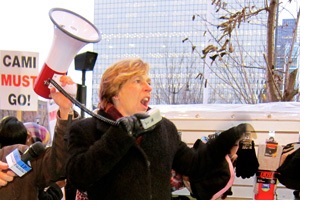 One of the most confusing aspects of the last decade’s education reforms is that a reform that will do great harm often contains an element that’s useful, even progressive.
During the early days of second-wave feminism, I remember reading Judy Brady’s essay “I Want a Wife” about how everyone needed “a wife,” that is someone to take care of the tasks of everyday life, as women were raised to do.
Illinois, which has a Democratic governor and a state legislature controlled by the Democratic Party, has just gutted its pension system for public employees.

Union-dense Lorain County, Ohio, is now home to an independent labor slate of two dozen newly elected city councilors—recruited and run by the central labor council there. All labor’s candidates had strong showings last month, and all but two were elected.
“This was a step we took reluctantly,” said Lorain County AFL-CIO President Harry Williamson. “When the leaders of the [Democratic] Party just took us for granted and tried to roll over the rights of working people here, we had to stand up.”
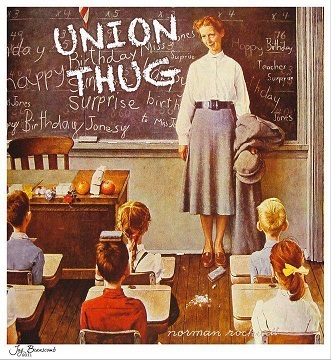 How should we respond to the barrage of propaganda about the latest international test of student achievement, PISA? Test data are (once again) being used to show that US schools are failing.
 One question I’m frequently asked is what “social movement teacher unionism” looks like and how to get there.
The teacher activist blogosphere has been buzzing about the perfidy of the AFT’s and NEA’s endorsements of teacher evaluation tied to students’ standardized test scores and a new national curriculum, the Common Core. Both policies are key to the neoliberal dream of a national, privatized system of public education that will synchronize educational outcomes with an economic reality of growing joblessness and underemployment. (I know these are strong claims and I refer readers who want further verification and explanation to my analyses in New Politics and book.)
[New Politics readers will be interested in the following article by Dan Gallin, who advocates social justice unionism, international solidarity and the need for workers' movements that actually move.
Is there a fundamental conflict between a healthy environment and a healthy economy?
[Originally posted on the Indypendent, Sept. 27, 2013]
Since school began again on August 19, tens of thousands of teachers have been engaged in strikes and demonstrations throughout Mexico—including seizing public buildings, highway toll booths, and border crossing stations, occupying public buildings and city plazas, and blocking foreign embassies—actions taken against the Education Reform Law and the new Professional Teaching Law and over local demands linked to wages and working conditions. While these are traditional tactics, these are the largest and most militant teachers’ union demonstrations in Mexican history.
[I blogged daily for The Indypendent from this week’s quadrennial AFL-CIO convention in Los Angeles. This is my third blog. For my coverage from Days 1 and 2 of the convention, click here and here.]
I would like to comment on the Leninist critique of my book Wild Socialism: Workers Councils in Revolutionary Berlin, 1918-21 by Dan La Botz on your website. His review contains several errors and misinterpretations.
Fast-food workers are striking today throughout the US. Tweets are flying with new hashtags announcing strike actions.
- « Newer Posts
- 1
- …
- 17
- 18
- 19
- 20
- 21
- 22
- 23
- …
- 26
- Older Posts »