Category: Labor

In a small church in the Albany, New York's low-income, predominantly African-American South End, forty people were gathered for a community meeting. They were organizing a protest against trains carrying potentially explosive oil — dubbed by the residents "bomb trains" — that were running through their neighborhood. City Counselor Vivian Kornegay told the group that many municipalities had opposed the bomb trains and other dangerous fossil fuel infrastructure, but had little power to protect their residents; it was up to a "people's movement" to do so. "What we want is for all of us to be free, healthy, and safe — and for our planet to be a better place to live."

[Montpellier, May 26, 2016] “We’ve had enough” is the phrase on everyone’s lips as – against all expectations — the wave of strikes, blockades, disruptions and mass demonstrations begun eleven days ago continues to develop throughout France. Indeed, in the past couple of days, two new strategic groups of workers have joined the protest. Technicians at France’s nuclear power plants are now cutting back on production of electricity, and the railroad workers have massively joined the street protests while cutting back on trains. Meanwhile, there are long lines at the gas pumps as petroleum workers continue to blockade France’s major oil refineries.
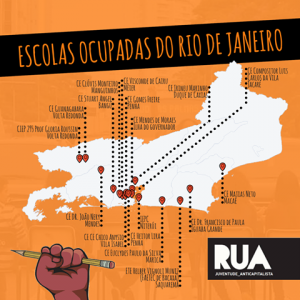
Teachers in the city of Rio de Janeiro, and in the state of the same name, have been on strike for more than two months now. More than a month ago students at one high school occupied their school in support. The student occupation spread to other schools and are there are now 76 schools occupied throughout the state of Rio de Janeiro and as many as twenty in other states to which the movement has spread. Students have been joined by parents and teachers and by volunteers from left political parties and individuals.
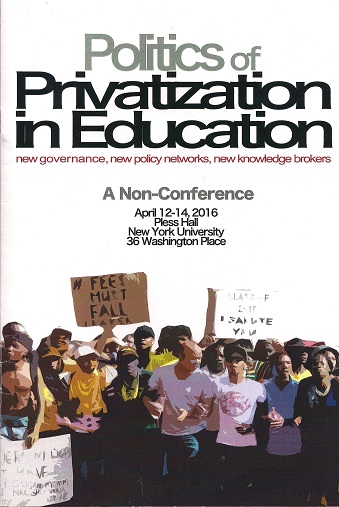
(These are my remarks at an evening panel of what its organizers referred to as a "non-conference" so as to convey the need for participants to interact with one another's ideas, rather than present papers. Sessions spanned two full days. The two evening sessions were videotaped. When they are made available I will post them on New Politics.)
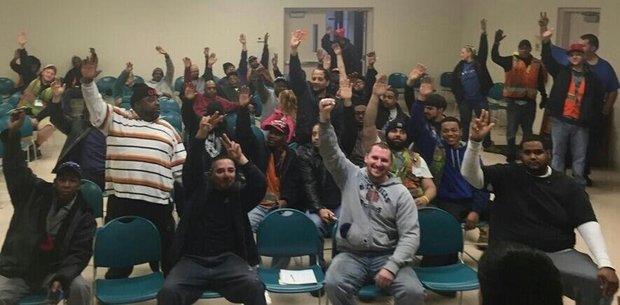
AVON, Ohio – Less than a day before temporary workers at the Detroit Chassis plant on Chester Industrial Parkway were scheduled to strike, the company agreed to their request to join a union.
The plant is staffed by about 60 workers – all of them temps — who make between $9.50 and $11.50 an hour, according to workers helping with the organizing effort to have the UAW represent them. The workers want permanent full-time employment and better wages and benefits. Their duties include assembling axles for the F-650 and F-750 trucks being made at Ford's Ohio Assembly Plant in nearby Avon Lake.

The Chicago Teachers Union (CTU) strike April 1 is not primarily about increased school funding, standardized testing, pensions for teachers, or even just corporate taxation, though the union is fighting for all of these. The strike is about democracy, especially who owns our society’s resources and how decisions about those resources are made.
A new Jacobin piece by Micah Uetricht and Sarah Chambers is a must-read to understand what's at stake in the April 1 walkout of Chicago teachers. (My own thoughts about the political implications of the strike are in a piece in press.) But for now I want to explain to teachers who may be considering crossing the union's picket lines tomorrow why that would be a very big mistake for them personally.

Like many countries trying to wedge their way into economic prosperity Mexico has affirmed an emphasis on education but in practice has negated its importance. Recently passed constitutional reforms relegate educators to temporary employment controlled by the federal government and private investors who have little or no interest in universal coverage or academic excellence. A huge portion of federal money designed for education goes to administrative personnel and is not subject to audit.
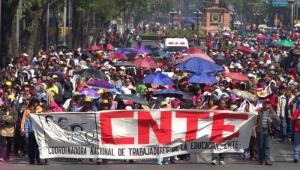
Oaxaca’s education workers build on the struggles of 2006 to fight corporate-driven education reforms.
Ten years ago, one of the most radical unions in the hemisphere, the Sección XXII of Mexico’s National Education Workers’ Union (SNTE), led a vibrant movement against the state governor’s heavy-handed rule in the southern Mexican state of Oaxaca.
”Happiness is political,” is the opening line of Kaswan’s provocative book on William Thompson’s theory on the social nature of happiness and its ramification for organizing a just society. Kaswan introduces the reader to Thompson (1775-1833) as “perhaps the paradigmatic case of a traitor to his class.” Thompson was the only son of a wealthy merchant in Cork, Ireland; however as a political theorist, he developed ideas of the Enlightenment in a liberatory direction, calling for the elimination of subordination in all its manifestations.
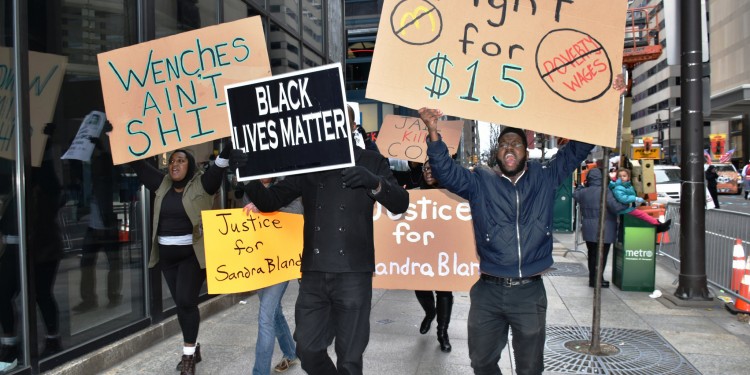
It may be that in 20 or 30 years we will look back to 2015 as the year that things really began to change in the U.S. This was the year we saw the intersection of the movement for higher wages and Black Lives Matter really begin to crystalize.
 Systemic contradictions of capitalism have only intensified in the neoliberal era. Structural unemployment, a phenomenon directly related to capitalist modes of production, has continued unabated, creating a massive and ever-growing “reserve army of labor” that has been disenfranchised on an unprecedented scale.
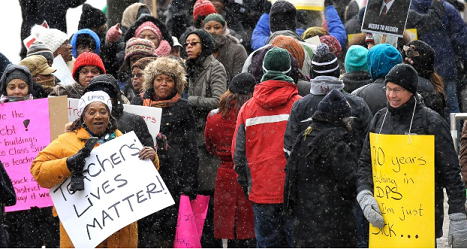 Much has been written about the harm the Supreme Court will wreak on US labor if it overturns the right of public sector unions to charge nonmembers a fee equal to the cost of the union’s expenses in representing them. Pundits on the left and the right have predicted a cataclysm.
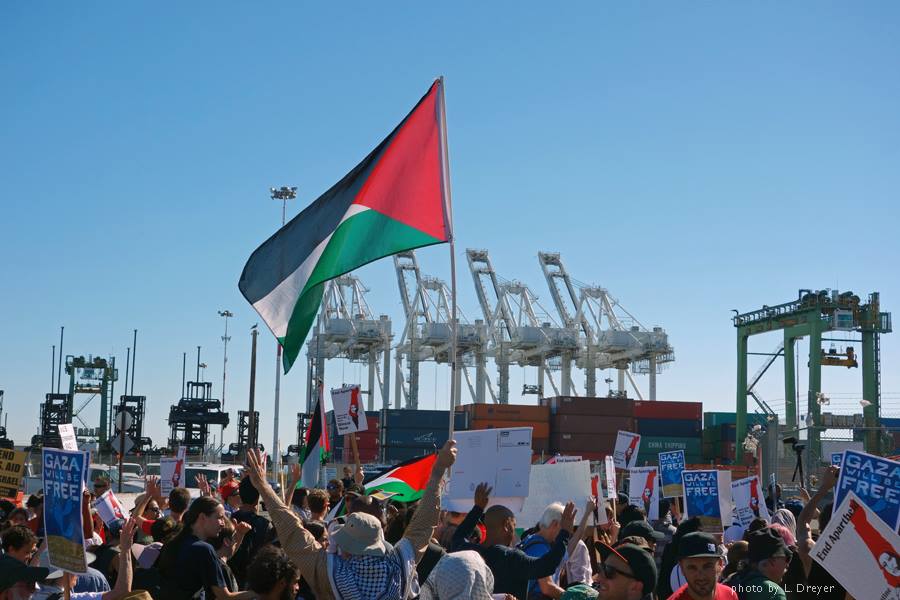
The necessity of working-class internationalism must surely be one of the left’s most invoked truisms, providing the semblance of a solution to the problems facing embattled workers and governments of the left. But too often the concept is deployed in vague, even contentless ways. The global economic crisis has put the issue of ‘internationalism’ into greater focus – particularly, perhaps, in Europe, where political and monetary union is in question as never before.
2015 was another in a series of very bad years for Mexico. Mexican working people continued to experience in 2015 the difficulties of a stagnant economy, the violence of the drug war, repression of the labor and social movements, and the rule of corrupt political parties. Few workers had legitimate labor unions with which to resist employer and government policies, and fewer had the desire to engage in strikes. Yet some workers—teachers in southern Mexico, farm workers in Baja California, and maquiladora workers in Juarez—did courageously attempt to fight for their rights and for greater power. We begin this report with the drug wars that have so dominated Mexican life for the last decade.

Mahmoud Beheshti Langroodi has been on hunger strike in Evin prison since November 26, 2015. His health has severely been deteriorated but he has refused to stop his hunger strike.
In a statement from Evin Prison on December 2, 2015, Mr. Beheshti Langroodi announced: “I hereby declare: I, Mahmoud Beheshti Langroodi, who have spent 25 years of my life teaching children of this land, and have more than 15 years of trade union activities in support of our esteemed teachers, have been on hunger strike since Thursday, November 26, 2015 (Azar 5, 1394), to protest against an unjust verdict of “9 year imprisonment” by Judge Salavati in a trial that lasted a few minutes, hoping that authorities, especially judicial authorities, after hearing my cry for justice, take actions ‘to vacate the prison sentence until a judicial review by a competent court with a jury is conducted publically’.”

It is a far from straightforward decision to found a union in a sector in which such an organisation has never existed before. For the most part, trade unions today have a (long) history: it may not be rare for workers to join a union, but it certainly is for them to participate in one’s founding and initial building. It is acutely challenging when the work itself to be organised is not entirely legal; when most of the workers are migrants in very precarious situations, who are regularly arrested and deported; when the legal context overlooks, and contributes to, high levels of violence and exploitation; and when, as if all of this was not enough, those who should be showing solidarity are on the other side, fighting to increase the criminalisation of the workers’ activity.
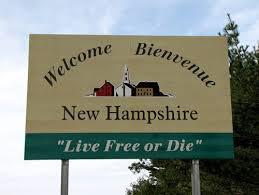
They don't put the slogan “Live Free or Die” on New Hampshire license plates for nothing!
There has been an inspiring statewide local union response to SEIU's predictably short-sighted headquarters embrace of Hillary Clinton. This Sanders endorsement comes from public workers who know Bernie well because they live and work just across the Connecticut River from Vermont–or, in some cases, are Vermonters themselves.
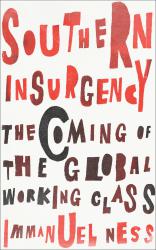
Immanuel Ness. Southern Insurgency: The Coming of the Global Working Class. London: Pluto Press, 2016. 226 pages. Tables. Notes. Index. Paper $28.
Immanuel Ness, professor of Political Science at City University of New York and a prolific writer on labor, has written an important new book whose title, Southern Insurgency: The Coming of the Global Working Class, should, I think, have ended in a question mark. Manny, a friend and a colleague—who, when I have seen him lately, has been in a state of jetlag from his travels to centers of worker activism around the globe—argues that those interested in labor should direct their attention from the stagnant and declining labor movement of the Global North to the migrant and contract laborers in places like South Africa, India, and China who are building democratic, militant, rank-and-file movements from below—struggles that, Ness suggests, are laying the foundations of a new global labor movement.
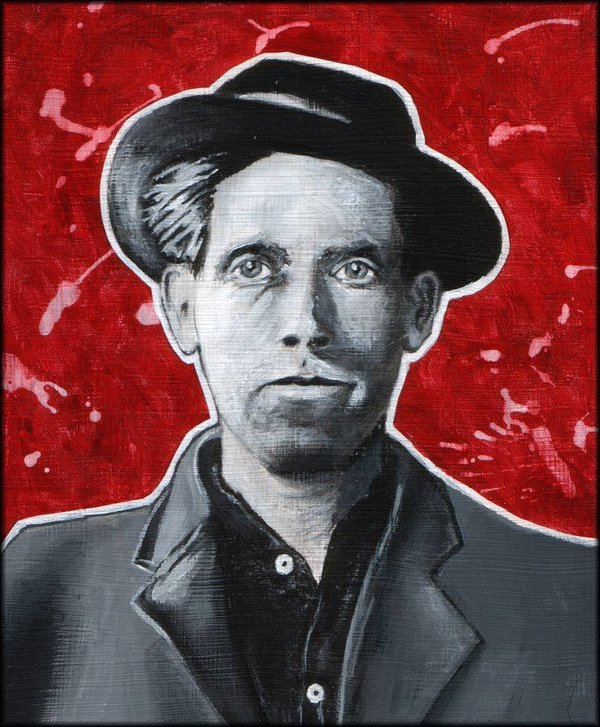
Almost a century ago, the socialist journalist John Reed wrote of the Industrial Workers of the World, popularly known as the Wobblies, “Remember, this is the only American working-class movement which sings. Tremble then at the IWW, for a singing movement is not to be beaten.” On the other hand, the sheriff of San Diego complained of his jails filled with Wobblies, “I do not know what to do. I cannot punish them. Listen to them singing all the time, and yelling and hollering, and telling the jailers to quit work and join the union.”
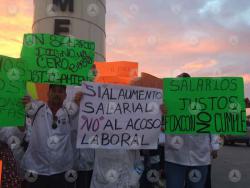
The Mexican and U.S. government first agreed to the creation of the maquiladora plants along the U.S.-Mexico border in 1965 and already by 1975 there were strikes for union recognition. Yet in the last 40 years, thanks to the cooperation of the multinational corporations and the U.S. and Mexican government virtually no group of workers has succeeded in organizing a genuinely independent labor union. Most plants have no unions. Some plants have unions run by lawyers and gangsters who are allied with the ruling Institutional Revolutionary Party (PRI) and the government. A combination of legal chicanery, intimidation, and violence have been used to keep workers from organizing. Now, once again, after many years there are labor protests in Ciudad Juarez one of the major maquiladora centers across the border from El Paso Texas as reported by Kent Paterson of Frontera NorteSur News where this article originally appeared.- Dan La Botz
In a virtually unprecedented development, labor protest is widening in the maquiladora industry of Ciudad Juarez, Mexico. While worker dissatisfaction or protest is nothing new in the foreign-owned border factories that produce goods for export to the United States, previous manifestations of discontent in the generally union-free industry have usually been confined to one company at a time.
- « Newer Posts
- 1
- …
- 13
- 14
- 15
- 16
- 17
- 18
- 19
- …
- 26
- Older Posts »