Category: Labor
We working people live in darkening times. When the Trump presidency ends in four years—if it does—we may no longer have an organized labor movement. As one of my colleagues, Ed Ott of the Murphy Institute, the City University of New York’s labor school, said to me, “We are at the beginning of the end of the U.S. labor movement based on a partnership with capital.” We are at the twilight of an era. Labor unions and collective bargaining stand to be swept away, and with them the institutions that have sheltered us in the workplace and provided us with a modicum of job security, living wages, health insurance, and pension benefits.
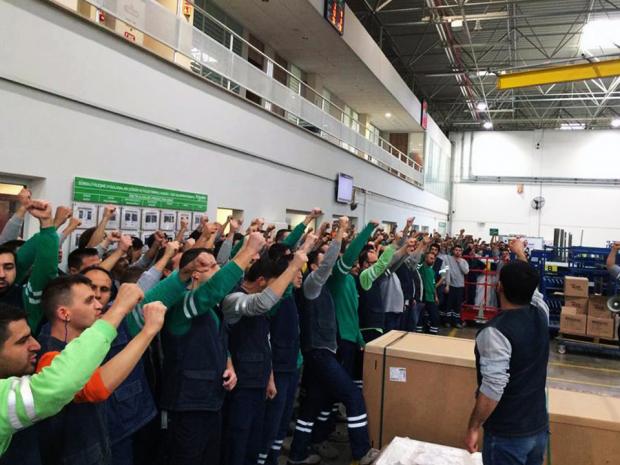
Hands off the metalworkers’ strike in Turkey!
Government ban means AKP despotism serves the bosses!
International solidarity with metalworkers of Turkey!
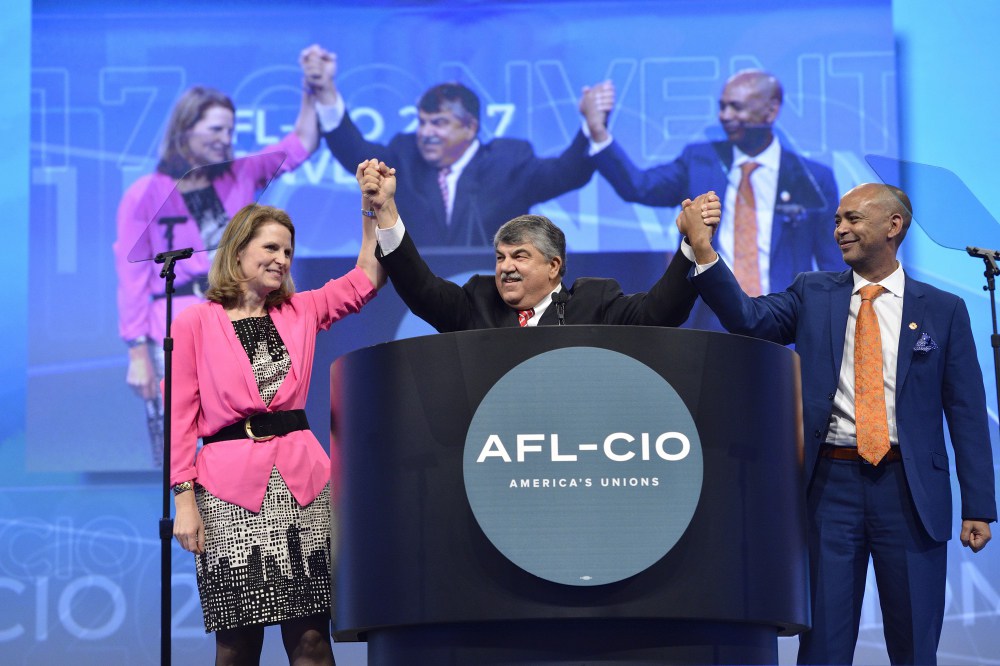
From October 22nd to the 25th, 2017, the AFL-CIO held its quarto-annual convention in St. Louis, Missouri. The choice of city was, if not intentionally, appropriate.
Reply to Dornbush, Elliott-Negri, and Lewis
Dornbush, Elliott-Negri, and Lewis are right that ideology is not enough and an analysis of “the actual, material terrain” is necessary. Simply repeating the well-known realities of the first-past-the-post U.S. electoral system that favors the two-party duality is not such an analysis. It’s old news. Not altogether wrong, but still yesterday’s political science.
I first met Kim Moody some 50 years ago. He was then organizing chapters of the California-based Peace and Freedom Party as an alternative to the Democratic war machine. If memory serves, he came to Park Slope, Brooklyn, then a predominantly Irish and Italian working-class neighborhood—not the gentrified picture from House Beautiful it has since morphed into—but also inhabited by a smattering of déclassé radicals. Moody wanted to interest a few of us in taking up the electoral mantle.
 Some New Politics readers will recognize the title of this article as a paraphrase of Hal Draper’s “Two Souls of Socialism,” which appeared in New Politics in 1966. The first version, however, appeared in the socialist student magazine Anvil in 1960, just as a new generation of youthful activists was emerging, inspired to a large extent by the civil rights movement.
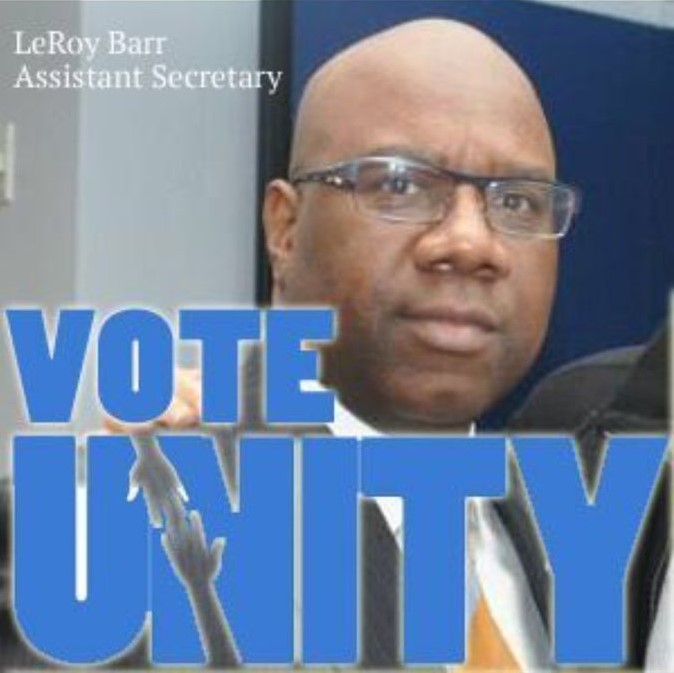 In its January meeting, after a pro-forma discussion, the Delegate Assembly of the UFT (United Federation of Teachers), which still has the legal right to bargain collectively on behalf of New York City's teachers, voted down a resolution to work with community groups to support Black Lives Matter in the schools in February. LeRoy Barr, UFT's assistant secretary, co-staff director, and Chairperson of the Unity Caucus, gave the UFT leadership's rationale for rejecting the motion. Support for BLM was, he contended, a splinter issue, divisive, at a time when the union had to stay focused on what was key, the Janus decision and the threat to collective bargaining rights.

Mohsen Abdelmoumen: You have written a book about the city of Richmond, California, where you live, prefaced by Senator Bernie Sanders: Refinery Town: Big Oil, Big Money, and the Remaking of an American City. This book shows us the experience of this city that has won struggles such as raise the local minimum wage, defeat a casino development project, challenge home foreclosures and evictions, and seek fair taxation of Big Oil and Big Soda. Can we say that the Richmond experience should inspire progressive activists in other cities around the world?

The Janus case before the Supreme Court will deny public employee unions the right to require non-union members to pay their share of the union’s costs to negotiate on behalf of everyone in the bargaining unit.

The #MeToo campaign on social media, women sharing of experiences of sexual harassment, shows how a new generation of women, with male supporters, demands that we examine systemic sexual oppression. We will undoubtedly hear complaints that #Me2 is unwarranted. One predictable trope from the Right is what we heard in response to Trump’s pawing and groping: "These are personal matters, not issues that our society has to address. This is life. Get over it."
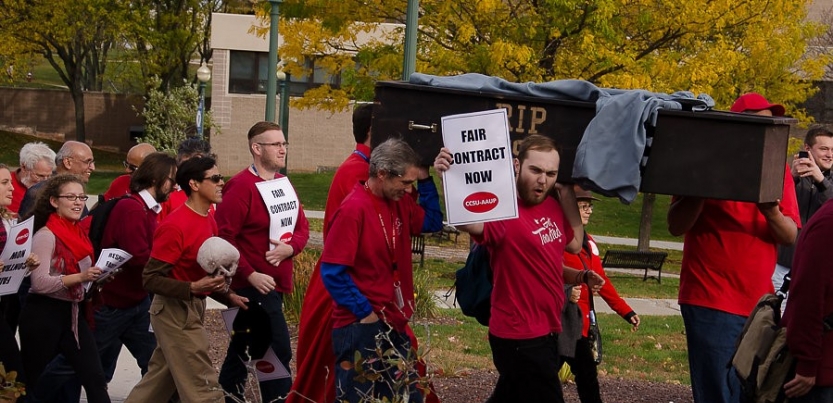
For the third time in eight years, public sector workers in Connecticut have voted for concessions. State employees have sacrificed a total of $7 billion to close budget deficits in 2009, 2011, and now 2017.
 Labor Day 2017 is a sobering moment for people who care about human dignity, social justice, peace, and a life-sustaining environment. While powerful elites who control government so as to safeguard capitalism are driving civilization towards barbarism and the planet to extinction, Trump’s election has spurred widespread protests. Vigorous social movements are challenging Trump’s and the GOP’s retrograde policies and politics: corrupt, xenophobic, racist, misogynist, malevolent. Sparked by Bernie Sanders’ campaign, we’re seeing a new embrace of socialism, especially among younger activists.
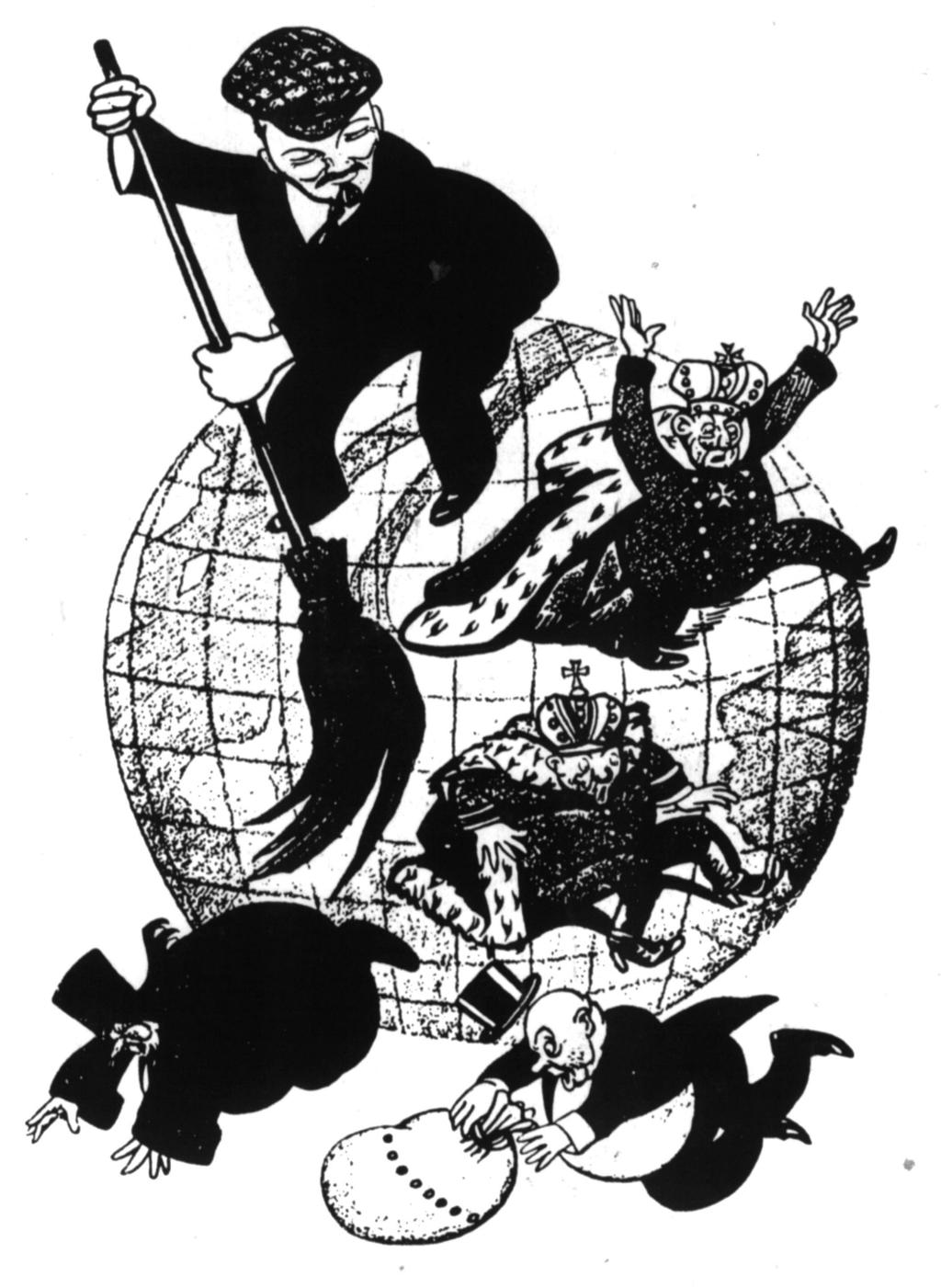
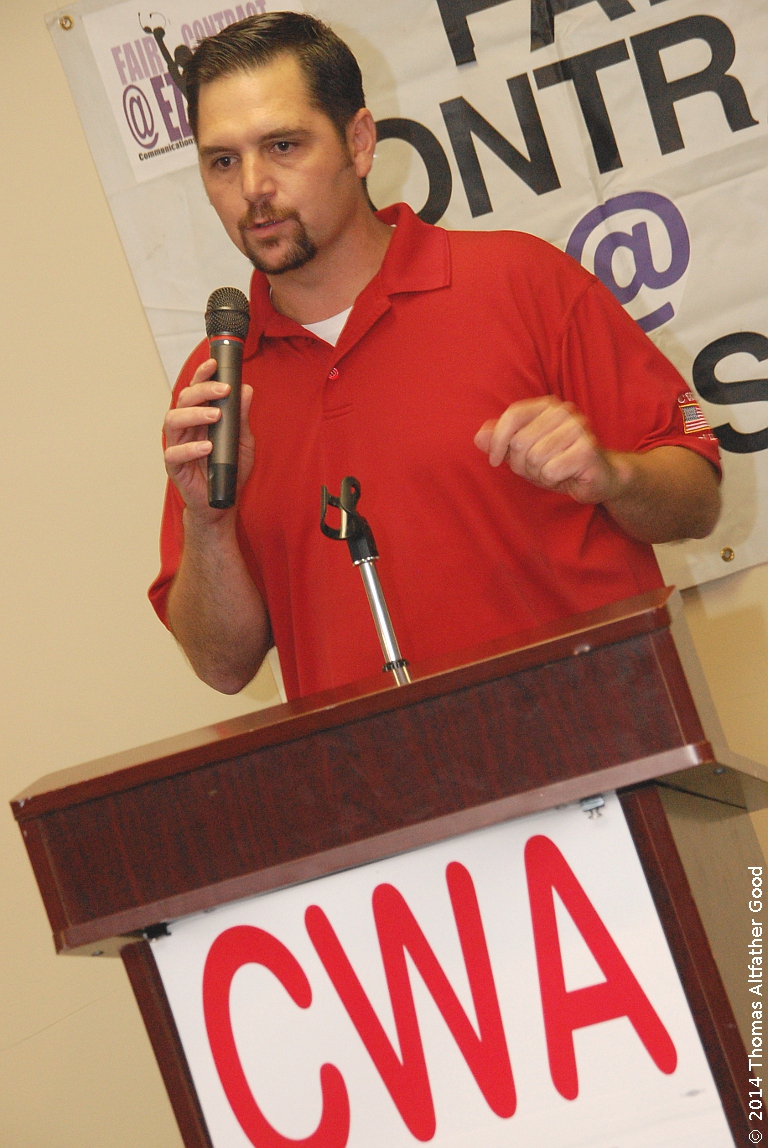
In Staten Island, one union local is propelling a growing labor-community alliance deep in New York’s Republican recesses.
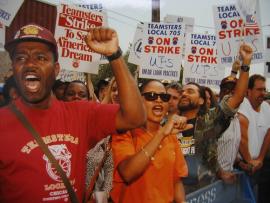
Twenty years ago this month the reform leadership of the Teamsters union, led by President Ron Carey, with the assistance of Teamsters for a Democratic Union (TDU), a reform caucus within the union, led a successful strike against United Parcel Service (UPS) that paralyzed the company, inspired labor unionists, and seemed to open up new opportunities for the workers movement. The UPS strike remains a model of strike strategy, organization, and tactics.

The story of the workers of a PepsiCo factory in Vicente Lopez, Buenos Aires, Argentina may be slightly confusing to those in America where it seems normal for a factory to close, as many did in the financial crash of 2008, without the workers organizing, despite losing valuable employment in a harsh economy. Yet the actions of the nearly 700 laid-off workers since PepsiCo, the second largest food and beverage corporation in the world, decided to move their production to another city south of Buenos Aires, could teach American workers a thing or two.

From February 14 to March 13, 2016, 35,000 Palestinian teachers in the West Bank government-run school system were on strike. The teachers’ goal was to hold the Palestinian Authority to the terms of a 2013 agreement between the General Union of Palestinian Teachers (GUPT) and the Ministry of Education, an agreement the Palestinian Authority had reneged on for three years running. (Ma’an News, Feb. 16, 2016)

At one level, France’s 2017 elections were a huge triumph for global capital. A young and very modern neoliberal candidate, Emmanuel Macron, won huge majorities for his new political party, On the Move (En Marche), in both the presidential and the legislative elections. At another level, however, Macron’s pathway forward is fraught with challenges, both from a long stagnant economic and a restive French public, many of whom stayed away from the final round of voting.

The most radical and militant union in American history was the Industrial Workers of the World (IWW), colloquially known as the Wobblies. Its active years were from 1905 to 1919, or at best until mid-1920 when it led its last major struggles—a maritime workers strike in California and a miners strike in Colorado. Fierce government repression during and after World War I, along with vigilante violence and internal divisions, dealt the IWW blows from which it never recovered. The mass industrial union movement during the New Deal passed it by. Yet, the IWW continues to exist on a small scale to this day.
Capitalism in the United States and across the world has gone through a series of mind-bending crises, spatial “fixes,” and continuous restructurings that have disoriented organized labor in most of the developed economies since the beginning of the neoliberal era in the late 1970s and early 1980s.
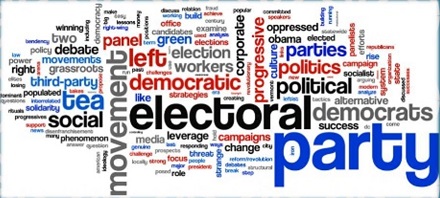
Democratic Socialists of America (DSA) is singular on the left as being both a broad radical socialist organization, encompassing left social democrats, Marxists and even a smattering of anarcho-syndicalists, combined with a strong face toward electoral politics. But an electoral orientation per se is not and cannot be the common denominator of our work. It is true that without an electoral face, any political organization is hamstrung and those on the left who argue that support for any Democrat anywhere is treasonous paint themselves into a corner. Electoral politics on the level it can be rationally conducted is worth doing. That, for me, is not in dispute. Its place in our work is what is problematic. Thinking in terms of power is about more than electioneering.
- « Newer Posts
- 1
- …
- 11
- 12
- 13
- 14
- 15
- 16
- 17
- …
- 26
- Older Posts »