Category: Labor
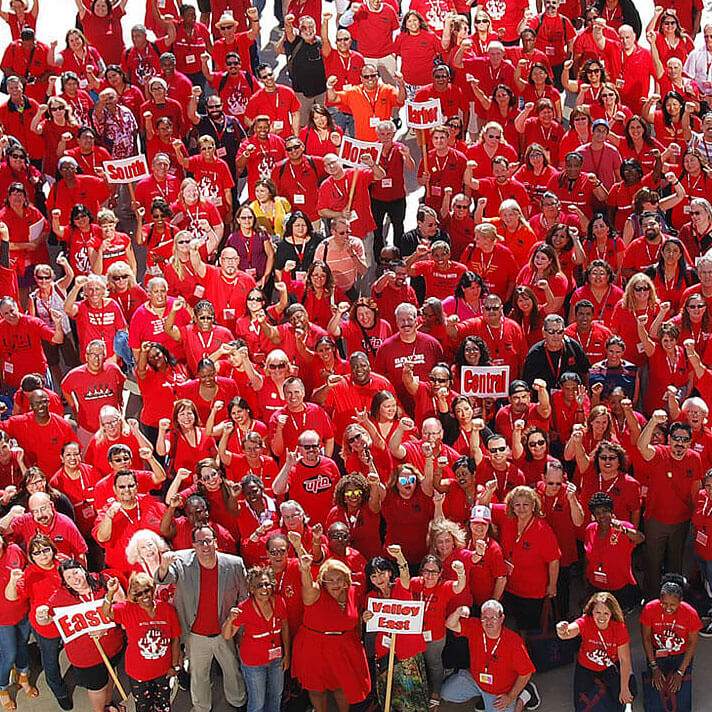
The January 14 strike date announced by the United Teachers of Los Angeles (UTLA) has heightened tensions in an already contentious dispute with Los Angeles Superintendent Austin Beutner, who represents the Los Angeles Unified School District (LAUSD) in negotiations. However, far more is at stake in Los Angeles and for the rest of us than a traditional contract struggle.
.png)
Rob Walsh, originally from a small town just outside Utica, is a material handler at the Tesla plant just south of Buffalo, New York’s downtown—dubbed Gigafactory 2—and part of the joint United Steelworkers/International Brotherhood of Electrical Workers organizing committee. One of plant’s earliest hires, he works 12-hour shifts three to four days a week, making $16.50 an hour. He is one of roughly 400 employees that work around the clock at the plant producing Tesla’s solar roof tiles. During those shifts, Walsh delivers production from the warehouse to the floor and then takes the finished product out to be shipped.
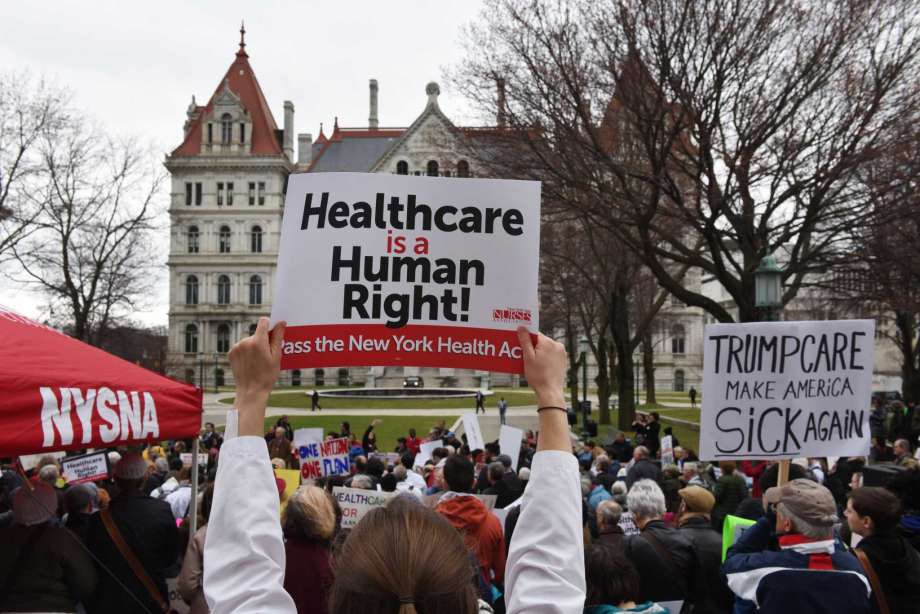
While a Single Payer healthcare system is on the table nationally (in the form of several bills, but perhaps more importantly, in the platforms of nearly all the top presumptive Democratic presidential nominees), the actual creation of such a system is perhaps more likely to be accomplished at the state level first, and it’s possible New York and California are tied for “most likely to succeed.” Even as some advocates caution that we should only fight for a national single payer plan, despite there being even less of a “pathway to victory” in the short-term, I see these campaigns as complimentary. Ambitious and aspiring New York State politicians are well-attuned to what constitutes “progressive” on the national scene, and it is to everyone’s advantage if supporting single payer is viewed as part of proving their credentials.
 In 2017 the Texas legislature passed a law forbidding the state from contracting with companies that refuse to do business with Israel. Some interpreted this broadly. After destructive flooding in Houston that year, one town told homeowners that if they wanted aid in rebuilding, they’d have to sign a pledge not to boycott Israel. After another type of flood – of bad publicity – the town said the boycott only applied to actual businesses in the town.
Ten years ago, members of UE Local 1110 made history by occupying their factory, Republic Windows and Doors. They captured the imagination of a nation reeling from financial collapse, won an endorsement of their cause from the president-elect, and forced one of the nation’s most powerful banks to come to the table and negotiate.
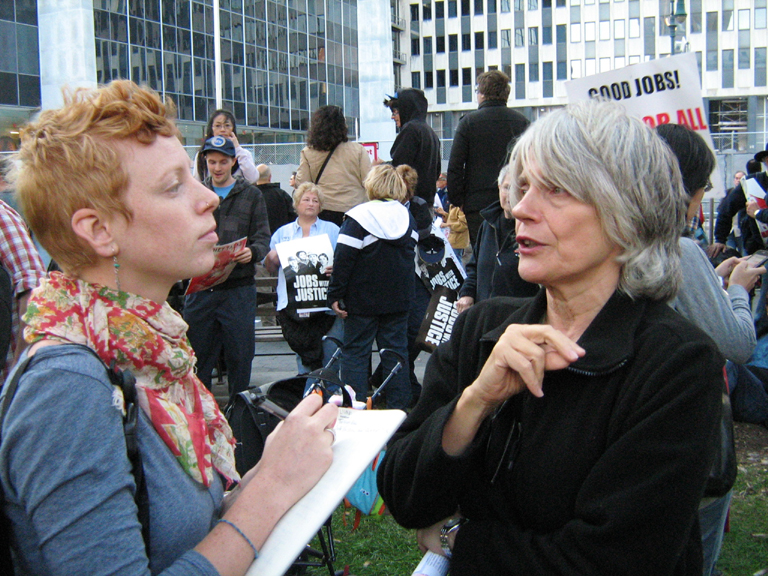 Priscilla Murolo is a professor of history at Sarah Lawrence College, where she formerly directed the graduate program in Women’s History. She also teaches in the Union Leadership and Activism Master’s Program at the University of Massachusetts. Beginning in the 1960s, she has been involved in the women’s movement, labor organizing and many community campaigns and organizations.

Thousands of Google employees throughout the United States and around the world walked off their jobs yesterday, Nov. 1, “to protest sexual harassment, misconduct, lack of transparency, and a workplace that doesn’t work for everyone.” Beginning in Singapore and working its way around the globe the movement closed Google offices from Mountain View, California, in Boulder and New York, as well as in London, Dublin, Zurich, Berlin and Hyderabad.
 Note: While teachers in Los Angeles Unified School District have voted overwhelmingly to authorize a strike, members of the largest teachers union local in the US, the United Federation of Teachers (UFT) in New York City, are debating a proposed contract settlement. In this guest blog, UFT activist Dan Lupkin explains why he wants the proposed contract to be voted down. We invite other opinions on this debate underway in the UFT. – Lois Weiner
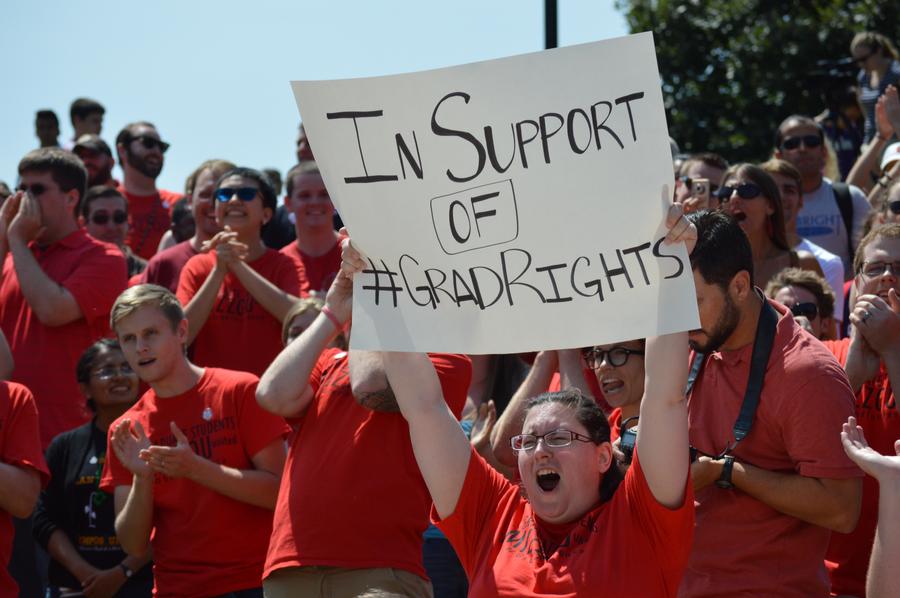
With the start of the new academic year underway, students and instructors will again enter into a millennia old relationship built on mentorship, trust and mutual respect. However, this school year, instructors will be walking into a very different classroom not because the this relationship has changed, but because the Supreme Court has signaled it does not politically support the casue of teachers advocating for working conditions that strengthen this bond.
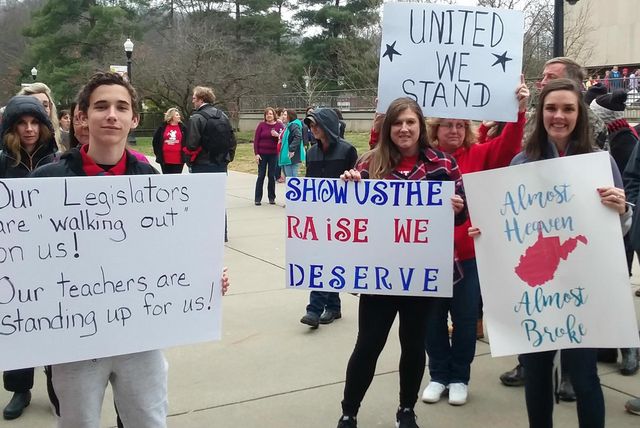 As the French get ready for the “rentrée” – the annual back-to-school/back-to-work day following the August vacation – social peace appears to reign in the land. The long-expected militant strikes and struggles against the neo-liberal counter-reforms introduced by President Macron early last Spring have failed to materialize. Surprisingly, the Macron government successfully force-marched its anti-labor, anti-welfare, pro-business agenda through parliament with little effective resistance by the unions and Left parties. Meanwhile, in the U.S., a wave of spontaneous teachers’ strikes spread from West Viriginia to other conservative ‘Red’ states, winning significant victories and surprising the media and the labor leadership. The contrast is surprising.

Last month students and recent graduates from more than a dozen mainland Chinese universities stood up in solidarity support with workers of Jasic Technology, a private company listed on the Shenzhen Stock Exchange. The student activists include those from the Peking University, Tsinghua University, Nanjing University, and Sun Yat-sen University. They wore t-shirts with the slogan “unity is power” printed in bold red. They produced videos of public speeches and peaceful demonstrations in front of the Jasic factory in the Pingshan District of Shenzhen City, a key node of globalized production in South China. They tweeted open letters and blogs and photos via social media. In response, Jasic management retaliated against workers who initiated to establish a democratic union since this May and refused immediate re-instatement of dismissed workers, triggering waves of rights defense protests and social justice campaigns. As of writing, 14 workers were currently still being detained by local authorities, and 50 students were forcibly taken by the riot police, crushing the worker-student coalition.
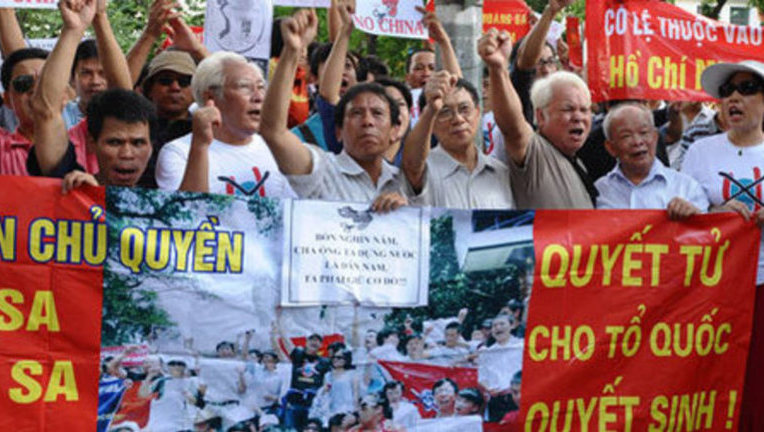
On Sunday, 10 June 2018, thousands of people took to the streets in major Vietnamese cities—Nha Trang, Binh Thuan, Hanoi, and Ho Chi Minh City, among others. Academics, independent journalists, and overseas Vietnamese signed petitions to join in their protest against the Draft Law on the 99-year lease of the three Special Administrative and Economic coastal zones in Vietnam. Workers, too, went on strike in two industrial zones in Long An and Tien Giang provinces. These collective actions led to a concession from the government: it would delay the National Assembly’s ratification of the Draft Law to its next meeting.

Mexico’s auto workers are for the first time forming a national federation in what is a very significant development both for Mexican labor and for Mexican society as a whole. Ten organizations representing over 25,000 Mexican workers have committed to the new organization.
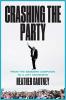 This memoir of sorts by Fordham University sociology professor Heather Gautney, who became a policy fellow in Bernie Sanders’ Washington DC office and a volunteer researcher and organizer for his unexpectedly popular 2016 presidential campaign, has a very specific focus: to “offer insights from up-close work with Bernie, mixed in with historical and sociological analysis, to perform an autopsy of the 2016 election” (2). Given the sheer number of insightless (to put it mildly) autopsies that have been proffered across the political spectrum—perhaps none more useless than Hillary Clinton’s own What Happened (Simon & Schuster, 2017)—Gautney’s book is more than welcome and even slightly overdue.
More than a hundred years ago, the muckraking journalist Upton Sinclair worked undercover for several weeks in the cattle slaughterhouses of Chicago. The result was his melodramatic but revelatory novel The Jungle, a work Jack London called the “Uncle Tom’s Cabin of wage slavery.” Sinclair’s narrative depicted the brutal working conditions endured by East European immigrants on the killing floor, engaging in back-breaking, dangerous, and tedious labor for subsistence wages.

Steve Fraser is a weathered veteran of the New Left and many subsequent movements, author of shrewd books on the acquisitive ruling class and also of the outstanding biography of famed left-leaning labor giant Sidney Hillman, among other works. Here he once again ranges far, but also comes close to home, his own personal home space.
In May 2017, Left politics in Brazil were pretty bleak. It was almost a year after the impeachment of President Dilma Rousseff of the Brazilian Workers Party (PT), whose ousting from power brought along with it an onslaught of austerity policies.2

Like the Arab Spring, the U.S. “Education Spring” was an explosive wave of protests. Statewide teacher walkouts seemed to arise out of nowhere, organized through Facebook groups, with demands for increased school funding and political voice for teachers. Though the walkouts confounded national media outlets, which had little idea how to explain or report on the movements, for parent and teacher activists who have been organizing against reforms in public education over the past four decades, the protests were understandable, if unexpected. What was surprising was their breadth of support (statewide), their organizing strategy (Facebook), and their breathtakingly rapid spread.
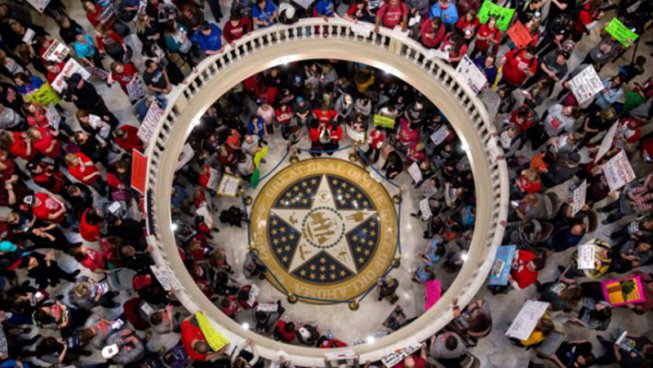
Left Voice speaks with Marxist labor historian Nelson Lichtenstein on the lessons of the Teachers’ Spring and the signs of a resurgent labor movement in the U.S.
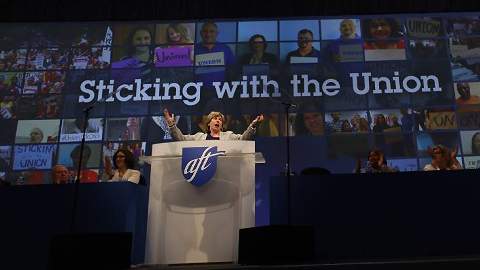
Reflecting on the days I spent as a delegate during the AFT national convention in Pittsburgh (held July 13-16), I was reminded of the fall of the Berlin Wall and the collapse of Soviet Communism in 1989-90. No one predicted it, and it seemed to come out of nowhere. But peace activists in the West who organized international support for struggles of dissidents in the Soviet Union and Eastern Europe saw the social ferment.

When I was a union rep, one of my most challenging assignments was assisting a Communications Workers of America (CWA) bargaining unit at a Boston-area telemarketing firm. Most CWA members in New England had call center jobs at the phone company, with good pensions, health insurance, and full-time salaries. As service reps, they fielded in-coming calls from customers with problems, questions, or new orders to place. In contrast, the telemarketing staff only interacted with the public, on behalf of various clients, via out-bound calling. Like the workers depicted in Boots Riley’s hilarious new film, Sorry to Bother You, they made cold calls to people who did not want to bothered, at dinner time or anytime, with a pitch for a new product, service, or donation to a political cause.
- « Newer Posts
- 1
- …
- 9
- 10
- 11
- 12
- 13
- 14
- 15
- …
- 26
- Older Posts »