
Place: North America

Donald Trump takes office on January 20, setting up the most right-wing, racist government in modern American history, but he will not go unchallenged. That challenge is already in motion.
This year’s elections are the culmination of the long-standing economic and cultural grievances of America’s industrial workers, a subclass largely composed of white men from the Rust Belt whose factories have been asset-stripped and sent abroad and whose unions or small businesses, pensions, and prospects have been decimated. They are not the poorest of the poor—not even the poorest of the white poor. They are not from places where the economic conditions are the worst, but they are from places where uncertainty about the future of industrial jobs is most acute.

The pages that follow are taken from Seth Tobocman’s new graphic biography of the radical lawyer Leonard Weinglass, Len: A Lawyer in History (AK Press). This particular section is based on a transcript of a talk that Len Weinglass gave at the 2002 Left Forum on the relationship between Nixon-era encroachments on civil liberties and the Patriot Act.
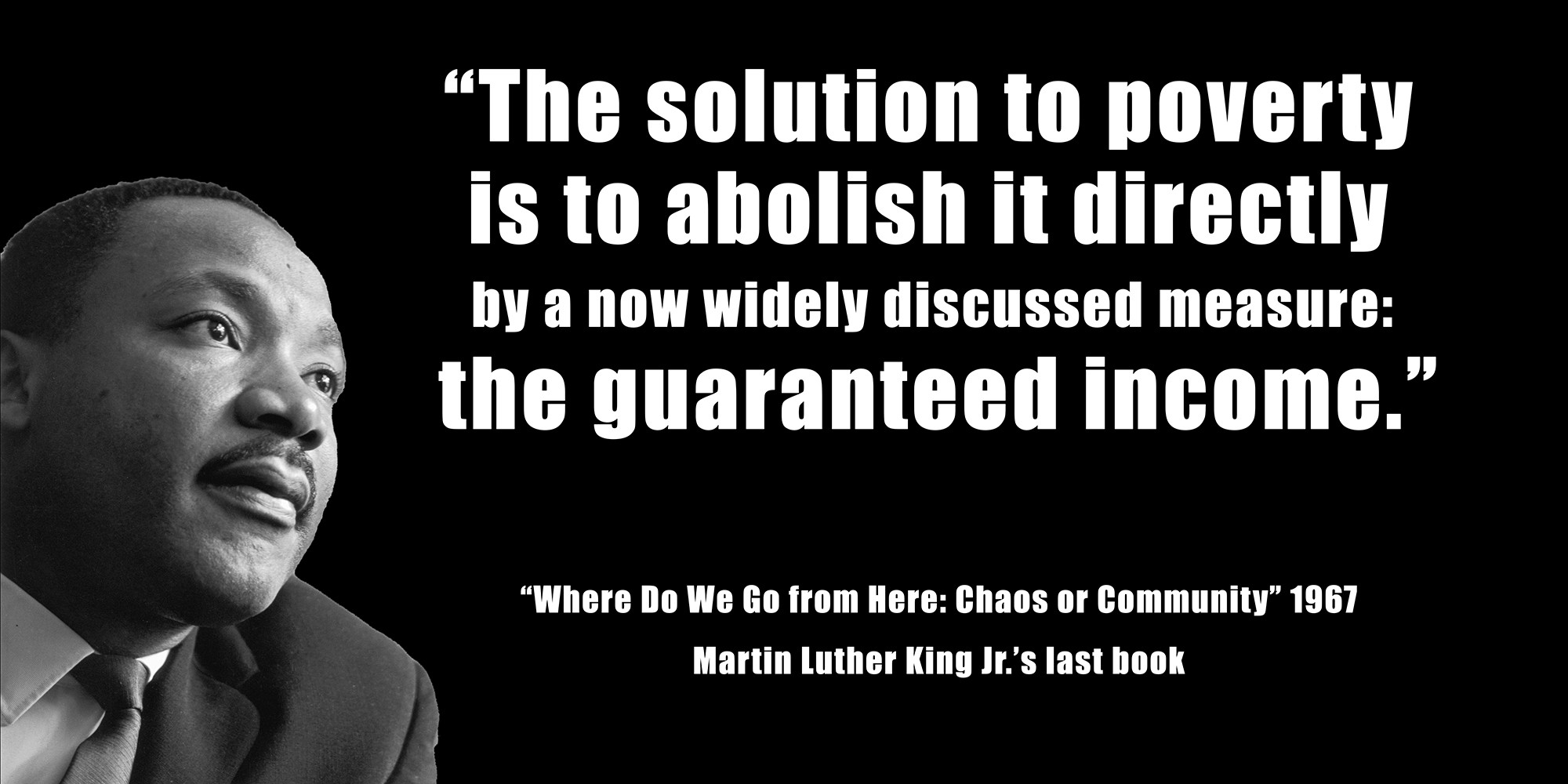
Marking an anniversary of a book’s publication is, appropriately, reserved for books that were widely read when they first appeared many years ago. Books we commemorate with an anniversary are ones that ushered in a new way of thinking and influenced the way society tries to make sense of the world. Martin Luther King Jr.’s last book, Where Do We Go from Here: Chaos or Community did neither of these things.

Millions of women around the world marched on Saturday, January 21, to repudiate Republican Donald Trump’s presidency, his vulgar and misogynistic language and behavior, and his anti-woman policies. On Trump’s first full-day as president, he was greeted in Washington, D.C. by a magnificent pink demonstration of women in protest promising he would face four years of resistance.
[Cet article est également disponible en français.]

On January 10, 2017, white supremacist and mass murderer Dylann Roof was sentenced to death by a jury of his peers in federal court. He was deemed competent to stand trial multiple times, despite serious questions regarding his mental stability. He was afforded what, by all means, appeared to be a competent legal team to defend him against the charges stemming from the shooting of ten (killing nine) Black church-goers at Mother Emmanuel African Methodist Church in South Carolina on June 17, 2015, though Roof decided to abandon legal counsel at several points in the legal process. Roof was 21 years old at the time of the attack—barely old enough to legally consume alcohol and not old enough to even rent a car. He has expressed nothing resembling regret for his crimes, and in fact has remained steadfast in his justification for them. Assuming the psychological experts are right and Roof lacks any kind of relevant mental illness, I have no sympathy for Roof nor should anyone else. I even understand the visceral desire to want to see Roof suffer the ultimate penalty for his crimes.

Trump is President. To avoid repeating the causes of Trump winning requires knowing what the causes were.
On Christmas Eve, I sent a satirical tweet about an imaginary concept, 'white genocide.' For those who haven't bothered to do their research, “white genocide” is an idea invented by white supremacists and used to denounce everything from interracial relationships to multicultural policies (and most recently, against a tweet by State Farm Insurance). It is a figment of the racist imagination, it should be mocked, and I'm glad to have mocked it.
“This is the end, my only friend, the end/Of our elaborate plans, the end/Of everything that stands, the end/No safety or surprise, the end.” – Jim Morrison, The Doors
Will Donald Trump’s ascension to the imperial presidency mark the nadir of the declension of the United States as the global hegemon? While Trump’s fantasies about “making America great again” do not explicitly rely on promoting the US as the “indispensable nation,” they, nonetheless, deploy strategies to resurrect the fossil fuel driven expansion of the military industrial state that marked the post-World War II period of US global dominance. Does Trump’s criticism of NATO and “nation building” suggest a less interventionist foreign policy, or does his commitment to white nationalism still augur a redeemer nation, primed to contest those who would challenge US global hegemony? Given the present contradictions of US global hegemony and the policies and posturing of a Trump and his proposed Administration, are we witnessing the end of the American Century and its institutional and ideological commitment to the US as the “indispensable” nation?

Victory….for now

After tens of thousands of young people rushed to the streets to denounce Trump’s election, “Sanderista” Tulsi Gabbard’s made different kind of headlines. She answered Donald Trump’s call and went to a vetting meeting. Yes, after the election all the Democrat pols gave the usual clichés about cooperation with Trump on certain matters, as if Trump were just some other Republican. That’s bad enough, but this was something more. Gabbard was actually looking to join the Trump Administration. She denies it. She ludicrously claims this was just a meeting to talk about Syria and the need for peace. As if “peace” was uppermost in Trump’s mind now. As if he wasn’t spending all his time visiting Alt-Right sewers and billionaire clubs to staff his cabinet.
 We all know very well by now that the white working class did not cause Trump to win the elections. Article after article have made the case, typically pointing to Nate Silver’s finding that the median household income of Trump supporters in the Republican primary was $72,000, roughly $10,000 more than the median household income for all whites. In the general election, Clinton won the majority of all voters earning $50,000 or less. Trump supporters are many things. They are undoubtedly whiter. They are also less likely to be educated and more likely to work in blue-collar jobs. But there’s one thing they’re not: overwhelmingly working-class.
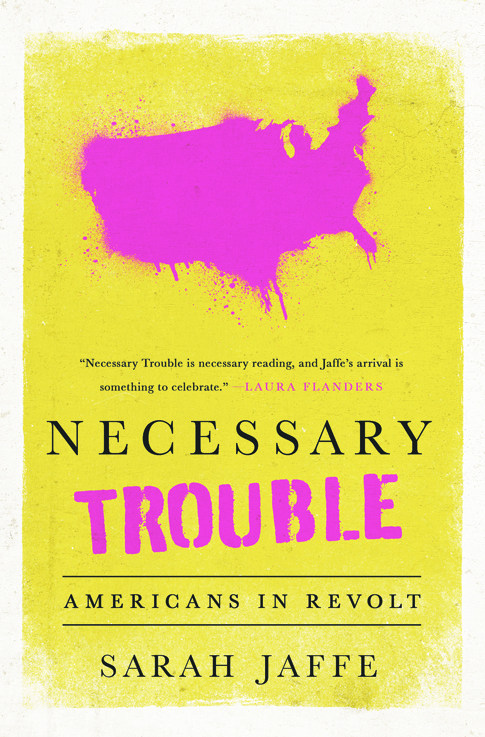
Sarah Jaffe. Necessary Trouble: Americans in Revolt. New York: Nation Books, 2016. 352pp. $26.99
One might be tempted to read Sarah Jaffe’s book with a kind of archaeological nostalgia, to look upon it as a remnant of a bygone-era when the left had confidence in the gains it was making, before a meteor named Trump struck earth.
In recent months I’ve been thinking a lot, more than usual, of Anthony Mazzocchi, longtime official of the Oil, Chemical, and Atomic Workers International Union, leading presence in the movement for occupational health and safety, and one of the very brightest lights of a serious working-class politics in the post-World War II era until his too-early death in 2002. Tony often observed, regarding capital’s revanchist attack on working people that has steadily intensified over the last four decades, that what we would now call the neoliberal Democrats had nothing to offer those who have been or fear being ground into the dust by the juggernaut. He cautioned that, if the left and the labor movement didn’t find ways to connect with that growing population of those hurting and to offer credible explanations of the sources of their condition and plausible strategies for fighting back, other, nasty and dangerous tendencies would. That perspective reflected a deeper view of politics that guided the thousands of us who, for nearly all the 1990s and most of the first decade of this century, struggled to articulate and advance an unambiguously working-class politics through the effort to build an independent Labor Party, of which Tony was the “Founding Brother” and animating force. In the 2015 issue of the Socialist Register, Mark Dudzic and I laid out an assessment of the state of the left and labor movement in the U.S. and the challenges that face us that is rooted in that perspective.

Happy Thanksgiving! As we celebrate the America’s founding myth of the Pilgrim Fathers welcomed by the Indians, the National Guard, militarized local police and (unlicensed) security guards continue to brutalize unarmed Standing Rock Sioux Indians (and members of dozens of other tribes) protesting the construction of the unapproved Dakota Access Pipeline on their sacred lands and water sources.[1]

Post-election left analyses have accurately identified many of the immediate causes for our current debacle. Voter suppression, the Electoral College, the Democratic Party, the Clinton campaign, Hillary Clinton, labor leaders, hacked emails, FBI chief James Comey, Democratic primary voters who voted for Clinton, minority voters who didn’t turn out in sufficient numbers — the list goes on. And all of these deserve blame. But I’ve seen very little self-reflection from the left. There have been some vigorous defenses of left actions, but little self-criticism and little to suggest that the same mistakes won't be repeated again.

As Kermit the Frog, America’s most famous Muppet, says: “it’s not easy being green.”
Preliminary results of the Green Party’s latest national campaign confirm the reality of his observation. The Party’s much-touted goal was getting 5% of the vote on Nov. 8, so it could qualify for $10 million in federal funds for 2020 campaigning and maintain broad nationwide ballot access.
How Trump Won: Seizing the Anti-Establishment Ground through Racial and Economic Nationalism
On November 8, voters in the United States narrowly elected an openly racist, misogynist and nativist candidate for president. Donald Trump succeeded in defining himself as an anti-establishment candidate who will end dynastic rule in Washington, D.C., by elites who care little for “forgotten Americans.”
1. The election of Donald Trump as president of the United States is a shocking and dangerous turn of events–not only for the U.S., but for the entire world. It is a decisive shift, representing the latest failure of center-right and center-left parties in the advanced capitalist countries in the wake of the Great Recession, opening the way for the triumph of a candidate who used right-wing populism to stoke racism, xenophobia and reaction.
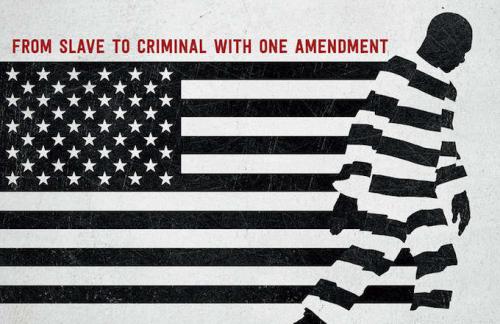
When prisoners in Alabama last spring proposed a national strike to protest “prison slavery,” they called out the infamous clause in the Thirteenth Amendment. The amendment most known for abolishing slavery included a rider that sanctioned slavery “as punishment for a crime wherein the party shall have been duly convicted.”
- « Newer Posts
- 1
- …
- 37
- 38
- 39
- 40
- 41
- 42
- 43
- …
- 73
- Older Posts »