Place: North America
Like millions of people here and around the world, we woke up this morning dismayed and frightened that Donald Trump has been elected President. Whatever we each thought of the Democratic Party and of Hillary Clinton, none of us wanted to believe that a plurality of voters could bring themselves to vote for Trump. His victory is part of a global pattern of an ascendant, populist right, following in the wake of the similarly unexpected vote in favor of Brexit in the UK, and, like Brexit, it is being celebrated by right wing nationalist leaders in Europe like Marine Le Pen.
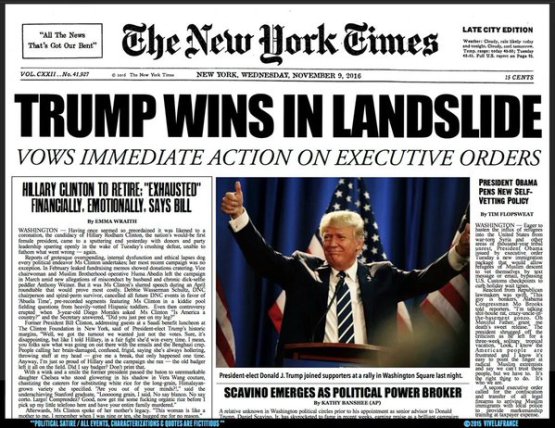
Dear Friends and Comrades,
Today is a terrible one for America and the world.

The Black Workers for Justice support the struggles of the indigenous peoples to defend their land and treaty rights and their struggles for environmental justice. And in this moment we are in full support of the resistance of the Standing Rock Sioux to the construction of the Dakota Access Pipeline (DAPL). We call on all people to support them politically and materially.
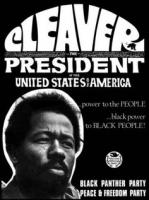
I joined the Peace and Freedom Party under the guidance of leaders of the International Socialists (IS), including Mike Parker and Jack Weinberg, in 1967-68. This was my only real involvement in a third party. It was not only long ago, it was a different context: there was a large, lively left movement, which at the time appeared to be still growing (we hoped).
Thus the P & F was conceived of—and briefly was—a movement party. That’s why it may be worth a look back.
To get the party on the ballot in California, we had to get people to change their party registration, via a registrar, often from Democratic, to P & F. Some 107,000 did so in California, which was remarkable. The same year George Wallace used the same procedure to get an almost exact number of registrants for his party.
I recall an IS member, J.B., said to me “I just wish we had his demographics!” So true.
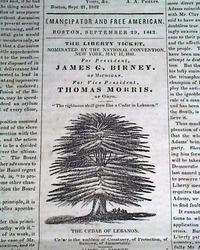
Imagine that it is 1840 and someone approaches you on the street and hands you a flyer for James G. Birney, the presidential candidate of the new Liberty Party. The flyer says that the Liberty Party opposes slavery. It is the only party that does.
The Democrats and the Whigs–the two parties of the two-party system of that time–supported slavery, not to the same degree perhaps, but neither party opposed slavery. The Liberty Party is new and small, tiny. It’s candidate Birney has absolutely no chance to win the election. But he stands opposed to slavery. Who will you vote for on voting day in 1840?

John K. Wilson. Trump Unveiled: Exposing the Bigoted Billionaire. New York: OR Books, 2016. 256 pp.
November 8 is show time. What will the time tell? The egregious Hillary Rodham Clinton will likely be elected president over the menacing tin pot Donald Trump. Clinton may be the shoddy Brand X, but corporate capital will sleep soundly in its bed with a Clinton presidency and even a Democratic Senate. Working families will be screwed again, but with more finesse than under a solipsistic Trump diktat. Sure, Hillary’s evasions and saccharine pronouncements pale in comparison to Trump’s Orwellianisms, his fabrications and the unsubtle subtext of his real stance, to “Make America White again.” No wonder Hillary will win. And by default.
Isn’t political life at the top grand?
 On October 6, 2008, an executive with Citigroup sent John Podesta, then co-chair of Barack Obama’s transition team, a list of possible cabinet appointments. There were still 29 days left in the hard-fought campaign. But the list, according to the New Republic, was almost entirely on the money; for who went on to fill senior posts in the Obama Administration, including Rahm Emanuel as chief of staff, Eric Holder as attorney general, Susan Rice as U.N. ambassador, and Janet Napolitano to lead Homeland Security.
 The night of the penultimate presidential debate I was at a screening of the Brazilian film Aquarius, which tells the story of a woman fighting a corrupt development company to remain in her apartment building. During the Q&A session with the director and force-of-nature actress Sonia Braga, a handful of demonstrators stood up, silently, holding “Fora Temer” signs to protest the government that has illegally installed itself in Brazil. Within sixty seconds Lincoln Center had the NYPD to escort them out, against Braga’s objections, and the Q&A continued with police watching from the edges of aisles.
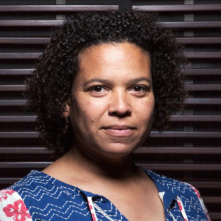
Rachel Herzing lives and works in Oakland, CA, where she fights the violence of policing and imprisonment. She is a co-founder of Critical Resistance, a national grassroots organization dedicated to abolishing the prison industrial complex and the Co-Director of the StoryTelling & Organizing Project, a community resource sharing stories of interventions to interpersonal harm that do not rely on policing, imprisonment, or traditional social services. The following interview was conducted by the True Leap Publishing Collective.
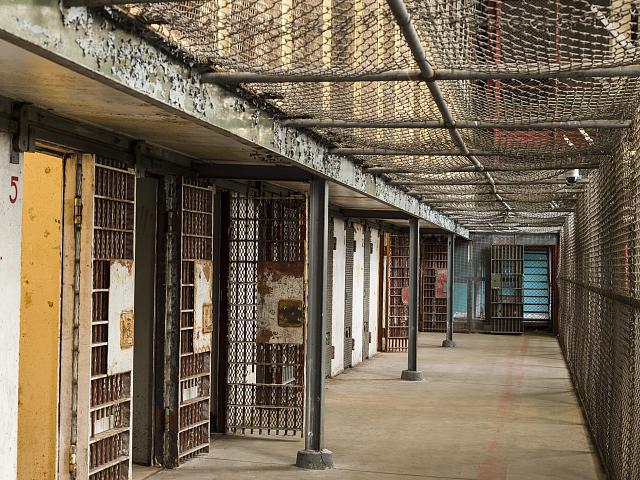
On the 45th anniversary of the Attica Prison rebellion in 1971, Process speaks with seven scholars of the carceral state about prisoners’ organizing in the 1960s and 1970s and movements protesting mass incarceration today. This is the first of a three-part series, guest edited for Process by Jessie Kindig. Check out parts two and three.
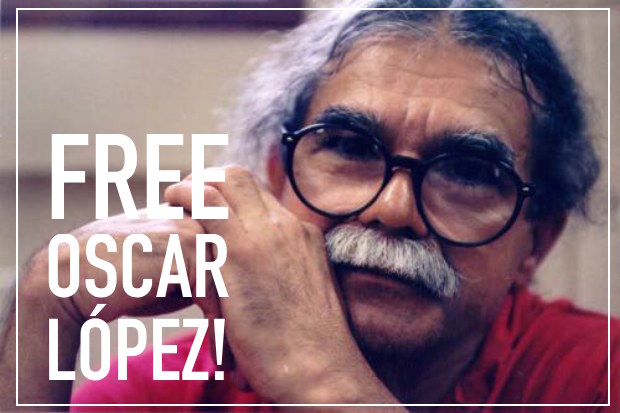
Oscar López Rivera is the longest-held Puerto Rican political prisoner in U.S. history. He has now served 35 years in U.S. federal prisons, including 12 in solitary confinement. The movement calling for his release has intensified, broadened and strengthened in the last few years.

Several left arguments on the U.S. election frankly leave me baffled.

Little has been written about the historical relationship between the movement against the Dakota Access Pipeline and the longer histories of Oceti Sakowin (The Great Sioux Nation) resistance against the trespass of settlers, dams, and pipelines across the Mni Sose, the Missouri River. This is a short analysis of the historical and political context of the #NoDAPL movement and the transformative possibilities of the current struggle.

The 2016-2017 academic year has just started in occupied Palestine, and with it come the hopes and dreams of young students, but also the daily challenges of walking to school past Israeli soldiers, or driving through checkpoints in the West Bank, or assigning a culturally and politically relevant curriculum in annexed East Jerusalem, where Israel is trying to impose an Israeli curriculum in Palestinian schools.
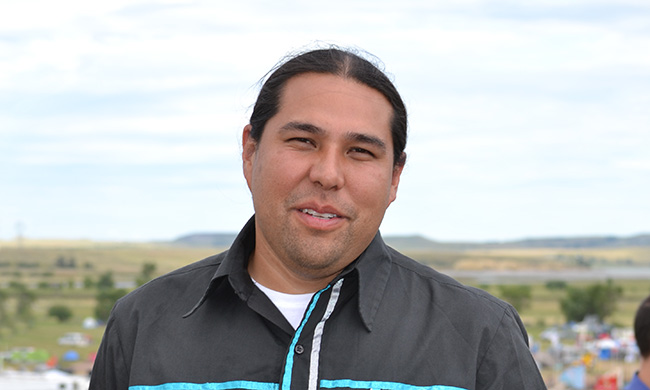
This year’s massive buildup of resistance to the Dakota Access pipeline follows closely on the heels of the victory over Keystone XL pipeline, something often credited to feverish organizing by 350.org. But years before 350’s involvement, there was the Indigenous Environmental Network, which launched that movement and its “Keep It In the Ground” messaging. This time, with nearly 200 tribes unified behind the Standing Rock tribe’s opposition to the pipeline and more than 3,000 people gathered at the Standing Rock Sioux reservation, Native Americans are clearly leading the movement.
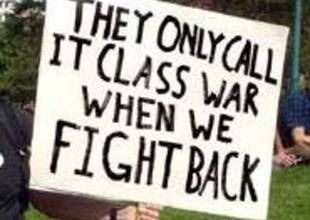
In 2008, the governments of the city of Chattanooga, Hamilton County, the state of Tennessee, and the United States all collaborated to provide Volkswagen (VW) with a $577 million subsidy package, the largest taxpayer handout ever given to a foreign-headquartered automaker in U.S. history. The bulk of the subsidy package, $554 million, came from local and state sources. The federal government also threw in $23 million in subsidies, bringing the grand total of taxpayer money that VW received in 2008 to $577 million.
Labor for Black Lives – a multi-ethnic network of workers in solidarity with the movement for Black lives, against capitalist exploitation and racist injustice and all oppression – fully endorses the Prison Strike, to begin on September 9, 2016, in which prisoners across the United States are organizing to end prison slavery and mass incarceration. We join our voices and forces with those, including 800+ prisoner members of the IWW's Incarcerated Workers Organizing Committee (IWOC), who say THIS STOPS TODAY.
 In presidential election years, by Labor Day most US labor unions have long halted organizing, shifting most of their human and financial resources to elect a Democrat to the White House. Members are told having a Democratic president will give us — that is, union officials — access to politicians with whom they can negotiate over labor’s concerns.
On August 1 the Movement for Black Lives (M4BL), a coalition of over sixty organizations, rolled out “A Vision for Black Lives: Policy Demands for Black Power, Freedom & Justice,” an ambitious document described by the press as the first signs of what young black activists “really want.” It lays out six demands aimed at ending all forms of violence and injustice endured by black people; redirecting resources from prisons and the military to education, health, and safety; creating a just, democratically controlled economy; and securing black political power within a genuinely inclusive democracy. Backing the demands are forty separate proposals and thirty-four policy briefs, replete with data, context, and legislative recommendations.
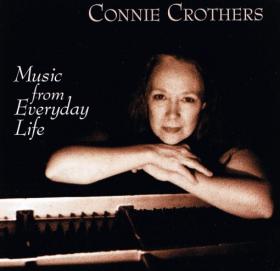
Sometime in the late 1980s, as Against the Current was doing some cross-promotion with the European socialist magazine International Viewpoint, I was glancing through the list of U.S. subscribers to IV when a name jumped put at me: Connie Crothers.
This was interesting, because I had a wonderful duet recording “Swish” (1982) by jazz pianist Connie Crothers with the percussion giant Max Roach. (This was the inaugural recording of Connie’s New Artists label – an impressive debut!) I immediately wrote to Connie – this was back in the Middle Bronze Age, before we did everything by email – and soon heard back. Indeed, she was the same Connie Crothers and delighted to hear from ATC.
In his useful and perceptive review of Empowering Progressive Third Parties in the United States, David Finkel claims that I endorse the "ultra-left conclusion of historian Eric Chester’s True Mission that the concept of a national labor party has always been a ploy to keep labor ensnared and subordinate to the Democrats."
- « Newer Posts
- 1
- …
- 38
- 39
- 40
- 41
- 42
- 43
- 44
- …
- 73
- Older Posts »