
Place: Middle East

ImageThe siege of Kobani by Islamic State (ISIS) brought worldwide attention to the Syrian Kurdish PYD (Partiya Yekîtiya Demokrat, Democratic Union Party), the leading force in the Kurdish-majority areas in northern Syria. The PYD calls this region Rojava—literally meaning “land of the sunset” but also translated as “West Kurdistan.” 
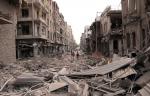
ImageOutside powers have had a long and shameful history of cynically supporting dictatorships in the Middle East because maintaining friendly autocratic states in the region suits their geopolitical objectives. And today those criminal policies are flagrantly on display. 
Image

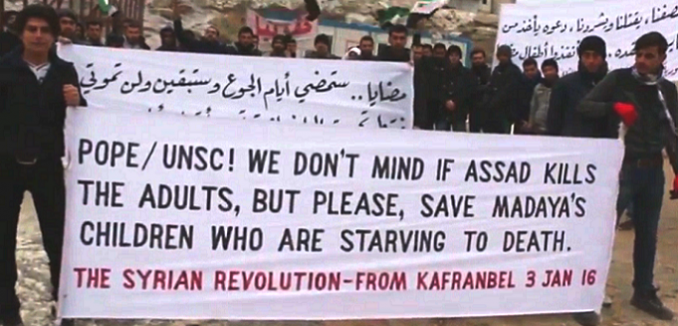
Throughout the world, people have been shocked by the scenes of starving people in the Madaya concentration camp in southern Syria, besieged by the Assad regime and its allied death-squad Hezbollah (which has invaded Syria from Lebanon). Some 40,000 people are trapped, besieged and starved as a weapon of war by the dictatorship which has used every conceivable means to maintain its power over the last five years; people are reported to be eating grass, insects and cats and dogs.

Yet it appears that the main task confronting leftists – i.e., opponents of exploitation, oppression and injustice, advocates of a “another world is possible” – is once again to find whatever excuses, whatever obfuscation, whatever mitigation they can on behalf of the tyrannical fascist regime responsible.

Image

Mahmoud Beheshti Langroodi has been on hunger strike in Evin prison since November 26, 2015. His health has severely been deteriorated but he has refused to stop his hunger strike.

In a statement from Evin Prison on December 2, 2015, Mr. Beheshti Langroodi announced: “I hereby declare: I, Mahmoud Beheshti Langroodi, who have spent 25 years of my life teaching children of this land, and have more than 15 years of trade union activities in support of our esteemed teachers, have been on hunger strike since Thursday, November 26, 2015 (Azar 5, 1394), to protest against an unjust verdict of “9 year imprisonment” by Judge Salavati in a trial that lasted a few minutes, hoping that authorities, especially judicial authorities, after hearing my cry for justice, take actions ‘to vacate the prison sentence until a judicial review by a competent court with a jury is conducted publically’.”

Image

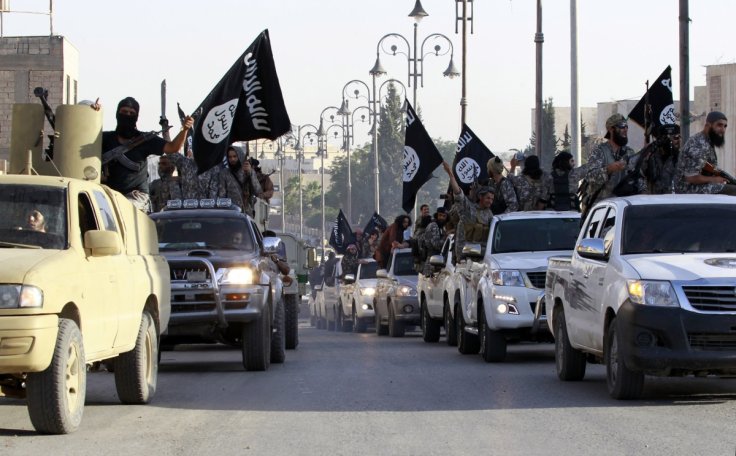
Militant Islamic State fighters parade on military vehicles along the streets of Raqqa (Reuters)

In the wake of the murderous massacres in Paris, the demand for violent retaliation against Islamic State (IS) is gaining momentum. David Cameron now plans a renewed bid to secure parliamentary approval for UK air strikes against IS in Syria.

At one level, this is an understandable reaction to the fascist-like tyranny and brutality of IS. But understandable reactions and effective reactions are often two different things. The desire for retribution, no matter how seemingly justifiable in response to the slaughter of so many innocents, is not a sound basis on which to frame political and military policy.

Image

The despicable ISIS attacks on Paris and elsewhere have unleashed intensified war and imperialist machinations over Syria and Iraq, as well as repression of immigrants and renewed Islamophobia. Can the left oppose the carnage on all sides without losing sight of its emancipatory aims?

Image
The following discussion was originally published in Internatonal Viewpoint
What will happen now in Portugal? Here we publish an exchange of views between Stathis Kouvelakis, leading member of the Left Platform in Syriza and now of Popular Unity in Greece, and Catherine Samary leading member of the Fourth International, from France. Thoughts on Stathis Kouvelakis’s text “From Greece, taking the risks into account: Some thoughts on the situation in Portugal“ “The risks are however immense and seem to me to outweigh by far the expected gains,” says Stathis Kouvelakis. What are what he calls “the three ways of summing up” this opinion? (His text is below.)

Image

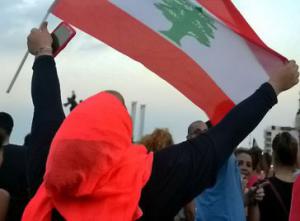
In response to the failure of the state to manage and dispose of accumulated trash, a series of protests erupted in Lebanon in August 2015 demanding the toppling of the Lebanese corrupt regime and the basic rights for water, electricity and a clean healthy environment. This article provides an overview of the strategies used by the state to dismantle the protest movements, a class reading of the social movements three months into the protests, and an analysis of the strengths and achievements of the demonstrations.

Image

The English translation of this article was originally published by International Boulevard

From Al Safir Al Arabi

Behind the violence shaking occupied Jerusalem, writes Haneen Naamnih in Al Safir Al Arabi, is a vast colonial enterprise slowly remaking the city.

Lebanon had experienced some major protests in early 2011 against the sectarian regime following the regional popular uprisings, but the movement unfortunately ended a few months later, especially after the sabotage of several religious and reactionary parties against the movement and with the complicity of leftist movements of Stalinist tradition.

(NOTE: For some background, see my previous article: www.solidarity-us.org/node/4058 in Against the Current, January-February 2014.)

ImageAUGUST 19 — Even while the rhetoric around the P5+1 nuclear deal with Iran seems to be reaching reactor-grade “critical” level, signs are emerging that the fix just may be quietly in.
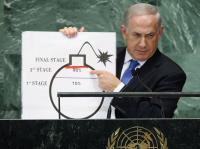
ImageOf course Congress should endorse the Iran deal. The renunciation of the agreement by Congress would have disastrous consequences for the Middle East, empowering warmongers everywhere, but especially in Washington, Tel Aviv, and Tehran.
There are three motives driving opponents of the deal.

ImageThe foundations for the Arab uprisings that took place in the wake of the 2008 financial crisis were laid in the years before by the neoliberal restructuring of Middle Eastern and North African economies.

ImageRegardless of one's views on whether or not the socialist left should support Bernie Sanders in his race for the White House, the momentum behind the self-described “democratic socialist” has been impressive. Beginning at 2% in April, his popularity grew to 14% in May and at last check was 32% in New Hampshire.

Image

Hilton Obinzenger is a poet and a long-time informed critic of Zionism and Israeli policy toward the Palestinians. His new poem, Treyf Pesach (Dirty Passover), is a blunt speaking and not unhumorous effort to ask fellow Jews how they can celebrate the slave insurrrection in Egypt millennia ago and yet be struck dumb by the Israeli government's dissembling and bloody practices  toward "the stranger in our midst" today. You can read Obinzenger's smart, snappy work here, and visit his website here.

Image

After approximately four and a half months of fighting, Kurdish forces have successfully pushed the Islamic State of Iraq and the Levant (known as ISIS or ISIL) out of Kobanî. The coalition of ground forces most notably included the People’s Defense Units (YPG) , Women’s Defense Units (YPJ) , and the Peshmerga from the Kurdish Regional Government (KRG).At the same time, through the air, a U.S. led-coalition made 700 airstrikes against ISIS. On February 6 it was reported  “fourteen more villages and some strategically important points have been liberated.” In an October 2014 article for Naked Capitalism Claude Salhani noted the strategic importance of the region. Salhani stated “victory for” ISIS in the region “would give the group prestige among the dozens of groups lined up in the fight against Syrian President Bashar Assad. It would also secure the terror organization’s flow of oil to a lucrative market.”

Image[Ed. note: Readers of David Finkel's November article on "The Trials of Rasmea Odeh" will be interested in this alert from the Rasmea Defense Committee.]

ImageOn January 25, the New York Times posted an article by their Israel correspondent, Jodi Rudoren, about a new Israeli film, “Censored Voices,” which premiered at the Sundance Film Festival this pas

ImageLebanese Marxist intellectual Gilbert Achcar, author of The People Want (2013), Eastern Cauldron (2004) and The Clash of Barbarisms (2002/2006), says Egypt is at an historical and highly important crossroads in the development of the long-term revolutionary process— stressing the urgency in building leadership and formulating strategies appropriate for change.

As we write on Sunday, October 19, it appears that ISIS [Islamic State] forces have begun to retreat from their vicious assault on the Kurds in Kobanê. We hope that this is a resounding defeat for ISIS, and that it inspires a wave of grassroots resistance to ISIS throughout Syria and Iraq. 

Norman Finkelstein has made his career taking the nasty assignments. It’s been dirty work, but presumably someone had to do it: plowing through the works of Joan Peters, Daniel Goldhagen, Elie Wiesel, Alan Dershowitz, and a small army of official and unofficial Israeli state propagandists.