Place: Middle East
These are desperately bad times. The government of Israel, having provoked the firing of rockets by its rampage through the West Bank, is now using that response as the pretext for an aerial assault on Gaza which has already cost scores of lives. An atmosphere of hysteria is being deliberately provoked in Israel, and whole communities are being subject to collective punishment, a war crime. People are dying, and for what? To prevent a unity government of Fatah and Hamas?
Adopted by U.S. Labor Against the War (USLAW) Steering Committee, June 25, 2014
A majority of working people opposed the Iraq War and participated in the eight year struggle to end it. We felt great relief when the last troops departed Iraq in 2011.
I will never forget when I first met Ali Mustafa. It was September 2012, during my first year at York and just before I joined Students Against Israeli Apartheid (Ali was a former member), where he did a talk on his visit to Egypt. After he was done, he asked the audience for comments. Seeing no takers, I chimed in. Not knowing who I was, he was very impressed with my comments, and that was the beginning of our friendship.
Long-time revolutionary activist, historian, and analyst Gilbert Achcar has produced a provocative assessment of the Arab Spring. In The People Want, Achcar develops a Marxist analysis of the roots of the Arab revolutions, traces their trajectories since December 2010, and draws a tentative balance sheet of what progress has been made and what possibilities remain.
In much of the global south, teachers are leaders of their communities. In Iran, two teachers are in mortal danger because they have defended their community’s religious freedom. Amnesty International has sent an alert for urgent action to defend them. I’ve sent an email message, reproduced below.
Pressured by the British Parliament's historic rejection of military action against Syria and by the great opposition of most of the American people to getting involved in yet another bloody war in the Middle East, President Obama has been forced to take his plan to attack Syria to Congress. At the moment, Congress appears to be sharply divided over whether or not to support the President, with many still undecided, and it is therefore imperative to take advantage of widespread antiwar opinion to make the case now against U.S. military intervention in Syria.
Skepticism is always warranted in the face of government claims, but some folks seem unable to apply the same level of skepticism to claims by Syria's dictator as they do to those of the U.S. government. This will not help us in waging a sustained effective campaign against U.S. military action against Syria; to rest our case on acceptance of Assad's claims weakens our argument. We need to explain why a U.S.-led war on Syria is not the solution, whether or not Assad is responsible for the horrific chemical weapons attack in the Ghouta suburbs of Damascus.
The Campaign for Peace and Democracy has posted an interesting symposium on Syria. It was mostly written before the August 21 chemical weapons attack and the resulting war threat from Washington. None of the symposium participants favors U.S. military action, but the symposium provides useful background on the Syrian uprising that helps us make sense of the current situation.
As I write, a horrible tragedy is unfolding in Egypt. The old order has reasserted itself with a vengeance. Nevertheless, it is hard to imagine that Egypt will ever again be what it was before 2011.
The following statement from the Egyptian Revolutionary Socialists makes a powerful case for socialism from below in the context of the Egyptian coup, the massacres carried out by the military and their horrific impact on the nation's democratic upsurge. Like others, the Revolutionary Socialists is evolving its point of view, challenged as it is with understanding first the election of a repressive right-wing Muslim government on the heels of a healthy mass movement, and then the shocks from a bloody military coup. We think it important to share their statement on the situation and, along with the Campaign for Peace and Democracy and others, we are republishing it as a contribution to the general discussion.
The bloody dissolution of the sit-ins in Al-Nahda Square and Raba'a al-Adawiyya is nothing but a massacre—prepared in advance. It aims to liquidate the Muslim Brotherhood. But, it is also part of a plan to liquidate the Egyptian Revolution and restore the military-police state of the Mubarak regime.
[from Weekly Worker 969, July 4 2013]
Ramallah. In November 2012, the United Nations General Assembly approved a resolution to upgrade Palestine to a “nonmember observer state”. The usual suspects—Israel, their American financers, and a few of their mutual allies—voted against the resolution, but it overwhelmingly passed.

Zionism is but one of many ideologies/movements that have competed for the loyalty of Jews as the guarantor of their freedom and security. The fact that it achieved success with the establishment of Israel in 1948 causes people to forget that its success was not pre-ordained. Further, no one can deny that it has come with a heavy cost in both Jewish and Arab lives. From a historic perspective, it may be worth examining other visions to secure a Jewish future. Every road not taken need not be a dead end.
They aim to bring recalcitrant tyrants to their senses, to put an end to their external as well as internal malefaction. With surgical precision, they pull the noose ever closer around the tyrant’s neck, so that in hopeless despair he is compelled to behave reasonably in foreign affairs while, enfeebled, he lifts his bloodied hands from the throat of the oppressed people. It is a morally justified decapitation of evil, the salutary removal of a swelling tumor.
During the past two years, the Campaign for Peace and Democracy has released official statements in broad support of the Syrian revolution: CPD Salutes Syria’s Courageous Democratic Movement and Message of Condolence and Solidarity from U.S. Peace Activists to the Syrian People. What follows, however, is not an official position but rather a personal statement by CPD’s co-directors about the current situation.
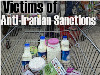
Havaar: Iranian Initiative Against War, Sanctions and State Repression is a grassroots group of Iranians, Iranian-Americans and allies who have joined together to categorically oppose any military action and the U.S.-led sanctions against Iran. They stand in solidarity with the Iranian people’s struggle against war and sanctions and against state repression; all of these forms of violence, they insist, hurt the lives and aspirations of ordinary Iranians.
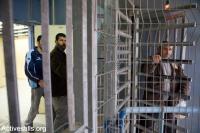 In December 2009, the Israeli Knesset passed a law allowing for the creation of a biometric database of the inhabitants of Israel. As of January 2013, the program is in its initial testing stage.
An uneasy cease-fire has been declared ending Israel's attack on Gaza, Operation Pillar of Defense. Take this quiz to see how much you know about the situation.
CPD’s statement "End U.S. Support for Bahrain’s Repressive Government" was signed by more than 1900 people, including several hundred Bahrainis, and was widely circulated in this country and Bahrain.
Since the beginning of 2011, Israeli politicians, generals, and diplomats displayed a growing nervousness in anticipation of "September," i.e., the proclaimed Palestinian intention to seek a full United Nations Membership for the State of Palestine.
- « Newer Posts
- 1
- …
- 14
- 15
- 16
- 17
- 18
- 19
- 20
- 21
- Older Posts »