Place: Middle East
The Campaign for Peace and Democracy issued the statement below about the democratic revolution in Egypt.
Egypt After Mubarak
Statement by the Campaign for Peace and Democracy
February 14, 2011
For a movement to be a serious threat to the imperialist West, it must be coherent and united, which is simply not the case of what is termed "Radical Islam." A united, militant Islamic world would indeed be a serious threat to the West, but nothing like that is in the offing, with the result that “Political Islam,” divided, remains weak and ineffectual. So much for the Clash of Civilizations theories, based on ideology rather than concrete history.
We, the undersigned, oppose the U.S.-led campaign to impose harsher sanctions on Iran, and the ongoing threat of war against that country. Despite Washington’s claims, its policy is clearly not animated by a genuine concern for protecting the world from the threat of nuclear war; otherwise how could Washington support such nuclear-armed states as India, Israel, and Pakistan, or maintain its own huge nuclear arsenal? Nor is U.S. policy driven by the goal of defending democracy.
Does desperation alone account for reckless escalation of U.S. military aggression in the Middle East for which the “threat” of an aggressive Islamism provides the rationalization? To be sure, the worsening world economic crisis directly conditions the international context, aggravating U.S. capital’s frantic rush to control the world’s remaining oil reserves. America's willingness to use excessive force and to go it alone also serves to intimidate would-be imperialist rivals like China, Russia and France, so as to retain its lion’s share.
Obama’s decision to radically escalate the wars he was ostensibly elected to terminate is a measure of U.S. imperialism's desperation. It’s not just that our erstwhile peace candidate and future Nobel peace laureate is withdrawing exhausted U.S. troops from the frying pan of Iraq only to transfer them into the fire of Afghanistan, although that itself was an act of desperation. Many of these “volunteer” soldiers and reservists, shattered after several devastating tours of duty in Iraq, are being forced to remain in the service years beyond their contracts.
New Politics readers and friends are invited to sign the Campaign for Peace and Democracy statement “End the War Threats and Sanctions Program Against Iran – Support the Struggle for Democracy Inside Iran.” The statement is being circulated widely in the United States and internationally. To sign on or see the evolving list of signers go to http://www.cpdweb.org/stmts/1015/stmt.shtml.
Joanne Landy and Thomas Harrison, Co-Directors, CPD, cpd@igc.org. The statement along with a selected list of signers is below:
The trial of the Decommissioners lasted three weeks, in which time the jury heard not only from the Decommissioners but also detailed evidence of war crimes committed in Palestine and testimony from EDO managing director Paul Hills, who faced questions about his company’s dealings with Israel. All the defendants were acquitted by unanimous jury decisions. One of the defendants, Chris Osmond, said: “It was the right verdict. Our action was because nobody else was willing to take action.
On the 17th of January 2009, Israeli warplanes pounded the terrified inhabitants of the densely populated Gaza strip in over 50 air-strikes. It was the 22nd day of Operation Cast Lead, the Israeli military assault on Gaza that left an estimated 1400 dead, including over 300 children.
Alan Dershowitz has suggested that to be effective Israeli propaganda should support 80 percent of what Israel does, and be critical of the other 20 percent. So I expected that Dershowitz would only approve 80% of the Israeli killings on the Gaza flotilla, while expressing some mild criticism regarding the IDF’s other victims. Silly me.
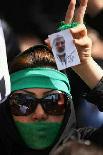
The Persian language blogosphere is rich, varied, and dynamic. Of the 100 million blogs registered around the world in 2005, 700,000 were Persian language, either inside Iran or in the diaspora. Of these, over 60,000 are updated frequently. With over 20 million Iranians connecting to the internet, and over 600,000 Iranians signed up on Facebook by the presidential election of the summer of 2009, the Iranian cyber community is by far the most dynamic such community in the Middle East, and one that is unambiguously diverse.
Recent news about Iran has been dominated by U.S. attempts to increase sanctions, and one could be forgiven for thinking the world hegemonic capitalist power is preparing war against a major nuclear power. The reality is far different: all the fuss is about a country where nine months of mass protests have not only weakened the state but also divided the ruling circles, making reconciliation at the top impossible.
A year has now passed since the explosive appearance of Iran’s Green movement in June 2009. Suspecting malfeasance in the official tally of the country’s June 12 presidential election, millions of Iranians took to the streets. The historian Ervand Abrahamian, author of the classic Iran Between Two Revolutions, described the silent rally of June 15 at Azadi (Freedom) Square in Tehran (London Review of Books, 7/23/09):
During the 2008 presidential campaign, Barack Obama was accused of palling around with terrorists.
This Republican canard was focused on the former Weatherperson, Bill Ayers, but also on Rashid Khalidi, the respected Palestinian-American scholar who had been a friend of Obama’s in Chicago.
This article is part of an ongoing discussion of the Iraq war and its aftermath. Various New Politics editors will be writing on this subject in future issues, not always with identical viewpoints, and we welcome contributions from our readers.
February 2004 marked the twenty-fifth anniversary of the Iranian Revolution. From September 1978 to February 1979, in the course of a massive urban revolution with millions of participants, the Iranian people toppled the regime of Muhammad Reza Shah Pahlavi (1941-1979), which had pursued a highly authoritarian program of economic and cultural modernization. By late 1978, the Islamist faction led by Ayatollah Ruhollah Khomeini had come to dominate the antiregime uprising, in which secular nationalists, democrats, and leftists also participated.
We are writing to extend our heartfelt solidarity and support to you, Egyptian workers, who in recent months have been courageously demanding that your government address your desperate economic conditions. The American press has been shamefully muted about the grim economic and political realities of life for people in Egypt, a key strategic U.S. ally in the Middle East.
Iraq, as one long conversant in its fervent political history remarked to me, is much like the earth resting underneath a giant rock laid there for a very long time. The U.S.-led invasion of 2003 destabilized — if not moved — this rock and unleashed a multitude of organisms that were unknown even to local residents.
The demand for national liberation, for the right of self-determination of a people, is understood by socialists to be a demand for radical, consistent democracy. This at once separates us from those who, such as the Buchananite paleocons, place the inviolability of the national principle above all other considerations and who may consistently oppose imperial interventions on that basis.
Kathryn Bigelow, the director of The Hurt Locker, claims that many men in Iraq and Afghanistan are addicted to war. If this is true, could it have something to do with the fact that GIs today do not face the endless bombardment from airplanes, field artillery, and tanks that World War II soldiers did?
I served in the 88th Infantry Division in Italy and I never met anyone so addicted. Had we met someone like that we would have considered him “Section 8,” that is, seriously disturbed.
Does that mean that many gung-ho GIs now serving in Iraq and Afghanistan are Section 8?
- « Newer Posts
- 1
- …
- 16
- 17
- 18
- 19
- 20
- 21
- Older Posts »