The New Politics Summer 2026 issue is now in the hands of subscribers, featuring articles on Democracy versus Degeneration in the United States (with contributions by Dan La Botz, Ellen Schrecker on McCarthyism Then and Now interviewed by Elizabeth Rapaport, Ben Silverman on the fascism debate, Samuel Farber on free speech, Samuel Barney on rural prisons, and Raoul Cansino and Bill Kelly on nativism), Imperialism Around the World (with articles by Lisbeth Moya González on Cuba, Husam Mahjoub on Sudan, Siyavash Shahabi and imperialism and the working class, and Matt Benson on the Mapuche in Chile), interviews on labor struggles and Russian political prisoners, a history of the International Socialists, review essays by Frieda Afary on AI, Javier Sethness on Western Marxism, and Peter Drucker on Molly Crabapple, as well as reviews on Ukraine, the Teamsters for a Democratic Union, white rage, South Asia, and Afghanistan, plus a letter on women under the Taliban.
You can help us by making your tax-deductible donation here. Or by subscribing (see options here). Or by doing both. If you’ve already done so, you can close this annoying box with the satisfaction of knowing that you’ve helped us to persist in defending and exploring “socialism from below.”


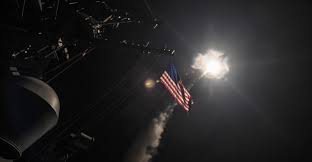
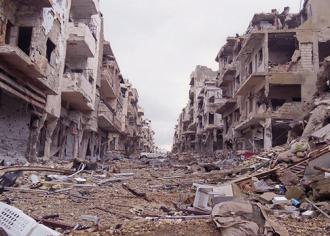
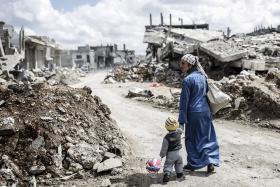
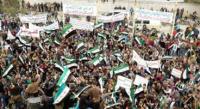 We are horrified by the relentless, cruel attacks of the Assad regime, aided by Moscow and Tehran, on the Syrian people. For sheer brutality the butchers in Damascus have few equals in the world today. But we also wholeheartedly condemn U.S. bombing and military forces in Syria, which will kill innocent people and contribute nothing towards a just solution to the Syrian conflict, while at the same time serving to deepen the reactionary U.S. military presence in the Middle East and reinforce Assad’s rhetorical claim that he is defending the Syrian people against Western imperialism, hollow though that claim may be.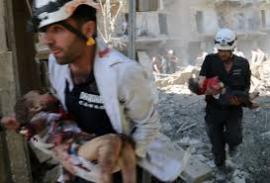
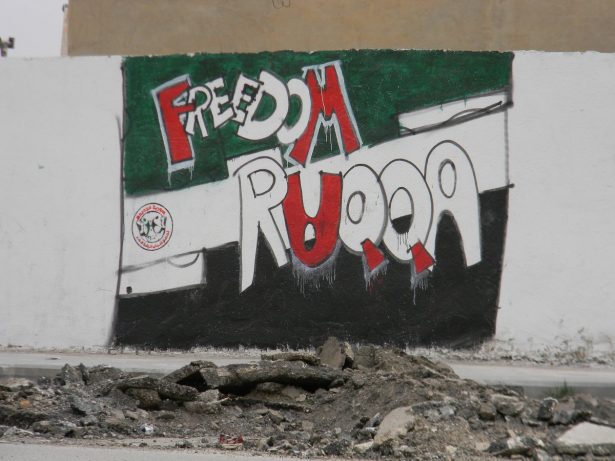
 The last terrible terrorist attack by the so-called “Islamic State” (also known as Daech) killed at least 300 people in Baghdad’s central shopping district of Karrada on July 2. It was the worst single car bomb attack in Iraq since U.S. and British led forces toppled the dictator Saddam Hussein 13 years ago and deepened the anger of many Iraqis over the weak performance of the security apparatus. This followed other terrorist attacks in the region and elsewhere. This put forward once more the question on how to answer and end the threat that represents Daech. The Western states led by the USA have shown that they consider Daech as the main enemy for the region of the Middle East and North Africa. Daech constitutes in the opinion of Western officials a source of regional and international instability, particularly with the terrorist attacks in West. However they propose to use the same elements that fueled the development of Daech to try to stop it militarily. This is therefore a recipe for defeat.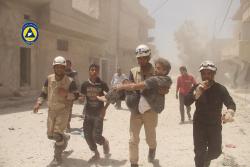
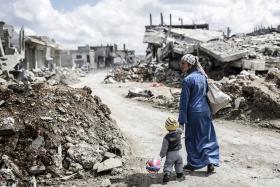
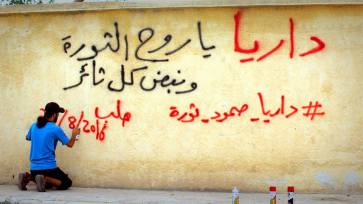 Four years following its liberation, the predominantly agricultural town of Daraya, strategically located near the capital, has fallen to the regime. A deal was reached to evacuate the 4,000-8,000 civilians remaining from a pre-uprising population of 300,000. The local fighters who defended their town so courageously will go to Idlib and join the resistance there.