Online Features
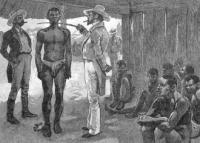
Edward E. Baptist, The Half Has Never Been Told: Slavery and the Making of American Capitalism. Basic Books, 2014. 528 pages. Paperback, $19.
“Changes that reshaped the entire world began on the auction block where enslaved migrants stood, or in the frontier cotton fields where they toiled…Enslaved African Americans built the modern United States, and indeed the entire modern world, in ways both obvious and hidden.”
— Edward Baptist, The Half Has Never Been Told
This vital and enthralling book reveals how U.S. capitalism was built on the torture of enslaved people. Edward Baptist quotes a Mississippi overseer telling his friends that “the whip was as important to making cotton grow as sunshine and rain.” The whip “might open deep gashes in the skin of its victim, make them 'tremble' or 'dance'…but it did not disable them.”
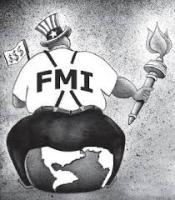
Paul Krugman’s analysis of the Puerto Rican debt crisis has subtle problems, but with big policy implications. Overall, his piece hits key points that other economists continue to miss: 1) Puerto Rico’s fiscal crisis is closely related to its economic depression, 2) the government patched up the problem with borrowing, instead of going to the root of it, 3) Puerto Rico’s low rate of labor force participation is not necessarily a result of welfare, 4) the situation is exacerbated by the Jones Act, 5) too much austerity can be self-defeating, and 6) it would be a terrible idea to give the hedge funds what they want (destroying the island’s education system in the name of fiscal responsibility). All of these points demonstrate Krugman understands the Puerto Rican case better than many Puerto Rican policy makers and economists. However, the subtle problems in his piece should be further discussed.
May First/People Link is the organization that hosts the New Politics website. But it is more than a hosting platform: it is a membership-based political community that tries to use the Internet to advance progressive causes. It has now come under attack by rightwing anti-abortion hackers because it hosts the National Network of Abortion Funds. We express our solidarity with May First/People Link and with the National Network of Abortion Funds. Below is the statement sent by May First/People Link to its members on August 4.
 Of course Congress should endorse the Iran deal. The renunciation of the agreement by Congress would have disastrous consequences for the Middle East, empowering warmongers everywhere, but especially in Washington, Tel Aviv, and Tehran.
There are three motives driving opponents of the deal.
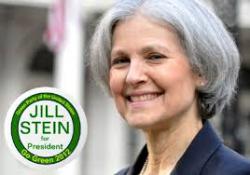
Jill Stein is campaigning as a Green Party candidate for the 2016 presidential race. She says we need real solutions for the economic, social and environmental crises we face. But the broken political system is only making things worse. It's time to build a people's movement to end unemployment and poverty; avert climate catastrophe; build a sustainable, just economy; and recognize the dignity and human rights of every person.
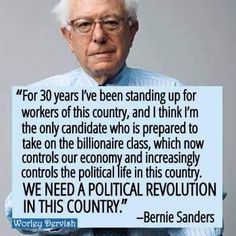
In the United States, even more so since the advent of twenty-four hour news channels, there is a consistent fetishization of political candidates. Who is viable? Who is trust-worthy? Whose ideas best fit with the prevailing public opinion polls on certain issues at a given time? Who has the most attractive haircut or family? Who has the right skin color, gender, or business experience to win over key demographics?
Though few of us are under any illusions that this country is or has ever been a genuine democracy, it seems that even those people who are not convinced by the patriotic rhetoric of the purity of American democracy too often acquiesce to the “all of our hopes rest in a single individual or political party” approach to politics. If socialism means anything beyond mass resistance to capitalism, it should be resistance to this mindset. When we fetishize the candidate we marginalize true democracy, the cornerstone of socialism.

Last night more than 100,000 people attended 3,500 meetings in all 50 states and the District of Columbia to watch a video-cast of Bernie Sanders and to begin to organize his on-the-ground campaign. Some of the meetings in various parts of the country had as many as 200 people in attendance. The meeting I attended in Crown Heights, Brooklyn was attended by 25 people, most in their 20s, with background working for social justice NGOs, in media, and in the arts, as well as a few graduate students.

United Auto Workers Local 2865 representing 13,000 teaching assistants and other student workers throughout the University of California system, called on the AFL-CIO to end its affiliation with the International Union of Police Associations (IUPA) in a resolution passed by its governing body on July 25. This is the union’s resolution passed by the union:
Statement:
We, UAW Local 2865, call on the American Federation of Labor and Congress of Industrial Organizations (AFL-CIO) to end their affiliation with the International Union of Police Associations.
While in Athens, I have gotten into the habit of ending the day by enjoying an iced coffee with cream in an outdoor cafe in a park about one mile from my hotel. It is there that I have been writing these dispatches. As I remarked in my first report, the park the cafe is in is filled with children, teenagers, young couples, the middle-aged, and old people until quite late. The cafe does not start to empty until after midnight.
For the many people who have engaged in the struggle for Puerto Rico’s independence, July 25 has a special significance. On that date in 1898, U.S. troops invaded Puerto Rico, beginning a period of U.S. colonial domination on the island that continues to this day. The United States invaded Puerto Rico, along with the Philippines, Guam and Cuba, in the setting of the Spanish-American War. That war was the opening of what would be the menacing role and predatory nature of the U.S. capitalist class in the Caribbean, Latin America and the entire world.
As a strong supporter of Bernie Sanders, my first reaction to hearing about the Black Lives Matter protest at Netroots Nation was disappointment. This looks bad, I thought. Bad for Bernie, who is the only presidential candidate with any chance of challenging structural injustice. And bad for Black Lives Matter, who could easily be interpreted as shutting down progressive discussions about immigration and economic inequality to make people focus on their priorities. I’ve had my share of mistakes during protests, as have all the activists I respect most, so I certainly had some sympathy. But I thought their protest was just that: a mistake.
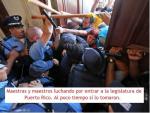 On Monday June 29, the Governor of Puerto Rico, Alejandro García Padilla, delivered a live message to the people of Puerto Rico stating that the government’s $73 billion debt is unpayable. The governor stated, “The public debt, considering the present level of economic activity, is unpayable”.
- « Newer Posts
- 1
- …
- 160
- 161
- 162
- 163
- 164
- 165
- 166
- …
- 227
- Older Posts »