Online Features

For the first time in decades a great debate about the priorities and the program of the American people is taking place not among small groups of leftists but in society at large. The debate between Sanders and Black Lives Matter—on social media, on TV and radio, in the newspapers, and on the street—is one of the most important discussions of our time and could if it is deepened help us all to find a way forward against both capitalism and racism. What appears to some only as conflict could lead to the construction of a new analysis and lay the basis for a new and broader social movement. We should all become involved in this debate and help to further it toward the common goal of a society of equality, democracy, and solidarity.
 In a recent op-ed in the New York Times, Nelson Denis describes the horrendous economic situation in Puerto Rico and compellingly shows the source of the problem to be the continuing colonial exploitation of the island by the U.S. government acting on behalf of key U.S.
Ecuador’s Indigenous movements have launched an uprising to challenge the government’s opposition to bilingual education and its support for an extractive-based economy.
On August 2, the Confederation of Indigenous Nationalities of Ecuador (CONAIE) began a march from the southeastern Amazonian province of Zamora Chinchipe that will arrive in the capital city of Quito on August 13. Upon its arrival, the Indigenous march will join a general strike called by the Workers United Front (FUT) in opposition to the government’s labor policies.
I don't support Bernie in the Democratic Party because I believe the key question in U.S. politics is building a political party that can defend the needs of the vast majority of the American people. As more and more people on the left agree, the Democratic Party is not and cannot be such a party; to my mind this constraint makes paramount the political independence of candidates, no matter how progressive their program.

I wanted to write and let you know why I support the doctors and clinic workers of Planned Parenthood who help people obtain abortions, often at great personal cost.
The current call to defund Planned Parenthood has been coordinated with attack videos that are highly edited in order to demonize the doctors who were filmed. As David Cohen and Krysten Connon document in their book, “Living in the Crosshairs,” the personal nature of political attacks on abortion in this country have led to harassment, stalking, and violence against providers and their families.
As those committed to social justice in St. Louis prepare to mark the August 9th killing of unarmed teen Michael Brown Jr. by Officer Darren Wilson in Ferguson, we know that many in the region would like us to just go away. Enough already, they say. Why commemorate something so sad and wrong, anyway? Let’s just move on. But we’re at the beginning, not the end of this struggle. It’s not time to move on, and this day calls for reflection.
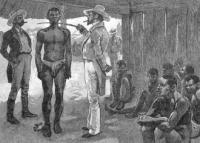
Edward E. Baptist, The Half Has Never Been Told: Slavery and the Making of American Capitalism. Basic Books, 2014. 528 pages. Paperback, $19.
“Changes that reshaped the entire world began on the auction block where enslaved migrants stood, or in the frontier cotton fields where they toiled…Enslaved African Americans built the modern United States, and indeed the entire modern world, in ways both obvious and hidden.”
— Edward Baptist, The Half Has Never Been Told
This vital and enthralling book reveals how U.S. capitalism was built on the torture of enslaved people. Edward Baptist quotes a Mississippi overseer telling his friends that “the whip was as important to making cotton grow as sunshine and rain.” The whip “might open deep gashes in the skin of its victim, make them 'tremble' or 'dance'…but it did not disable them.”
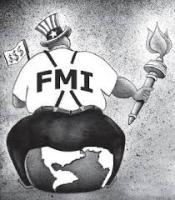
Paul Krugman’s analysis of the Puerto Rican debt crisis has subtle problems, but with big policy implications. Overall, his piece hits key points that other economists continue to miss: 1) Puerto Rico’s fiscal crisis is closely related to its economic depression, 2) the government patched up the problem with borrowing, instead of going to the root of it, 3) Puerto Rico’s low rate of labor force participation is not necessarily a result of welfare, 4) the situation is exacerbated by the Jones Act, 5) too much austerity can be self-defeating, and 6) it would be a terrible idea to give the hedge funds what they want (destroying the island’s education system in the name of fiscal responsibility). All of these points demonstrate Krugman understands the Puerto Rican case better than many Puerto Rican policy makers and economists. However, the subtle problems in his piece should be further discussed.
May First/People Link is the organization that hosts the New Politics website. But it is more than a hosting platform: it is a membership-based political community that tries to use the Internet to advance progressive causes. It has now come under attack by rightwing anti-abortion hackers because it hosts the National Network of Abortion Funds. We express our solidarity with May First/People Link and with the National Network of Abortion Funds. Below is the statement sent by May First/People Link to its members on August 4.
 Of course Congress should endorse the Iran deal. The renunciation of the agreement by Congress would have disastrous consequences for the Middle East, empowering warmongers everywhere, but especially in Washington, Tel Aviv, and Tehran.
There are three motives driving opponents of the deal.

Jill Stein is campaigning as a Green Party candidate for the 2016 presidential race. She says we need real solutions for the economic, social and environmental crises we face. But the broken political system is only making things worse. It's time to build a people's movement to end unemployment and poverty; avert climate catastrophe; build a sustainable, just economy; and recognize the dignity and human rights of every person.
- « Newer Posts
- 1
- …
- 158
- 159
- 160
- 161
- 162
- 163
- 164
- …
- 225
- Older Posts »