Online Features
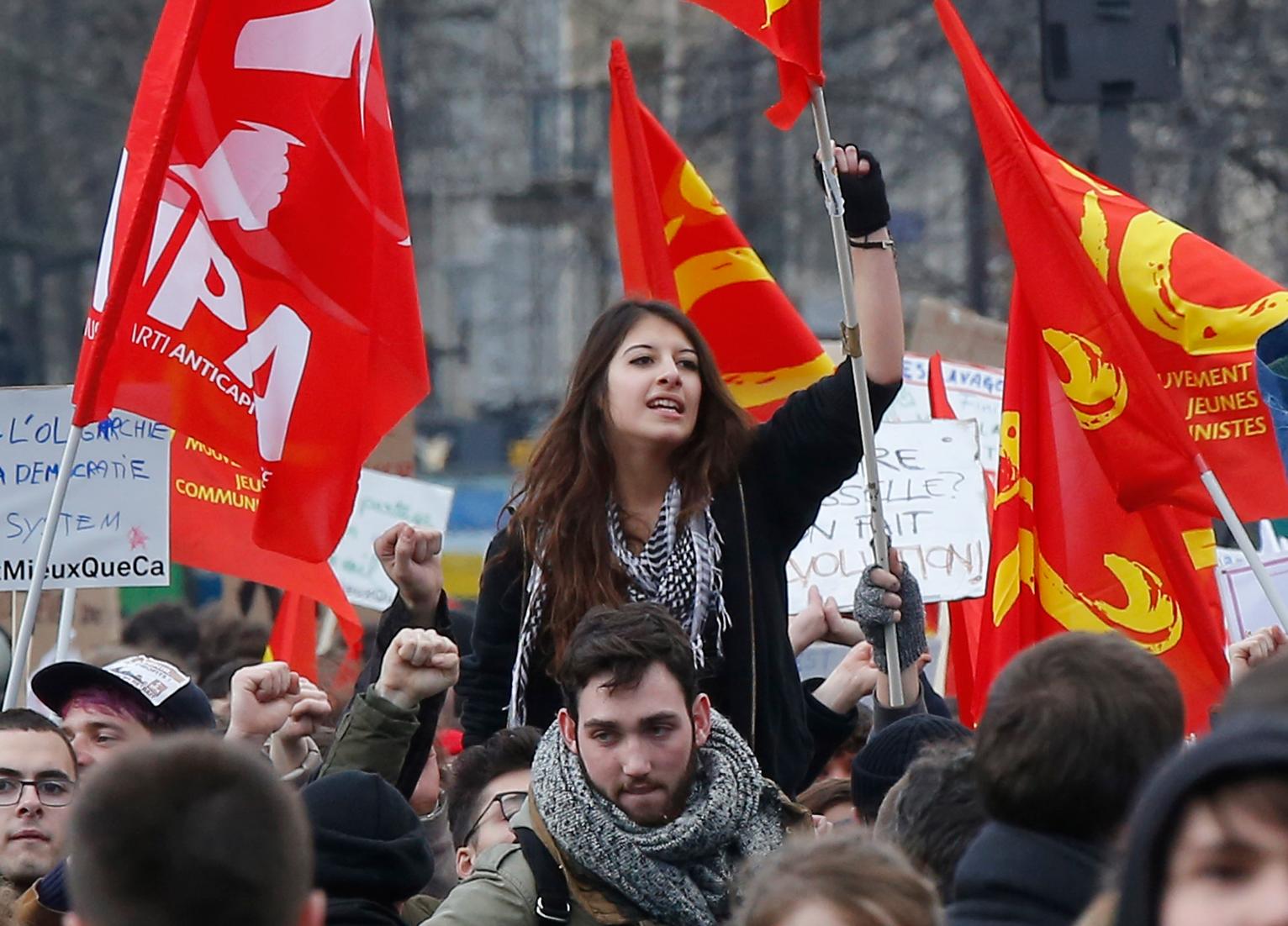
“The 49-3 is a brutality. The 49-3 is a denial of democracy.” Despite François Hollande’s opinions on this article of the French constitution in 2006, his government under Manuel Valls (who had himself been among the MPs proposing it be suppressed in 2008) used it to force through the unpopular law proposed by Minister for Labour Myriam El Khomri on May 10. This provoked an immediate reaction from the coordinating committee of workers’ and students unions calling days of national mobilisation and strikes on May 12, May 17, May 19, to continue on May 26 and June 14. [1]

I grew up in the Great Depression era and so I grew up with Joe Louis. That was my marker. If you walked down the street when he was having a fight, every radio in every house was tuned to that fight. You could hear the fight walking down the street, literally. So, of course, Blacks were very proud of him.
And certainly having Joe Louis as the heavyweight champion you felt thrilled on the one hand, but on the other hand you felt ashamed because he was a very humble man and didn't push against the barriers, which were much stronger then, of course. Still we thought that with his fame, he might have pushed harder against those barriers.
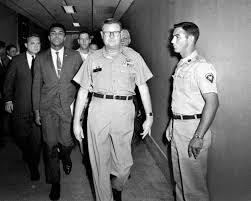
After Muhammad Ali refused induction–we had the champ in our corner.
When in June of 1963 I graduated from Mar Vista High School in Imperial Beach, just south of San Diego, California, I went to my local Selective Service Board—the draft board—and registered as a conscientious objector. My paternal grandfather, a Dutch immigrant and baker, was a socialist pacifist and his four sons had registered as conscientious objectors (C.O.s) in World War II and two of them—my father Herb and my uncle Bert—had been drafted and had done what was called alternative service (the alternative to serving in the military) at a former Civilian Conservation Corps camp in Big Flats, near Elmira, New York.
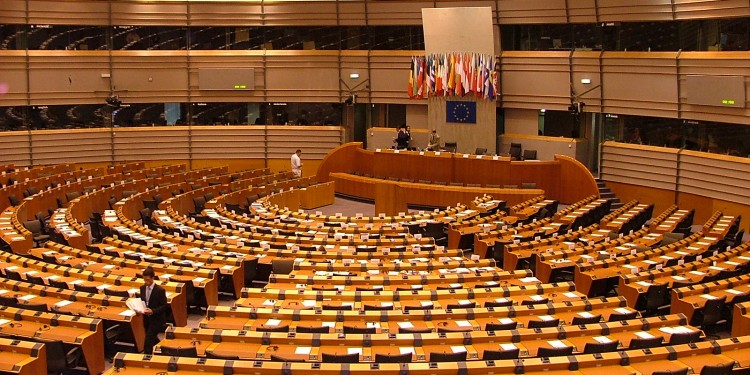
The process of European unification is undergoing a deep crisis, certainly the deepest since it started at the beginning of the 1950s. In less than a year, the EU faced two major tests—first the Greek quarrel, then the refugee crisis — that revealed its true face: a mixture of impotence, unwillingness, egoism, arrogance and cynicism. It is not a pretty spectacle. No illusions can remain about this entity that, far from embodying the federal ideal, has become an empty shell, an object of shame and deserved sarcasm. Those who still ritually proclaim its virtues are the representatives of a highly discredited political elite who seem to no longer have any culture or values. The more they assert their belief in the EU, the more they disqualify it, even in the eyes of the millions of people who have never felt any sympathy for conservatism, nationalism and xenophobia.
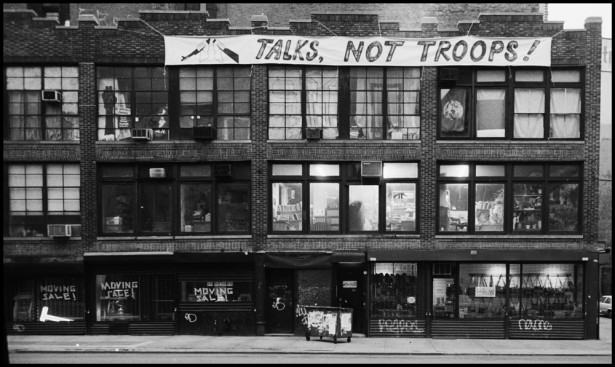
Nearly 20 years ago, as I left the War Resisters League, or WRL, offices in lower Manhattan for the first time, I noticed that my fingertips were covered in black soot and ink. My hands were full of tracts and leaflets, and I had been looking through nonviolence training materials for the last hour. I tried to rub the dirt off onto my jeans, but it wouldn’t budge and later even soap and water had to work really hard.
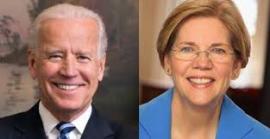
Douglas Schoen, a former advistor to Bill Clinton, predicts in a column in the Wall Street Journal that Hillary Clinton may not be her party’s nominee. He suggests that if Sanders wins California, which he may well do, Clinton, with her legal problems and negative ratings in the polls, may be dumped and the convention could choose Vice-President Joe Biden and Senator Elizabeth Warren. Schoen says in a Fox News interview that Biden is “chomping at the bit.”
This scenario may be unikely, in a year when politics has brought us many unlikely developents, but it's worth thinking through. Certainly Sanders' supporters should think about how they would react to such a development.

The National Coordinating Committee (la CNTE) and allied dissident groups in the Mexican Teachers Union (el SNTE) declared a general, indefinite strike on May 16. Tens of thousands of teachers left their classrooms, shutting down many schools in four states: Chiapas, Oaxaca, Guerrero, and Michoacán. There have also been protests in the State of Morelos and the State of Mexico.
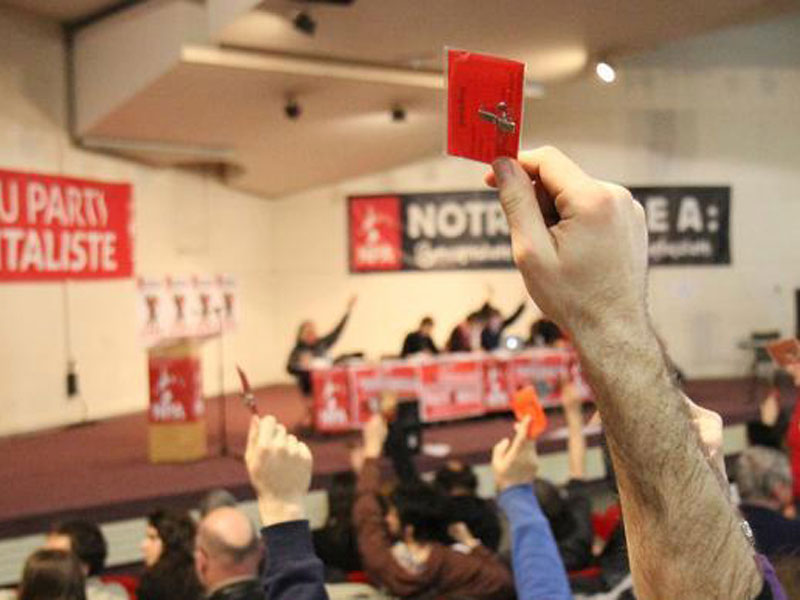
This is a translation of a statement by the Left Tendencies of the French New Anticapitalist Party (NPA) that are grouped under Platform A, originally published in La Izquierda Diario on January 27, 2016.
In the indicative vote taken at the NPA’s National Political Council meeting, the platform of the left tendencies came in first with 45% of the vote, beating those presented by François Sabado and Olivier Besancenot (38%) and Alain Krivine and Philippe Poutou (16%).
The NPA National Conference confirms the decision of its Third Congress [January 2015] to present an NPA candidate in the presidential elections. The text that follows defines the political framework of this candidacy.

In a small church in the Albany, New York's low-income, predominantly African-American South End, forty people were gathered for a community meeting. They were organizing a protest against trains carrying potentially explosive oil — dubbed by the residents "bomb trains" — that were running through their neighborhood. City Counselor Vivian Kornegay told the group that many municipalities had opposed the bomb trains and other dangerous fossil fuel infrastructure, but had little power to protect their residents; it was up to a "people's movement" to do so. "What we want is for all of us to be free, healthy, and safe — and for our planet to be a better place to live."
[Montpellier, May 26, 2016] “We’ve had enough” is the phrase on everyone’s lips as – against all expectations — the wave of strikes, blockades, disruptions and mass demonstrations begun eleven days ago continues to develop throughout France. Indeed, in the past couple of days, two new strategic groups of workers have joined the protest. Technicians at France’s nuclear power plants are now cutting back on production of electricity, and the railroad workers have massively joined the street protests while cutting back on trains. Meanwhile, there are long lines at the gas pumps as petroleum workers continue to blockade France’s major oil refineries.
.jpg)
Let’s call a spade a spade. What has just happened in Brazil, with the dismissal of the elected president, Dilma Rousseff, is a coup. A coup which is pseudo-legal, “constitutional”, “institutional”, parliamentary, anything you want, but a coup all the same.
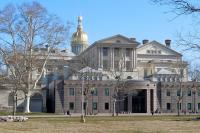
On May 9, 2016, the New Jersey State Senate approved by a vote of 39-0 S1923, a bill prohibiting the investment of state pension and annuity funds in companies that boycott Israel or Israeli businesses. One of the bill's sponsors was liberal stalwart and Democratic Majority Leader Loretta Weinberg. Among the co-sponsors were Democratic Senate President Stephen Sweeney and Republican Minority Leader Tom Kean Jr. There is a similar bill in the Assembly, A925, still in committee. [Update: The bill was released by the Assembly committee on May 19, 2016.] Both bills are an affront to basic principles of human rights that many NJ liberals seem to support everywhere else in the world except when it comes to Israel-Palestine. And both bills are an affront as well to the First Amendment.
- « Newer Posts
- 1
- …
- 145
- 146
- 147
- 148
- 149
- 150
- 151
- …
- 227
- Older Posts »