Online Features

Image

Let’s call a spade a spade. What has just happened in Brazil, with the dismissal of the elected president, Dilma Rousseff, is a coup. A coup which is pseudo-legal, “constitutional”, “institutional”, parliamentary, anything you want, but a coup all the same.

Image

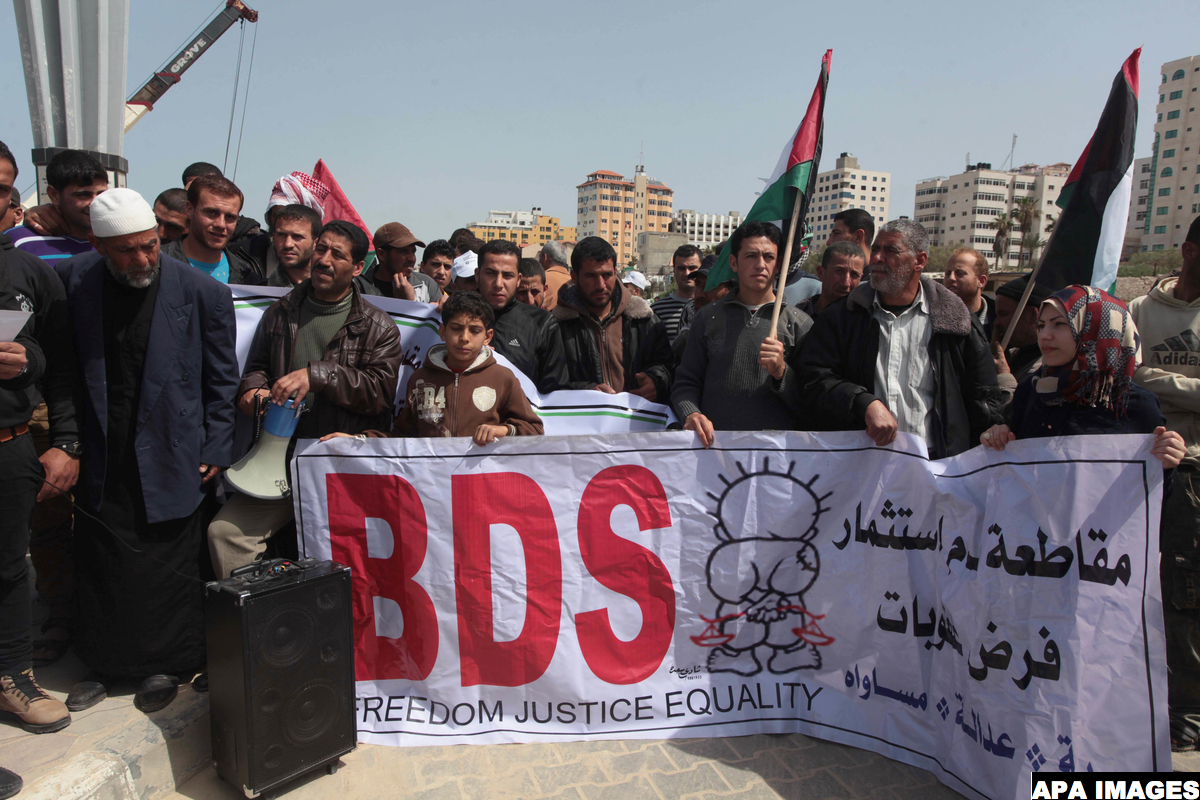
On May 9, 2016, the New Jersey State Senate approved by a vote of 39-0 S1923, a bill prohibiting the investment of state pension and annuity funds in companies that boycott Israel or Israeli businesses. One of the bill's sponsors was liberal stalwart and Democratic Majority Leader Loretta Weinberg. Among the co-sponsors were Democratic Senate President Stephen Sweeney and Republican Minority Leader Tom Kean Jr. There is a similar bill in the Assembly, A925, still in committee. [Update: The bill was released by the Assembly committee on May 19, 2016.] Both bills are an affront to basic principles of human rights that many NJ liberals seem to support everywhere else in the world except when it comes to Israel-Palestine.  And both bills are an affront as well to the First Amendment.

Image

The Question of the Lesser Evil

In a recent article for Counterpunch, Gary Leupp details the long history of Hillary Clinton’s foreign policy record and concludes with the question: is the possibility of her winning the general election in November 2016 really that much less frightening than the possibility that Donald Trump does? Here, we want to explore a potential answer to that question.

Image

[This article will appear in the Summer 2016 issue of New Politics. Corrections since it was initially posted have been included.]

The world today is faced with crises on virtually every front, and any assessment of the foreign policy positions of the two major parties’ 2016 presidential candidates must be measured against how well they respond to these crises.

ImageDear Comrades and Friends,

Six women members of the Revolutionary Workers’ Party (DIP) of Turkey are being persecuted for their activity around the International Working Women’s Day. They are now being tried in court for support to and propaganda of terrorism simply because they have expressed solidarity with Kurdish women brazenly repressed and humiliated by security forces.

Image

Luiz Bernardo Pericás, Caio Prado Júnior uma biografia política. Sao Paulo, 2016. 484 pp. Photos. Illustrations. Acronyms. Chonology. Notes. Bibliography. Index. Available only in Portuguese at this time.

Pericás’ Caio Prado is a well researched, well documented biography of Caio Prado, the renowned and important Brazilian historian. This biography is distinguished by the author’s concern to present Prado not only as a Marxist intellectual but also as a member of the Brazilian Communist Party (PCB) and a committed political activist–and to show the relationship between the two. The author argues that Prado’s politics were integral to his work as a historian.


Image

This talk was given at the Washington State Council of Fighters Educational Convention for 350 Delegates in Spokane, Washington, on April 20, 2016.

ImageBrazil’s president, Dilma Rousseff of the Workers Party (PT) will very likely be impeached today, leading to her immediate, temporary removal from office and to a trial that could remove her permanently. Waldir Maranhao, the acting speaker of the lower house, had annulled the impeachment process just a couple of days ago, but then Renan Calheiros, the head of the Senate, said that he would proceed with the impeachment anyway, and it is going forward. This impeachment, which the left calls a kind of golpe de estado or coup d’état could be the end of Dilma’s presidency and the beginning of a new rightwing government that will impose greater austerity and do so by repressing the social movements.

Image

What can we in the United States learn from the left in Europe and Brazil?

During the last two weeks of April I visited three European countries speaking about Bernie Sanders and the American elections. I spoke in Paris, Madrid, Barcelona, and in French-speaking Switzerland, while in May I spoke in four Brazilian cities: Rio de Janeiro, the Rio suburb of Niteroi, Vitoria, and Fortaleza. In Paris I spoke to Ensemble, part of the Front de Gauche, in the suburb of Bagnolet. In Madrid and Barcelona, I spoke at meetings organized by the journal Viento Sur which is linked to Anticapitalistas, the leftwing of Podemos. In Switzerland, I spoke at the Spring University of solidaritiéS Suisse, an independent, multi-tendency left wing group.

Image

Teachers in the city of Rio de Janeiro, and in the state of the same name, have been on strike for more than two months now. More than a month ago students at one high school occupied their school in support. The student occupation spread to other schools and are there are now 76 schools occupied throughout the state of Rio de Janeiro and as many as twenty in other states to which the movement has spread. Students have been joined by parents and teachers and by volunteers from left political parties and individuals.

Image

I’m not feeling the Bern anymore. The Bern has gone away. The Bern has turned to heartburn, if not yet reflux.

ImageI was invited to speak here in Rio de Janeiro by the Socialism and Freedom Party (Partido Socialismo e LiberdadePSOL) and spoke last night to an enthusiastic and very well informed crowd of about 200 students at the university (UFRJ). I also sat down to talk with PSOL leaders and activists here about the local political situation and the social movements. So here are my impression, though they are just impressions of the political situation, of the teachers' strike, and of the school occupations.